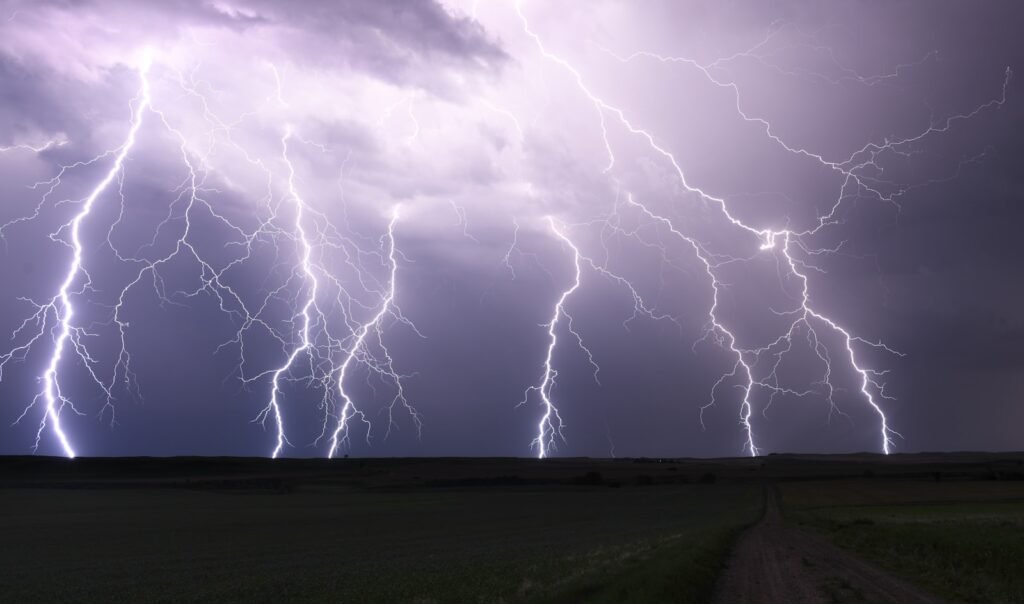

On a hot summer night in the Great Plains, a storm rolled across the horizon, hurling down jagged forks of light. A rancher watched in disbelief as one towering oak tree on his land was hit not once, but twice in the same storm, erupting in sparks like something out of a disaster movie. Stories like his sound like exaggerations, yet they line up with what lightning scientists now know: some places, and even some people, really are more likely targets than others. The real mystery is why the sky seems to sometimes pick the same spot again and again, out of all the empty space around it. Untangling that mystery has turned out to be much stranger, and more important, than it first appears.
The Hidden Clues Above Our Heads
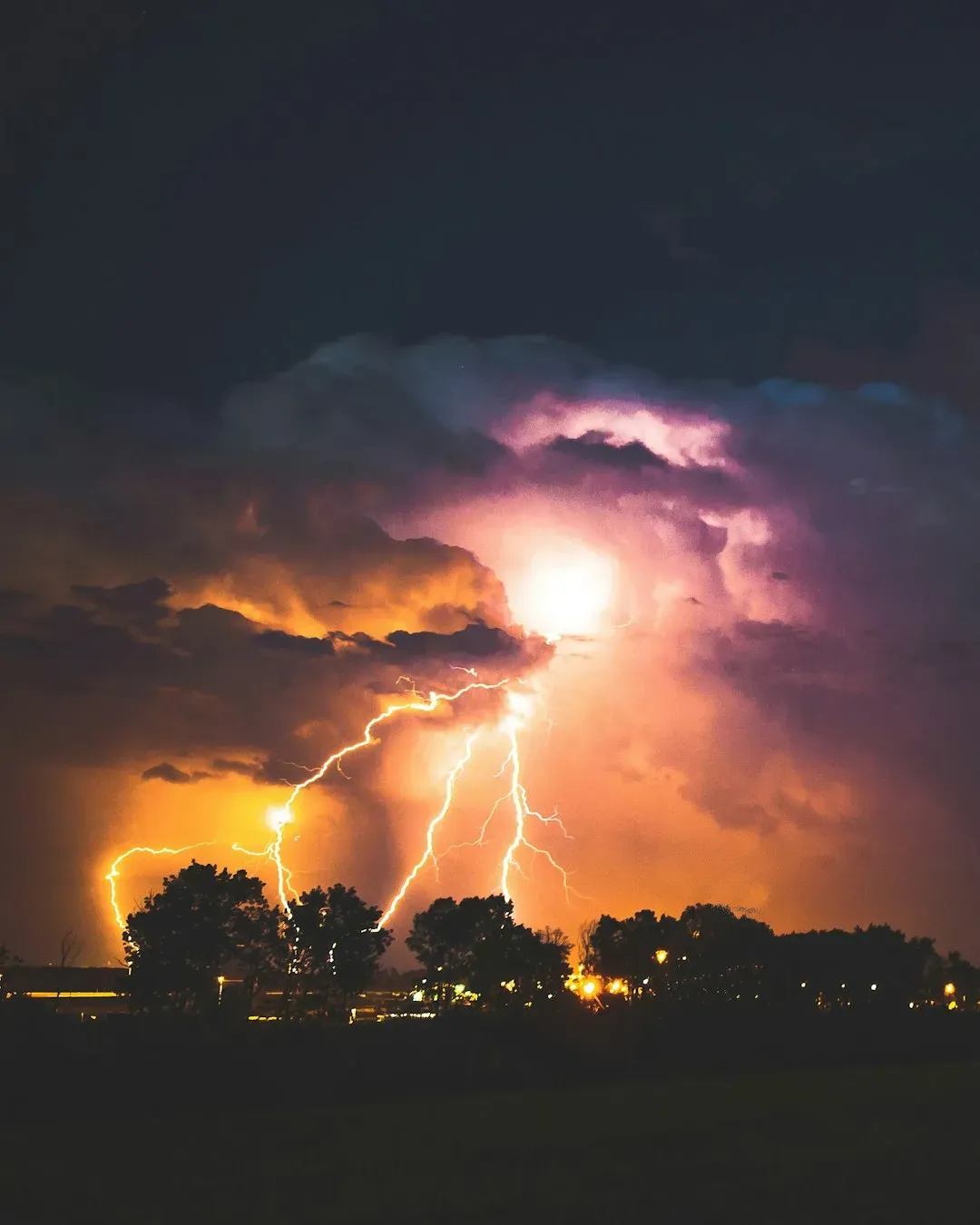
It feels random when a bolt of lightning tears out of a cloud, but the atmosphere is quietly stacking the deck long before the flash ever appears. Inside tall thunderclouds, tiny ice crystals and hailstones crash into one another, shuffling electric charge like a cosmic-sized balloon rubbing against wool. Over minutes and hours, separated regions of positive and negative charge build up, creating invisible tension between cloud and ground. The ground, for its part, responds like a mirror, with charges rearranging in soil, rocks, trees, and buildings just waiting for a path to snap into place. When that gap finally bridges, it follows the route of least resistance, not a random line in space.
What makes a spot a “repeat customer” for lightning are the subtle features we don’t usually think about as electrical. Slight bumps in terrain, a lone tall tree, or a ridge of rock that conducts better than the soil beside it can all quietly guide electric fields into focusing over one place. The air column above a hilltop, for example, can carry a stronger electric field than the valley a few hundred feet away, like a magnifying glass bending sunlight to one hot point. Once a channel is carved by a strike, heated air and vaporized material can briefly alter the conditions above it, sometimes priming the same path for another discharge in the same storm. It is less a cosmic dartboard and more a rigged game where the board’s shape keeps nudging the dart toward certain targets.
From Ancient Omens to Forensic Lightning Science
Long before anyone talked about electric fields, people noticed that lightning seemed to favor certain temples, hills, or trees, and they spun stories to explain it. In many early societies, a building struck twice was viewed as blessed, cursed, or singled out by deities, depending on who you asked. The repeating hits were not dismissed as coincidence; they were seen as messages, just without a clear language to decode them. That sense of pattern, even when the science was missing, was an early hint that lightning follows rules, not whims. Today, we have traded oracles and omens for high-speed cameras and satellite data, but the same basic question remains: why there and why again?
Modern lightning researchers treat each bolt like a crime scene, piecing together the geometry of clouds, terrain, and structures after a major strike. Networks of ground sensors now triangulate lightning strokes to within a few hundred feet, and in some regions within tens of feet, tracking millions of flashes a year. Combined with weather radar and satellite instruments that see lightning from orbit, scientists can layer maps of electrical activity over land-use, elevation, and even soil type. Over time, patterns jump out: transmission towers that are hit over and over, wind turbine farms that light up on almost every severe storm day, and coastal ridges that see far more repeat strikes than nearby flatlands. The old idea that lightning never strikes twice in the same place has crumbled under a mountain of data.
When the Same Spot Keeps Getting Hit
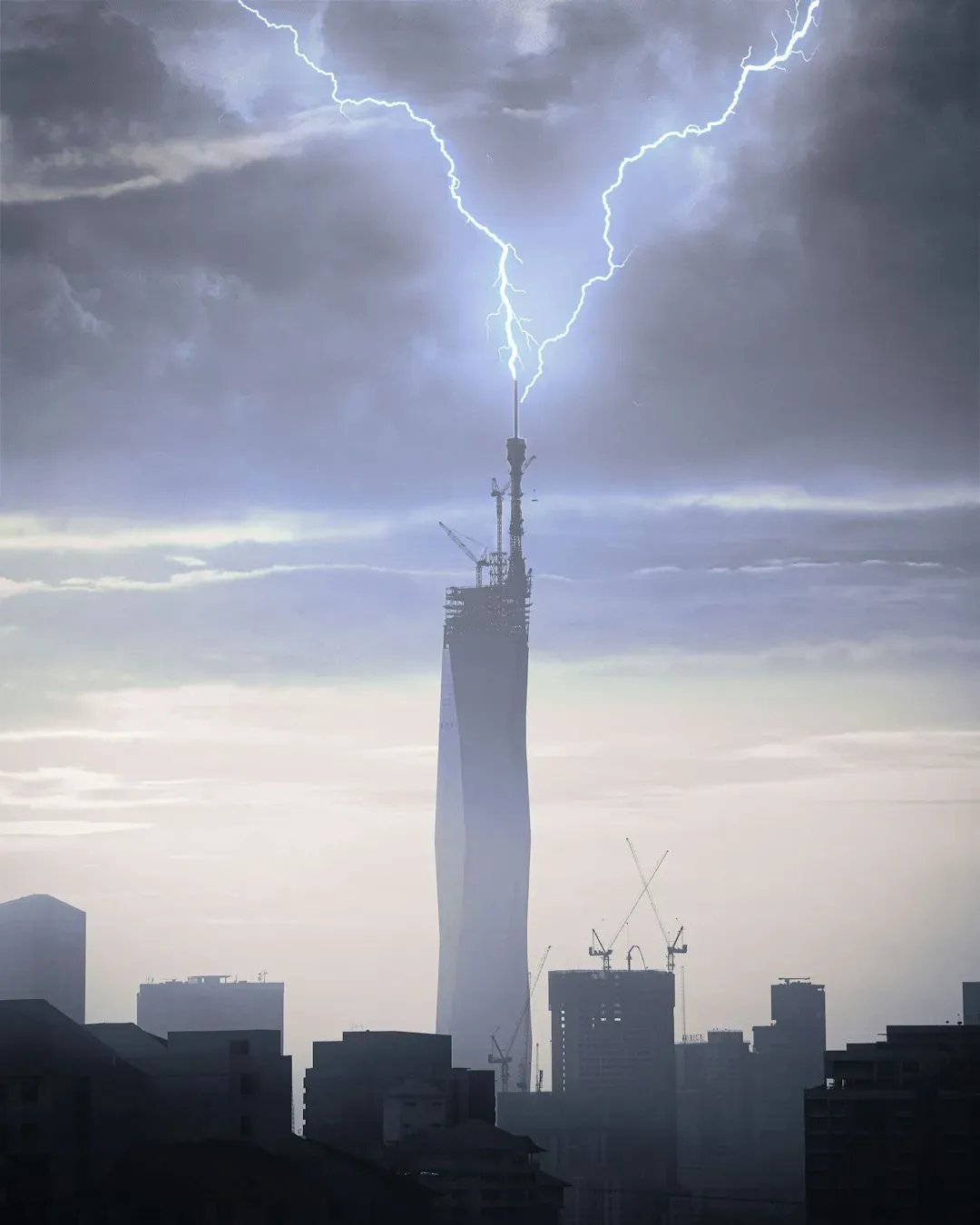
If you want to see lightning strike twice, or dozens of times, the safest way is to look at skyscrapers and towers. Structures like the Empire State Building and the Willis Tower are hit many times every year, with some individual storms delivering several strikes to the same mast within minutes. Their combination of height, sharp edges, and metal framing make them irresistible conductors that help complete cloud-to-ground circuits. Tall radio masts, offshore platforms, and mountain-top observatories form similar hotspots, funneling electrical charge again and again through the same points. These are deliberate sacrifices, in a way, drawing fire away from more vulnerable surroundings.
But repeat strikes are not just a city-skyline phenomenon. Isolated trees in open fields, rock outcrops above forest canopy, and even ridge-line churches or farmhouses on a hill can become favored targets. In mountainous regions and along coastlines, warm, moist air tends to rise along slopes, feeding thunderstorms and boosting electric fields over the same terrain features day after day in stormy seasons. That is why some very specific places on Earth rack up astonishing lightning tallies year after year, while areas a short drive away see far fewer hits. The sky is not choosing victims at random; it is following a map that we have only recently learned to read.
The Physics of a Double Strike
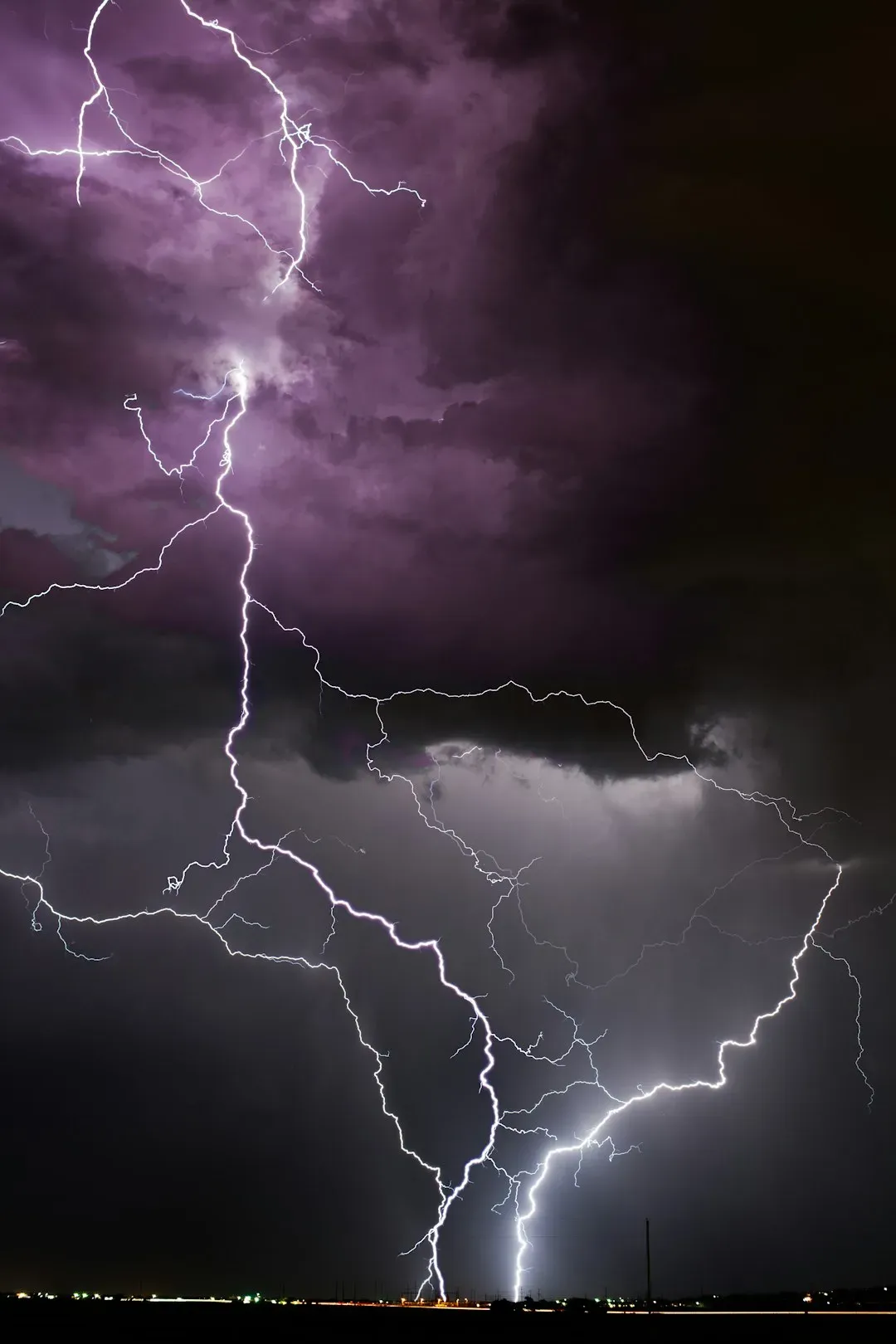
To understand why a bolt might revisit the same spot within seconds, you have to zoom in on the moment a lightning channel forms. Before you ever see the bright flash, a faint, stepped leader of charge crawls jaggedly downward from the cloud in fits and starts. At the same time, thin upward leaders may leap up from trees, towers, or even the ground itself, reaching to meet it. Where they connect, a conductive highway from cloud to ground is established, and a powerful return stroke races up that path, creating the blinding light we recognize as lightning. That path is not always used just once.
In many strikes, the same ionized channel is reused multiple times within a fraction of a second, creating what the eye perceives as a flickering bolt. Each subsequent discharge follows the already ionized, low-resistance route, like a car choosing the only paved road across a muddy field. Sometimes, subsequent strokes hit the same object slightly differently, shifting only a few meters along a roofline or tree trunk, but still effectively delivering a repeat strike. In rare cases, a second leader can re-form along nearly the same path even after the original has cooled, particularly if the local electric field is still intense and focused. What looks like the sky “changing its mind” is really the atmosphere stubbornly reusing a path it has already paid the energetic cost to construct.
Rare Bolts, Superbolts, and Lightning Outliers
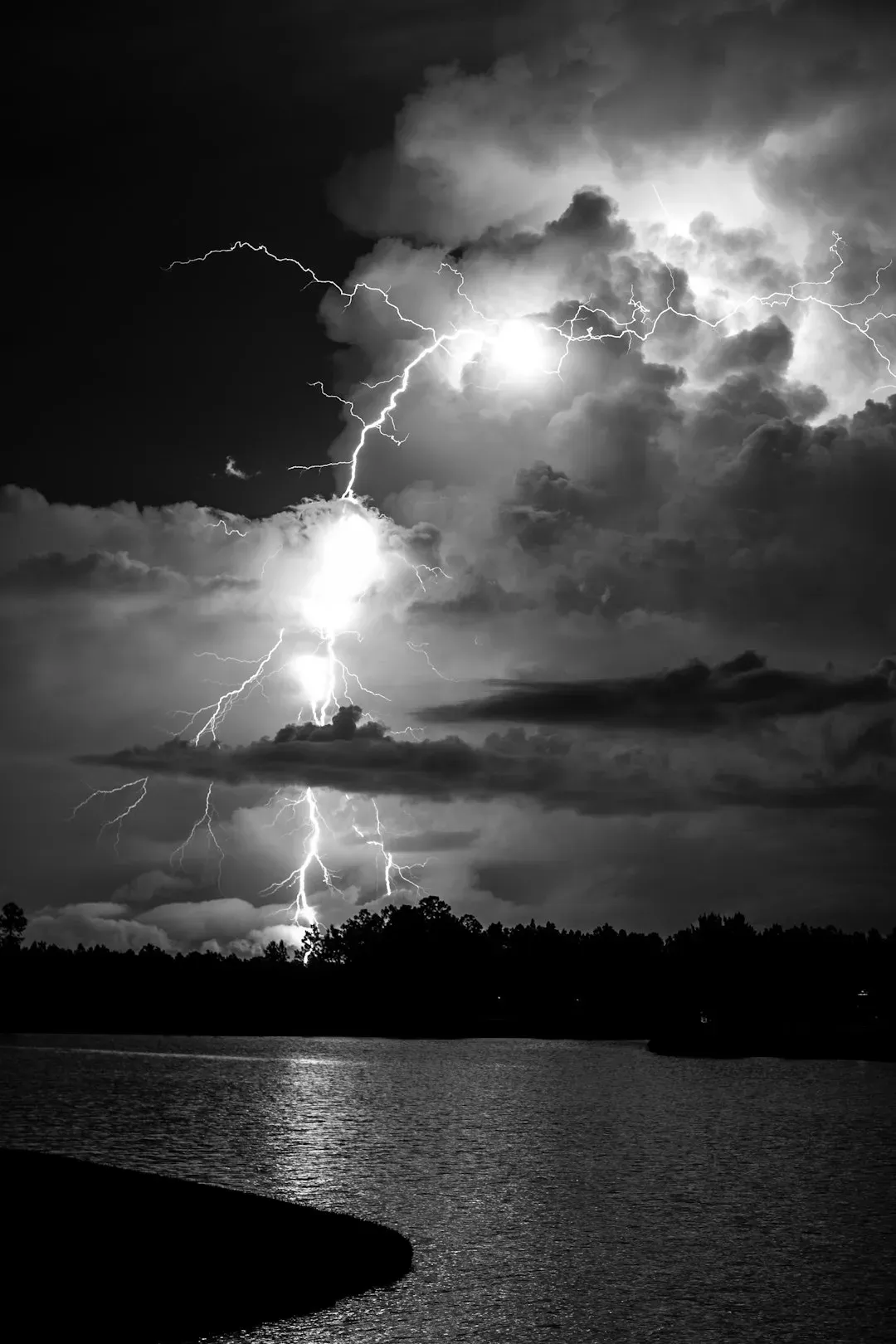
Not all lightning is created equal, and some of the rarest forms push the idea of a “bolt from the blue” to an extreme. So-called superbolts carry many times the current of typical lightning, releasing energies that stand out even in global satellite records. These monsters are uncommon but not mythical, and they often appear over oceanic regions where storm dynamics and cloud tops create exceptionally strong charge separations. On the other end of the spectrum are long-range positive lightning strokes that can emerge from the tops of storms and strike clear air far from the rain. Those distant hits can appear to come out of nowhere, sometimes landing in places that have already taken a hit earlier in a storm’s life.
Then there are exotic cousins like sprites and gigantic jets, rare upward discharges that lace the sky above storms like ghostly, red or blue tendrils. While these do not typically cause ground damage, they reveal that the electrical environment above a thunderstorm can be complicated and structured, sometimes reinforcing the same regions over and over. The fact that the atmosphere can support such a variety of pathways underscores how far we still have to go in predicting exactly where and when lightning will fall. While forecasting storm regions prone to lightning has improved dramatically, pinpointing individual future strike points – especially repeat ones – remains out of reach. That tension between what we know and what we still cannot foretell is part of what keeps lightning researchers hooked.
Why It Matters More Than an Old Myth
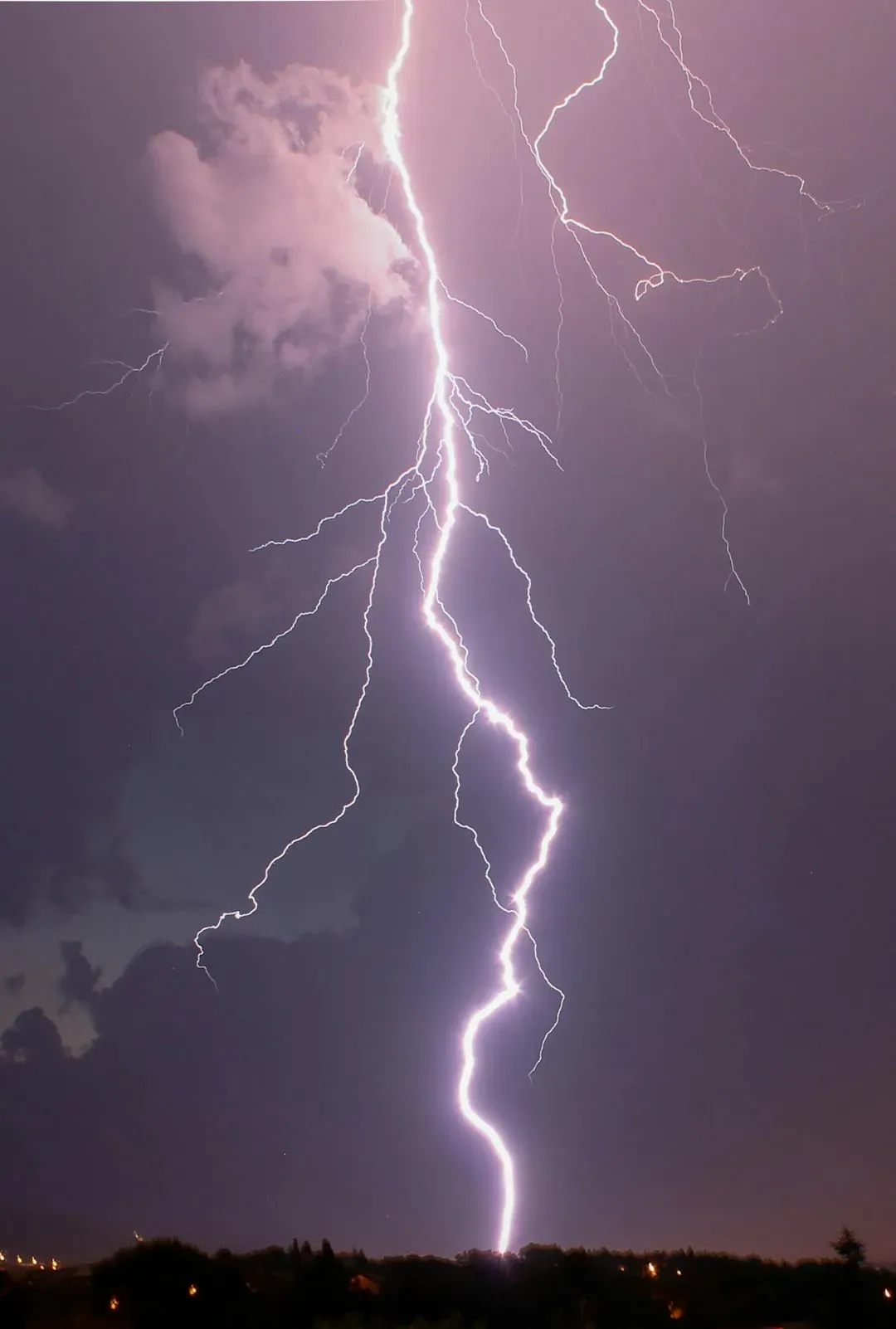
You might be tempted to write off the phrase about lightning never striking twice as just a harmless saying, but it can actually lead to dangerous complacency. People who have seen one strike hit a tree, tower, or even their home sometimes assume the risk has somehow been “spent” for that location. In reality, the very factors that brought the first strike – height, isolation, local geology – make another hit more, not less, likely. For infrastructure planners, ignoring repeat-strike patterns can mean undersizing lightning protection or placing critical equipment in the worst possible spots. The cost is not just in damaged electronics, but in fires, power outages, and occasional injuries or deaths.
There is a scientific stakes story here, too. Lightning plays a major role in fixing nitrogen in the atmosphere, triggering wildfires, and influencing atmospheric chemistry; getting its patterns wrong can warp long-term climate and ecosystem models. As the climate warms, some regions are already seeing longer thunderstorm seasons and shifts in where the most active “lightning alleys” are located. Understanding not only how often lightning hits, but where it tends to keep hitting, feeds into wildfire risk projections, aviation safety planning, and the design of renewable energy farms. It is a reminder that what starts as a curious myth-busting question can end up entangled with power grids, food security, and public safety. In that sense, this is not a niche curiosity; it is a piece of how we manage living on a stormy planet.
Global Hotspots and the Geography of Repeat Strikes
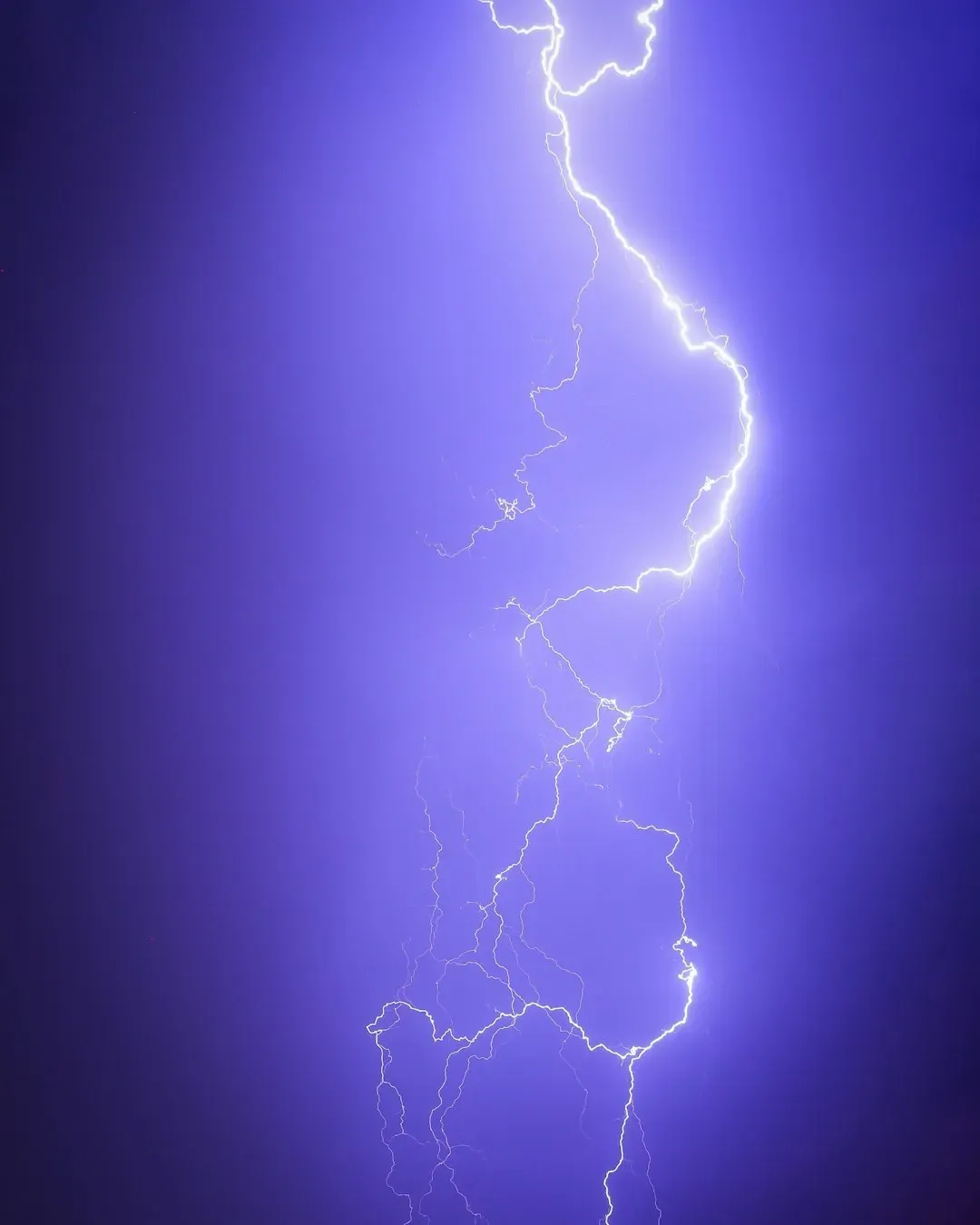
Seen from space, Earth’s lightning patterns cluster in surprising ways, and some of the biggest hotspots are not where most people would guess. High lightning densities appear over parts of central Africa, northern South America around Lake Maracaibo, and sections of Southeast Asia, where warm, moist air and local topography churn out storms almost daily in some seasons. Within those broader regions, repeat-strike zones narrow down to particular lake shores, mountain slopes, and coastal ridges. The combination of lake breezes, valley winds, and towering clouds can aim electric fields over the same communities again and again, storm after storm. For people living there, lightning is less of a rare spectacle and more of a regular, sometimes deadly, neighbor.
In North America, stretches of the Gulf Coast and central plains stand out, with some tall structures acting as repeat magnets in already active regions. As urban skylines grow in places that historically had only trees or low buildings, city cores can become new artificial peaks in the electrical landscape. That shift can alter where the worst repeat-strike risks sit, moving them from farmland and lone trees to office towers, cell sites, and rooftop solar installations. Global lightning observation systems now run almost continuously, building year-over-year maps that help reveal these evolving patterns. Those maps are quietly guiding standards for lightning protection and helping insurers, utilities, and emergency planners decide where the next big risks might cluster.
Storm Tech, AI, and the Future of Predicting Rare Bolts
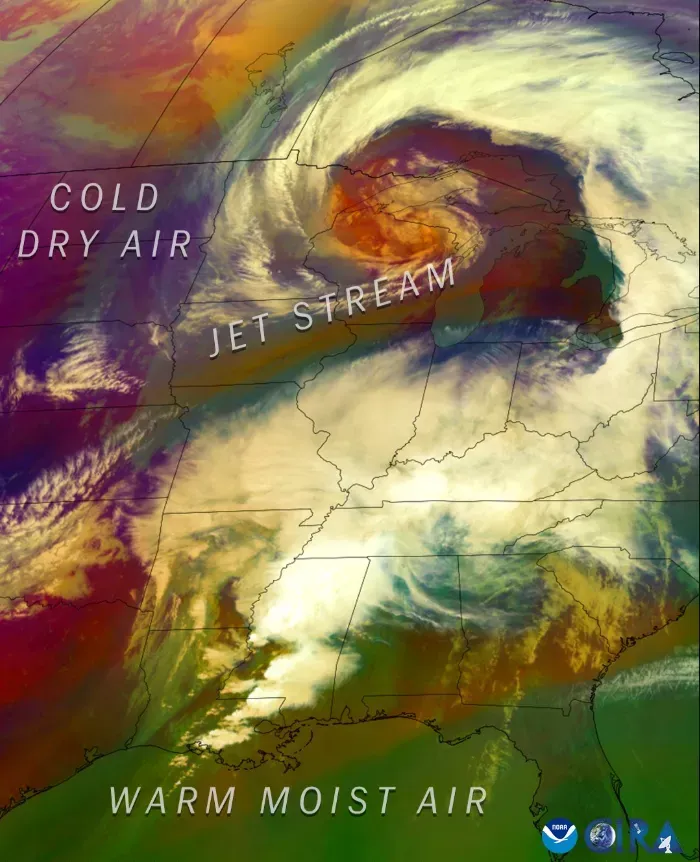
The tools for studying lightning have changed more in the last few decades than in the previous few centuries combined, and the next leap may come from artificial intelligence. Dense networks of radio antennas already listen for lightning’s electromagnetic signatures, timing the cracks and pops to reconstruct three-dimensional strike locations. Satellites watch from above, capturing both cloud-to-ground and cloud-to-cloud flashes across entire continents. Feeding that torrent of data into machine-learning systems offers a way to tease out subtle cues that human analysts might miss, such as how specific cloud shapes, temperatures, and terrain features line up with repeat-strike clusters. Early research is exploring whether such systems can flag elevated risk zones not just for storms, but for repeat hits within particular storm cells.
There are challenges, of course. Lightning is a chaotic, nonlinear process, and AI models trained on one region or climate regime can stumble when applied elsewhere without careful tuning. Increased thunderstorm activity in a warming climate could also shift baselines faster than models are updated. On the engineering side, better prediction could feed into adaptive lightning protection – smart grids that reroute power, aircraft that adjust routes preemptively, or tall structures whose systems change configuration during high-risk periods. The promise is a world where “rare” and especially damaging bolts are less surprising and less devastating, even if they remain awe-inspiring. The question is not whether we can predict every strike, but how much risk we can shave off with smarter, data-driven foresight.
What You Can Do When the Sky Turns Electric
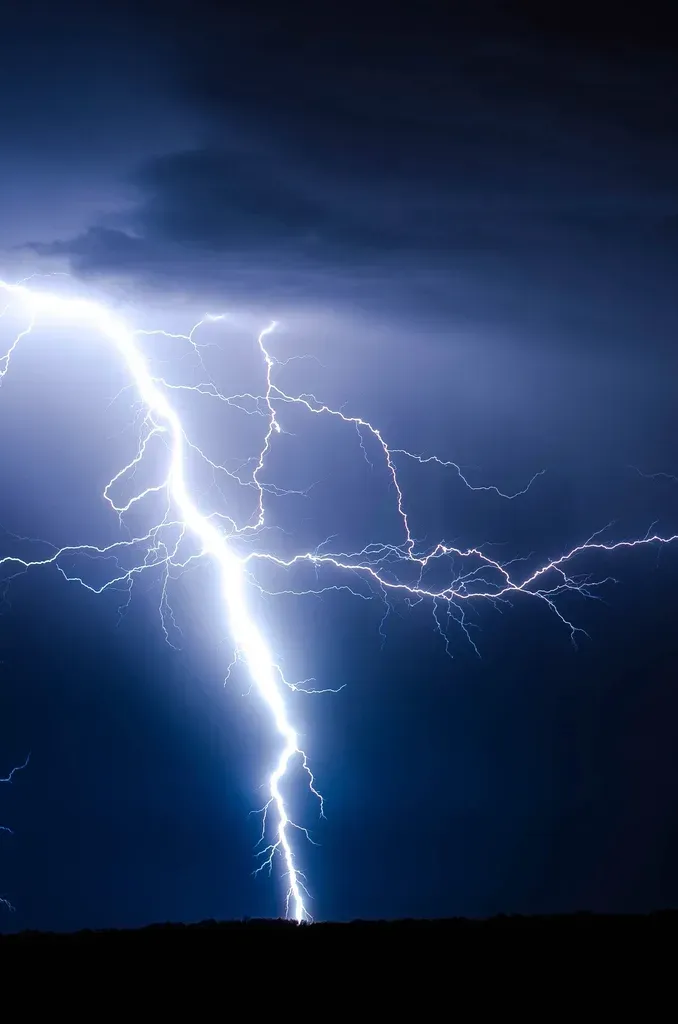
Most of us will never run a lightning lab or launch a satellite, but there are straightforward ways to respect what we now know about repeat strikes. If you live on or near a hill, in an exposed rural area, or in a storm-prone region, it is worth having a professional check whether your home would benefit from a modern lightning protection system. Simple steps like installing whole-house surge protection, grounding rooftop metal, and avoiding tall, isolated trees near structures can sharply reduce damage risk. During storms, remembering that a place that has just been hit can be hit again should keep you from gathering near that tree or that tower to “check things out.” The safest move is still to get inside a substantial building or a fully enclosed metal-topped vehicle and stay there until at least half an hour after the last thunder.
Beyond personal safety, you can pay attention to how your community thinks about lightning. Support local efforts to improve wildfire readiness in lightning-prone areas, especially where repeat strikes are known to hit dry forests or grasslands. Encourage schools, parks, and sports leagues to take lightning policies seriously, rather than treating the first nearby strike as the only real danger. And if the science fascinates you, follow lightning research projects from universities and weather agencies, many of which share real-time maps and storm breakdowns. The more we treat lightning as a pattern-rich natural system instead of a random bolt of fate, the better chance we have of living alongside it with fewer scars and a bit more informed wonder.
Suhail Ahmed is a passionate digital professional and nature enthusiast with over 8 years of experience in content strategy, SEO, web development, and digital operations. Alongside his freelance journey, Suhail actively contributes to nature and wildlife platforms like Discover Wildlife, where he channels his curiosity for the planet into engaging, educational storytelling.
With a strong background in managing digital ecosystems — from ecommerce stores and WordPress websites to social media and automation — Suhail merges technical precision with creative insight. His content reflects a rare balance: SEO-friendly yet deeply human, data-informed yet emotionally resonant.
Driven by a love for discovery and storytelling, Suhail believes in using digital platforms to amplify causes that matter — especially those protecting Earth’s biodiversity and inspiring sustainable living. Whether he’s managing online projects or crafting wildlife content, his goal remains the same: to inform, inspire, and leave a positive digital footprint.