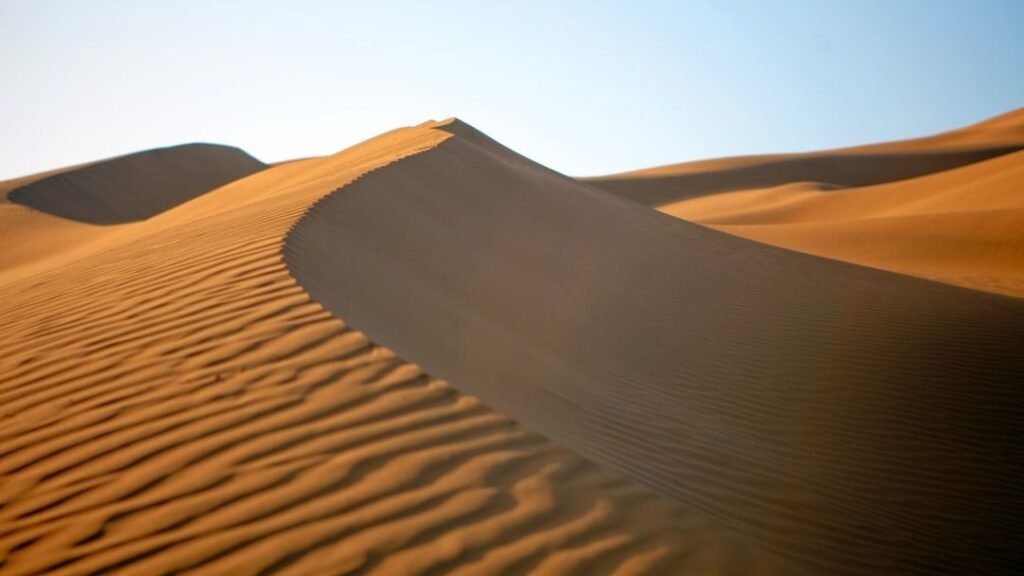

Stand at the foot of a towering sand dune, and it almost feels alive. The slope seems to breathe as it slips and slides under your feet, and the wind hums across the surface like it knows exactly what it’s doing. These dunes can be taller than skyscrapers, heavier than entire cities, and yet they move, grow, and vanish over time. The mystery is obvious: what on Earth is powerful enough, and precise enough, to build these giants grain by grain?
The answer turns out to be more complicated than “just the wind.” Scientists have spent decades trying to understand why some deserts remain flat and rocky while others explode into vast seas of shifting dunes. Some forces are obvious, like storms and gravity. Others are subtle and almost invisible: tiny changes in air turbulence, hidden moisture, or hard layers buried beneath the sand. Once you start to see the pattern, a dune field stops looking random and starts to feel like a coded message written by the planet itself.
The Relentless Power Of Wind: More Than Just A Breeze
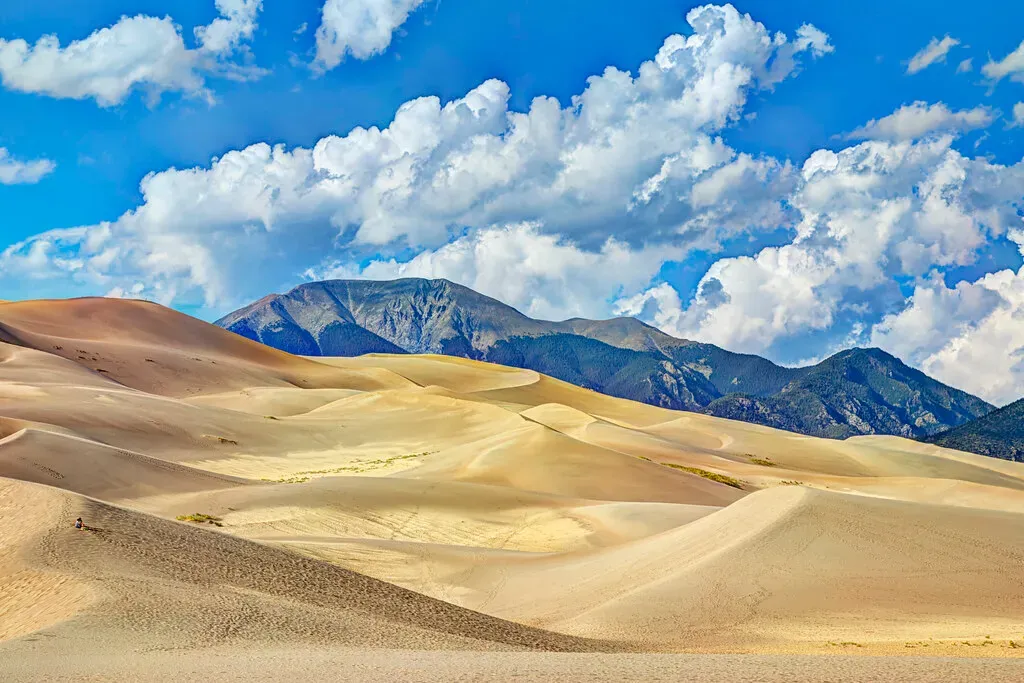
It’s tempting to imagine wind simply blowing sand around until a dune appears, but reality is nastier and more precise. Wind has to be strong enough to lift or nudge individual grains, yet not so strong that it blows everything away without letting it pile up. There’s a kind of “sweet spot” speed where grains start to hop, bounce, and slide along the surface, a process known as saltation. Once a few grains start moving, they slam into others, kicking them into motion too, like a microscopic avalanche happening over and over.
What’s surprising is how sensitive this process is to small changes in wind direction and strength. In some deserts, winds come mostly from one direction, carving classic crescent-shaped barchan dunes that look like giant commas marching across the landscape. In others, shifting winds from multiple directions sculpt star dunes that rise like sand pyramids with many arms. The unknown forces here aren’t mystical – they’re hidden in the chaotic, constantly changing patterns of airflow that we still can’t fully predict, even with powerful computer models.
Grain Size, Shape, And Weight: The Secret Life Of A Sand Grain
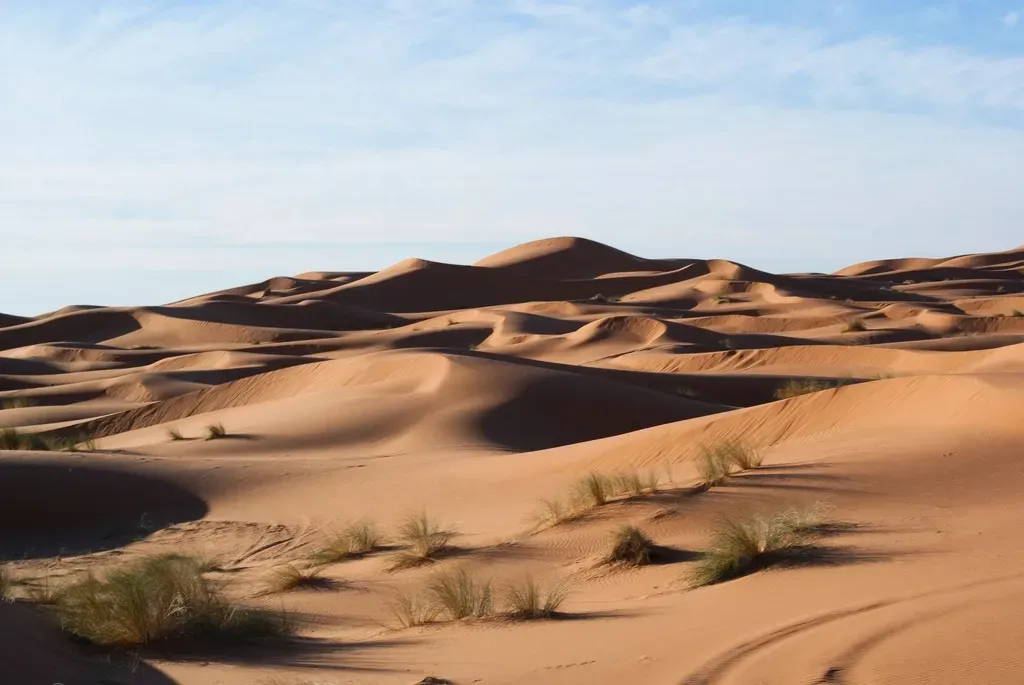
Not all sand is created equal, and that tiny detail changes everything. Finer grains are easier for the wind to lift, but if they’re too small, they can be carried long distances and never settle into big structures. Coarser grains are heavier and harder to move, so they tend to form lower, more stable features. Many of the world’s most dramatic dunes are built from sand that is oddly “just right” – not too fine, not too coarse, and reasonably uniform in size. That balance lets dunes grow tall but still remain mobile.
Even the grain shape matters. Rounded grains roll and bounce differently than angular ones, which can lock together like little jagged puzzle pieces. Over long timescales, grains can be worn down, sorted by wind, and sifted like flour through invisible sieves in the atmosphere. It’s an almost eerie form of natural selection: the wind “chooses” which grains can join the dunes and which are left behind. The result is that some areas become rich in dune-building sand, while others, with the wrong kind of grains, stay stubbornly bare and rocky.
The Hidden Role Of Obstacles And Underground Structures
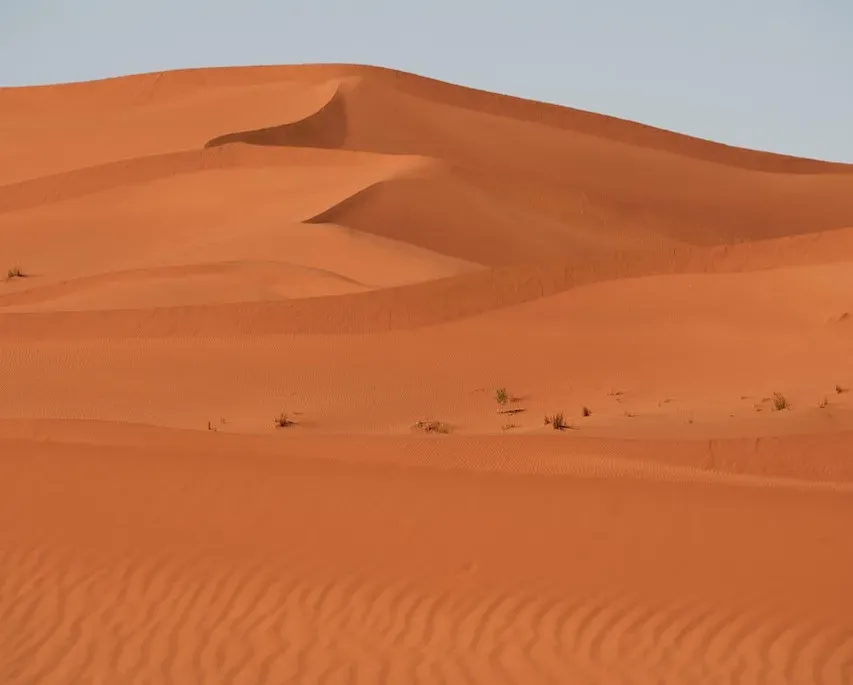
Massive dunes often start from surprisingly small triggers: a rock, a shrub, a ridge, or even human-made structures like fence lines can interrupt airflow just enough for sand to begin piling up. When wind slows ever so slightly around an obstacle, it drops some of the sand it’s carrying. Over time, that tiny bump catches more grains, growing from a low mound into a recognizable dune. Once it reaches a certain size, the dune itself becomes the main obstacle, reshaping and redirecting the wind around it.
But there’s more going on beneath the surface. In several deserts, scientists have found that huge dunes sit on top of buried bedrock ridges, old river channels, or hard crust layers. These underground features don’t look dramatic from above, but they control how water drains, how vegetation grows, and how sand can move. A dune field that seems chaotic may actually be “locked” into place by structures far below, like a building anchored to a hidden foundation. That invisible architecture can explain why dunes line up in certain patterns or form long ridges that stretch for hundreds of kilometers.
Moisture, Temperature, And The Strange Grip Of Almost-Dry Sand
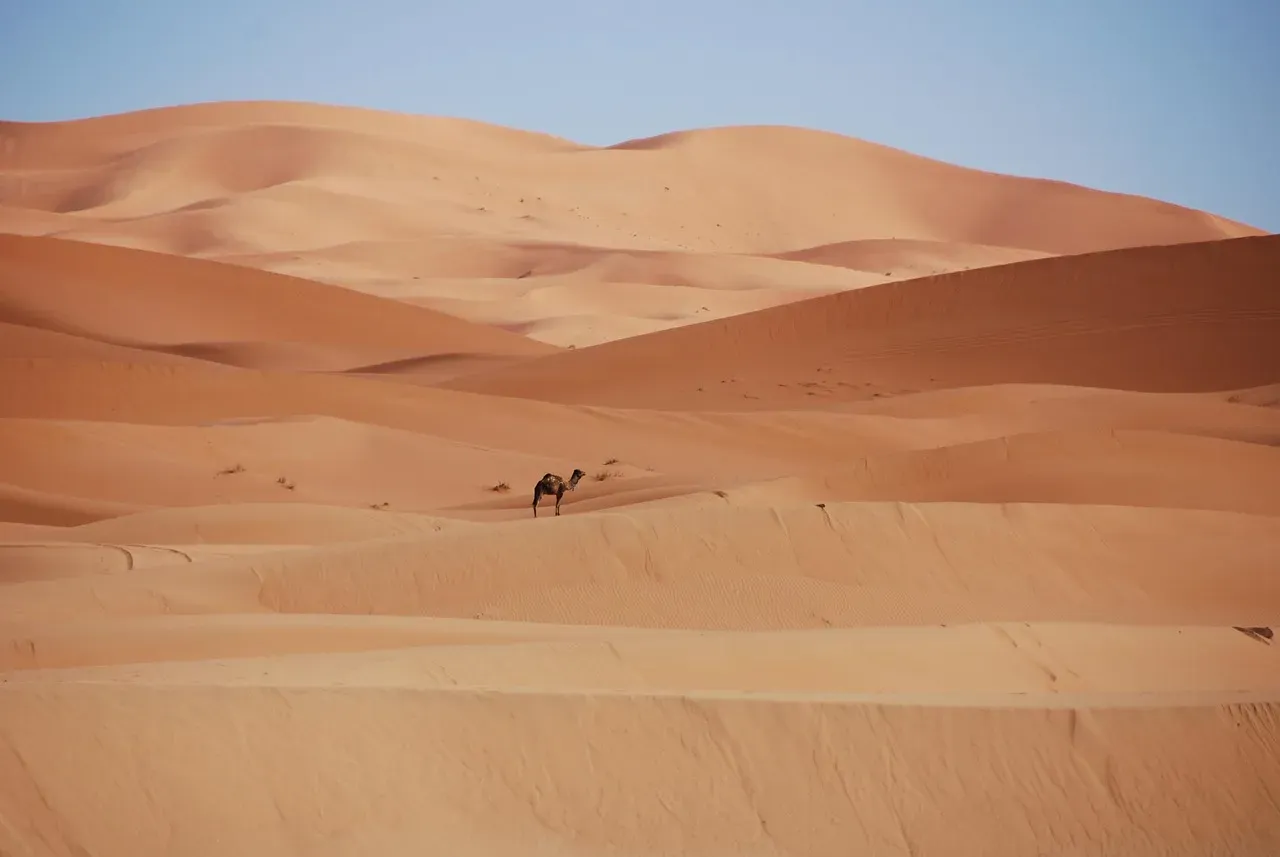
Deserts are famously dry, but they’re not completely waterless. A little bit of moisture between sand grains can create tiny bridges that make the sand unexpectedly sticky. After rare rainstorms or fog events, sand may resist movement for days or weeks, changing how dunes respond to wind. This subtle wetness can also help stabilize the lower parts of dunes while the upper slopes continue to shift and slide, allowing dunes to grow taller without simply blowing away.
Temperature adds another layer of complexity. During scorching days, the upper surface of the sand can heat up far more than the air above it, causing pockets of rising hot air and swirling turbulence. At night, the ground cools rapidly, and the wind’s behavior changes again. These daily cycles can influence which parts of a dune erode and which grow, inch by inch. Over years and centuries, these tiny, almost invisible differences add up to massive sculpted forms that seem too deliberate to be accidental.
Gravity, Avalanches, And The Mysterious “Singing” Of Dunes
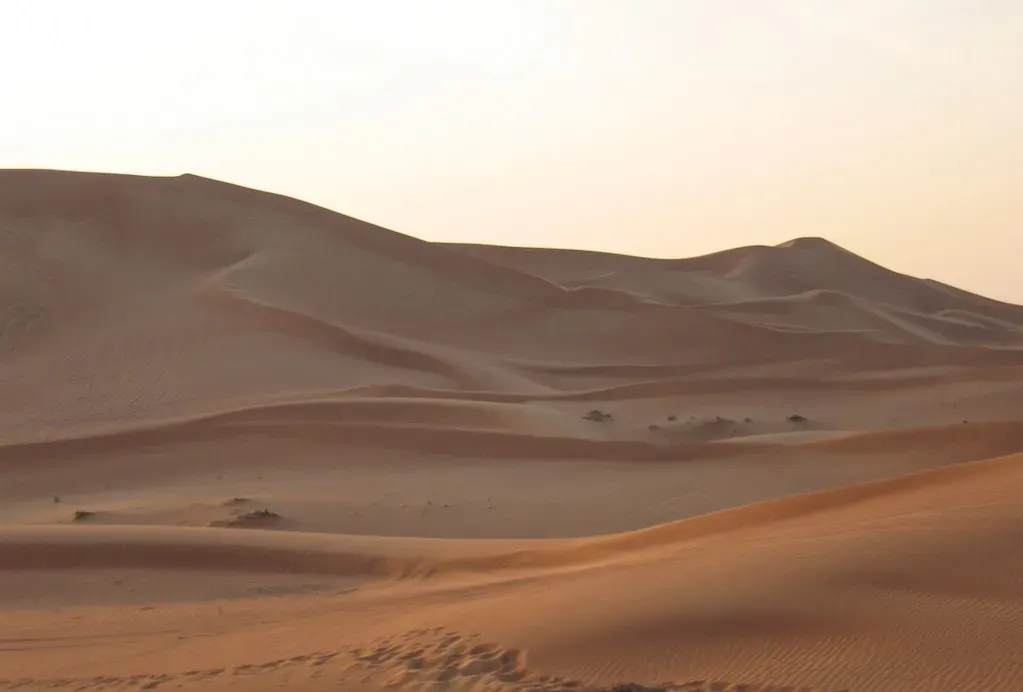
Even though wind does the lifting, gravity does the shaping. Every dune has a gentle windward slope where sand is pushed upward and a steeper slip face where it collapses in small avalanches. Once the slope becomes too steep for the grains to hold, they suddenly slide down in bursts, resetting the angle to a more stable value. This pattern repeats constantly, which is why dunes often keep a surprisingly consistent shape even as they crawl slowly across the desert.
In a few special dune fields around the world, those avalanches do something eerie: they hum, boom, or “sing.” When a mass of sand slides just right, with grains of similar size and dryness, vibrations can build into a low, resonant sound that carries across the desert. Researchers have linked this to layers of sand moving in sync, but the exact conditions that make a dune “sing” reliably are still not fully understood. It’s like the dunes are briefly turning into giant musical instruments, tuned by wind and gravity and played by flowing sand.
Climate Shifts, Ancient Winds, And Fossilized Dune Fields
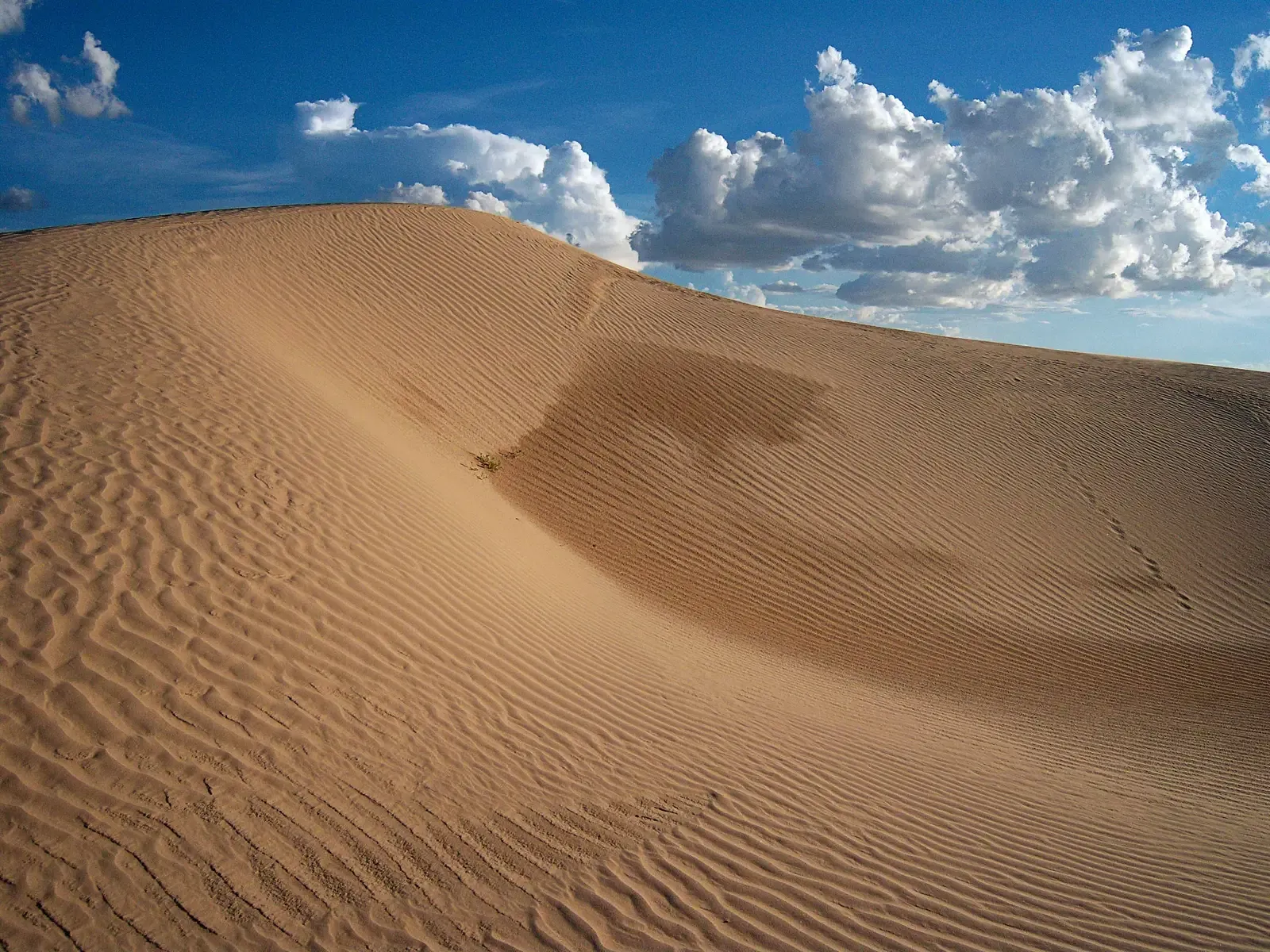
One of the strangest truths about deserts is that many of their dunes owe their existence to climates that no longer exist. Satellite images and field surveys have revealed ancient dune fields now locked in place by vegetation or moisture, sometimes buried or cemented into stone. These “fossil dunes” tell stories of past wind regimes, when storms were stronger or came from different directions. Massive dunes we see today might be actively growing on top of older structures laid down during ice ages or wetter periods.
As climate shifts, so do the rules of dune building. Changing storm tracks, altered wind strengths, and new patterns of drought or rainfall can wake up previously stable sands or shut down active dune systems. In some regions, dunes are creeping toward farmlands and growing towns, while in others they’re becoming fixed by new plant growth. The unknowns here are not magical forces but the future itself: we don’t know exactly how global warming will rearrange the balance between sand, wind, and moisture in the coming decades.
Other Worlds, Other Dunes: What Mars And Titan Are Teaching Us
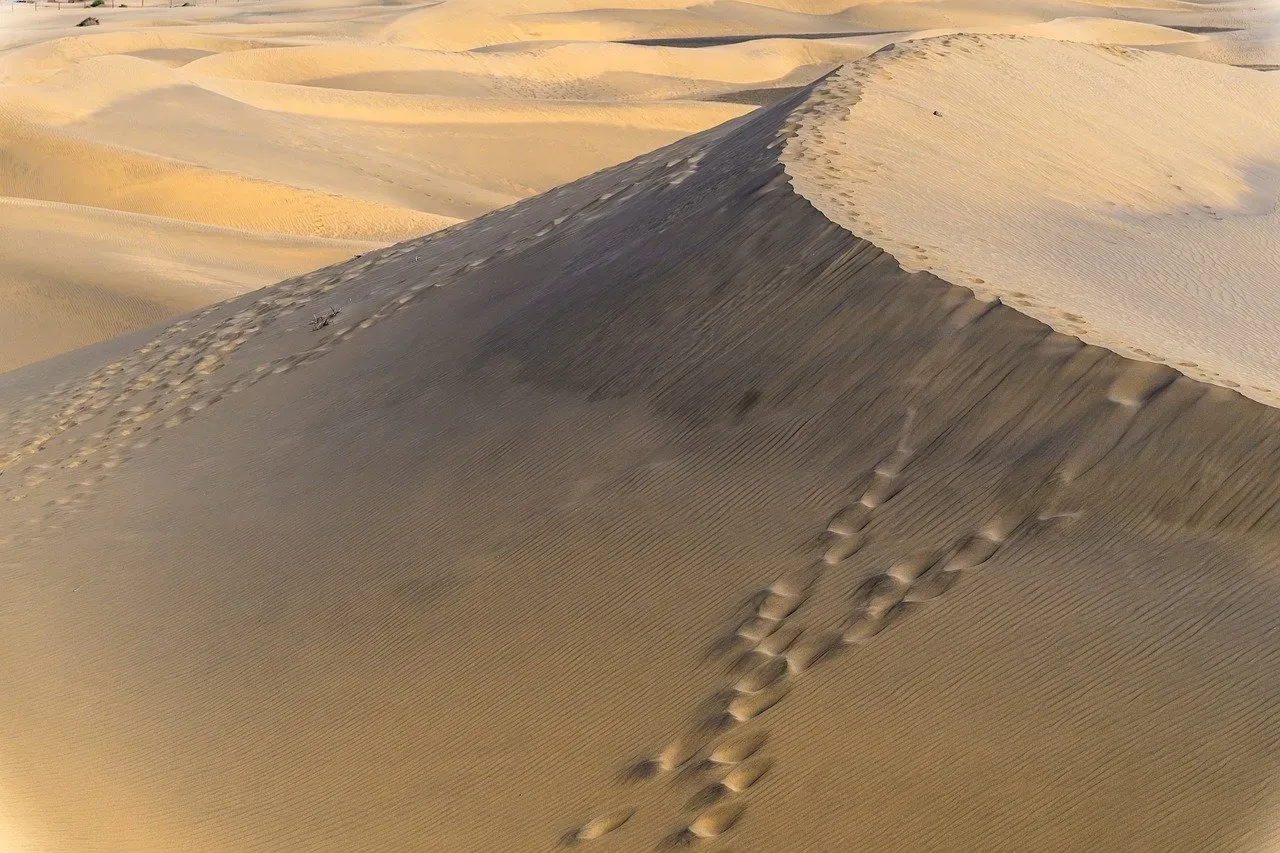
If anything makes dunes feel even more mysterious, it’s discovering them on worlds far beyond Earth. Mars has enormous dunes shaped by a thin, alien atmosphere and lower gravity, yet some of their patterns look remarkably familiar. Saturn’s moon Titan, with its thick, hazy atmosphere and hydrocarbon “sand,” is draped in vast fields of long, parallel dunes that echo those in Earth’s largest deserts. These distant landscapes suggest that dune formation follows some deep, universal rules, even when the ingredients are wildly different.
Studying dunes on Mars and Titan has forced scientists to question assumptions they once took for granted. If similar shapes can form under such different conditions, then some aspects of dune behavior must be more fundamental than we thought – rooted in fluid dynamics, granular physics, and gravity in ways we’re still trying to piece together. In a strange way, every new image from a distant moon loops back to Earth, helping us re-read our own desert dunes not just as pretty patterns, but as natural experiments in how matter organizes itself under the quiet pressure of wind and time.
Reading The Desert’s Moving Script
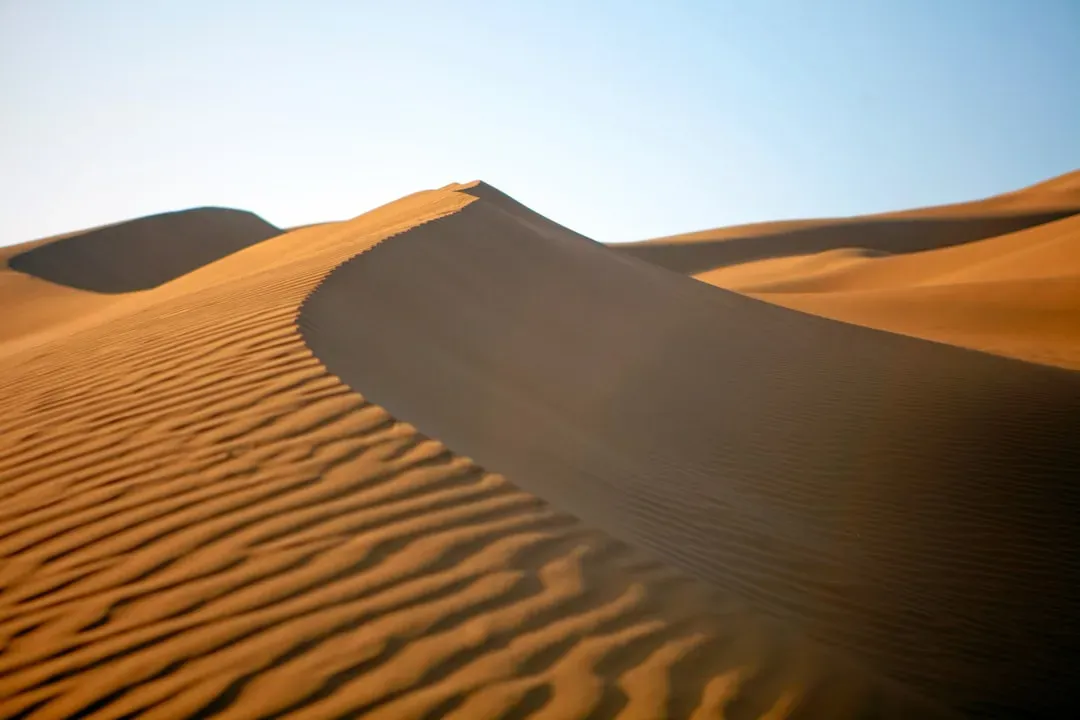
Massive sand dunes are not accidents or simple piles of dust; they’re the visible trace of a delicate tug-of-war between wind, gravity, grain properties, moisture, underground structures, and shifting climate. What looks like chaos from a distance is, up close, a highly organized system where small, almost invisible forces add up to towering, migrating forms. The more closely researchers study them – from hiking up their slip faces to modeling grain motion on supercomputers – the more layers of order and mystery they uncover.
Those unknown forces driving dune formation are not some singular hidden power, but the combined effect of countless tiny interactions that we still can’t fully predict or control. A change in wind gusts, a buried ridge, a bit of moisture, or even a different planet’s atmosphere can tip the balance and rewrite the entire landscape. In the end, standing at the base of a giant dune feels a bit like staring at a moving script written by physics and time. When you look at a desert now, do you still see emptiness – or an enormous, shifting puzzle waiting to be read?