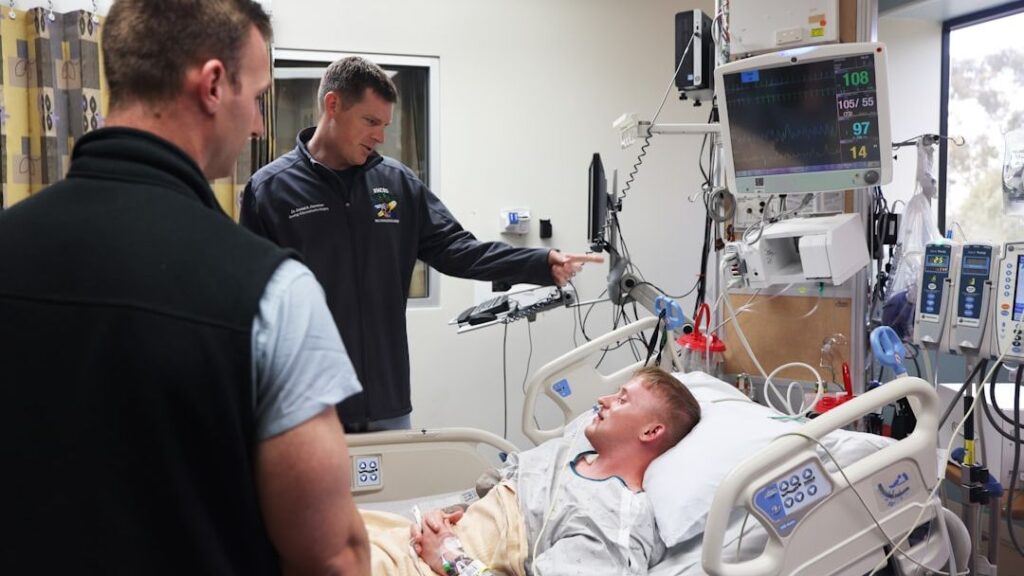

There is a strange, almost taboo question many of us carry around but rarely say out loud: what actually happens inside your brain right before you die? Not the poetic version, not the movie slow‑motion montage, but the real, messy, electrical‑storm biology of it. In the last few years, neuroscientists have finally been able to peek into those final seconds and minutes with more precision than ever before, and what they are finding is both unsettling and unexpectedly beautiful.
We are still far from having a complete, frame‑by‑frame map of the dying brain, and anyone who claims otherwise is overstating the science. But we do have enough data now – from cardiac arrest patients, from animals, and from rare EEG recordings at the bedside – to say this: death is not an instant lights‑out. Your brain fights for a surprising amount of time, it does a few last remarkable things, and some of the classic “near‑death” stories have more biological footing than many skeptics once admitted.
The First Seconds: When Your Brain Realizes the Body Is in Trouble
Right before death, your brain’s first job is not to think deep thoughts – it is pure survival mode. When blood pressure suddenly crashes, the brainstem and autonomic centers flare up, sending frantic signals to the heart, lungs, and blood vessels to correct the crisis. You can picture it like air‑traffic control during a storm, flooding the system with emergency instructions to keep the plane in the sky a little longer. This internal alarm response can unroll over seconds, not hours, which is why people sometimes remain surprisingly lucid right before a catastrophic event.
As oxygen levels drop, higher brain regions – those responsible for conscious thought, memory, and self‑awareness – start to sputter. But they do not switch off cleanly; at first, they become unstable. Electrical activity may spike and fragment, like a city grid flickering under a power surge before finally going dark. Subjectively, that can mean confusion, tunnel vision, or dissociation, which matches what many dying or near‑dying patients describe: the sense that reality is narrowing, and time is losing its usual smooth flow.
The Final Energy Surge: Why the Dying Brain Can Look Strangely “Awake”
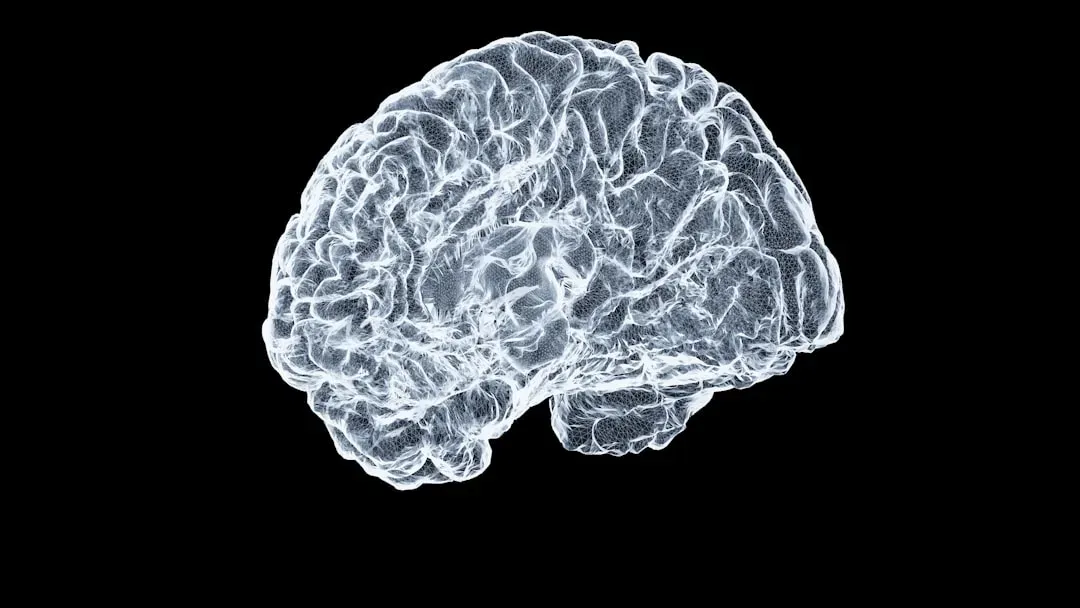
One of the most surprising findings of modern neuroscience is that the brain can produce a brief burst of organized activity just before or shortly after the heart stops. Researchers have recorded waves in frequency bands usually linked to conscious perception, attention, and memory in both animals and in a handful of human cases. On a graph, this looks less like a flatline and more like a last flare of synchronized firing. It is deeply counterintuitive: at the threshold of death, parts of the brain may look momentarily more coordinated, not less.
What does that actually mean from the inside? We honestly do not know for sure, and anyone who pretends to know is guessing. A cautious but compelling interpretation is that as inhibition fails – those systems that normally keep neural activity balanced and quiet – large networks may briefly light up together. Imagine the way a stadium goes dark row by row after a game, but for a second the lights all blaze brighter before someone kills the main switch. If that last coordinated burst touches sensory, emotional, and memory circuits at once, it could help explain why some people report rich, intense experiences during cardiac arrest, even when they appear unconscious to observers.
Oxygen Starvation, Disorganized Firing, and the Edge of Consciousness
The brain is terrifyingly dependent on a constant supply of oxygen and glucose. Within seconds of the heart stopping, energy production plummets, and neurons start to fail at maintaining their delicate electrical gradients. Instead of crisp, timed firing, you get waves of depolarization – large groups of cells essentially losing their charge in a chaotic sweep. Neuroscientists sometimes call this a spreading depolarization or a cortical “tsunami,” and once it rolls through, normal signaling cannot easily come back without restored blood flow.
From a conscious perspective, that tsunami is probably the end of anything like ordinary experience. Before it hits, however, the boundary between organized and disorganized activity is blurry. Some networks may still be capable of producing sensations, thoughts, or even complex scenes, while others are already failing. It is a bit like trying to have a conversation in a room where the lights are flickering, the floor is vibrating, and the fire alarm is wailing – you might catch fragments of what is said, but the structure is breaking down fast. This transition zone is likely where many near‑death phenomena live: vivid but unstable, intense yet quickly slipping beyond recall.
Near‑Death Experiences: What the Brain Can (and Cannot) Explain So Far

Stories of moving through a tunnel, seeing a bright light, feeling overwhelming peace, or watching one’s body from above are common enough that they have become cultural archetypes. For a long time, the scientific reaction to these reports was dismissive: hallucination, wishful thinking, or simple confabulation after the fact. More recent work has nudged that attitude toward a more nuanced view. We now know that features like tunnel vision can arise from retinal and visual‑cortex changes when blood flow drops, and that feelings of leaving the body can be triggered by stimulating specific brain regions involved in spatial awareness and body ownership.
That does not mean every detail of every story is neatly mapped to a brain mechanism – far from it. There are still puzzling cases where people report accurate observations from times when their EEG looked flat or when they were clinically unresponsive. From a strict scientific standpoint, these are intriguing anomalies rather than proof of anything supernatural, but they do warn us against smug certainty. My own opinion is that neuroscience can probably explain a large portion of near‑death experiences in natural terms, yet it also has to make peace with the fact that people’s interpretations of those experiences will always stretch beyond synapses and ions.
Memory, Life “Reviews,” and Why Time Feels So Weird Near Death
The classic life review – those rapid flashes of significant moments from childhood to the present – is another near‑death motif that sounds cinematic but is reported often enough to take seriously. Memory networks are highly interconnected, and they are wired to prioritize emotional salience. Under conditions of extreme stress, surging neurotransmitters like adrenaline and norepinephrine can push these systems into overdrive. In theory, a sudden, global disturbance in the brain could dislodge clusters of autobiographical memories all at once, producing a sort of compressed highlight reel rather than a calm, chronological replay.
On top of that, our sense of time is shockingly malleable. High arousal states – like accidents, falls, or violent events – are frequently described as happening in slow motion, even though outside observers see them unfold in real time. The dying brain, flooded with stress chemistry and struggling to keep circuits coherent, may distort time even more drastically. A few seconds of neural activity could feel stretched into minutes of subjective experience. So when someone says they “relived their entire life” in the instant before impact, it might not be poetic exaggeration. It might be a faithful report of how elastic time becomes when the system is breaking apart.
Consciousness After the Heart Stops: How Long Is “Someone” Still There?
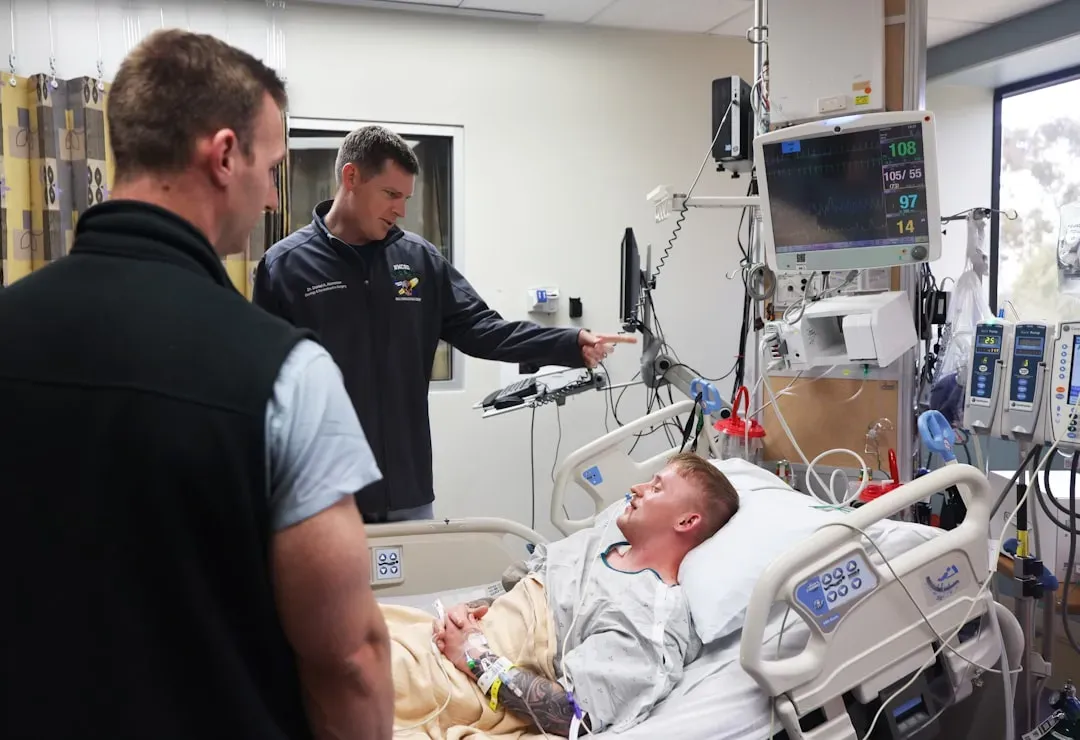
One of the most unsettling questions in this area is brutally simple: after the heart stops, how long – if at all – does conscious awareness continue? Modern resuscitation research suggests that organized brain activity does not vanish the instant circulation ceases. In some documented cases, measurable patterns associated with perception and attention have persisted for tens of seconds, and basic electrical activity can linger even longer if cooling or other factors slow the brain’s metabolic collapse. That means the line between “alive and aware” and “dead and gone” is more of a fading gradient than a clean cliff edge.
Ethically and emotionally, that gradient matters. It challenges simplistic ideas about the moment of death, especially in settings like the ICU or organ donation, and it forces us to confront the possibility that some conscious experience could occur on the far side of what doctors call “clinical death.” My own take is that we should treat those final seconds and minutes with serious respect, assuming there may still be a conscious subject present even when monitors look grim. Comfort measures, gentle touch, and spoken reassurances may seem symbolic, but if there is even a small window where they can be felt, they become more than ritual – they become part of someone’s last real world.
What This Science Means for How We Think About Dying

Once you learn that the brain does not simply unplug but mounts a wild, complicated fight for a while, it becomes hard to see death as a sharp line. Instead, it looks more like a closing act with a chaotic light show – bursts of order, waves of collapse, fragments of experience stitched together by a mind that is losing its ability to track time and self. That image can be frightening, but it can also be strangely reassuring. If the brain is wired to protect us from pain and to generate meaning even under catastrophic stress, then it is plausible that many people’s final moments are less terrifying from the inside than we, watching from the outside, might assume.
Personally, the more I read this research, the less I believe in either of the two extreme stories: the cold, instant blackout or the overly polished spiritual slideshow. Reality seems messier and, in a way, more human. There is a brain doing its best with failing resources, leaning on all the shortcuts it has learned – tunnel vision, time distortion, memory floods, dissociation – to protect and comfort a mind standing at the edge. We may never fully know what your last moment feels like, but we know enough to say this: whatever else is going on, your brain is not indifferent. It shows up for you, right to the end. And knowing that, how does it change the way you want to live the moments you still have?