We live in a remarkable age of brain science. Scanners can map our neural activity down to millimeters. Researchers can trace neurotransmitter pathways with stunning precision. Scientists are even engineering proteins to watch neurons communicate in real time, like eavesdropping on whispered conversations between billions of cells. It’s extraordinary, honestly. These technologies have peeled back layers of mystery that previous generations could only dream about investigating.
Yet here’s the thing. Despite these advances, there’s still something that slips through the fingers of even our most sophisticated instruments. Something essential to what it means to be you. As we zoom in on brain circuits and decode patterns of electrical activity, we’re bumping up against a profound boundary, one that might define the limits of what science itself can capture.
The Astonishing Reach of Modern Brain Measurement
Scientists recently engineered a molecular glutamate indicator called iGluSnFR4, sensitive enough to detect the faintest incoming signals between neurons. This kind of breakthrough lets researchers essentially watch the brain’s internal dialogue as it happens. Think about that for a moment.
We’re at a unique moment in neuroscience history where technological innovation has created possibilities for discoveries that could revolutionize our understanding of the brain. EEG, fMRI, fNIRS, and MEG are widely used non-invasive techniques for recording brain activity, with EEG offering high temporal resolution, low cost, and portability. These tools have cracked open doors that were sealed shut just decades ago. Pretty amazing progress for a field that wasn’t even legitimate a century ago.
Mapping the Machinery Behind Memory and Movement
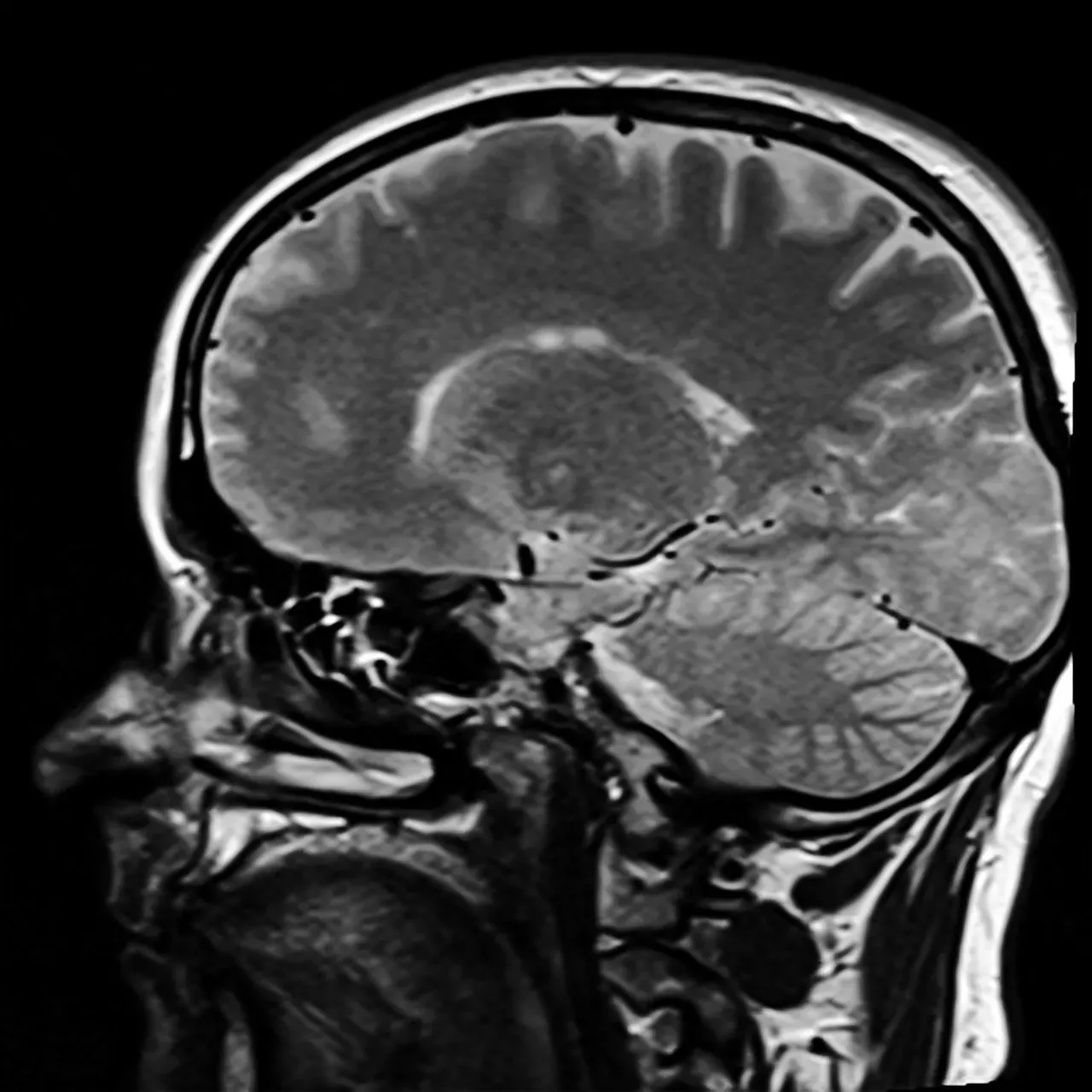
Functional magnetic resonance imaging has transformed how we study the living brain. BOLD fMRI depicts changes in deoxyhemoglobin concentration consequent to neural metabolism, and since its inception in 1990, has been widely employed in thousands of studies of cognition and clinical applications. Researchers can now watch specific brain regions light up when you remember your childhood home or move your hand to pick up a coffee cup.
Scans taken while subjects engage in tasks enable researchers to link neural structure activity with particular functions, experiences, or behaviors. We can identify the neural patterns underlying fear, hunger, even complex social emotions. It’s not magic, though sometimes it feels close. Still, something critical gets lost in the translation from brain scan to lived experience.
The Troubling Limits Hidden in the Data
Let’s be real about what these measurements actually capture. While task-fMRI provides important insights into general brain functioning, it cannot yet predict how individuals respond to specific situations or their future mental health. That’s a significant limitation for a tool we’ve placed enormous faith in.
Investigators discovered that people’s arousal levels dwindling during fMRI scans, such as becoming more relaxed and sleepy, causes changes in breathing and heart rates that alter blood oxygen levels, which are then falsely detected as neuronal activity. Even our most sophisticated brain imaging carries noise we’re only beginning to understand. The measurement itself interferes with what we’re trying to measure. It’s frustrating, in a way.
The Strange Case of Consciousness Without Content
The conscious experience in our brain cannot be found or reduced to neural activity; when we feel happiness, the brain creates a distinctive pattern that correlates with the feeling but is not the actual feeling itself. A scientist observing your brain would see patterns and activity. They could identify correlations. What they couldn’t see is the feeling itself, the raw sensation of what it’s like to be you in that moment.
In the unique case of consciousness, the thing to be explained cannot be observed; we know consciousness exists not through experiments but through our immediate awareness of our feelings and experiences. This creates an almost paradoxical situation for science. How do you study something that only exists from the inside? It’s a puzzle that keeps philosophers and neuroscientists up at night.
Qualia: The Unreachable Heart of Experience

Philosophers call them qualia. Qualia are defined as instances of subjective conscious experience, such as the perceived sensation of pain, the taste of wine, and the redness of an evening sky. These are the qualitative textures of existence, the actual felt quality of seeing red versus seeing blue, tasting chocolate versus tasting lemon.
In the study of consciousness, qualia remain impenetrable because the objective perspective used for scientific investigations misses their subjective nature. No brain scanner will ever capture what chocolate actually tastes like to you. Scientists can measure which taste receptors fire, which neural pathways activate, which regions of your cortex respond. None of that is the taste itself. The experience sits behind a one-way mirror, visible only to you.
The Hard Problem That Won’t Go Away
This project allows that there are limits to neural explanations of consciousness, precisely because of the explanatory gap. Neuroscientists and philosophers call this the hard problem. It’s brutally simple to state but seemingly impossible to solve. How does physical stuff, neurons and chemicals and electrical impulses, create inner experience?
The broader goal is to clarify the limitations of measured neural biological and electrical properties in laboratory settings to explain consciousness; possible outcomes of experiments challenge the conventional wisdom that causally links action potentials and consciousness. We can describe correlations all day long. What we can’t explain is the leap from correlation to sensation, from brain state to felt experience. That gap remains stubbornly unfilled.
Why the Boundary Matters More Than Ever
Neuroscientists characterize the field in 2025 as rapidly transforming thanks to better tools and bigger datasets, with artificial intelligence, improved modeling, and novel ways to manipulate and record from larger cell populations teeing up a new era of advances. We’re poised for breakthroughs. The machinery is getting more sophisticated by the month.
While we may one day develop tools to measure neural correlates of consciousness, the subjective experience of being conscious, the qualia, may remain inherently beyond our reach. This isn’t pessimism. It’s recognizing a fundamental boundary. Some aspects of reality might exist in a space that objective measurement simply cannot access. The inner texture of experience, the sensation of being someone rather than something, may forever elude the tools of science, no matter how advanced they become.
Understanding this limitation doesn’t diminish neuroscience’s incredible achievements. It does, however, remind us that the complete picture of human consciousness might require more than brain scans and electrode readings. It might require acknowledging that some truths live entirely on the inside, knowable only to the one who experiences them. That’s both humbling and profound. What do you think about where the line should be drawn between what we can measure and what we must simply experience? Tell us in the comments.