
Light races across the universe at a speed so extreme it almost feels like a typo: about three hundred thousand kilometers every second. Yet for all its fame, that number often sits in our minds as a trivia fact, not a mystery begging to be solved. Why is light that fast, and not twice as fast, or half? What sets this cosmic speed limit, and why does everything from your Wi‑Fi to the glow of distant galaxies have to obey it? Behind that simple question lies a story about the fabric of reality itself, and how physicists slowly realized that light is not just fast – it is fundamental.
The Hidden Clues in Everyday Light
Flip on a light switch and the room appears bright essentially instantly, so fast that your brain cannot resolve any delay at all. That mundane moment hides a staggering drama: in the time it takes you to blink, light could circle Earth more than seven times. Early scientists had no way to watch this directly, but they could see clues in shadows, eclipses, and the way sunsets linger after the Sun slips below the horizon. Those glowing clouds in the evening sky are not where the Sun is, but where it was moments ago, when those photons first left it.
Even simple technologies around you are whispering the same story. The delay in a video call with a friend on another continent is a reminder that information is not infinitely fast; it has to ride on electromagnetic signals that move at or below the speed of light. When GPS on your phone finds your location, it does so by timing how long light-speed radio pulses take to arrive from satellites orbiting above you. The everyday smoothness of these systems can feel almost magical, but underneath is a single hard limit that nothing seems able to beat.
From Ancient Curiosity to Measuring the Cosmic Speed Limit
For much of history, thinkers argued about whether light had any speed at all or simply appeared everywhere at once. Ancient Greek philosophers debated the point, while later scholars tried to catch light in the act using lanterns and mirrors over hillsides. Those first attempts were heroic but doomed, because the distances were too small and human reactions too slow to notice a difference. The true breakthrough came in the seventeenth century, when careful observations of Jupiter’s moons revealed a tiny timing delay that changed with Earth’s distance – light, it turned out, took time to arrive across the Solar System.
Over the following centuries, scientists swapped planets for more precise tools: spinning mirrors, rotating toothed wheels, and eventually lasers and ultra-stable clocks. By the late twentieth century, the speed of light in vacuum was pinned down so precisely that physicists flipped the script and defined the meter itself based on that constant speed. Instead of asking how fast light moves across a known distance, they fixed the speed and let it define distance. That decision was a profound statement: the speed of light is not just another number, but a cornerstone of how we measure the universe.
Why Light Is Fast: The Fabric of Space, Time, and Fields
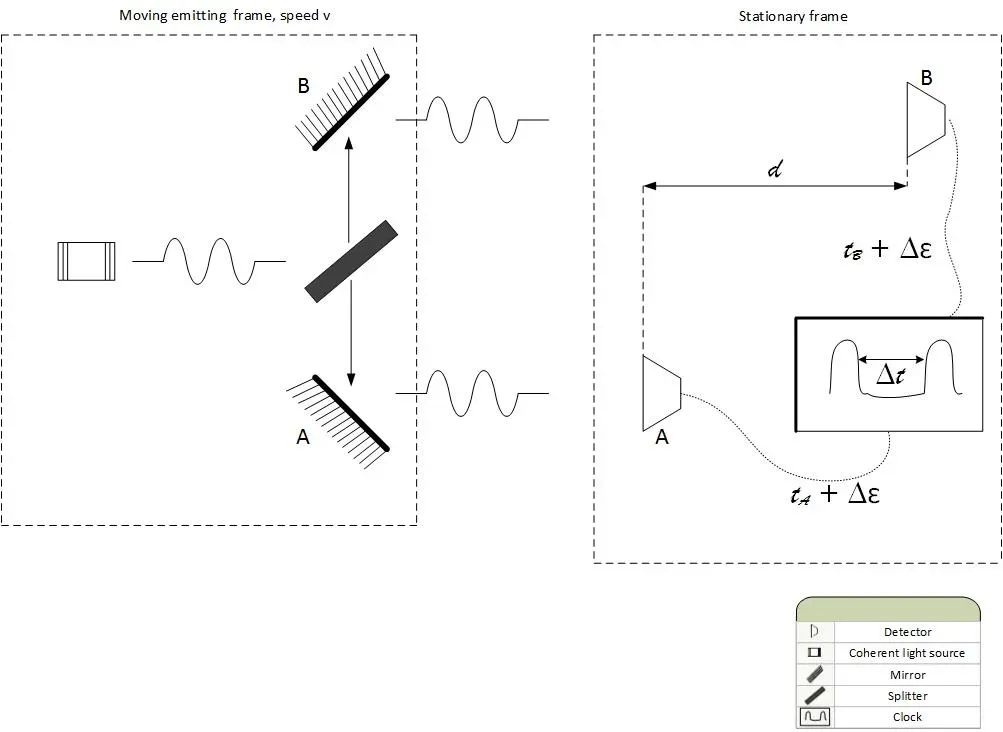
The first surprising twist is that light’s speed is not really about light as a substance racing through space; it is about the properties of space itself. In the nineteenth century, James Clerk Maxwell combined electricity and magnetism into a single theory and found that oscillating electric and magnetic fields should propagate as waves. When he calculated how fast those waves should move, the result matched the known speed of light. That meant light is an electromagnetic wave, and its speed is determined by two constants: how strongly electric fields interact and how strongly magnetic fields interact in vacuum.
Mathematically, the speed of light emerges from the ratio of those constants, leaving no free dial to turn up or down. Then came Einstein, who went further and argued that this speed is not just the speed of light but the maximum speed at which any cause can influence any effect. Space and time, he showed, are knitted together into spacetime in such a way that this speed appears as a built-in limit, shaping everything from moving clocks to the paths of planets. In that picture, asking why light is so fast is like asking why the number of degrees in a circle is what it is; it is part of the geometry of reality, not a speed chosen by light itself.
When Light Slows Down – and What That Really Means
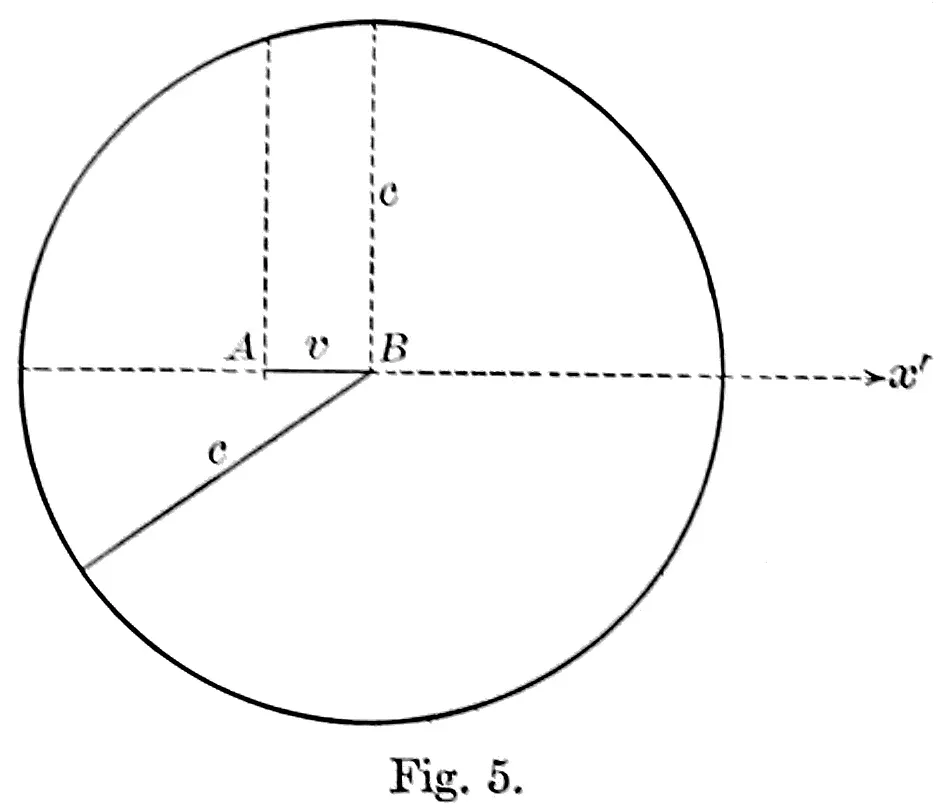
If light’s speed in vacuum is such a sacred constant, why do we talk about light slowing down in glass, water, or even ultra-cold atomic clouds? The key is that the fundamental limit still holds, but the path becomes more complicated. In a medium, photons interact with atoms and electrons, constantly being absorbed and re-emitted or nudged out of their way. That detour effect makes the overall progress appear slower, even though between interactions the underlying electromagnetic signal still respects the same universal speed.
This difference between the fundamental speed and the effective speed lets scientists build lenses, fibers, and even exotic materials that bend and delay light in remarkable ways. Researchers have created setups where the group speed of a light pulse is slowed to walking pace, or in some tricky cases appears to move faster than the vacuum speed without actually sending information faster. It sounds like a loophole, but it is not; the detailed physics keeps the core rule intact. Nothing that carries usable information or a cause can outrun that vacuum limit, and every clever experiment so far has ended up confirming this rather than breaking it.
The Hidden Consequences: From GPS to Black Holes
Once you accept that there is a hard upper limit on how fast information can travel, the world looks different. GPS satellites, whizzing above Earth, have to account for both their motion and the warping of time in Earth’s gravitational field, all described by Einstein’s relativity, which is anchored to the speed of light. Without those corrections, your phone’s location would drift by many meters, turning navigation into guesswork instead of near pinpoint accuracy. The same framework lets scientists predict how particles in accelerators will behave as they get pushed ever closer to that speed limit but never quite touch it.
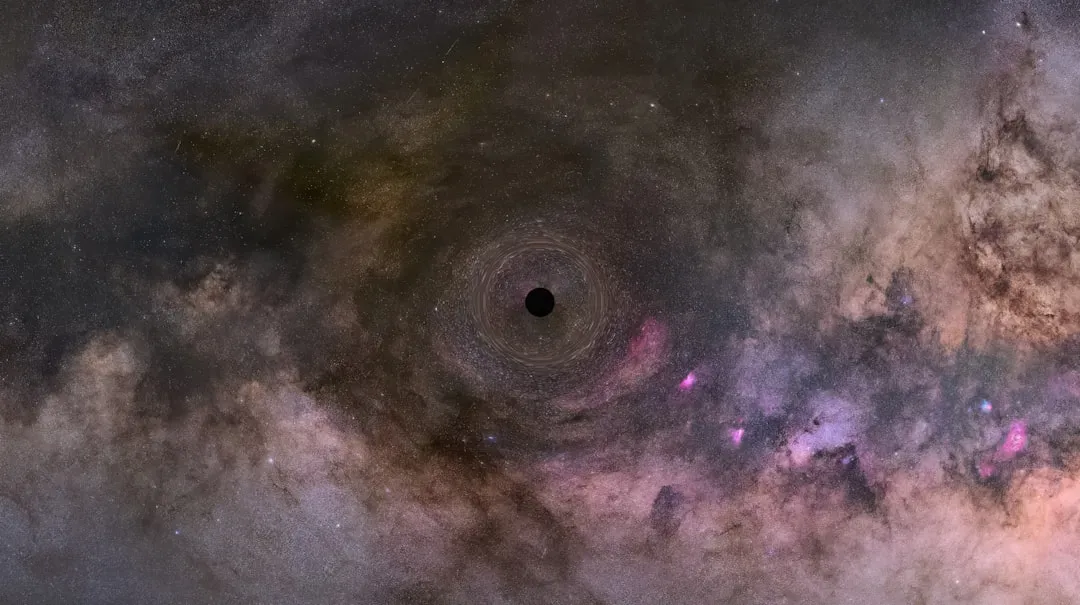
On the grandest scales, the speed of light shapes our cosmic horizon – the radius of the observable universe. We can only see as far as light and other signals have had time to reach us since the Big Bang, leaving the rest unobservable for now. Around black holes, that limit and the warping of spacetime combine to create event horizons, regions from which no light, and hence no information, can return. In my own first encounter with a black hole simulation in a university lab, it felt unsettling to realize that this was not just a neat effect, but a literal boundary on what anyone, anywhere, could ever know.
Why It Matters: The Speed of Light as Nature’s Ultimate Rulebook
The speed of light matters not just as a big number but as the backbone of how cause and effect work in the universe. If influences could travel arbitrarily fast, you could imagine effects appearing before their causes, timelines tying themselves in knots, and physics becoming deeply inconsistent. The fixed speed keeps events ordered within each observer’s experience, even if different observers disagree about the details of time and distance. It is a quiet guardian of consistency in a universe that otherwise allows for some very strange behavior.
Compared with older ideas of instantaneous action at a distance, the modern picture is stricter and in some ways harsher. Gravity does not act instantly; changes in a star’s mass, for example, send ripples in spacetime – gravitational waves – that travel at the same finite limit as light. Quantum physics adds its own weirdness, with entangled particles showing correlations that seem instantaneous, yet still cannot be used to send actual messages faster than the limit. The more we push at the edges of theory and experiment, the clearer it becomes that this cosmic speed barrier is not an inconvenience to be engineered around, but a fundamental feature that keeps the whole system from unraveling.
The Frontier Experiments: Chasing the Limit
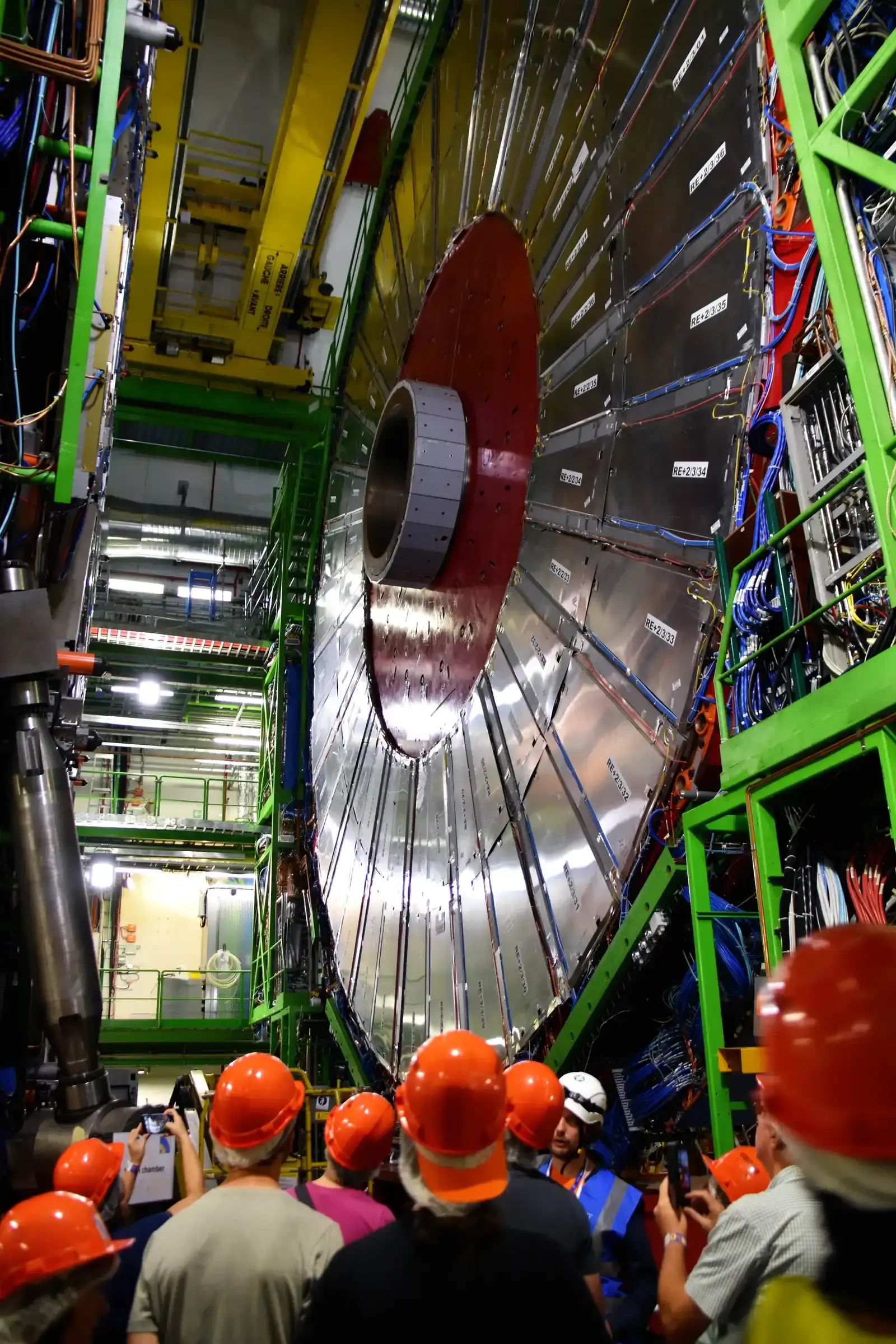
Because this speed is so central, physicists keep testing it from every angle, looking for the slightest crack in the rule. High-energy particle colliders push protons to speeds that are unimaginably close to the limit, forcing their energies to skyrocket while their speeds barely increase. Observatories track the arrival times of light and neutrinos from distant supernovae, comparing different messengers to see if any outruns the others over cosmic distances. So far, every careful comparison has shown that if any difference exists at all, it is far smaller than current instruments can detect.
Even the detection of gravitational waves from colliding black holes and neutron stars became another test, because those ripples arrived essentially in step with the light emitted by the same cataclysms. That match suggests that spacetime vibrations and photons both share the same maximal speed. Meanwhile, precision measurements keep probing whether the speed of light has always been the same across cosmic history or might vary subtly depending on direction or energy. Each non-result might sound boring, but together they tighten the cage around theories that would allow even a tiny crack in the cosmic speed limit.
The Future Landscape: Technologies at the Edge of Light

Even if we cannot break the speed of light, we can build technologies that live closer and closer to its edge. Fiber-optic cables already carry most of the world’s internet traffic as pulses of light, and engineers obsess over shaving microseconds off travel times between financial centers. Quantum communication experiments aim to use individual photons to create ultra-secure links, where any attempt at eavesdropping leaves detectable traces. As these systems scale up, the distance light can cover in a fraction of a second becomes not an abstraction but a real design constraint.
Looking ahead, ideas like interstellar probes driven by powerful laser sails push the practical use of light into truly ambitious territory. Even reaching a tiny fraction of the speed of light would cut travel times to nearby stars from tens of thousands of years to something closer to a human lifetime, though still painfully long by everyday standards. At the same time, astronomers are building telescopes and detectors to catch the faintest light from the first galaxies, stretched and dimmed by the universe’s expansion but still racing toward us at the same relentless pace. The more we turn light into both a tool and a messenger, the more that single speed will define what is technologically and scientifically possible.
How You Can Engage With the Science of Light

You do not need a particle accelerator or a space telescope to connect with the story of why light is so fast. Simple experiments with a laser pointer and a mirror, done carefully and safely, can hint at just how cleanly light travels in straight lines and how precisely it reflects. Amateur astronomers, armed with modest telescopes or even good binoculars, can watch eclipses, occultations, and planetary motions that echo the classic measurements scientists once used to infer light’s speed. Even paying closer attention to everyday tech – from the lag in a livestream to the timing displayed on your GPS app – can make the hidden role of that speed feel more tangible.
If you want to go further, you can support research and education efforts that explore fundamental physics, whether through public observatories, science museums, or citizen science projects that analyze astronomical data. Many initiatives invite volunteers to help classify galaxies, track variable stars, or sift through signals in search of fleeting cosmic events. Engaging with these efforts turns the speed of light from a distant concept into something you are actively helping to explore. And maybe, the next time you see a sunset or a distant lightning flash, you will find yourself wondering not just at the beauty, but at the relentless, invisible race those photons ran to reach your eyes.
Suhail Ahmed is a passionate digital professional and nature enthusiast with over 8 years of experience in content strategy, SEO, web development, and digital operations. Alongside his freelance journey, Suhail actively contributes to nature and wildlife platforms like Discover Wildlife, where he channels his curiosity for the planet into engaging, educational storytelling.
With a strong background in managing digital ecosystems — from ecommerce stores and WordPress websites to social media and automation — Suhail merges technical precision with creative insight. His content reflects a rare balance: SEO-friendly yet deeply human, data-informed yet emotionally resonant.
Driven by a love for discovery and storytelling, Suhail believes in using digital platforms to amplify causes that matter — especially those protecting Earth’s biodiversity and inspiring sustainable living. Whether he’s managing online projects or crafting wildlife content, his goal remains the same: to inform, inspire, and leave a positive digital footprint.