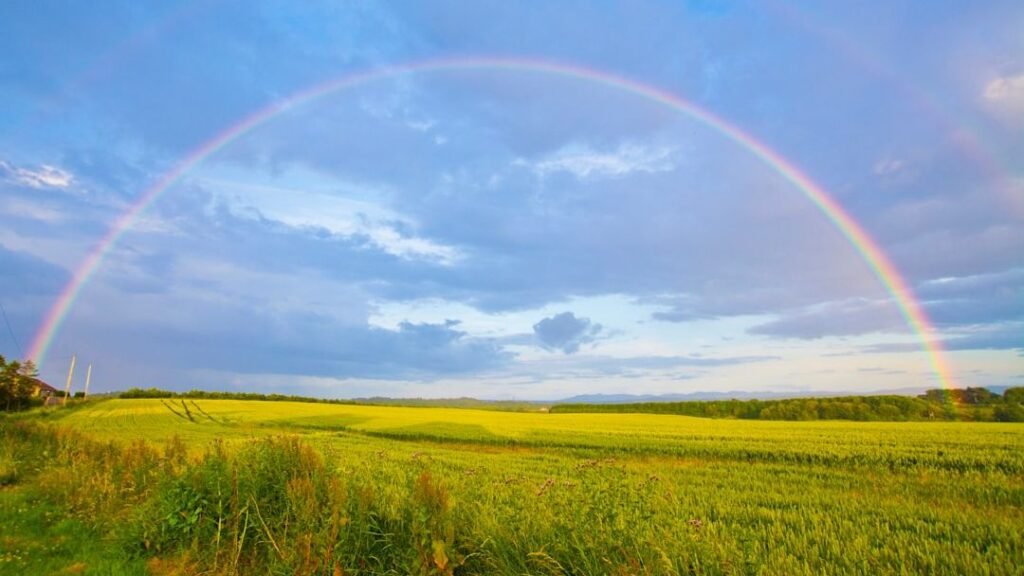

There’s something almost unreal about the moment a rainbow appears. The sky is still heavy with rain, the ground is wet, and suddenly this perfect, delicate arch of color just hangs there, like nature decided to draw with light for a minute. Even if you’ve seen hundreds, that first instant always feels a bit magical and a bit mysterious.
But behind that soft, emotional punch is a surprisingly sharp and precise bit of physics. A rainbow isn’t a vague “reflection in the sky”; it’s the result of countless tiny water droplets bending, reflecting, and splitting sunlight in a very specific way. Once you see what’s really happening inside those raindrops, a rainbow goes from “pretty accident” to “wow, that’s insanely well-organized light.”
The Surprising Secret: A Rainbow Isn’t Really in the Sky
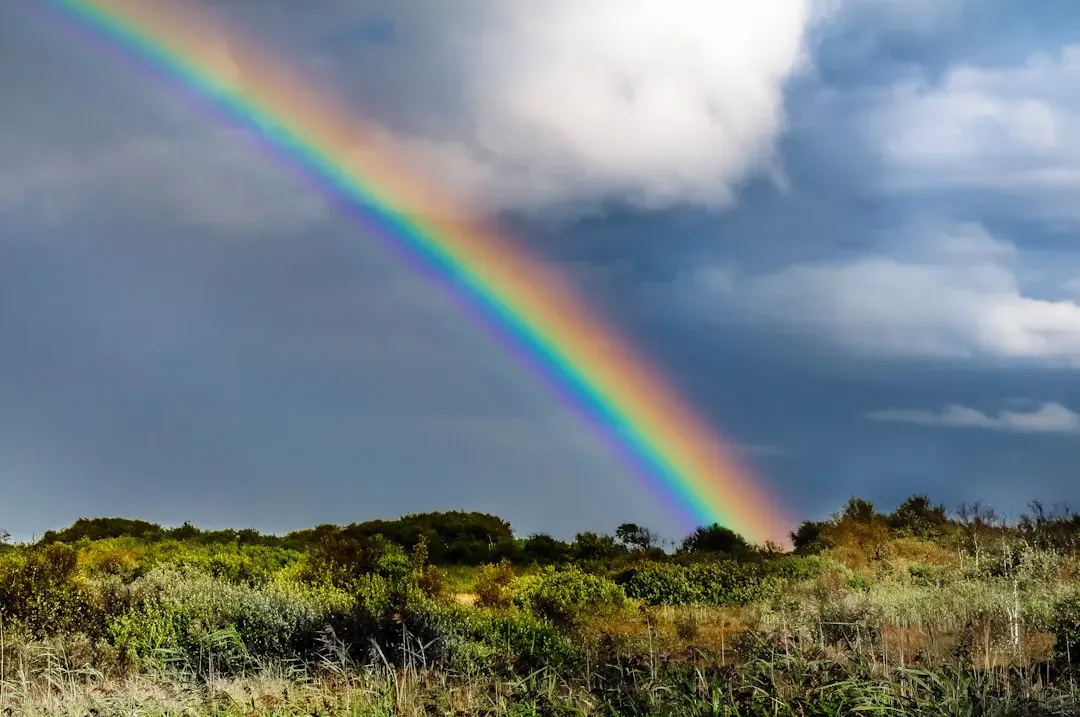
Here’s the first mind-bender: a rainbow isn’t actually a physical thing hanging in a fixed spot in the sky. It’s not like a cloud or a distant mountain you could fly through or touch. A rainbow is more like a visual effect, created by the way light enters your eyes after it bounces around inside raindrops at very particular angles.
Each person sees their own rainbow. The sun is behind you, the rain is in front of you, and only rays of light that leave raindrops at just the right angles end up in your eyes. If someone stands a few steps to your left or right, the specific droplets sending light to their eyes are different ones, even though the rainbow looks “shared.” It’s a bit like watching a movie on a screen: everyone feels like they’re seeing the same thing, but the light hitting each pair of eyes is actually unique.
Sunlight: How White Light Hides All the Colors

For a rainbow to exist, you first need something people often forget: white sunlight that secretly isn’t white at all. Sunlight is actually a blend of many different wavelengths of light, from deep reds to intense violets, all mixed together so smoothly that our eyes interpret it as a single pale color. When this mix is spread out, you see the familiar spectrum: red, orange, yellow, green, blue, indigo, and violet.
In everyday life, you rarely notice this hidden spectrum because most surfaces just scatter or absorb light without carefully separating it. A rainbow appears when something does that separation job really well. Glass prisms can do it; thin films of oil on water can do it; and in the case of a rainbow, billions of tiny water droplets in the sky do it all at once. Each droplet becomes a microscopic prism, pulling the colors apart from what looks, at first glance, like boring white light.
Refraction: Why Light Bends When It Hits a Raindrop
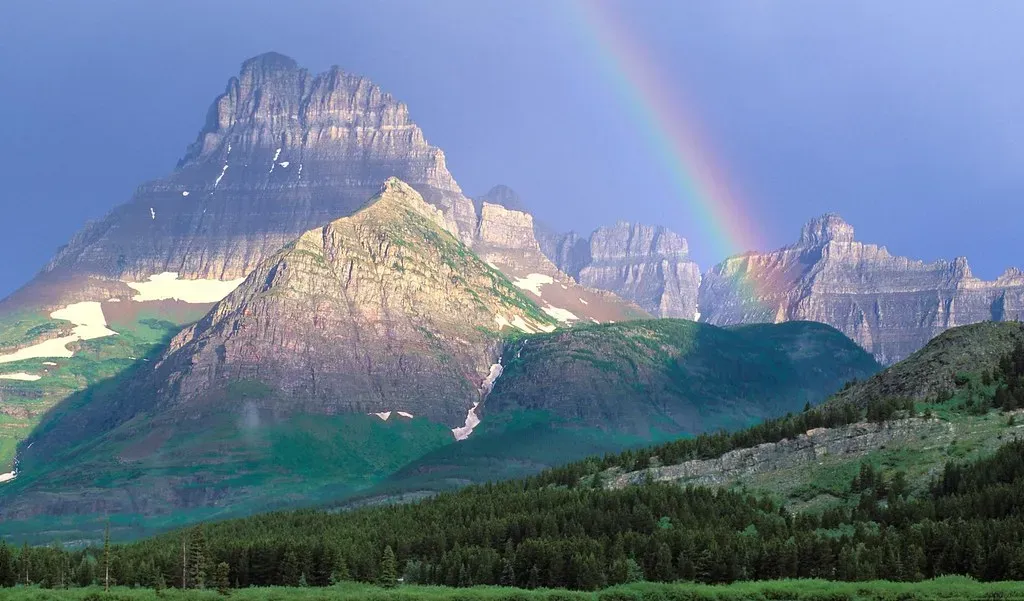
The first big step in creating a rainbow happens when sunlight enters a raindrop. As light passes from air into water, it slows down because water is optically “denser” than air. When a wave of light changes speed at an angle, it bends; this bending is known as refraction. You’ve probably seen this effect when a straw in a glass of water looks strangely broken or bent at the surface.
Crucially, different colors of light bend by slightly different amounts when they pass from one material into another. Red bends the least, violet bends the most, with the other colors in between. That means that the moment sunlight enters a raindrop, its colors start to spread out and fan apart ever so slightly. The raindrop hasn’t created a full rainbow yet, but it has already begun to tease the colors apart from the original white beam.
Reflection Inside the Droplet: A Tiny Mirror Turns the Light Around
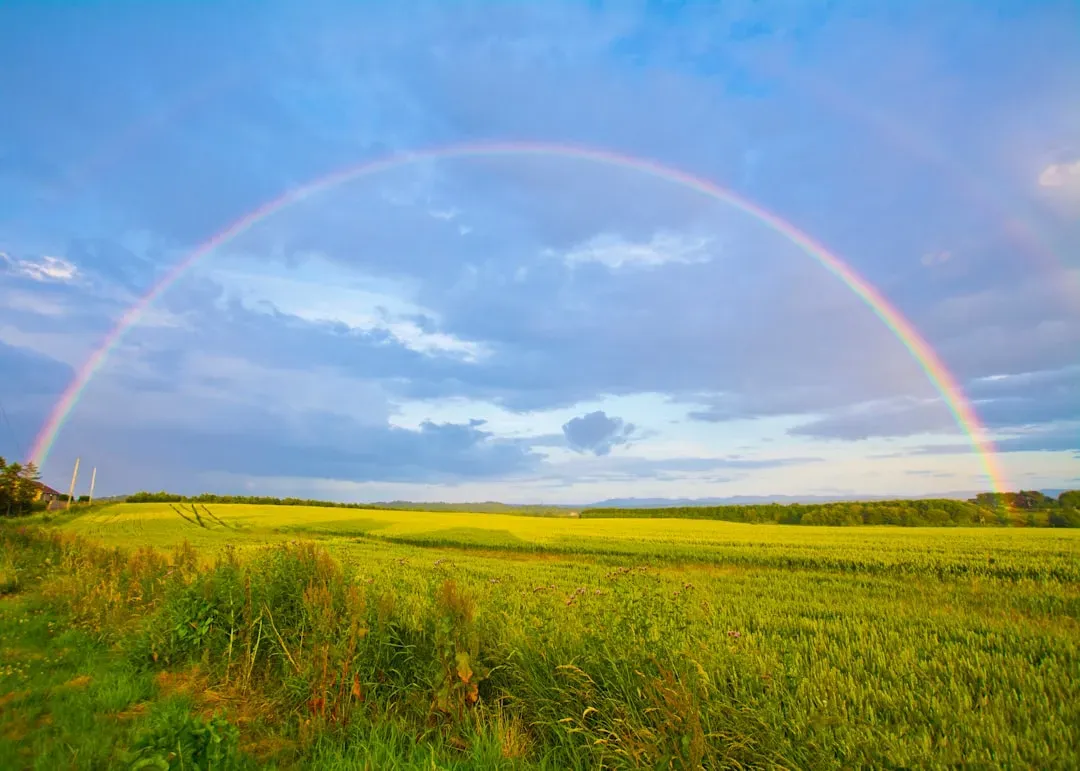
Once the light is inside the raindrop, something else important happens: the light hits the back of the droplet and some of it reflects. The curved back surface of the droplet acts a bit like a mirror, sending the light back toward the direction it came from, but now it is still inside the water. This internal reflection is what gives the rainbow its “turned-around” position, opposite the sun.
During this reflection, the colors that were already slightly spread remain separated. They don’t remix into white; instead, they keep traveling along slightly different paths within the droplet. This is where a rainbow starts to take shape as more than just “light in water.” Without that internal bounce, you might still get a bit of color separation, but you wouldn’t get the strong, bright, organized arc that we recognize as a rainbow.
Exiting the Droplet: The Magic Angles That Make the Arc
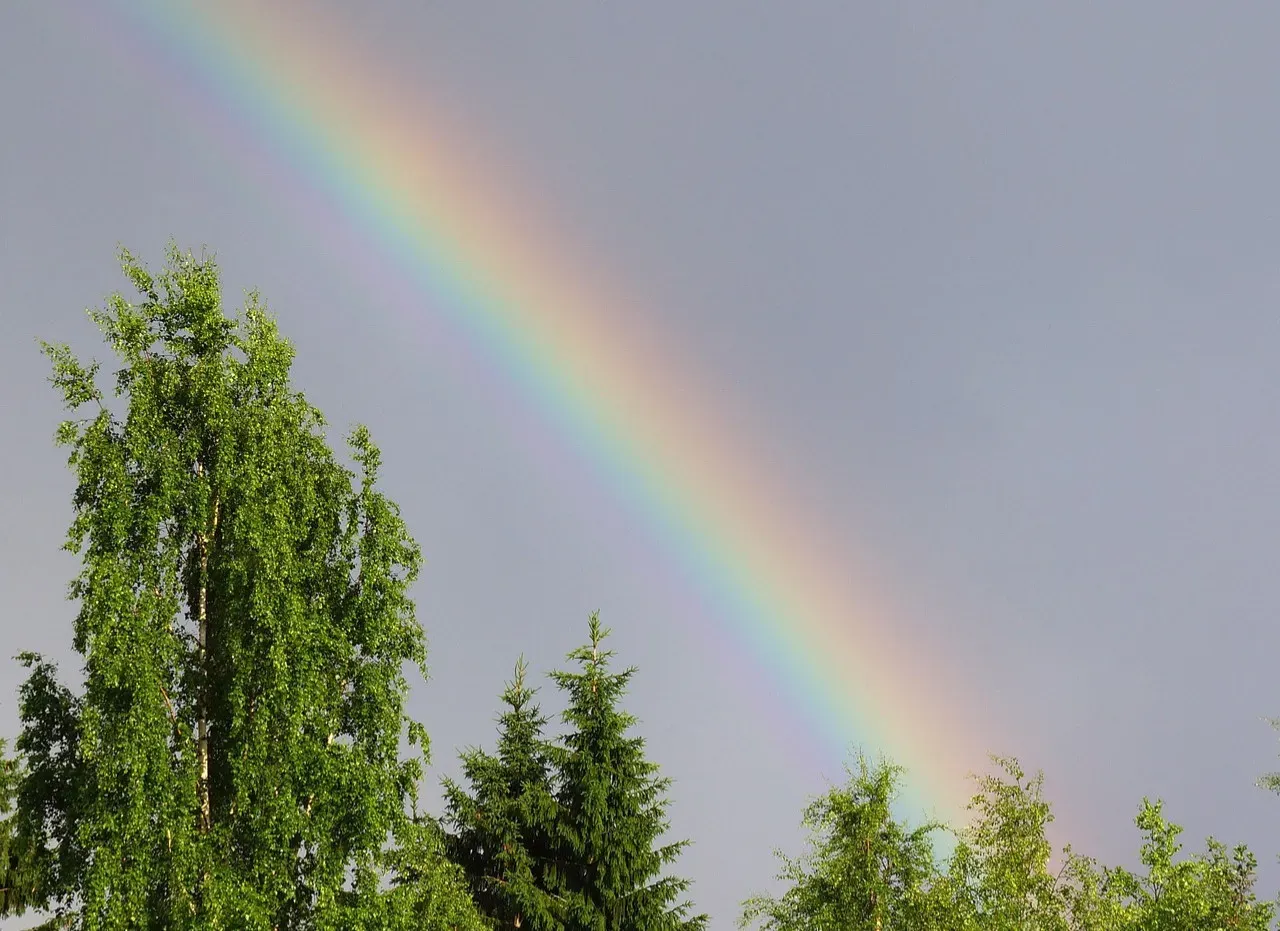
After reflecting inside the droplet, the light heads toward the front surface again and exits back into the air. It refracts a second time as it leaves water and returns to air, bending once more. At this stage, those tiny differences in bending between red, orange, yellow, green, blue, indigo, and violet really start to add up. Some angles reinforce the brightness of particular colors, while others send light off in directions where no one is standing to see it.
For a primary rainbow, the strongest light escapes the droplet at a very specific range of angles relative to the incoming sunlight. Red light tends to leave around an angle a little larger than violet, which is why you see red on the top and violet on the bottom of the main bow. The shape of the arc comes from the fact that every droplet that happens to sit at the correct angle from your eyes and the sun contributes just one tiny colored point. Together, those points form a circle centered on the line from your eyes through the shadow of your head – though you usually only see the upper half, which is why it looks like an arch.
Why You Can Never Reach the End of a Rainbow
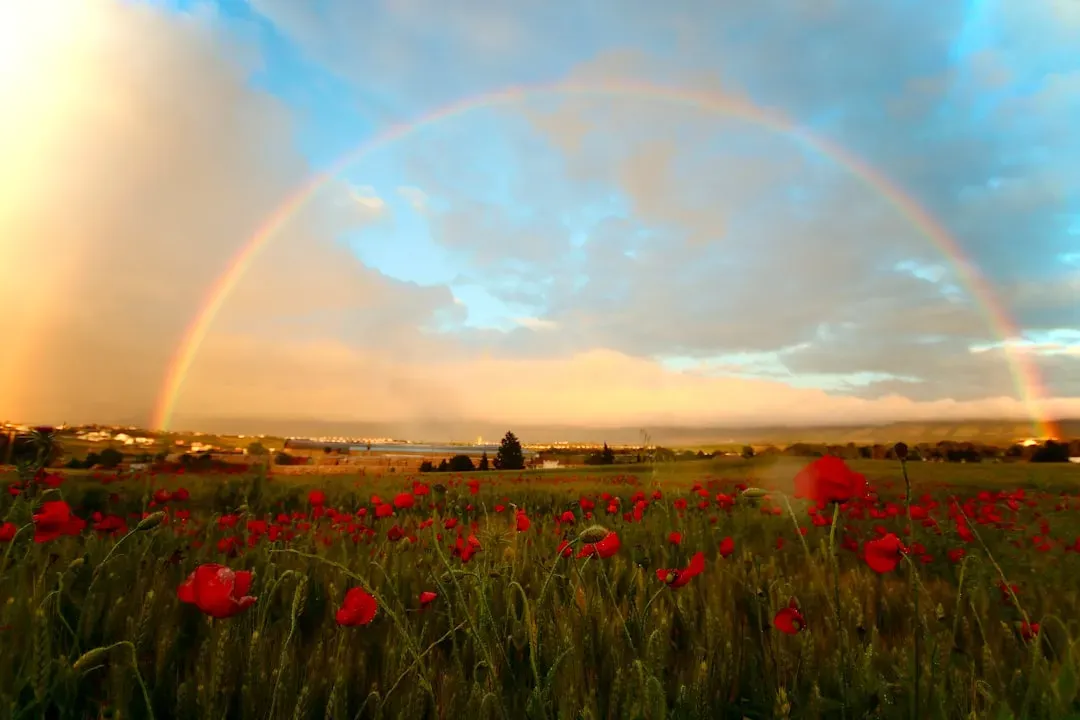
There’s a quietly frustrating truth about rainbows: you can never get to the end of one, because the “end” moves as you move. Remember that a rainbow depends on the exact angle between your eyes, the sun, and the raindrops. When you walk or drive toward what looks like the base of the rainbow, you change that geometry, so the set of droplets sending light to your eyes changes as well. The rainbow shifts with you, always staying out of reach.
This also explains why a rainbow can vanish the moment the rain moves, the sun goes behind a cloud, or you change position too much. The effect is delicate; lose the right combination of sunlight, rain, and angles, and the bow simply disappears. Sometimes from an airplane, when conditions line up, people see a full circle of a rainbow rather than just an arc, which really drives home the idea that it’s a cone of light centered on your own viewpoint rather than a thing hung in the sky like a painted bridge.
Double Rainbows and Brighter Colors: When Physics Shows Off
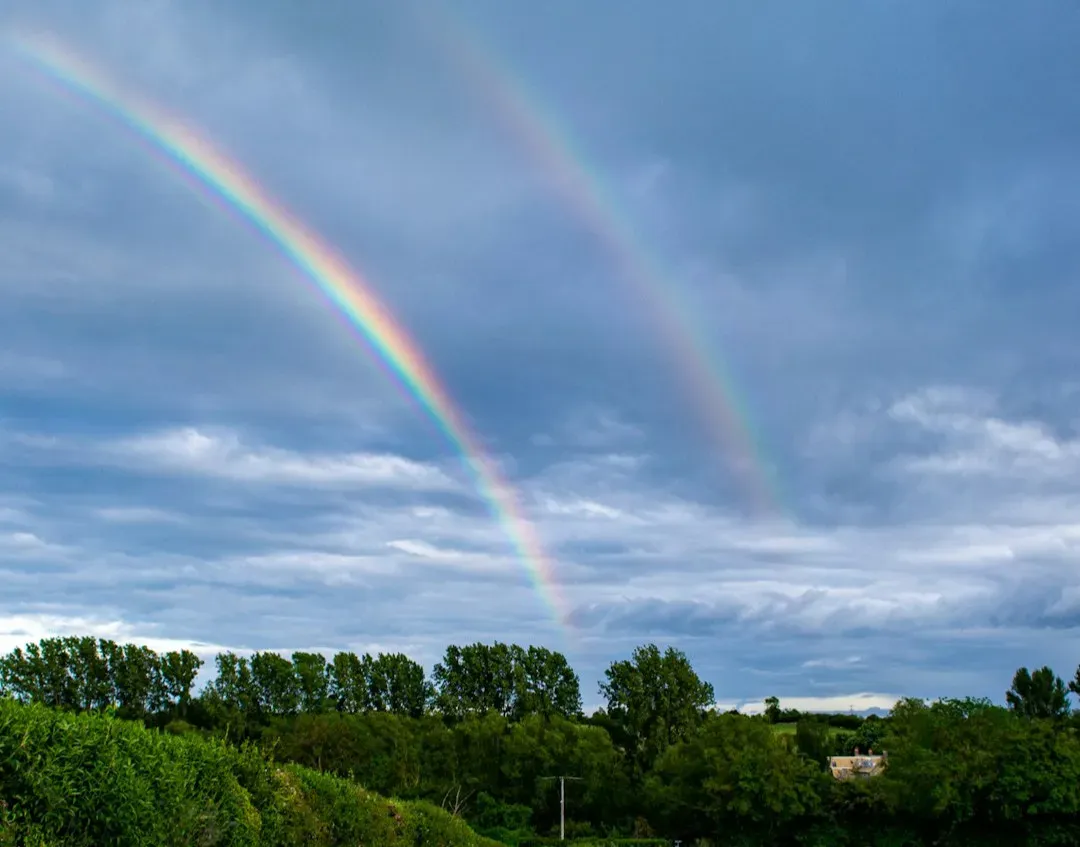
Every so often, the sky turns up the volume and shows a second, fainter rainbow above the first. This double rainbow happens when light reflects twice inside the raindrop before exiting. That extra internal reflection flips the color order, so the secondary bow has red on the bottom and violet on the top. It also spreads the light more and loses some intensity with each bounce, which is why the second bow is dimmer and often looks softer and more washed out.
Under the main bow, the sky can look brighter, while between the two bows the sky sometimes appears darker. That darker band is where light is less likely to emerge from droplets at the right intensities for our eyes, which gives the whole scene a more dramatic, almost painted look. When you see one of these displays, you’re really looking at a large-scale demonstration of geometric optics happening across millions or even billions of droplets, all following the same laws of physics at once.
A Colorful Arch Built from Simple Rules
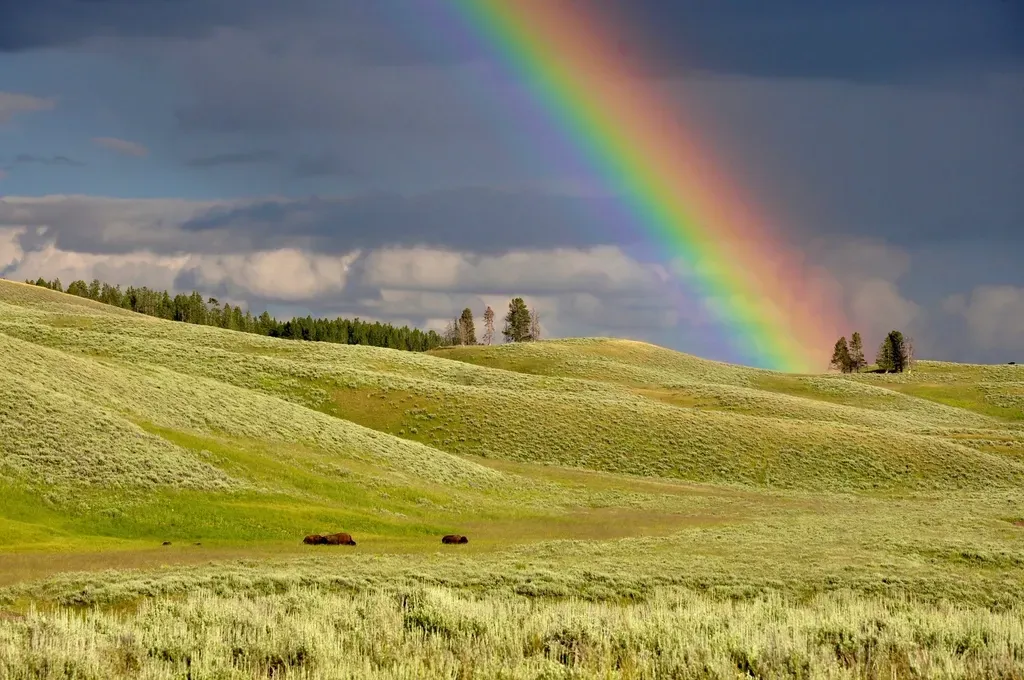
In the end, a rainbow is the perfect example of how something that feels almost mystical can come from a chain of very down-to-earth steps: white sunlight, refraction into a raindrop, reflection inside, another refraction on the way out, and strict angles that decide which colors you get to see. Your eyes, the sun’s position, and the drifting rain all conspire to build that fleeting arch just for your particular point of view. It’s orderly, it’s predictable, and somehow that makes it even more impressive.
Once you know what’s going on, you stop thinking of a rainbow as a flat picture in the sky and start seeing it as a living geometry of light and water, constantly shifting with every step you take. The next time one appears, you might catch yourself quietly tracing the angles in your mind while still feeling that same little jolt of wonder. Now that you know what makes that colorful arch possible, what will you notice differently the next time it appears after the rain?