
Right now, as you read this, you are moving. Not just because your heart is beating or the air is stirring around you. You are hurtling through space at a speed so staggering it would make your head spin if you truly stopped to feel it. Your planet is spinning, your solar system is orbiting the center of the Milky Way, and your entire galaxy is being dragged across the cosmos toward something enormous, something mostly hidden, something we still do not fully understand.
That something has a name. Scientists call it the Great Attractor, and honestly, the name alone should send a chill down your spine. It is one of the most jaw-dropping mysteries in all of modern astronomy. What is it? Where is it? Should you be worried? The answers are far stranger, and far more spectacular, than you might expect. Let’s dive in.
The Universe Is Not as Still as It Looks
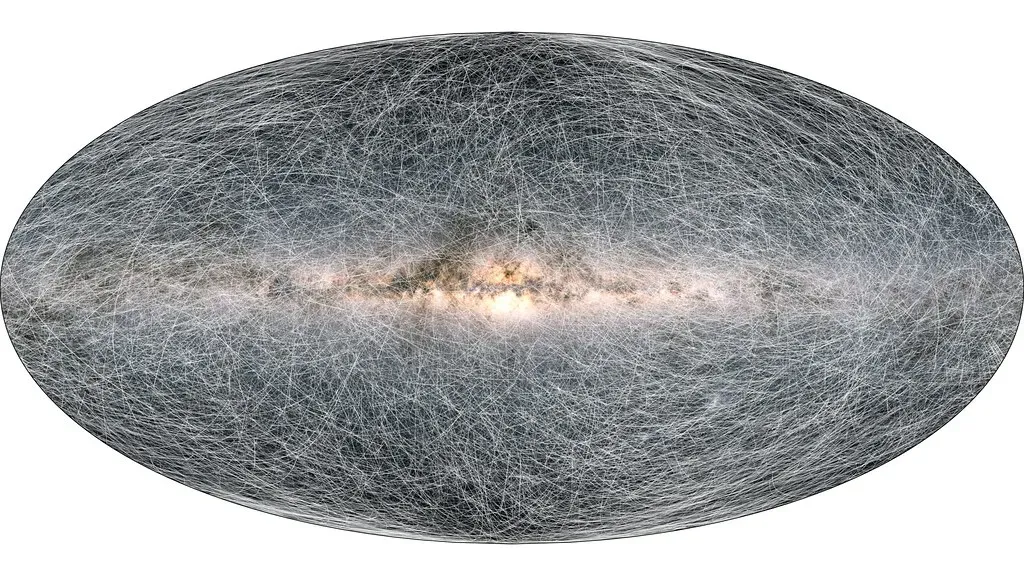
Here is a thought that tends to break people’s brains the first time they really sit with it. The sun and the rest of our solar system orbits the center of the Milky Way galaxy at over 500,000 miles per hour. Let that sink in. You are on a cosmic merry-go-round that never stops, spinning around a galaxy you can barely see the edge of.
To understand the mystery of the Great Attractor, you first need to grasp a fundamental truth about our universe: everything is in motion. The universe has been expanding ever since the Big Bang, some 13.8 billion years ago. Space itself is stretching, pushing galaxies apart. Think of it like dots drawn on a balloon being slowly inflated. Every dot moves away from every other dot, not because anything is pushing them, but because the surface itself is growing.
Not everything, however, is moving purely with the expansion. Some galaxies, including our own Milky Way, are not just being swept outward in the cosmic current. Something else is going on. Something with a gravitational grip so powerful it overrides the ordinary flow of the cosmos.
How the Great Attractor Was First Discovered
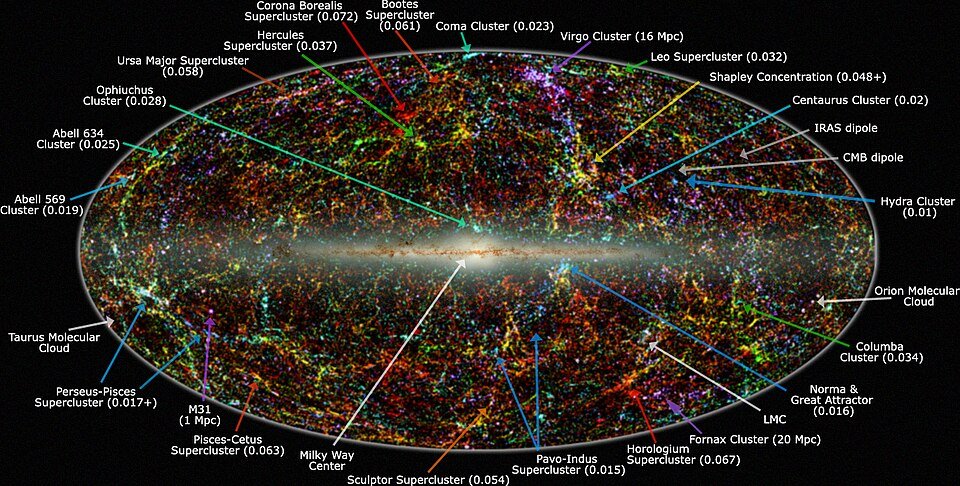
The story of the Great Attractor begins in the late 1970s and early 1980s. Astronomers studying the motions of galaxies noticed something strange: galaxies in our region of the universe were not behaving the way they should. Instead of simply moving with the Hubble flow, the uniform expansion of space, they seemed to be heading toward a common point. This was not a small anomaly. This was entire neighborhoods of galaxies marching in lockstep toward the same invisible destination.
After subtracting the motion from the expansion of the universe, astronomers calculated that the Milky Way has a “peculiar velocity” of about 600 km/s, directed towards a specific point in the sky. This indicated the presence of a massive, localized source of gravity – the Great Attractor. The Great Attractor was named by Alan Dressler in 1987, following decades of redshift surveys that built up a large dataset of redshift values. Here’s the thing: naming something is often the first step to realizing how little you understand it.
The Zone of Avoidance: Why We Cannot Simply Look at It
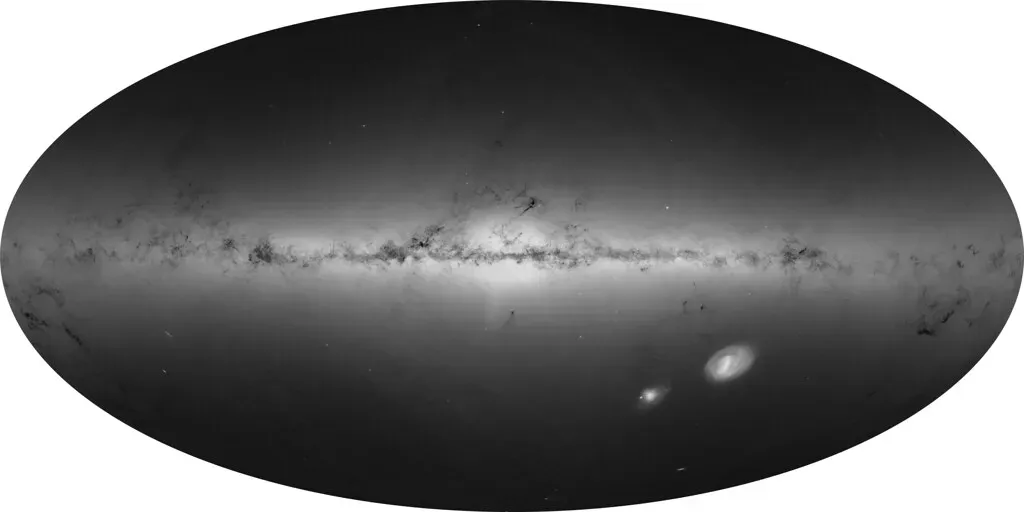
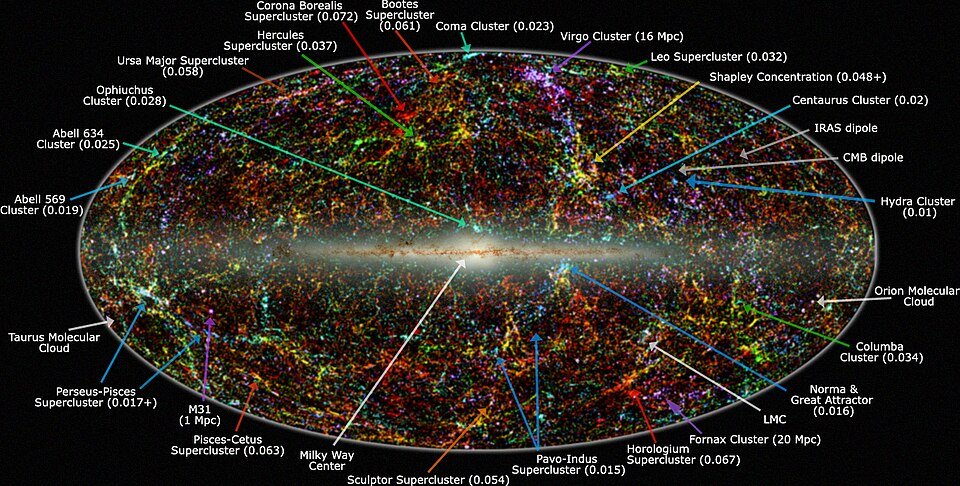
The main obstacle is that the Great Attractor lies in the “Zone of Avoidance,” a part of the sky obscured by the dense plane of the Milky Way. This region is filled with gas, dust, and countless stars, making optical observations extremely challenging. Astronomers have had to rely on infrared and X-ray surveys, which can penetrate these cosmic veils, revealing clusters of galaxies hidden behind the Milky Way’s glare.
It sounds almost darkly comic when you think about it. Our own galaxy, that beautiful band of stars we admire on clear nights, is the very thing blocking us from seeing one of the most dramatic structures in the observable universe. This twenty percent of the universe that is blocked out by our galaxy just so happens to be exactly where the Great Attractor is, now covered by gases, dust, and stars. Nature has a strange sense of irony. To peer through the cosmic dust, astronomers had to use different kinds of telescopes that could detect wavelengths of light other than visible light, such as X-rays and infrared. By studying the motion of galaxies on the other side of the Zone of Avoidance, and by using X-ray surveys to find clusters of galaxies hidden within it, scientists began to piece together the puzzle.
What the Great Attractor Actually Is
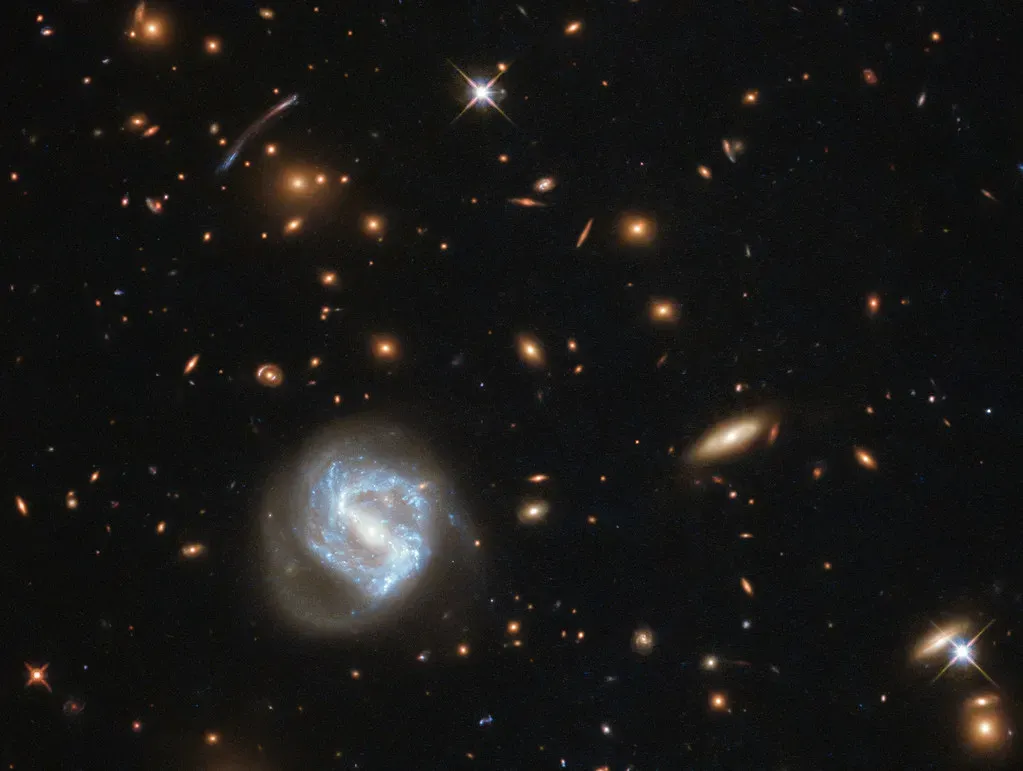
The Great Attractor is not so much a thing, like a star, comet, or galaxy, but a place, the central gravitational point of the Laniakea supercluster. I think this is where a lot of people get tripped up. We tend to imagine a single, dramatic object, maybe a supermassive black hole or a rogue planet-eating monster. The reality is both more subtle and, in a way, more profound.
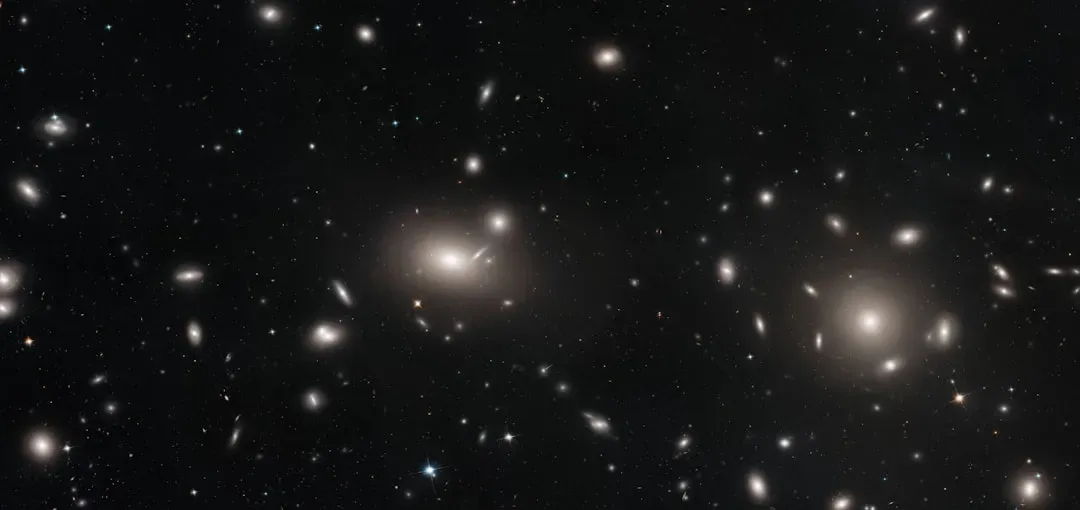
Recent studies suggest that the Great Attractor may not be a single object but rather a collection of massive galaxy clusters, dark matter, and hot intergalactic gas. One of the most prominent components is the Norma Cluster, a huge concentration of galaxies whose combined gravity may account for much of the observed pull. Yet, even with modern instruments, a significant portion of the mass responsible for this cosmic tug remains unseen, hinting at the presence of dark matter. It is, in the most literal sense, a gravitational valley. Galaxies around it are like water, flowing downhill toward the lowest point without any single force shoving them. The mass is simply there, patient and enormous, and everything else follows.
Laniakea: Our Cosmic Home Address

Most recently, the prime suspect at the center of all this motion is the supercluster Laniakea, which is Hawaiian for “immense heaven” or “immeasurable heaven.” It is a poetic name for something so vast it defies everyday imagination. According to mapping efforts, Earth’s galaxy lives near the edge of the Laniakea supercluster, which measures 500 million light-years in diameter and includes roughly 100,000 galaxies.
Within a given supercluster, most galaxy motions are directed inward, toward the center of mass. This gravitational focal point, in the case of Laniakea, is called the Great Attractor, and it influences the motions of the Local Group of galaxies, where the Milky Way galaxy resides, and all others throughout the supercluster. Laniakea covers approximately four main galaxy superclusters, including superclusters of Virgo and Hydra-Centaurus, and spans across 500 million light years. Because it is not dense enough to be gravitationally bound, it should be dispersing as the universe expands, but it is instead temporarily anchored by a gravitational focal point. Thus the Great Attractor would be the core of the new supercluster. It is our home, our cosmic neighborhood, held loosely together by an invisible gravitational hand.
Will We Ever Actually Reach It? The Role of Dark Energy
The universe is expanding faster than we can fall, so even as gravity tries to drag us in, space itself is stretching away. That means the Great Attractor might very well be the greatest irony in the cosmos: a destination toward which we are destined to travel, but never reach. It is like walking toward a horizon. The closer you think you are getting, the further it moves.
While gravity is pulling galaxies toward the Great Attractor, another force is pushing them apart. Enter dark energy, the unknown energy that is driving the accelerated expansion of the universe. Dark energy works in opposition to gravity, stretching space itself and causing galaxies to recede from one another at ever-increasing speeds. This cosmic tug-of-war between gravity and dark energy shapes the fate of the universe. In the middle of this struggle lies our Milky Way, racing toward the Great Attractor while the fabric of space stretches around it. Eventually, dark energy will have pushed the Great Attractor region so far away from us that it will no longer pack the same kind of gravitational clout, and instead of the Milky Way being drawn toward the Great Attractor, it will start to move away. A destination that becomes an origin. Think about that.
The Shapley Supercluster and the Bigger Picture
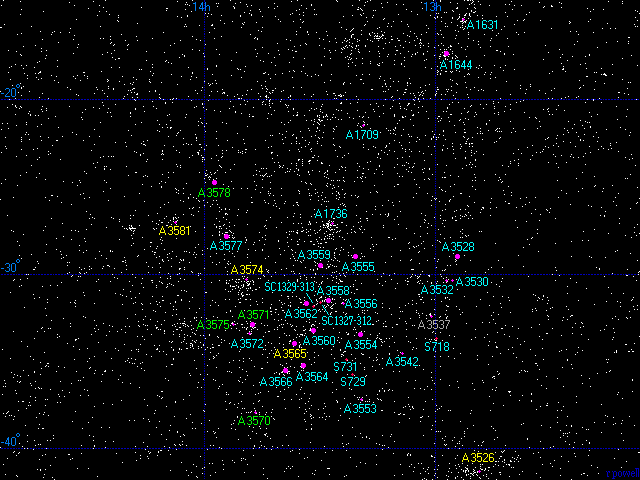
Surveys have confirmed earlier theories that the Milky Way galaxy is in fact being pulled toward a much more massive cluster of galaxies near the Shapley Supercluster, which lies beyond the Great Attractor, and which is called the Shapley Attractor. So the Great Attractor is not even the end of the gravitational story. It turns out there is a bigger bully further down the cosmic block.
Farther out, roughly 650 million light-years away in the same general direction, lies the Shapley Supercluster, an enormous concentration of rich galaxy clusters. Astronomers have debated how much of our galaxy’s motion is caused by the Great Attractor versus the Shapley Supercluster. Current evidence suggests the Great Attractor dominates the motions of galaxies relatively close to it, while the Shapley Supercluster likely influences motions on the far side of the Great Attractor and may contribute to the overall bulk flow of galaxies at larger distances. In other words, the Milky Way is not just responding to one gravitational tug. It is embedded in a hierarchy of pulls at different scales, with the Great Attractor being the most immediate and dominant influence on our region of space. Layer upon layer upon layer of gravitational architecture, stretching further than the eye or even the telescope can resolve.
Conclusion: A Mystery That Rewrites Our Place in the Universe
The Great Attractor is not a threat, a monster, or a cosmic catastrophe waiting to happen. It is something stranger and more humbling than that. It is the gravitational heart of our home in the universe, a reminder that the Milky Way is not some lonely island floating in an empty void but a tiny member of an almost incomprehensibly vast structure.
The mystery of the Great Attractor is a perfect example of the scientific process. What began as a puzzling observation of galactic motion led to the discovery of a hidden cluster of galaxies and ultimately redefined our own cosmic address. The Great Attractor may be one of the most baffling and mysterious phenomena in the universe, but it is also a window into the vast, unexplored frontiers of space. As technology continues to improve and new telescopes and observatories are launched, we may one day gain a clearer understanding of this cosmic anomaly.
You are already on this ride, being pulled across the cosmos at over a million miles per hour, toward a place you will likely never see with your own eyes. There is something deeply human about that, reaching for something just beyond our grasp. Does knowing you are part of something that enormous make you feel small, or does it make you feel strangely, wonderfully connected? What do you think? Share your thoughts in the comments.