
Imagine waking up one day and realizing that everything you see, touch, and feel is not quite what it seems. Not fake exactly, but more like a breathtaking special effect being projected from a deeper, hidden reality. That’s the wild suggestion behind the holographic universe idea: the possibility that our entire three-dimensional world is, in some sense, a kind of cosmic hologram.
This doesn’t mean we’re in a cheap simulation or a sci-fi movie, but it does challenge some of our most basic assumptions about space, time, and what “real” even means. The strange part is that this idea didn’t start with conspiracy theorists or internet forums; it grew out of serious attempts by physicists to solve brutal problems in black hole physics and quantum gravity. Let’s carefully unpack what that actually means without getting lost in jargon.
What Does It Even Mean to Live in a Hologram?

When people hear “hologram,” they usually think of a shimmering 3D image floating above a glass plate, like a sci-fi character beamed into a room. The key trick of a hologram is that a two-dimensional surface encodes a three-dimensional image. The picture looks flat, but it contains all the information needed to reconstruct the illusion of depth. The holographic universe idea takes that same basic idea and applies it to reality itself: maybe our three-dimensional space, plus time, is actually encoded on a distant, lower-dimensional boundary.
In everyday terms, it’s like saying everything inside a room – the air, the furniture, your body – is somehow fully described by information on the walls. The walls are two-dimensional, but they hold the blueprint for the whole 3D scene. If the holographic idea is right, something similar could be happening with our universe: the “real” description might live on some sort of cosmic boundary, while what we experience is the vivid 3D “projection.” That sounds outrageous, but it grows out of serious mathematical work, not late-night speculation.
How Black Holes Accidentally Pointed Us to the Holographic Universe
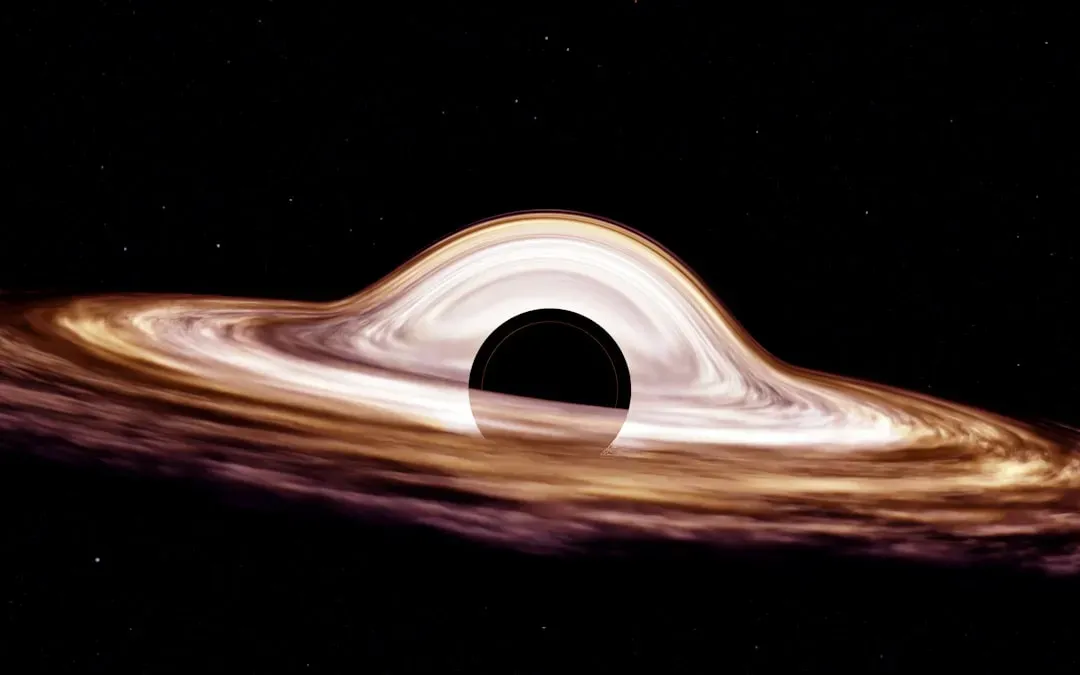
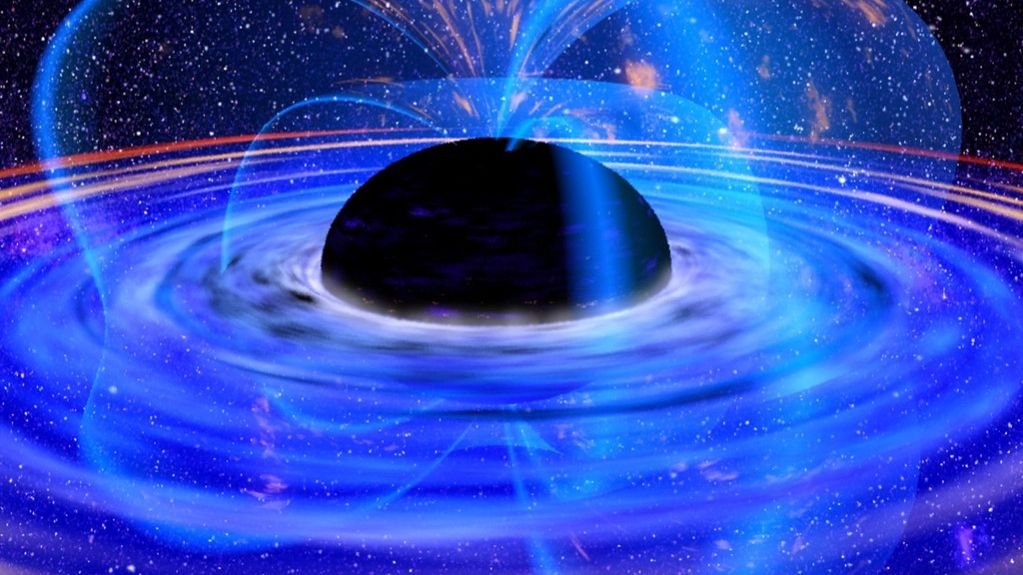
The road to the hologram idea started with one of the most terrifying objects in the universe: black holes. In the 1970s and 1990s, physicists studying black holes discovered something shocking about how they store information. Instead of their information content (often described as entropy) scaling with their volume, it scales with the area of their event horizon – the surface that marks the point of no return. The information seemed to live on the surface, not in the interior, which is the opposite of what you’d expect for a normal object.
This strange “area law” hinted that nature might be more holographic than volumetric at a fundamental level. If a black hole’s information is encoded on its surface, maybe the same is true, in some way, for the entire universe. Out of this puzzle came the so-called holographic principle: the idea that all the information inside a region of space can be described by information on its boundary. That’s not just a poetic phrase; it’s a principle that helped shape modern attempts to reconcile quantum mechanics and gravity.
The Holographic Principle in Plain Language

The holographic principle basically says: if you take any chunk of space, the maximum amount of information it can hold doesn’t depend on the volume inside, but on the area of its boundary. That’s almost the opposite of how we intuitively think about packing things. Normally, you’d say a bigger room can fit more boxes because it has more volume. In the holographic view, the deeper truth seems to be that the “storage capacity” of reality is tied to surfaces, not interiors – a deeply counterintuitive but powerful idea.
In simple terms, think of a backup drive that lists every possible thing that could ever happen in a region of space, stored not throughout the space, but on its outer skin. The events unfolding inside are like a movie playing out, while the boundary holds the full script. This doesn’t mean we literally live on a wall somewhere, but it does suggest that the most fundamental description of what happens may live in fewer dimensions than we experience. The universe, at its core, might be more like an intricate data structure than a solid, continuous volume.
From Abstract Theory to Concrete Math: The AdS/CFT Breakthrough
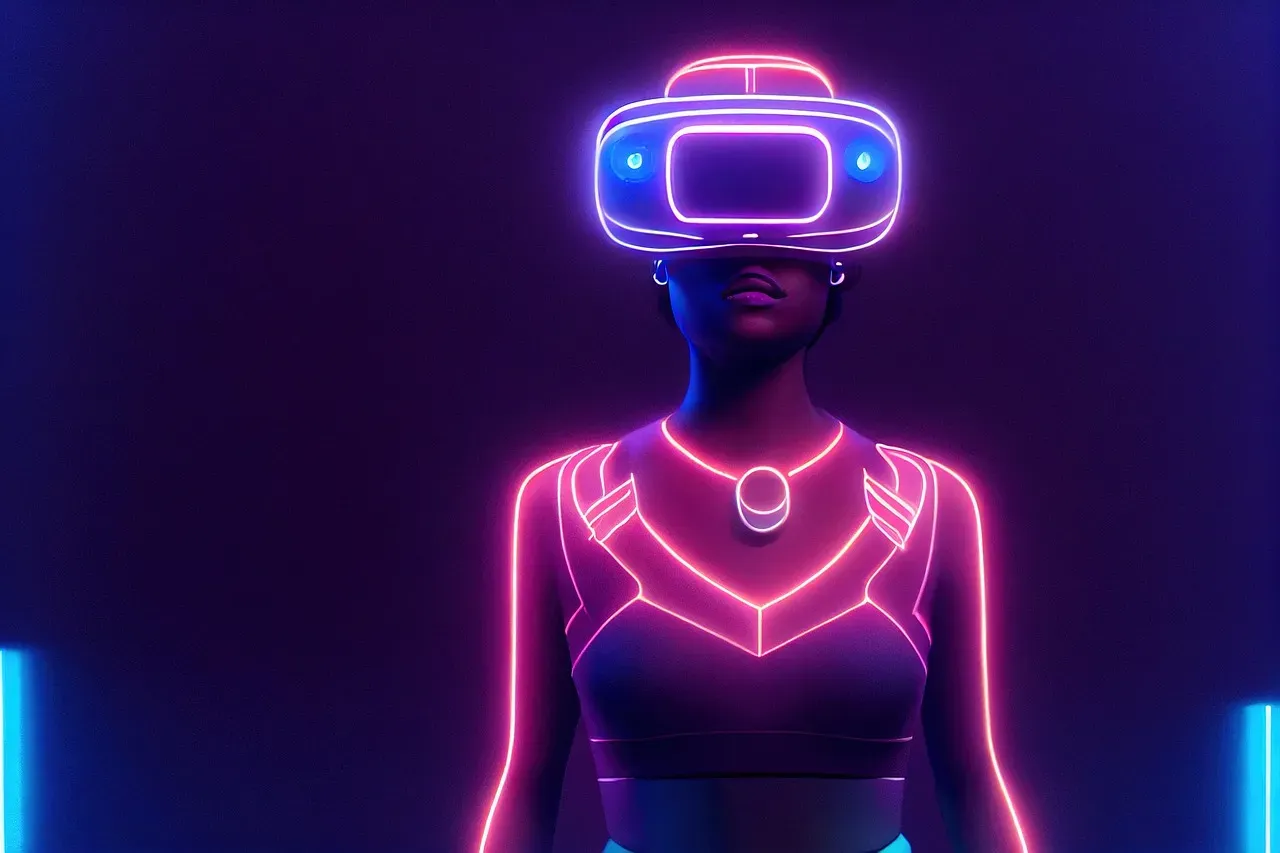
For a long time, the holographic principle sounded more like a philosophical hint than a usable scientific tool. That changed dramatically in the late 1990s when a powerful mathematical example of holography was discovered: a correspondence between a theory of gravity in a certain kind of curved space and a lower-dimensional quantum field theory living on its boundary. The names are technical – Anti-de Sitter space and conformal field theory – but the core idea is simple: a world with gravity and one more dimension can be exactly described by a world without gravity and one fewer dimension on its edge.
This “duality” gave physicists a working laboratory for holography. Suddenly, it wasn’t just a vague idea; it was a fully fleshed-out equivalence that could be used to do calculations, test ideas, and explore otherwise impossible-to-solve problems in quantum gravity and strongly interacting quantum systems. Even though our universe doesn’t look exactly like the kind of space used in this model, the success of this duality has made many researchers take the holographic viewpoint very seriously as a window into how spacetime might emerge from more fundamental quantum information.
Are There Any Clues That Our Universe Is Actually Holographic?

This is where people often get disappointed, because there’s no clean experiment that has already shouted: yes, reality is a hologram. The holographic principle is well supported in certain theoretical frameworks, but directly testing whether our entire cosmos is holographic is brutally hard. Our universe seems to have properties, like accelerating expansion and the specific pattern of cosmic microwave background radiation, that don’t obviously fit the neat textbook holographic models developed so far. Still, researchers have tried to see whether tiny deviations in those cosmic patterns could hint at an underlying holographic description.
Some studies have explored whether the earliest light in the universe might carry subtle “graininess” or statistical fingerprints of a holographic origin of spacetime. Others look at how quantum entanglement behaves on large scales and whether area laws for entanglement support a holographic view. So far, nothing has provided a definitive “yes” or “no.” Instead, holography sits in an interesting middle zone: not a proven property of our universe, but a highly successful idea in related theoretical models, and an increasingly important tool for understanding quantum gravity and even some aspects of condensed matter physics.
Does a Holographic Universe Mean Life Is Just an Illusion?

Hearing that reality might be holographic can trigger a kind of existential vertigo. If our three-dimensional world is in some sense a projection, does that make our lives fake, like background graphics in a video game? The answer, as far as physics is concerned, is no. A holographic description doesn’t say the things you experience are unreal; it says they may have a different underlying description than you’d expect. Your emotions, relationships, pain, joy, and choices are still as real as anything can be within this framework, just like a character in a story is real inside the logic of that story.
Think of it this way: a rainbow is “just” light and water droplets, but that doesn’t make it less beautiful or less real. Learning how it works adds depth, not emptiness. In the same way, if spacetime, matter, and energy are emergent from deeper quantum information stored on a boundary, that doesn’t cheapen your experience of them. Instead, it suggests that reality might be layered: what we touch and see is one layer, and there may be a more abstract informational layer beneath it. For many people, that idea feels strangely inspiring rather than depressing.
Holograms, Simulations, and Why They’re Not the Same Thing
The holographic universe idea often gets mashed together with the “simulation hypothesis,” the claim that we might be living in a computer simulation run by an advanced civilization. While both challenge our naive sense of reality, they’re not the same. Holography is a proposal about how the laws of physics might be organized, rooted in gravity, quantum mechanics, and information theory. It doesn’t require any external programmers, computers, or intentional design. Instead, it’s a way of saying that a universe with gravity and a universe without gravity on its boundary can be two faces of the same underlying physics.
The simulation idea, in contrast, is more like saying the universe is a super-advanced video game, where the “hardware” and “software” live outside our reality. The holographic principle doesn’t need that outer layer; the boundary theory and the bulk universe are just two mathematically equivalent descriptions of the same thing. If reality is holographic, it could still be natural, self-contained, and not “about” anything or anyone beyond it. That may not make for as many dramatic movie plots, but it’s a more grounded way of thinking about a deeply weird possibility.
Why the Hologram Idea Matters Even If It’s Never Proven

Even if it turns out that our specific universe isn’t holographic in a strict sense, the holographic principle has already changed how physicists think about space, time, and information. It has given them new tools to explore quantum gravity, model complex quantum systems, and understand how entanglement might literally weave the geometry of spacetime. For many researchers, it’s now almost natural to ask not “what is space made of?” but “how does space emerge from a deeper network of quantum information?” That’s a radical shift from the old picture of spacetime as a rigid stage where matter and energy move around.
On a more personal level, playing with the holographic idea does something interesting to the imagination. It nudges you to see your everyday world – your room, your city, the night sky – as part of a much stranger and richer structure than it appears. The idea that everything you know might be encoded in some deeper, lower-dimensional way is both unsettling and strangely beautiful, like discovering that your favorite song is built from a hidden pattern you never noticed. Whether or not we ever confirm that we live in a hologram, the very act of asking the question stretches how we think about reality, and maybe that stretch is the most valuable part.