
Have you ever wondered what mysteries hide beneath your feet? Picture this: you’re standing on solid ground, maybe walking to work, maybe hiking a trail. Solid, right? Safe. Predictable. Now imagine if someone told you that beneath that familiar surface lies a world so extreme, so utterly alien, that even our most sophisticated technology can barely scratch its outermost layer. The idea of journeying to the center of the Earth has captured imaginations for centuries, from Jules Verne’s fictional explorers to modern scientists with drills and diamond-anvil cells. It’s a place where temperatures rival the surface of the sun, where pressures could crush you into something smaller than a marble, and where mysteries about our planet’s very existence still wait to be solved.
Let’s be real: the journey sounds impossible. Yet the question persists, hanging in the air like an irresistible challenge. So let’s dive in and explore what would happen if we could actually make this extraordinary voyage.
Why We Can’t Just Drill Down
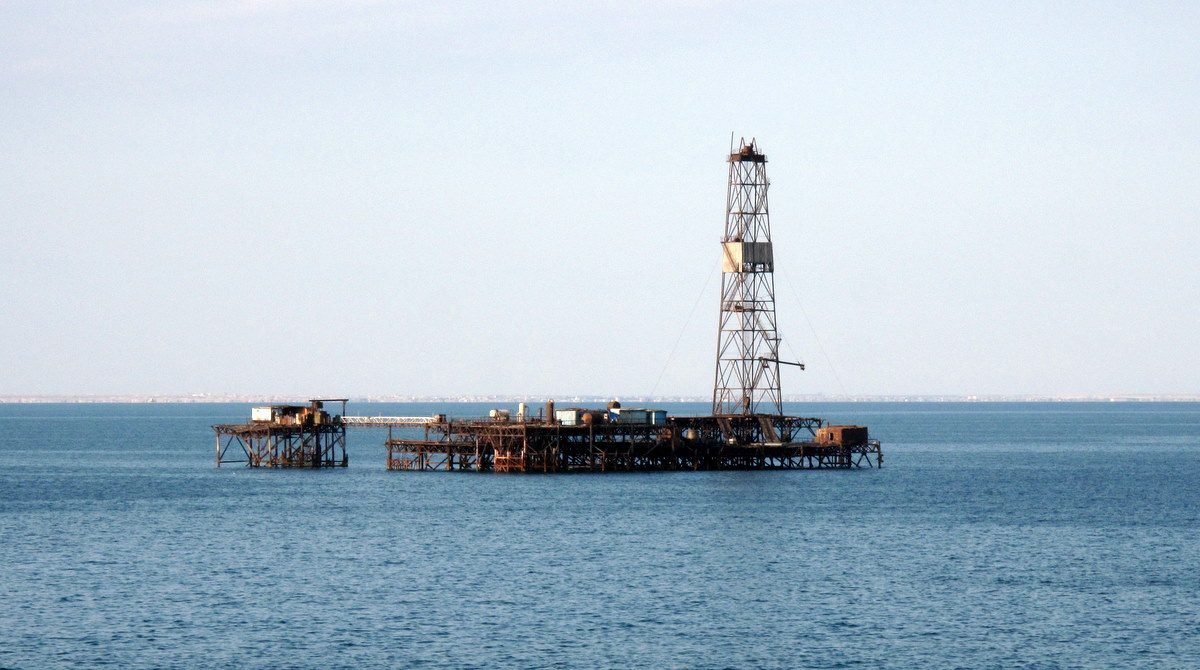
You’d think with all our technology, we’d have made it pretty far into the Earth by now. Honestly, we haven’t. The deepest human-made hole on Earth is the Kola Superdeep Borehole, which reached a depth of 12,262 meters in 1989. That sounds impressive until you realize it’s only about seven and a half miles down. The distance to the center of the earth is around 3,950 miles, which means our deepest hole barely scratched the surface.
The Russians who drilled Kola ran into a problem that no amount of engineering genius could solve: heat. At 7.5 miles below the surface, temperatures reached around 180 degrees Celsius, almost twice as hot as predicted. Such high temperatures deform drill bits and pipes, and the rocks themselves become more malleable, behaving more like plastic than rock. Imagine trying to dig a hole in hot fudge. That’s essentially what happens when you go deep enough into our planet.
The Hellish Temperatures Waiting Below
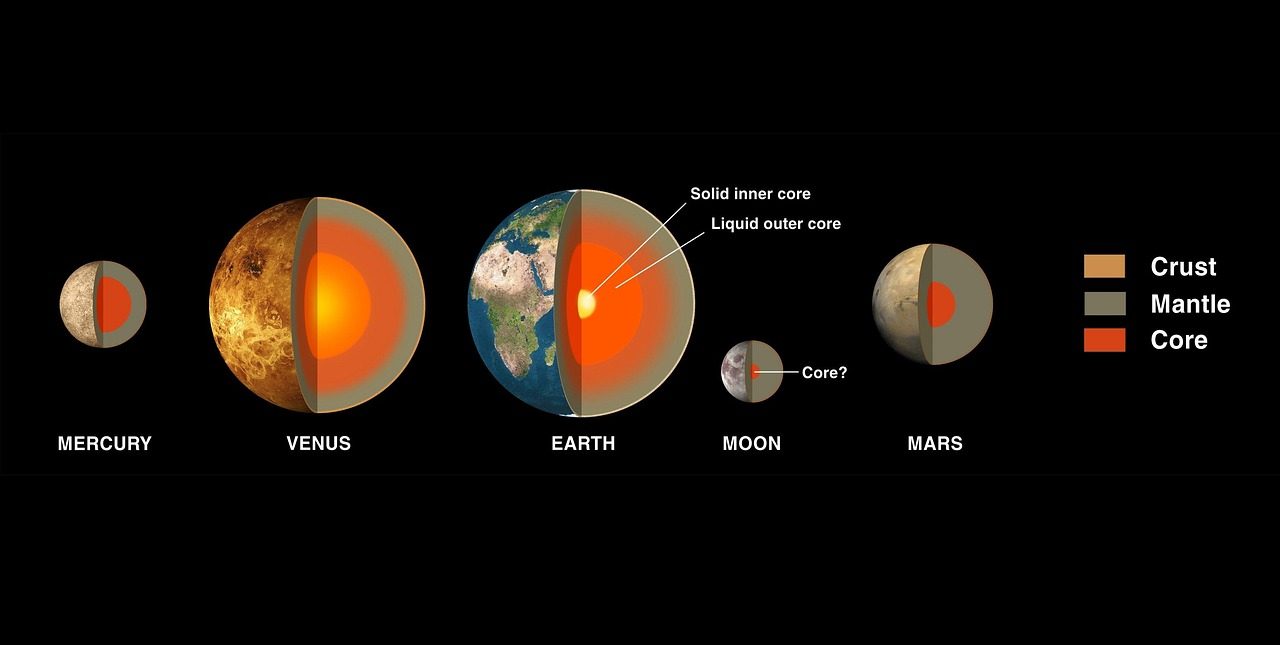
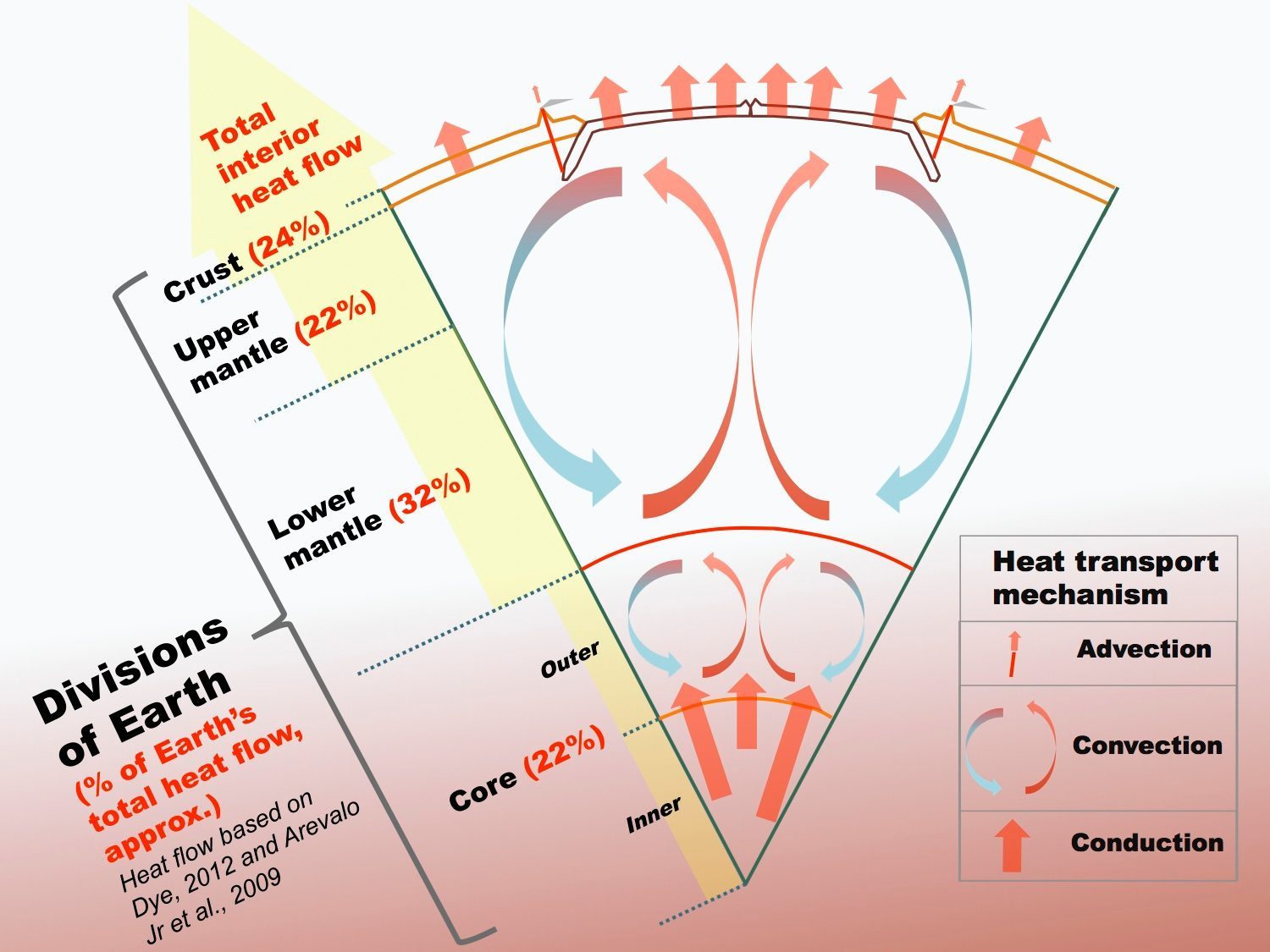
If somehow you could survive the journey downward, you’d encounter temperatures that would make a summer heatwave feel like a refreshing breeze. As you descend through the crust, temperatures increase by about 25 to 30 degrees Celsius per kilometer, and near the boundary between the crust and mantle, temperatures reach around 400 to 500 degrees Celsius.
Things get even more intense as you go deeper. The outer core has temperatures estimated to range from about 4,000 to 5,700 K. That’s somewhere between roughly 5,000 and over 14,000 degrees Fahrenheit. The inner core’s temperature is estimated to be approximately 5,700 K, about the temperature at the surface of the Sun. Let that sink in for a moment: the center of our planet is as hot as the star we orbit. No material we’ve ever created could withstand that kind of heat, not even close.
Pressure That Defies Imagination
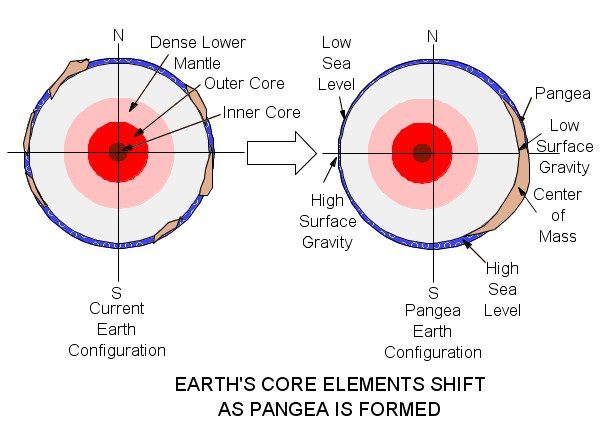
Here’s where things get truly mind-bending. Temperature is just one challenge. Pressure is another beast entirely. At Earth’s surface, we experience one atmosphere of pressure, which is comfortable, normal, what our bodies are built for. At the inner core, the pressure reaches at least 3.6 million times the pressure at Earth’s surface. Read that again. Three point six million times.
At the core, pressure reaches 330 to 360 GPa, at which iron becomes a solid even at the high temperatures there. This extreme pressure is why the inner core is solid despite being hotter than the outer core, which is liquid. Iron can be solid at such high temperatures only because its melting temperature increases dramatically at pressures of that magnitude. Your body, any vessel you could imagine, would be obliterated long before reaching anywhere near those conditions. It’s a humbling thought, really.
The Layers You’d Have to Cross
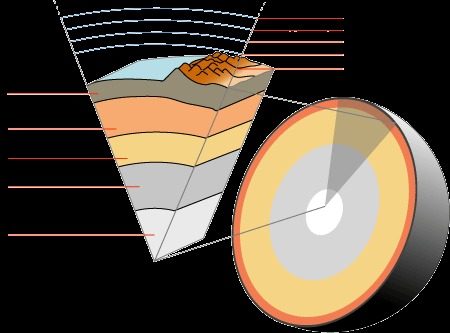
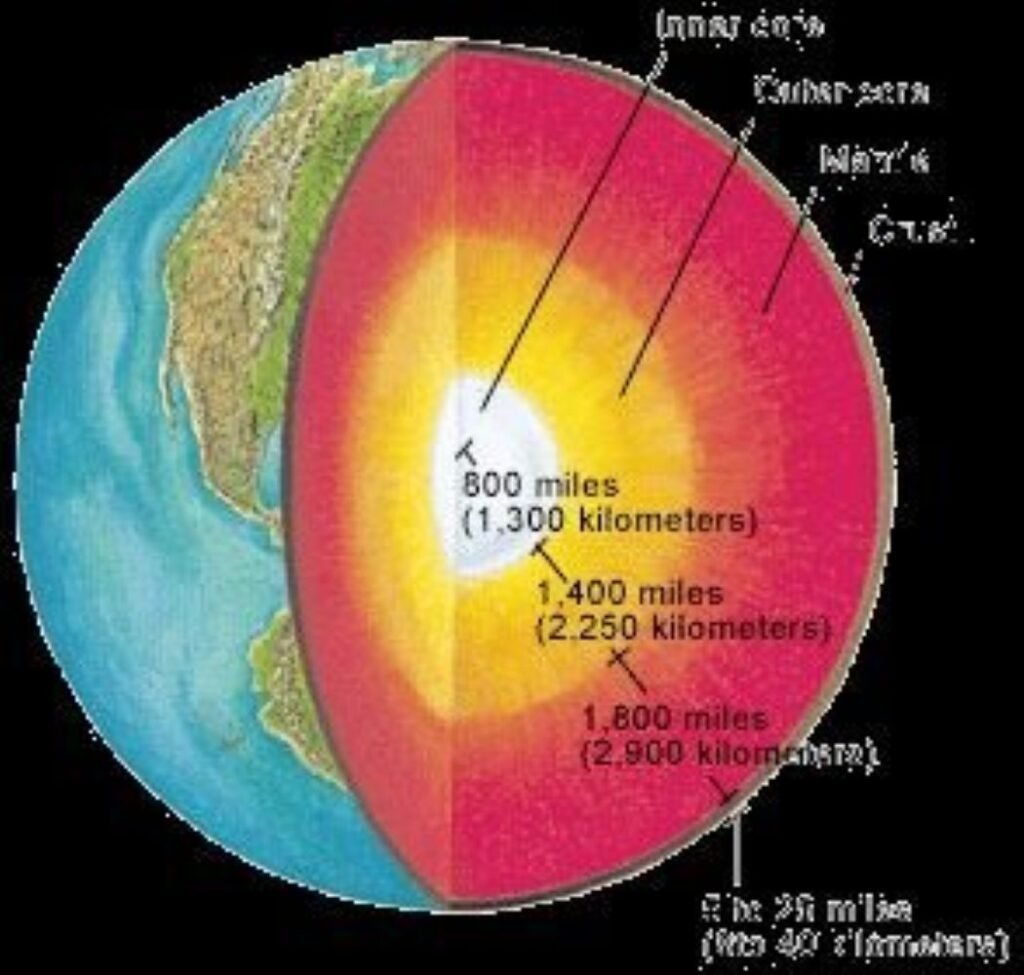
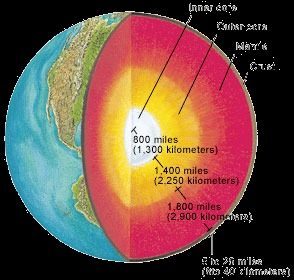
Earth’s structure can be divided into four main layers: the crust, the mantle, the outer core, and the inner core. Each one presents unique challenges. The crust is the thin shell we live on. Earth’s crust ranges from about 5 kilometers thick in oceanic regions to about 70 kilometers thick under continents. That’s the easy part.
Below that lies the mantle, and it’s massive. The mantle is about 2,900 kilometers thick and makes up 84 percent of Earth’s total volume. Though predominantly solid, on geologic time scales the mantle behaves as a viscous fluid, sometimes described as having the consistency of caramel. This slow, flowing rock drives plate tectonics, volcanoes, and earthquakes, the very forces that shape the surface world we experience.
Then comes the outer core, a churning ocean of liquid metal. The outer core is about 2,260 km thick, beginning approximately 2,889 km beneath Earth’s surface and ending 5,150 km beneath the surface. Finally, at the very center, you’d reach the inner core, a solid ball of iron and nickel compressed by unimaginable forces.
What’s Actually Down There?
So what would you find if you could somehow make this journey? Scientists have never directly sampled the core, so everything we know comes from indirect evidence. The characteristics of the core have been deduced mostly from measurements of seismic waves and Earth’s magnetic field, with the inner core believed to be composed of an iron-nickel alloy with some other elements.
Approximately 85 percent of Earth’s core is iron, about 10 percent is nickel, and the final 5 percent consists of light elements such as hydrogen, silicon, and sulfur. These trace elements might seem insignificant, yet they hold clues to how our planet formed billions of years ago. The core isn’t just sitting there doing nothing, either. The churning metal of the outer core creates and sustains Earth’s magnetic field. Without that magnetic field, solar radiation would strip away our atmosphere, making life as we know it impossible.
The Tools We Use to Peek Inside
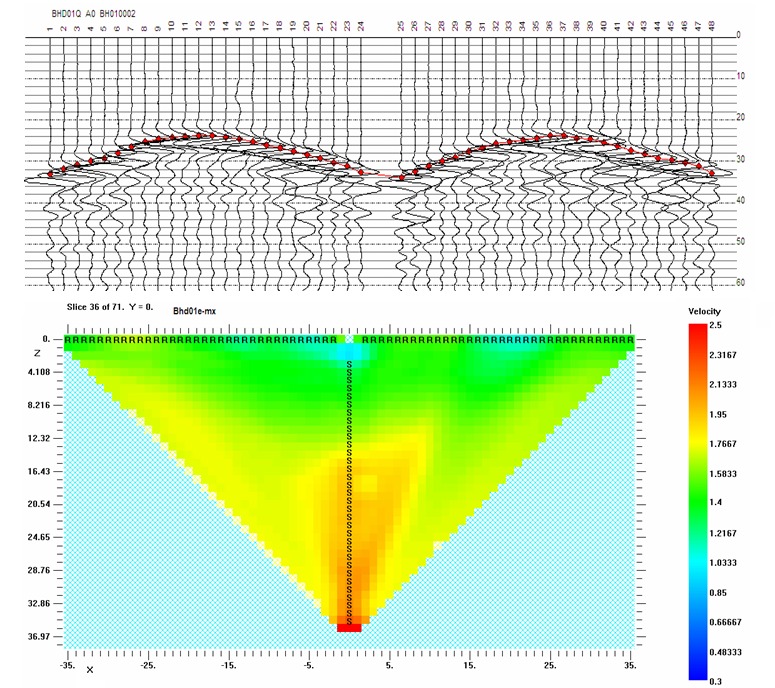
Since we can’t physically travel to the center of the Earth, how do we know anything about it? Scientists have gotten creative. Seismic waves from earthquakes act like x-rays for the planet. Scientists measure seismic waves that pass through the Earth, with deep earthquakes 30 km or more below the surface generating the most informative waves.
In laboratories, diamond anvil cells use Earth’s hardest substance to simulate the incredibly high pressure at the core, with an x-ray laser beamed through two diamonds to simulate the core’s temperature. It’s not the same as being there, but these experiments let researchers recreate core conditions in miniature, testing how iron behaves under extreme pressure and heat. Computer modeling has also advanced dramatically, allowing scientists to simulate processes impossible to observe directly.
Surprising Discoveries from the Deep
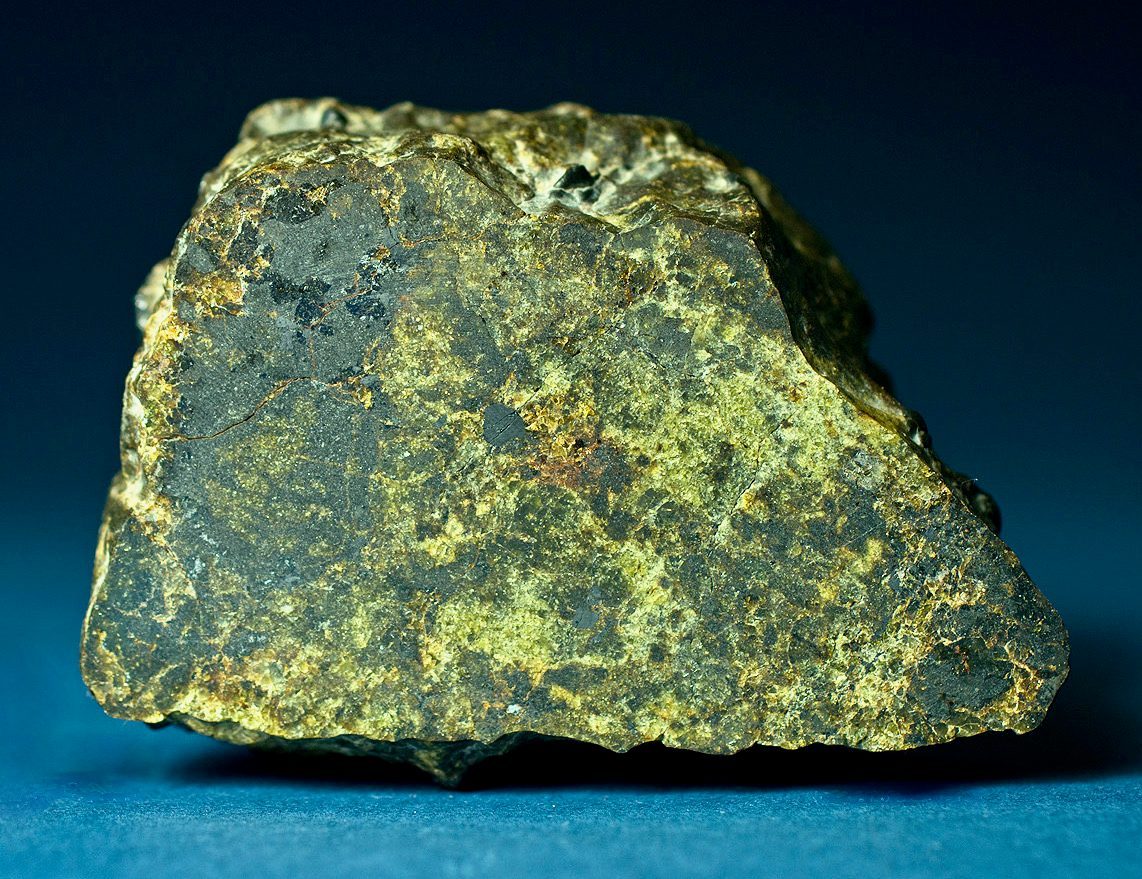
What’s fascinating is that every time scientists probe deeper, they find surprises that challenge what we thought we knew. When the Kola Superdeep Borehole drilled down, researchers discovered the absence of the transition from granite to basalt that scientists had long expected to exist, with the granitic rock extending beyond the twelve kilometer point. That single finding forced geologists to rethink fundamental assumptions.
Scientists learned that Earth’s crust is thinner than expected, water exists far deeper than imagined, and microscopic life can thrive in crushing heat and pressure. These aren’t just academic curiosities. Understanding the deep Earth helps us predict volcanic eruptions, understand earthquakes, and even search for life on other planets. If life exists in such extreme conditions here, maybe it can elsewhere too.
Could We Ever Make the Journey?
So could we ever actually do it? Could future technology overcome the heat, the pressure, the sheer distance? Let’s be honest: it’s hard to imagine how. The material with the highest melting point is an alloy of Tantalum Hafnium Carbide that melts at 3,990 degrees Celsius, well below the Earth’s core temperature of around 5,200 degrees Celsius, and that’s not even considering the pressure of 3.6 million atmospheres.
Some scientists have proposed wild ideas. One method involves using a hydrogen bomb to blow open a crack in Earth’s crust, then filling it with molten iron that sinks to the core while a small probe rides on top, transmitting data back using seismic waves. It sounds like science fiction, and realistically, it probably is. The engineering challenges are so immense that exploring interstellar space might actually be easier than reaching our planet’s center.
The Wonder of the Unreachable
There’s something beautifully humbling about the center of the Earth remaining beyond our reach. We’ve sent probes to the edge of our solar system, landed rovers on Mars, and peered billions of light-years into space with telescopes. Yet the core of our own planet, just a few thousand miles beneath us, remains profoundly mysterious.
Humanity knows more about certain distant galaxies than the ground beneath our feet, and while it took Voyager 1 satellite 35 years to reach interstellar space, it took only about 19 years to drill just 12 km into Earth’s surface. This isn’t a failure of science or technology. It’s a reminder that our planet still holds secrets, that exploration isn’t finished, and that some frontiers may remain forever just out of reach. The journey to the center of the Earth may never happen physically, but the quest to understand what’s down there continues to push the boundaries of human knowledge and imagination.
What do you think? Does it surprise you that we know less about Earth’s interior than we do about distant planets? Share your thoughts.
Hi, I’m Andrew, and I come from India. Experienced content specialist with a passion for writing. My forte includes health and wellness, Travel, Animals, and Nature. A nature nomad, I am obsessed with mountains and love high-altitude trekking. I have been on several Himalayan treks in India including the Everest Base Camp in Nepal, a profound experience.