
You have probably stood at a crossroads in your life and wished you could rewind the clock. Maybe it was a missed opportunity, a regretted decision, or simply a burning curiosity about whether the dinosaurs really were as terrifying as the movies suggest. Whatever the reason, the human obsession with time travel runs deep. It runs so deep, in fact, that some of the most brilliant scientific minds in history have spent considerable energy trying to figure out whether it is actually possible.
Here is the thing though: time travel is not entirely science fiction. Parts of it are already happening, quietly, beneath the radar of public awareness. The real question is what it would mean if we could harness it fully, and what extraordinary, terrifying, or wondrous consequences might follow. Get ready, because this one is a wild ride.
Einstein Changed Everything We Thought We Knew About Time
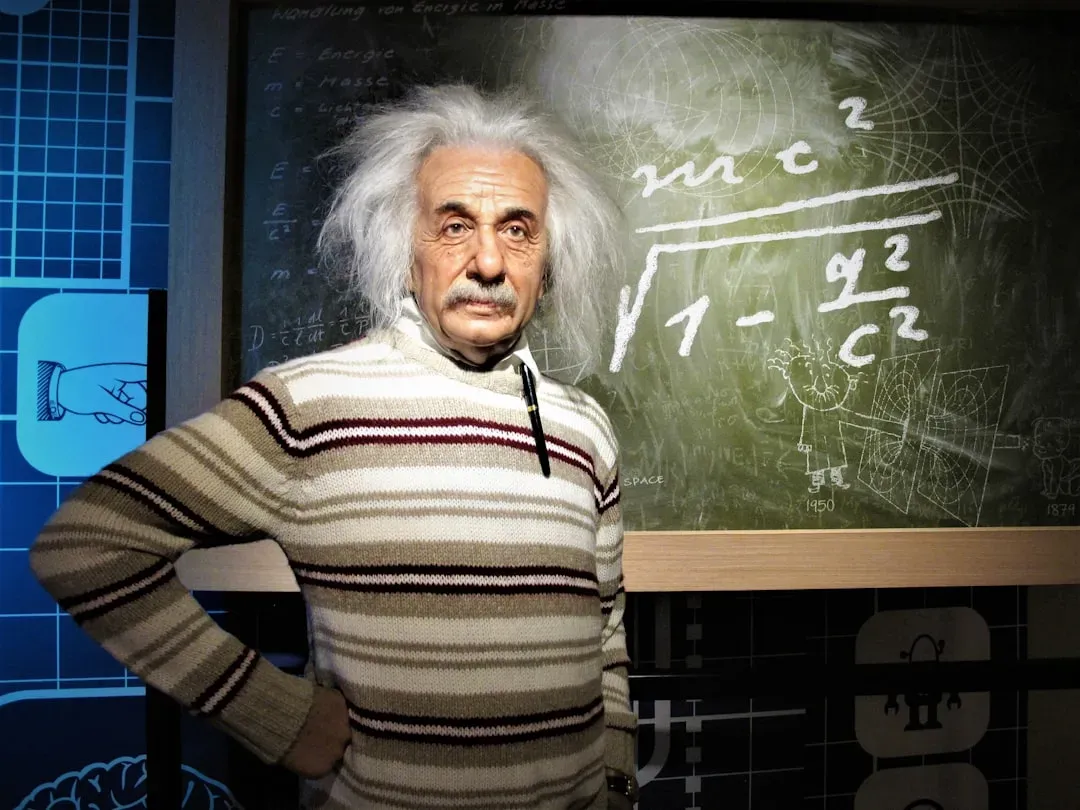
Before we can talk about what time travel would look like, you need to understand that time is not what you think it is. It is not a fixed, steady river flowing at the same pace for everyone on Earth. Albert Einstein revolutionized physics when he proved this intuitive understanding of time to be fundamentally incomplete, revealing time to be neither fixed nor the universal constant we once believed it to be.
Einstein’s special theory of relativity, published in 1905, introduced the concept of time dilation. Time does not flow at the same rate for everyone. It depends on how fast you are moving relative to something else. If you could travel at speeds close to the speed of light, time would slow down for you relative to people who remain stationary.
According to Einstein’s special theory of relativity, time’s flow depends on how fast you are moving. The quicker you travel, the slower seconds pass. According to Einstein’s general theory of relativity, gravity also affects clocks: the more forceful the gravity nearby, the slower time goes. Think of it like being stuck in traffic while everyone else takes the fast lane. You arrive at the future, just later than you expected.
Time Dilation Is Already Happening Right Now, Above Your Head
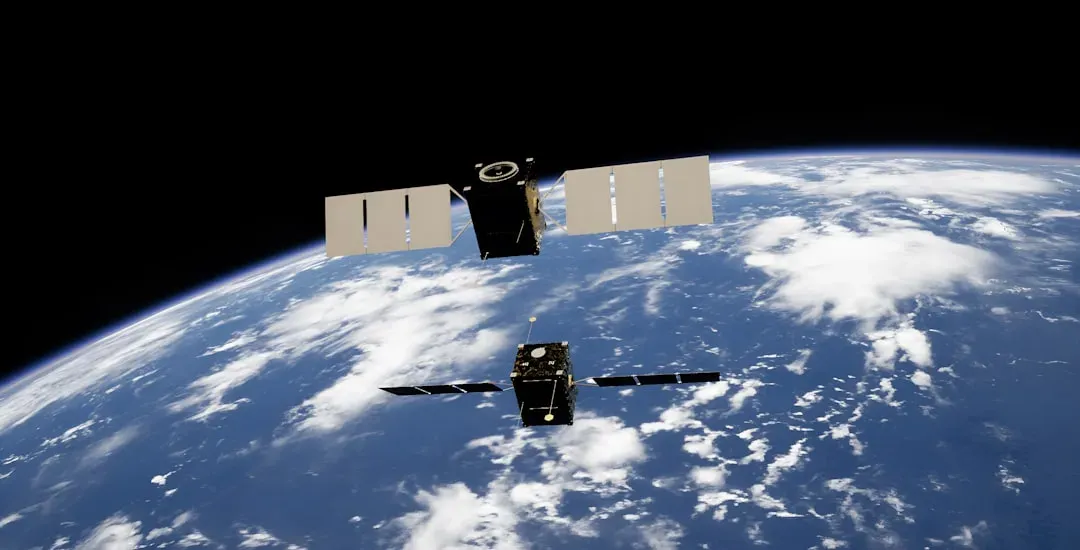
Here is something that might genuinely surprise you: you rely on time travel effects every single day without realizing it. The GPS technology guiding your phone, your car, your delivery driver, all of it depends on corrections for time dilation. The Global Positioning System uses accurate, stable atomic clocks in satellites and on the ground to provide worldwide position and time determination, and these clocks have gravitational and motional frequency shifts so large that, without carefully accounting for numerous relativistic effects, the system would not work.
A clock aboard a GPS satellite will lose about 7 microseconds per day due to its speed. That is three orders of magnitude larger than the budget for satellite clock error, meaning it simply cannot be ignored. On top of that, a clock aboard a GPS satellite in medium Earth orbit will gain about 45 microseconds per day over a clock at sea level, and the net effect is that a GPS satellite clock will gain about 38 microseconds per day over a clock at rest at mean sea level.
Time dilation is not a theory waiting for proof. It is an engineering reality. Every GPS satellite in orbit right now is correcting for it as you read this sentence. Honestly, that still blows my mind every time I think about it. Einstein’s century-old equations are baked into the navigation app on your phone.
Wormholes: The Universe’s Most Exotic Shortcut
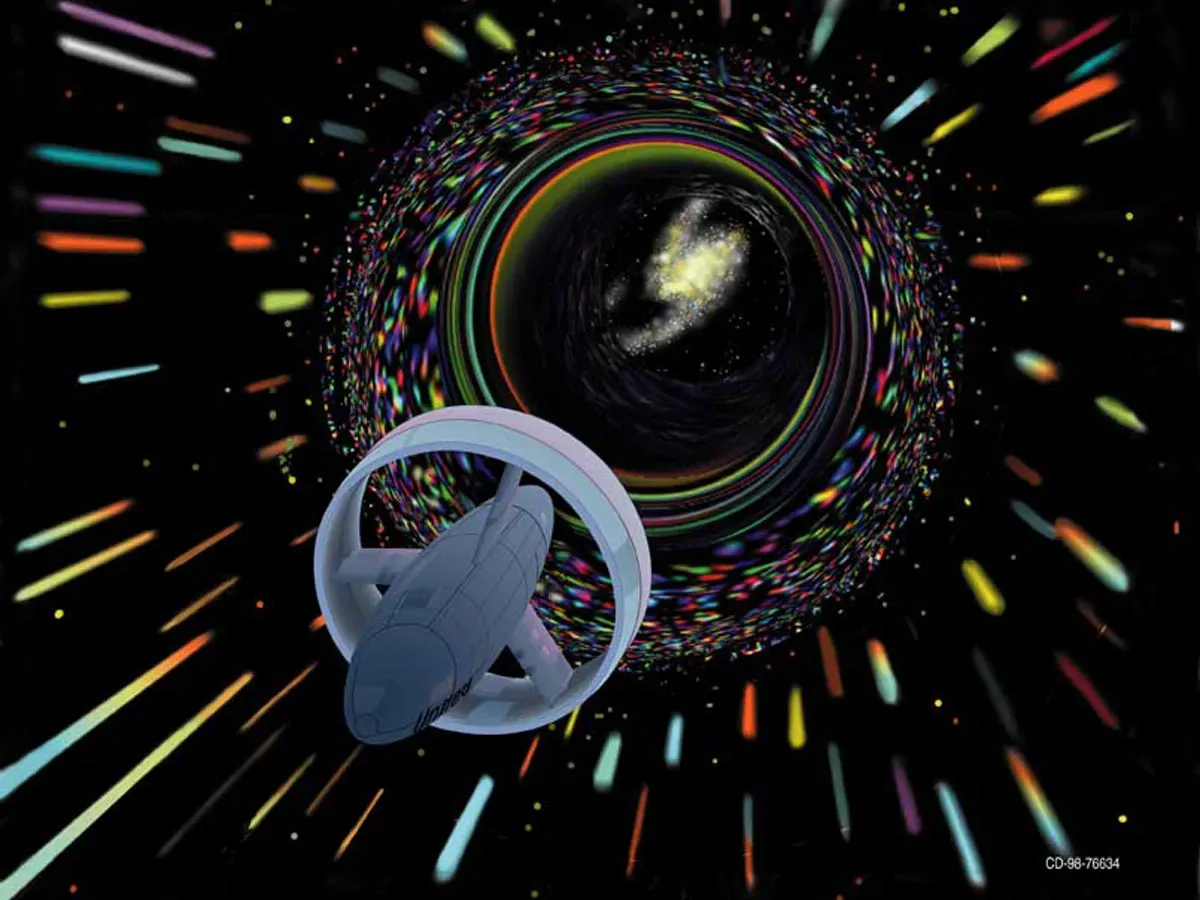
If forward time travel is already proven, what about the really daring stuff? What about cutting across time rather than riding it? This is where wormholes enter the conversation, and things get genuinely strange. A wormhole is a hypothetical structure that connects disparate points in spacetime, visualizable as a tunnel with two ends at separate points in spacetime, including different locations, different points in time, or both.
In 1935, Einstein and physicist Nathan Rosen used the theory of general relativity to elaborate on the idea, proposing the existence of “bridges” through spacetime. These bridges connect two different points in spacetime, theoretically creating a shortcut that could reduce travel time and distance. The shortcuts came to be called Einstein-Rosen bridges, or wormholes.
Relativity physics provides the framework for understanding wormholes as distortions or tunnels in the curvature of spacetime, caused by massive objects or energy distributions. These tunnels could connect not only different locations but also different times, opening the door for time travel. Imagine folding a piece of paper so that two distant points touch. That is essentially the geometry physicists are imagining, just in four dimensions instead of two. Easy to say, extraordinarily hard to actually build.
The Exotic Matter Problem: Why Building a Time Machine Is So Hard
Let’s be real for a moment. If wormholes theoretically exist in the math, why is nobody building one? The answer comes down to one spectacularly difficult requirement: exotic matter. Exotic matter, a hypothetical form of matter with negative energy density, has long been theorized as an essential component in the creation of stable wormholes, and its existence would provide a means to manipulate spacetime, allowing for the creation of traversable wormholes that could facilitate time travel.
Negative energy density, which physics predicts might hold wormholes open, has been indirectly observed in minor quantum effects such as the Casimir effect, but never in the amounts or scale needed. The Casimir effect is a real, measurable phenomenon where the energy between two very close metal plates behaves in unusual ways. It is like finding a single drop of water and trying to use it to fill a swimming pool.
The problem with using wormholes to travel in space or time is that they are inherently unstable. When a particle enters a wormhole, it creates fluctuations that cause the structure to collapse in upon itself. There are theories that a wormhole could be held open by some form of negative energy. Under these theories, if a sufficient quantity of negative energy could be employed, it might continue to hold the wormhole open while objects pass through it. So far, gathering that quantity of negative energy remains firmly beyond anything human technology can achieve.
The Grandfather Paradox and Why It Keeps Physicists Up at Night
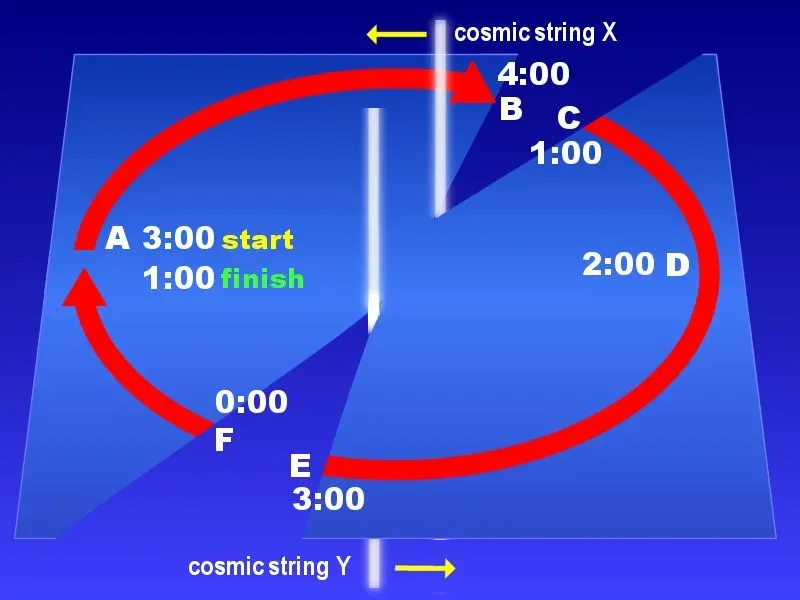
Suppose you solved the exotic matter problem. You built your wormhole, you stabilized it, and you stepped through to the past. What happens next? This is where the deeply unsettling business of paradoxes begins. Any theory that would allow backward time travel would introduce potential problems of causality. The classic example is the grandfather paradox, which postulates traveling to the past and intervening in the conception of one’s ancestors.
If a person travels back in time and kills their grandfather before their own parent is born, this would prevent the time traveler from being born, which in turn would prevent the time traveler from going back in time and killing the grandfather. This leads to a massive level of inconsistency. It is essentially logic eating itself, a snake consuming its own tail at the speed of thought.
I think what makes this paradox so powerful is that it is not really about grandfathers at all. It is about whether the universe has any internal coherence. An important consequence of quantum corrections researchers are studying is that history might remain self-consistent. Even if you attempted to do something paradoxical, the physical system would not settle into a final state that defies logic or causality. Instead, the universe would “correct” the scenario to avoid a permanent contradiction.
The Novikov Self-Consistency Principle: The Universe’s Built-In Safety Net
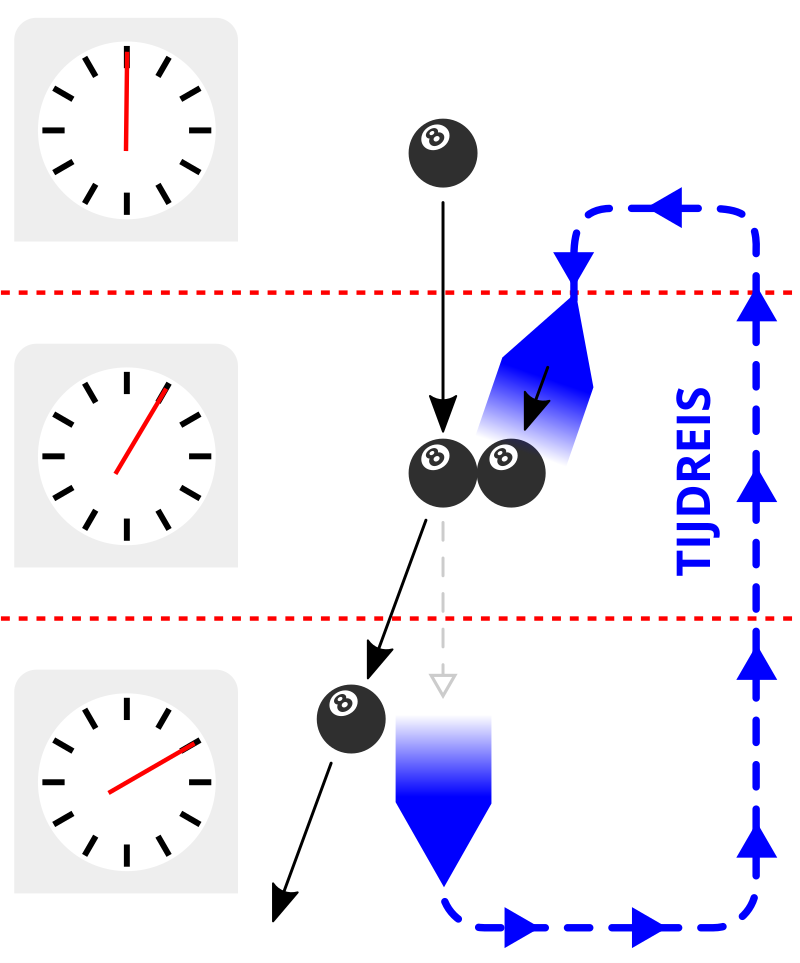
One of the most elegant proposed solutions to the paradox problem is something called the Novikov Self-Consistency Principle. The Novikov self-consistency principle was developed by Russian physicist Igor Dmitriyevich Novikov in the mid-1980s to solve the problem of paradoxes in time travel. The principle asserts that if an event exists that would cause a paradox or any “change” to the past whatsoever, then the probability of that event is zero. It would thus be impossible to create time paradoxes.
The Novikov self-consistency principle states that anything you do in the past has already happened and cannot be changed; thus, any attempt to alter history will simply result in events unfolding in a way that is consistent with what has already occurred. This idea may seem counterintuitive at first, but it provides a fascinating framework for exploring complex time-travel narratives without getting lost in paradoxes.
According to this principle, physics in or near closed timelike curves can only be consistent with the universal laws of physics, and thus only self-consistent events can occur. Anything a time traveler does in the past must have been part of history all along, and the time traveler can never do anything to prevent the trip back in time from happening, since this would represent an inconsistency. In other words, the universe has its own built-in editor. You cannot publish a paradox. It simply will not go to print.
What Backward Time Travel Would Mean for Physics, Philosophy, and You
Even setting paradoxes aside, if backward time travel were truly possible, the consequences for everything we understand about reality would be staggering. Time travel is not just a scientific puzzle; it is a philosophical one. If you can travel back in time, is the past fixed? Or can you change it? Would a time traveler be the same person if they alter their timeline?
Stephen Hawking proposed the chronology protection conjecture, suggesting the laws of physics somehow prevent the formation of closed timelike curves except possibly at microscopic scales. The implication is that any attempt to create a time machine would trigger unspecified physical processes which destroy the mechanism before it could function. Hawking was essentially suggesting the universe actively resists being broken.
By demonstrating how entropy and quantum fluctuations can ease or erase the contradictions on a time loop, recent research offers a potential blueprint for how the universe itself could make time travel self-consistent. This does not mean practical time travel is on the horizon, not at all; but it does suggest that the idea is not as impossible as it might seem at first glance. Still, the philosophical weight of it all is enormous. Free will, identity, memory, history itself: all of it would need reexamination from the ground up.
Conclusion: The Most Important Journey Humanity Has Yet to Take
Time travel sits at the extraordinary intersection of what we know and what we dare to imagine. The science is real, at least in part: forward time travel is scientifically proven, as time dilation effects from special and general relativity allow travelers to move into the future faster than normal, and GPS satellites and particle accelerator experiments confirm these effects daily. Backward time travel remains a different story entirely, one without a proven chapter yet written.
The ER=EPR conjecture suggests wormholes could be related to quantum entanglement, offering a possible microscopic mechanism linking spacetime geometry with quantum mechanics. This intersection hints at the potential for a unified theory of quantum gravity that incorporates wormholes naturally while resolving paradoxes associated with time travel. The puzzle pieces are still scattered across the table, but more of them are being found every year.
Perhaps the most remarkable truth in all of this is that the universe seems to be built on rules flexible enough to at least flirt with the concept of time travel, without immediately shattering. The laws of physics are not a stone wall. They are more like a sophisticated maze, full of unexpected passages. Whether one of those passages leads backward through time is a question that may define the next century of scientific discovery.
What would you do first if you could travel through time? Would you go forward or back, and would you trust the universe to keep you honest? Tell us in the comments.