
Imagine waking up tomorrow with the ability to step into a machine, punch in a date, and find yourself standing in ancient Rome or witnessing the birth of a star. It sounds like the stuff of late-night sci-fi marathons. Yet here is the thing: some of the most brilliant physicists who have ever lived have seriously grappled with whether time travel is theoretically allowed by the laws of the universe. Not just allowed in stories, but in actual, testable, mathematical physics.
The deeper you dig into this subject, the more your brain starts to ache in the most wonderful way. From Einstein’s curved spacetime to quantum mechanics and wormholes, the science is stranger than any film you have ever watched. So buckle up and prepare to have your sense of reality stretched in ways you probably did not expect. Let’s dive in.
Einstein Changed Everything We Know About Time
Most of us grew up thinking of time as a straight line, ticking steadily forward like a metronome, completely indifferent to who you are or how fast you are moving. Isaac Newton certainly thought so. He proposed a concept of universal time, meaning time was the same everywhere in the universe, for everyone, no matter what.
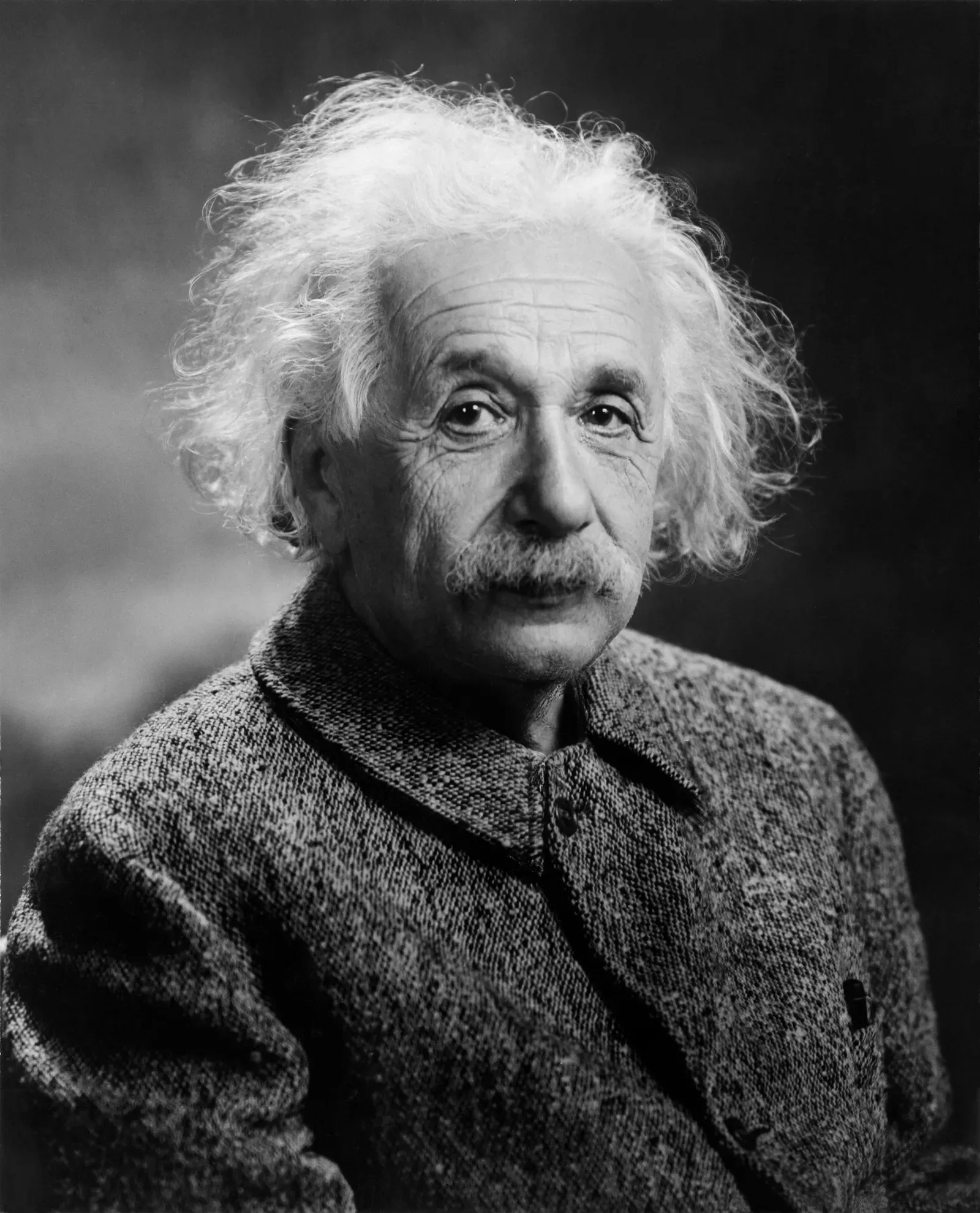
Then Albert Einstein came along and demolished that idea entirely. Einstein formulated the theories of relativity, which remain the most comprehensive framework for understanding time. He showed that time is not linear and universal, and that it actually varies depending on physical quantities like speed, gravity, and mass. Think of it like this: time is not a rigid ruler, it’s more like a rubber band that can be stretched, squished, and bent.
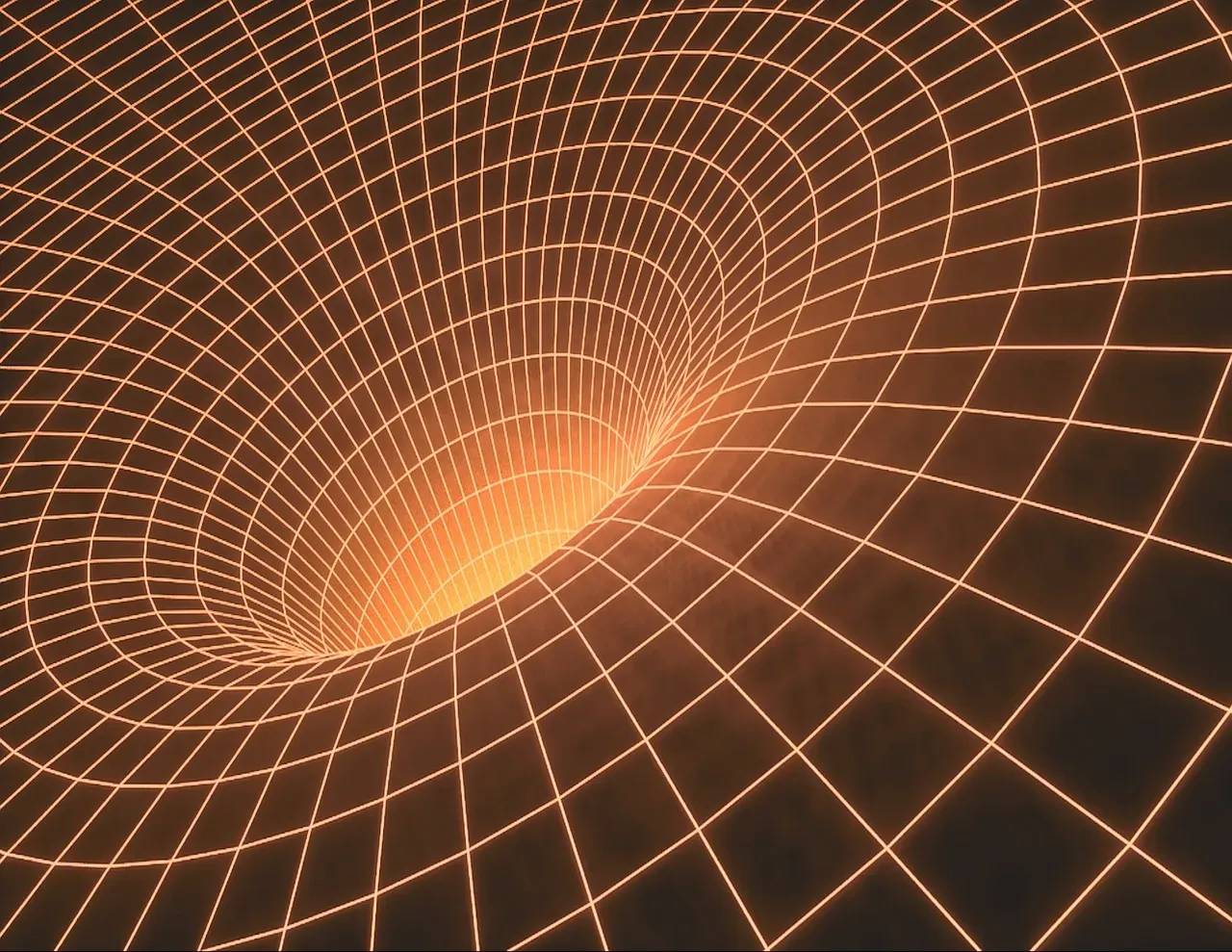
Einstein’s theory of general relativity shows that spacetime can curve in unusual ways. Under certain extreme conditions, it might bend so dramatically that it loops back on itself, creating what physicists call a “closed timelike curve.” Imagine following a path through spacetime that eventually leads you back to where, and when, you started. Honestly, that alone should keep you up at night.
Albert Einstein’s general theory of relativity fundamentally changed our understanding of gravity by describing it as the curvature of spacetime caused by mass and energy. This framework also predicts unusual geometries, such as wormholes. So the very same theory that explains how planets orbit the sun also, quietly and almost reluctantly, opens a mathematical door to time travel.
Time Dilation: The Time Travel That Already Happens
Here is something genuinely mind-blowing. You do not need a science fiction machine to experience time travel. It is already happening around you, right now, on a very small scale. Time dilation is the relative difference in the passage of time between two entities due to a stark difference in either gravity or relative velocity. Slower clocks, faster clocks, it is not a glitch. It is physics doing exactly what it is supposed to do.
This is not just theory. We have observed time dilation directly. Astronauts aboard the International Space Station age ever-so-slightly slower than people on Earth, because they are moving faster relative to us. Atomic clocks flown in high-speed jets tick a little differently than those on the ground. So in a sense, time travel to the future already happens, just on a very tiny scale.
Forward time travel is supported by special relativity. For example, astronauts traveling at near-light speeds would experience time dilation, aging slower than people on Earth. This effect, though experimentally verified, does not allow for backward time movement. So moving forward in time is essentially proven science. Moving backward? That is where things get wonderfully chaotic.
The Global Positioning System can be considered a continuously operating experiment in both special and general relativity. The in-orbit clocks are corrected for both special and general relativistic time dilation effects so that, as observed from the Earth’s surface, they run at the same rate as clocks on the surface. Every time you use GPS navigation, you are, without realizing it, benefiting from Einstein’s theory of time.
Wormholes: The Universe’s Theoretical Shortcut
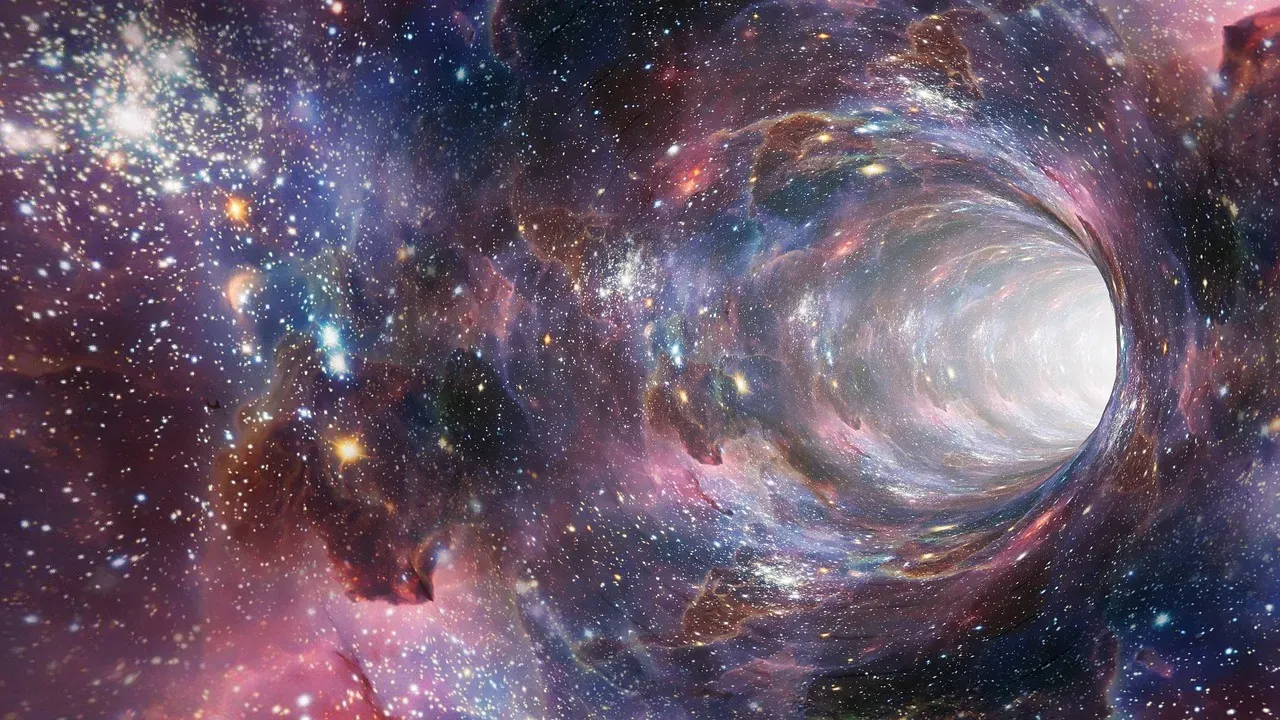
A wormhole is a hypothetical structure that connects disparate points in spacetime. It can be visualized as a tunnel with two ends at separate points in spacetime, meaning different locations, different points in time, or both. Wormholes are based on a special solution of the Einstein field equations. Wormholes are consistent with the general theory of relativity, but whether they actually exist is unknown.
Think of spacetime like a folded piece of paper. You are standing on one side, trying to reach a dot on the other. You could walk the long way across the surface. Or someone could just poke a hole straight through. In 1935, Einstein and physicist Nathan Rosen proposed the concept of bridges through spacetime, now called Einstein-Rosen bridges. These hypothetical tunnels could, in theory, connect distant parts of the universe or even different times. Later, physicist Kip Thorne and his colleagues popularized the idea of traversable wormholes, ones that could be crossed without being instantly destroyed.
If you take one end of a wormhole and accelerate it to a speed close to that of light, it will experience time dilation, its internal clock will run slower than the rest of the universe. That will cause the two ends of the wormhole to no longer be synchronized in time. The result, at least in theory, is a tunnel connecting two different moments in history.
The catch? A significant one. The problem with using wormholes to travel in space or time is that they are inherently unstable. When a particle enters a wormhole, it creates fluctuations that cause the structure to collapse in upon itself. There are theories that a wormhole could be held open by some form of negative energy, a case where the energy density of space is actually negative. This so-called “exotic matter” has never been confirmed to exist, which is, to put it mildly, a rather large obstacle.
The Grandfather Paradox: When Logic Ties Itself in Knots
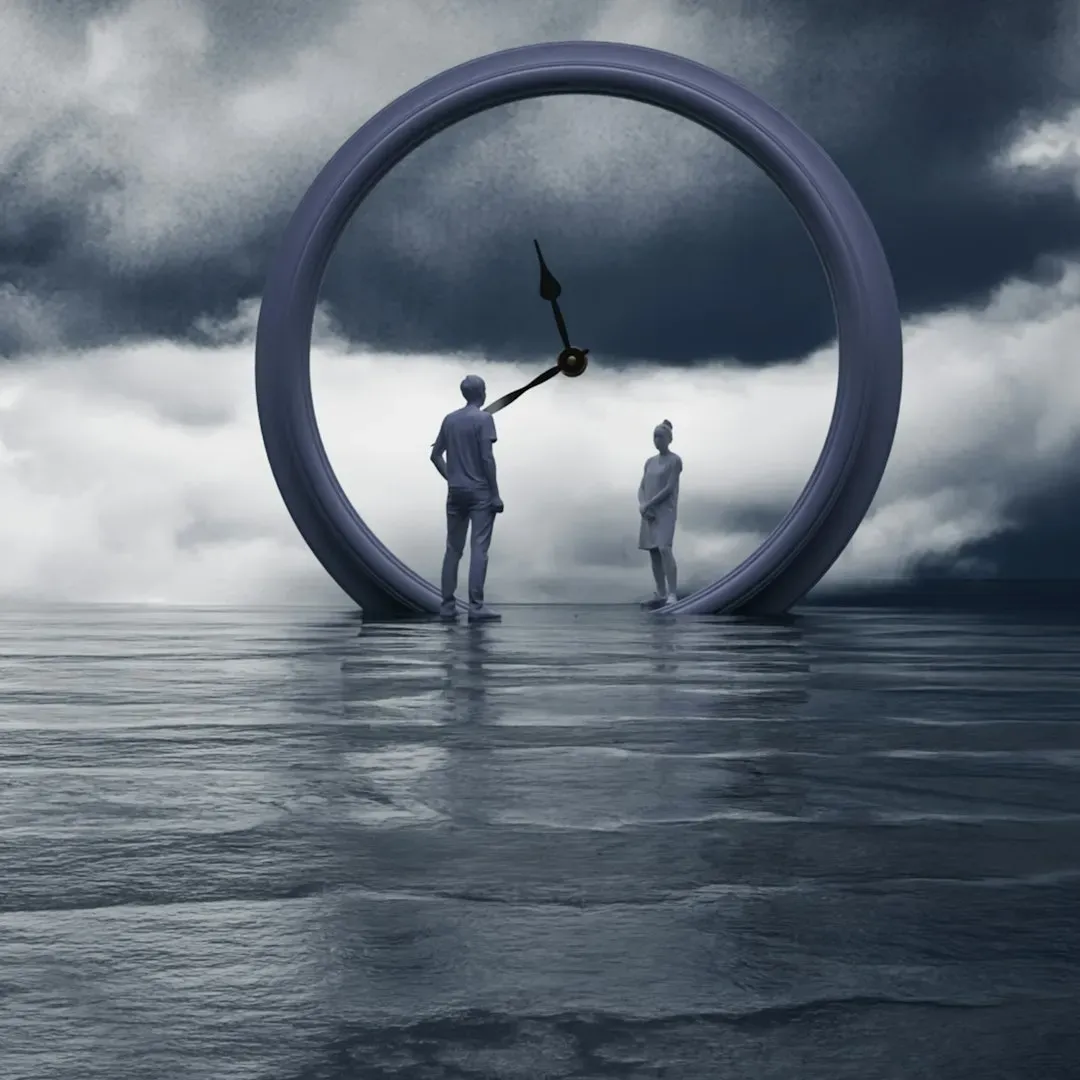
Let’s say you somehow built a time machine and traveled back to the year your grandfather was a young man. You decide, for reasons best known to your fictional self, to prevent him from ever having children. The result? Your parent would never be born. You would never be born. So you would not exist to travel back and stop anything. If your grandparents never met, you would never be born. But if you were never born, how could you travel into the past to prevent the meeting? Such paradoxes suggest that backward time travel might create contradictions in reality itself.
The paradox of changing the past stems from modal logic: if it is necessarily true that the past happened in a certain way, then it is false and impossible for the past to have occurred in any other way, so any change to the past would be a paradox. It is a logical trap that seems to have no exit. You are essentially arguing with the universe’s own rulebook.
There are proposed resolutions, though. Some physicists propose that the universe might prevent paradoxes by enforcing consistency. In such models, events in the past could not be changed in ways that create contradictions. Others suggest that altering the past might create branching timelines, each representing a different version of reality. Neither solution is exactly comforting, but both are at least intellectually honest about the problem.
I think what makes the grandfather paradox so fascinating is that it forces you to confront something deeply uncomfortable: the idea that free will and time travel might be fundamentally incompatible. A time traveler would not be able to change the past from the way it is, but would only act in a way that is already consistent with what necessarily happened. You can go back. You just cannot actually change anything. That is either reassuring or deeply frustrating, depending on your personality.
The Bootstrap Paradox and Other Brain-Melting Loops
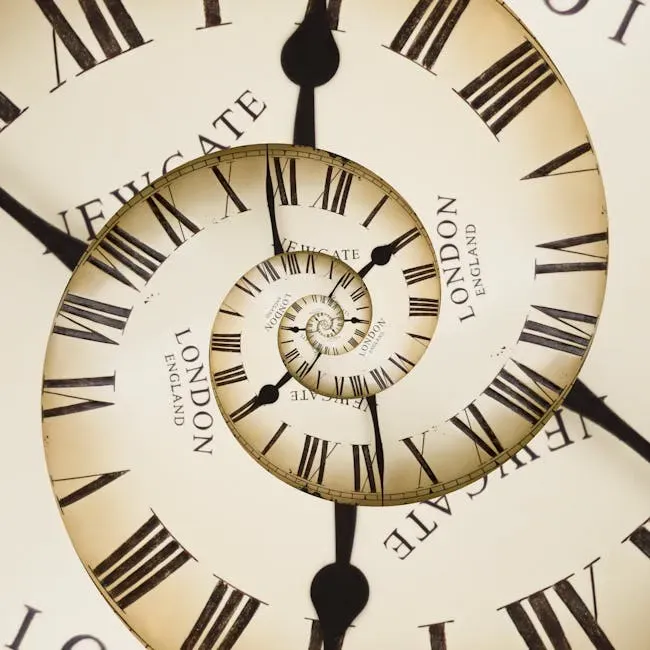
The Bootstrap Paradox is a theoretical paradox of time travel that occurs when an object or piece of information sent back in time becomes trapped within an infinite cause-effect loop in which the item no longer has a discernible point of origin, and is said to be “uncaused” or “self-created.” It is also known as an Ontological Paradox, in reference to ontology, a branch of metaphysics dealing with the study of being and existence.
Here is a classic example. Imagine you travel back in time and hand a young scientist the complete theory of relativity, written on a piece of paper. He publishes it. It becomes famous. You read it. You travel back. You give it to him. But who originally wrote it? The bootstrap paradox illustrates how backwards time travel can create situations where effects precede their causes in logically impossible ways. The information came from nowhere. It just loops forever, with no origin point, which is a philosophical nightmare wrapped in a physics problem.
The predestination paradox occurs when the actions of a person traveling back in time become part of past events and end up causing the very event they were trying to prevent. This creates a temporal causality loop in which Event A in the past impacts Event B in the future, which in turn causes Event A to occur. This circular event loop ensures that the time traveler does not alter history. Any attempt to prevent something from happening in the past will only lead to causing it instead.
Time travel paradoxes fall into two broad categories. First, closed causal loops, such as the Predestination Paradox and the Bootstrap Paradox, which involve a self-existing time loop in which cause and effect run in a repeating circle, but are also internally consistent with the timeline’s history. Second, consistency paradoxes, such as the Grandfather Paradox, which generate a number of timeline inconsistencies related to the possibility of altering the past. These are not just fun thought experiments. They represent genuine scientific barriers to any workable theory of backward time travel.
Hawking’s Chronology Protection and Quantum Mechanics’ Surprising Answer
Stephen Hawking had a characteristically elegant response to the whole mess of time travel paradoxes. The chronology protection conjecture is a hypothesis first proposed by Stephen Hawking, suggesting that laws of physics beyond those of standard general relativity prevent time travel, even when the latter theory states that it should be possible. In other words, the universe itself might be wired to stop you from breaking causality.
Hawking called this the Chronology Protection Conjecture: the idea that the laws of physics conspire to prevent time travel on a macroscopic scale. He even pointed out, with a dry wit that was very much his signature, that the best evidence for this conjecture is simply that we have never been visited by tourists from the future. It is hard to argue with that logic.
Yet quantum mechanics may offer a surprising counterpoint. A study by Lorenzo Gavassino, a Vanderbilt University physicist, explores how quantum mechanics and thermodynamics might resolve such paradoxes, offering a theoretical glimpse into how time travel could actually work without breaking reality. The research is genuinely groundbreaking, even if it does not mean time machines are coming anytime soon.
One of the study’s most remarkable discoveries is the erasure of memories for individuals or systems traveling on a closed timelike curve. Memory formation, closely tied to the increase of entropy over time, is inherently unstable on a closed timelike curve due to the reversal of the entropic arrow of time. As entropy decreases during the journey’s second half, all processes, including memory retention, reverse, leaving the traveler unable to recall their experiences within the loop. So even if you could travel through time, you would arrive with no memory of having done it. That is either a fascinating safety mechanism or the universe’s cruelest joke.
Conclusion: The Dream That Refuses to Die
Time travel sits at a peculiar intersection: it is supported enough by theoretical physics to be taken seriously, yet blocked by paradoxes and practical barriers so enormous they almost defy imagination. Travel into the future through time dilation is firmly supported by modern physics and has already been observed in experiments. Travel into the past, however, remains uncertain. While certain theoretical models allow it, they require conditions and technologies far beyond anything humanity can currently achieve.
Still, science is a work in progress. Ideas once deemed impossible, like heavier-than-air flight or quantum entanglement, are now realities. Time travel may yet move from the pages of science fiction into the annals of science fact. It would be reckless to declare it impossible, and equally reckless to book your tickets just yet.
What strikes me most about this whole subject is not the machines or the paradoxes. It is what the science reveals about the nature of reality itself. Time is not merely a ticking clock or a line on a calendar. It is woven into the deepest structure of existence. It bends near massive objects. It slows at high speeds. It connects every moment of history with every moment yet to come.
We are, in a very real sense, already time travelers. Every heartbeat carries you forward. Every second you age, the universe around you shifts. The only question physics has not yet answered is whether forward is the only direction available to you. What do you think? If time travel to the past were ever proven possible, would you go back, and would you dare to change anything?