
Imagine stepping through a doorway and emerging not just somewhere else, but somewhen else entirely. The idea of time travel has captivated humanity for centuries, from ancient myths to modern blockbusters. Yet what if this seemingly impossible dream could actually become reality?
Scientists aren’t just fantasizing about temporal voyages anymore. Einstein’s equations for general relativity suggest that suitable geometries of spacetime might allow time travel into the past and future, and the laws of physics allow time travel. The universe operates on rules far stranger than our everyday experience suggests, where time itself can bend, stretch, and possibly loop back on itself.
The theories we’re about to explore aren’t science fiction pipe dreams. They’re serious scientific proposals backed by rigorous mathematics and grounded in our best understanding of reality. From Einstein’s revolutionary insights to cutting-edge quantum mechanics, the physics of time travel reveals a universe far more malleable than you ever imagined. So let’s dive into the rabbit hole of temporal possibilities and discover what modern science tells us about journeying through time.
Einstein’s Revolutionary Vision: How Relativity Opened Time’s Door
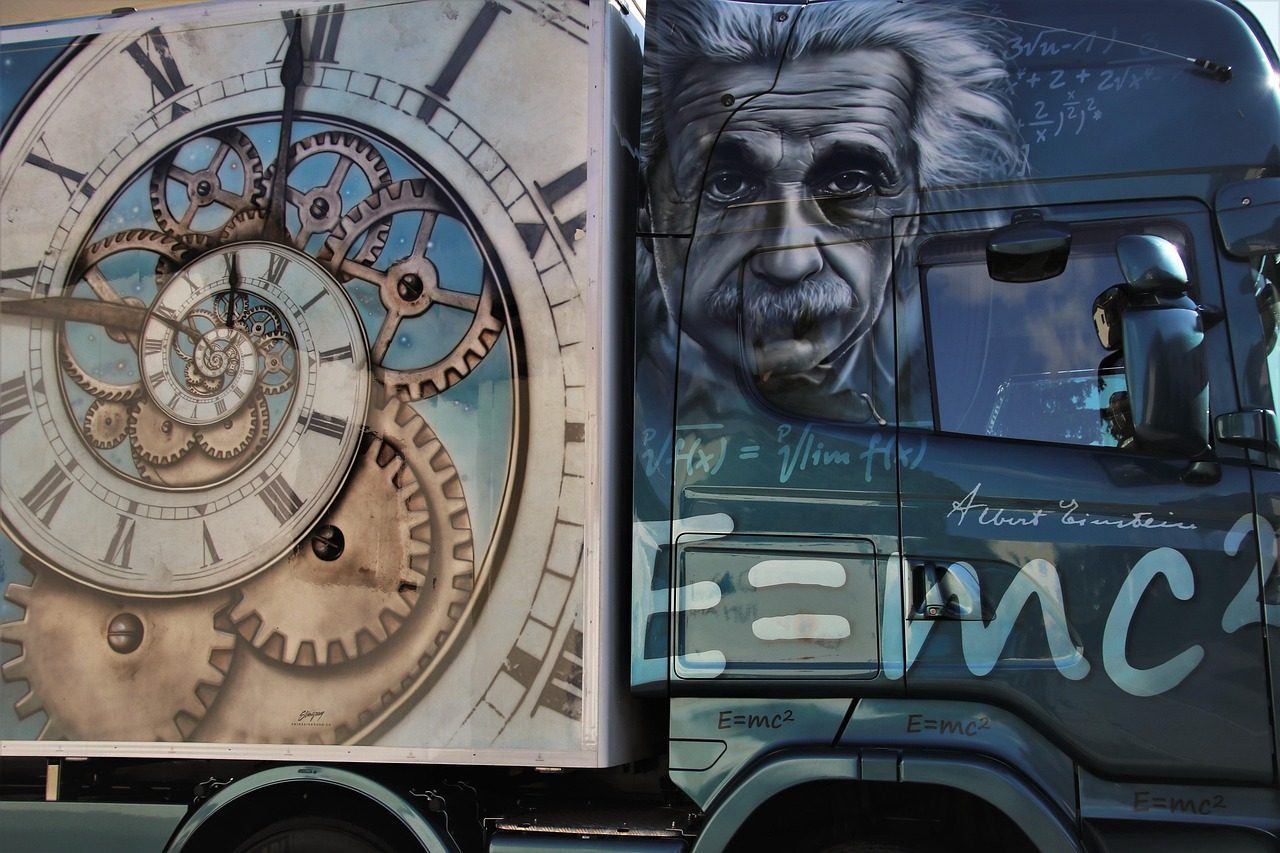
More than 100 years ago, a famous scientist named Albert Einstein came up with an idea about how time works called relativity, which says that time and space are linked together. This wasn’t just another scientific theory. It fundamentally rewrote our understanding of reality itself.
The quicker you travel, the slower seconds pass, and according to Einstein’s general theory of relativity, gravity also affects clocks with more forceful gravity nearby making time go slower. Think of time as a river that can flow at different speeds depending on where you are and how fast you’re moving. Near massive objects like black holes, this river slows to a crawl.
Scientists have done experiments to show this is true, using two clocks set to the exact same time where one clock stayed on Earth while the other flew in an airplane, and after the airplane flew around the world, scientists compared the two clocks. The flying clock had actually aged less than its earthbound twin.
Einstein’s theory introduced concepts including 4-dimensional spacetime as a unified entity of space and time, relativity of simultaneity, kinematic and gravitational time dilation, and length contraction. These aren’t just abstract mathematical curiosities. They’re measurable effects that GPS satellites must account for to provide accurate directions to your destination.
The Physics of Forward Time Travel: Already Happening Around Us
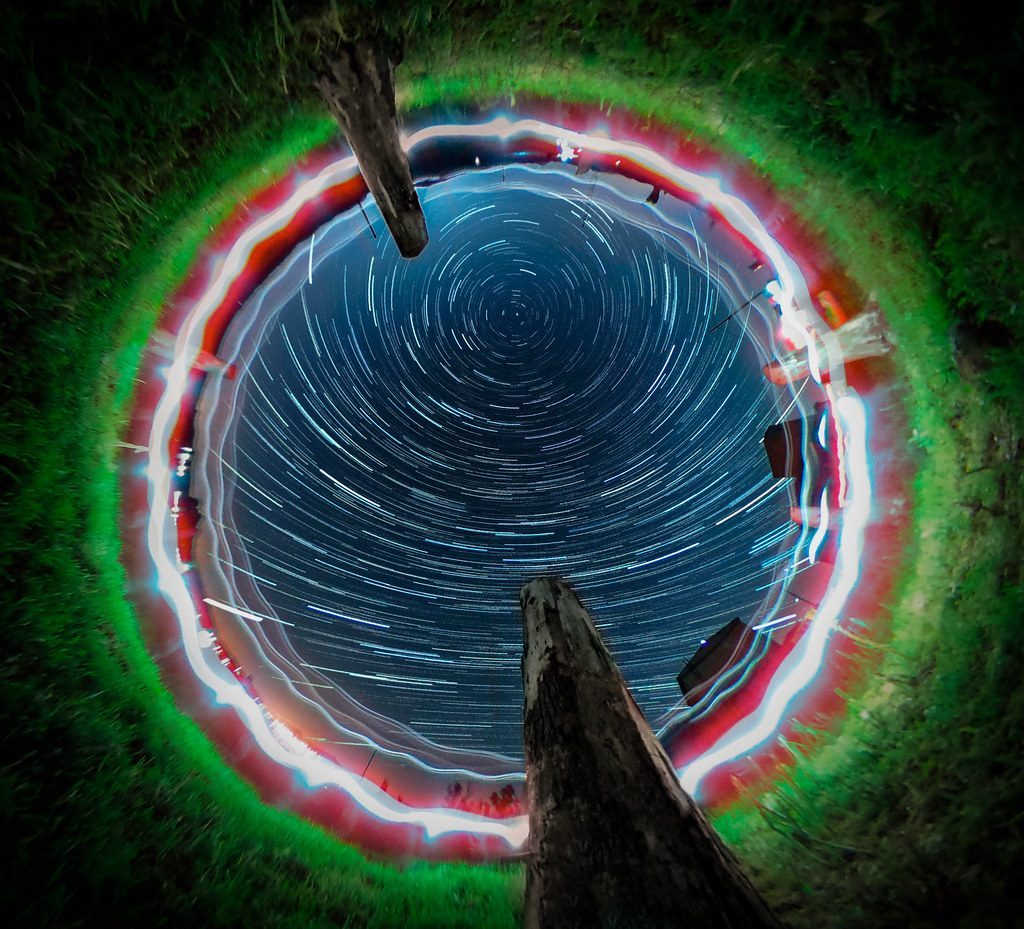
Forward time travel, outside the usual sense of the perception of time, is an extensively observed phenomenon and is well understood within the framework of special relativity and general relativity. You’re actually time traveling right now, moving forward at exactly one second per second.
However, the real magic happens when you speed up or venture near massive objects. Einstein’s theory of special relativity proposes that time is an illusion that moves relative to an observer, where an observer traveling near the speed of light will experience time much more slowly than an observer at rest. This means astronauts on the International Space Station age slightly slower than people on Earth.
Einstein’s theory also says that gravity curves space and time, causing the passage of time to slow down, and high up where satellites orbit, Earth’s gravity is much weaker, causing clocks on GPS satellites to run faster than clocks on the ground. The difference might seem tiny, but without accounting for these effects, your GPS would be off by several miles within a day.
Making one body advance or delay more than a few milliseconds compared to another body is not feasible with current technology. Still, the principle remains sound: travel fast enough or venture close enough to a massive object, and you’ll effectively journey into everyone else’s future.
Closed Timelike Curves: When Spacetime Loops Back on Itself

Physicists discuss the possibility of closed timelike curves, which are world lines that form closed loops in spacetime, allowing objects to return to their own past, and there are known solutions to the equations of general relativity that describe spacetimes which contain closed timelike curves. Imagine a cosmic highway that curves so dramatically it eventually connects back to itself.
Kurt Gödel proposed a solution known as the Gödel metric, but his solution requires the universe to have physical characteristics that it does not appear to have, such as rotation and lack of Hubble expansion, and in 1949, Kurt Gödel came up with a rotating universe with CTCs, though Einstein was concerned about the paradoxes this allowed. Gödel’s universe would need to spin like a cosmic carousel for his time loops to work.
Einstein’s theory of general relativity describes gravity as the warping of spacetime by energy and matter, where an extremely powerful gravitational field could in principle profoundly warp the fabric of existence so that spacetime bends back on itself, creating a closed timelike curve or CTC, a loop that could be traversed to travel back in time. The mathematics work perfectly, even if the physics remains uncertain.
Whether general relativity forbids closed time-like curves for all realistic conditions is still being researched. The jury’s still out on whether our universe actually permits these temporal loops or whether they remain mathematical curiosities.
Wormholes: Tunnels Through Space and Time
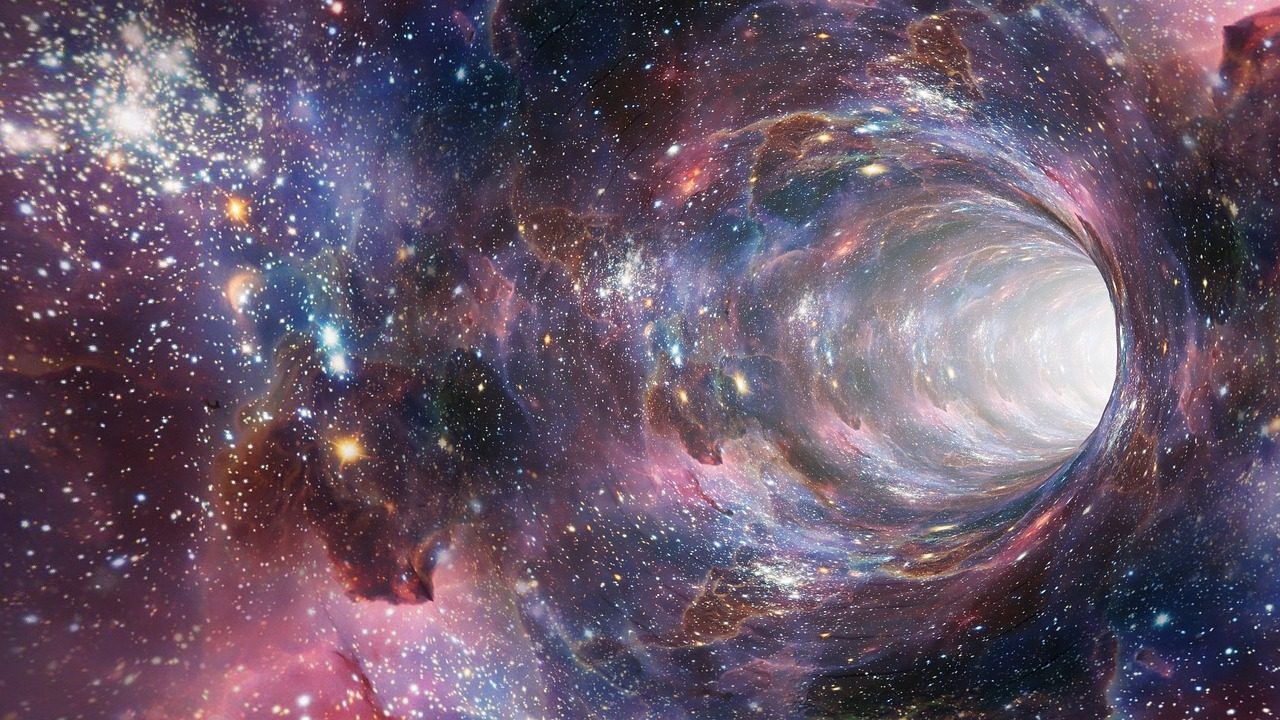
A wormhole is a hypothetical structure that connects disparate points in spacetime and can be visualized as a tunnel with two ends at separate points in spacetime. Think of them as cosmic shortcuts that could theoretically allow you to traverse vast distances or even different times.
These bridges connect two different points in space-time, theoretically creating a shortcut that could reduce travel time and distance, and the shortcuts came to be called Einstein-Rosen bridges, or wormholes. Instead of traveling for many millions of years from one galaxy to another, under the right conditions one could theoretically use a wormhole to cut the travel time down to hours or minutes.
Because wormholes represent shortcuts through space-time, they could even act like time machines where you might emerge from one end of a wormhole at a time earlier than when you entered its other end. The concept becomes even more fascinating when you consider that these tunnels might connect not just different places, but different moments in history.
Wormholes are consistent with the general theory of relativity, but whether they actually exist is unknown, and Einstein’s theory of general relativity mathematically predicts the existence of wormholes, but none have been discovered to date. They remain tantalizing possibilities hidden in the equations of physics.
The Challenge of Exotic Matter and Negative Energy
Most time travel models require negative mass and hence negative energy because, as Albert Einstein revealed when he discovered E = mc2, mass and energy are one and the same, and in theory, just as an electric charge can be positive or negative, so can mass though no one’s ever found an example of negative mass. This exotic requirement presents one of the biggest obstacles to practical time travel.
In many cases, negative mass is needed to hold open a wormhole, a tunnel in spacetime predicted by general relativity that connects one point in the cosmos to another, because without negative mass, gravity would cause this tunnel to collapse. Think of it as needing anti-gravity props to keep your time tunnel from crushing itself.
More recent research found that a wormhole containing exotic matter could stay open and unchanging for longer periods of time, where exotic matter contains negative energy density and a large negative pressure, and such matter has only been seen in the behavior of certain vacuum states as part of quantum field theory. We’ve glimpsed hints of this strange matter at quantum scales, but nothing approaching the amounts needed for time travel.
Scientists concur that it’s unlikely matter with negative mass even exists, although some quantum phenomena show promise for negative energy on very small scales. The universe seems stingy about giving us the tools we need for temporal tourism.
Black Holes: Nature’s Most Extreme Time Machines

As for backward time travel, it is possible to find solutions in general relativity that allow for it, such as a rotating black hole. These cosmic monsters don’t just devour matter and light. They twist spacetime so severely that they might offer pathways through time itself.
Black holes distort time by slowing down their passage, which is possible because of their large mass and large gravitational field. Near the event horizon of a black hole, time crawls compared to the outside universe. What feels like minutes to you could represent years for distant observers.
While our universe as a whole doesn’t seem to rotate in this way, rotating masses such as black holes can produce similar effects, creating potential environments for closed timelike curves. The swirling spacetime around a spinning black hole might create the conditions necessary for temporal loops.
Anyone walking through the Kerr ring might be transported to the other side of the universe or even the past. However, the entrance to Einstein-Rosen bridges sits behind the black hole event horizon, making them just as deadly as black holes. You’d need to survive the journey through the most extreme environment in the universe first.
The Grandfather Paradox: Time Travel’s Greatest Challenge
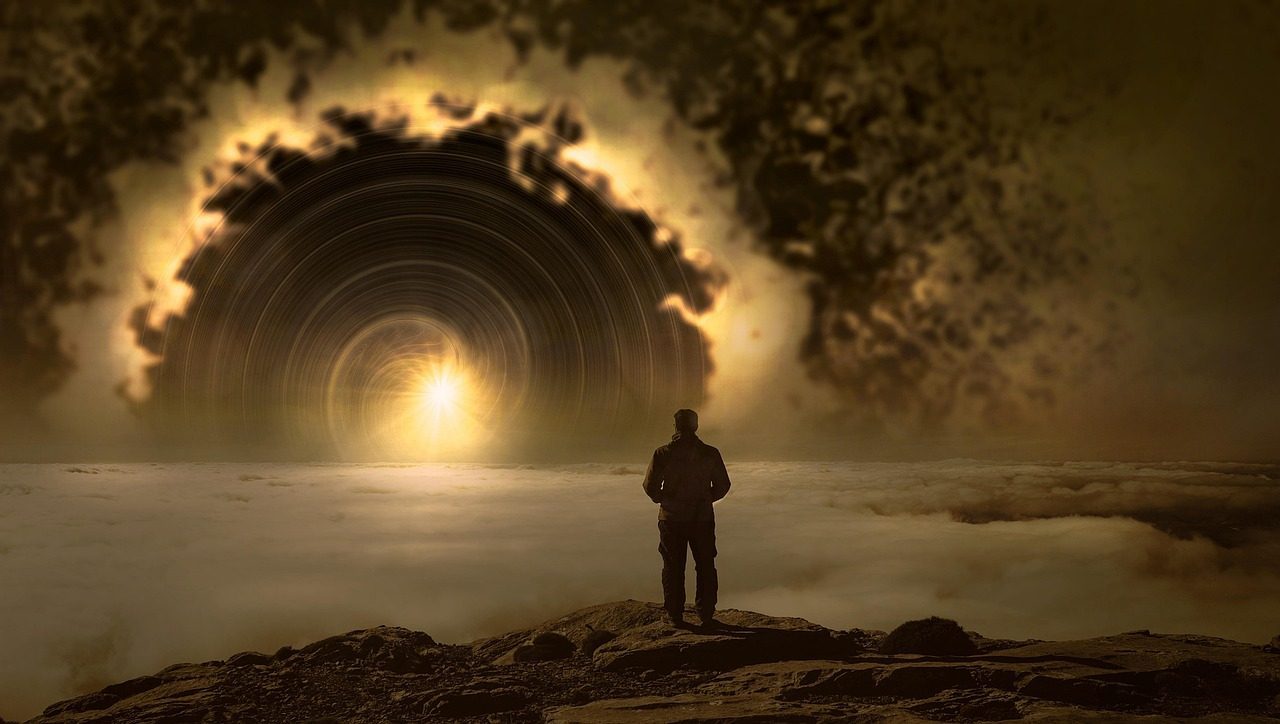
Any theory that would allow backward time travel would introduce potential problems of causality, with the classic example being the grandfather paradox, which postulates travelling to the past and intervening in the conception of one’s ancestors. This paradox strikes at the heart of time travel’s logical consistency.
A common example given is a time traveler killing their grandfather so he can’t father one of their parents, thus preventing their own conception, and if the traveler were not born, they could not kill their grandfather, making this scenario self-contradictory. It’s a logical knot that seems impossible to untangle.
Consideration of the grandfather paradox has led some to the idea that time travel is by its very nature paradoxical and therefore logically impossible, with philosophers arguing that the possibility of creating a contradiction rules out time travel to the past entirely. Yet this hasn’t stopped scientists from searching for creative solutions.
However, some philosophers and scientists believe that time travel into the past need not be logically impossible provided that there is no possibility of changing the past, as suggested by the Novikov self-consistency principle. Perhaps the universe has built-in safeguards against paradoxes.
Quantum Solutions: How Quantum Mechanics Might Save Time Travel

Seth Lloyd proposed an alternative model of CTCs that resolves the grandfather paradox using quantum teleportation and a technique called post-selection, and with Canadian collaborators, Lloyd went on to perform successful laboratory simulations of his model in 2011. Quantum mechanics offers surprising ways around time travel’s logical roadblocks.
Adding post-selection to quantum measurement makes the process deterministic rather than probabilistic and effectively bans events that would prove to be paradoxical, where results showed that the closer a photon got to doing something self-inconsistent, the more frequently the experiment failed, hinting that time travel might work the same way with any jaunt that would lead to a paradox being canceled preemptively.
A particle emitted by the machine with a probability of one half would enter the CTC and come out the other end to flip the switch with a probability of one half, imbuing itself at birth with a probability of one half of going back to flip the switch. The universe might use probability to resolve paradoxes, ensuring that contradictory events balance out mathematically.
In quantum theory’s many worlds interpretation, the grandfather paradox could be resolved if the time traveler starts out in a timeline where their grandfather lived long enough to have children, then continues along a parallel time track where they will never be born after going back and killing their forebear. Multiple timelines might provide escape routes from logical contradictions.
The Arrow of Time: Why Tomorrow Feels Different from Yesterday
The law of increasing entropy is the only law of physics that distinguishes between past and future, and as far as we know, entropy is the sole reason we remember past events and cannot predict future ones. This fundamental asymmetry shapes our entire experience of temporal flow.
The law of increasing entropy, a thermodynamic quantity that measures the degree of disorder in a system, is the only law of physics that distinguishes between past and future, where entropy is the sole reason we remember past events and cannot predict future ones. Without entropy, time might have no preferred direction at all.
This phenomenon could even render irreversible events, like killing one’s grandfather, temporary on a time loop, nullifying the paradox altogether. Quantum fuzziness might effectively cancel expected disorder to create a parallel entropic timeline that begins and ends at the same points.
If time is not an inherent property of the universe but is instead emergent from the laws of entropy, as some modern theories suggest, then it presents a natural solution to the Grandfather Paradox. Time itself might be more flexible than we imagine, opening unexpected possibilities for temporal manipulation.
Time travel remains one of physics’ most tantalizing puzzles. While we’ve discovered that forward time travel is not only possible but happening all around us, backward journeys through time face formidable obstacles. The need for exotic matter, the threat of paradoxes, and the fundamental structure of causality all conspire against temporal tourists.
Yet science continues to surprise us. From quantum mechanics offering probabilistic solutions to paradoxes, to the possibility that multiple timelines might coexist, our understanding of time’s true nature keeps evolving. Perhaps most remarkably, the very fabric of spacetime appears more malleable than our ancestors ever dreamed.
Whether time travel will ever become reality remains an open question. The mathematics suggest it’s possible, but the engineering challenges seem insurmountable with current technology. Still, as we’ve learned throughout history, today’s impossibility often becomes tomorrow’s breakthrough. What do you think? Could we one day step through time as easily as we walk through space?
Jan loves Wildlife and Animals and is one of the founders of Animals Around The Globe. He holds an MSc in Finance & Economics and is a passionate PADI Open Water Diver. His favorite animals are Mountain Gorillas, Tigers, and Great White Sharks. He lived in South Africa, Germany, the USA, Ireland, Italy, China, and Australia. Before AATG, Jan worked for Google, Axel Springer, BMW and others.