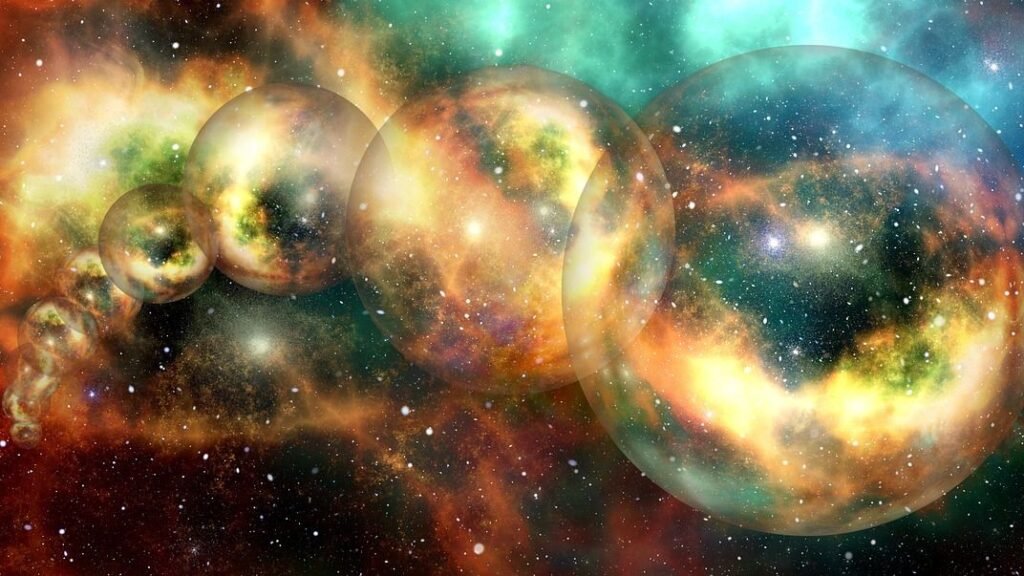

Imagine discovering that somewhere out there, another version of you chose a different job, never met the person you love now, or took a risk you were too scared to try. That idea is not just the stuff of late-night sci‑fi marathons anymore; it sits uncomfortably close to real, serious physics. The multiverse is one of those concepts that sounds ridiculous at first, then slowly becomes unsettling once you realize how many scientists are actually willing to entertain it.
When I first read about it, it felt like someone had quietly pulled the floor out from under the idea that life is a single straight line. If parallel universes are real, your life might be more like a branching forest of possibilities than a single path. In that forest, every choice, every coincidence, every dice roll could lead to a different universe. The question is not just whether the multiverse exists, but what it would mean for who we are, what we fear, and what we hope is possible.
The Many Faces of the Multiverse

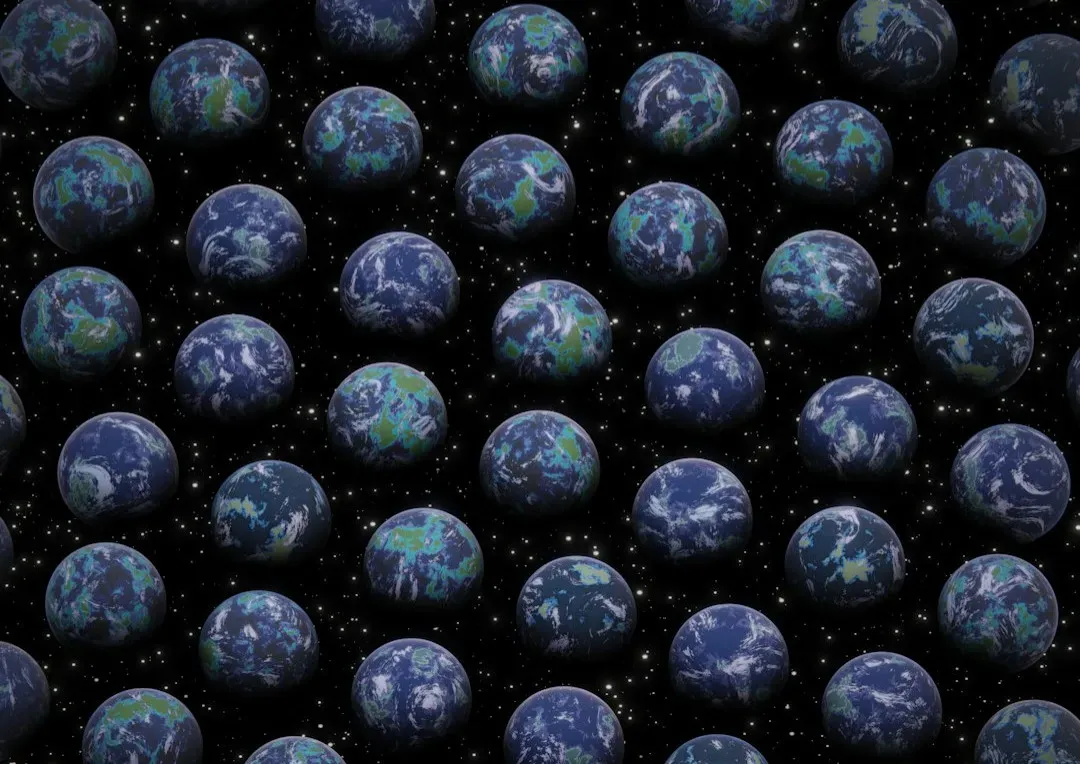
One surprising thing about the multiverse idea is that there is not just one multiverse theory – there are several, and they do not all say the same thing. Some physicists talk about a “cosmic” multiverse, where our universe is just one bubble in a vast foam of universes expanding in a larger space. Others focus on a “quantum” multiverse, where each tiny event with multiple possible outcomes might branch reality into different versions.
There are also theories where different universes might follow totally different laws of physics, like different rulebooks in a stack of possible games. In some models, those universes are forever cut off from us, like sealed rooms we can never enter. In others, they might be extremely far away but still part of the same grand structure, like distant galaxies we will never reach but can still describe. The multiverse is less like one clean hypothesis and more like a crowded family of wild ideas that all share the same unsettling DNA.
Quantum Choices: Do Universes Split With Every Decision?

When people talk about parallel universes in everyday conversation, they often mean something close to the “many worlds” interpretation of quantum mechanics. In that view, every microscopic event that could go more than one way actually does go more than one way, just in different branches of reality. That would mean there is a version of reality where the coin landed heads, and another where it came up tails, and both are equally real.
Stretch that logic out to everyday life, and it gets dizzying fast. There might be a universe where you answered a message you ignored, took a job you turned down, or left a conversation at the moment you stayed instead. It sounds dramatic, but the math behind many worlds is surprisingly clean and does not require extra “magic” to collapse possibilities into a single outcome. The downside is that it asks us to accept that reality is not a single story, but a constantly branching tree of timelines we can never climb back through.
Cosmic Bubbles: Our Universe as One of Many
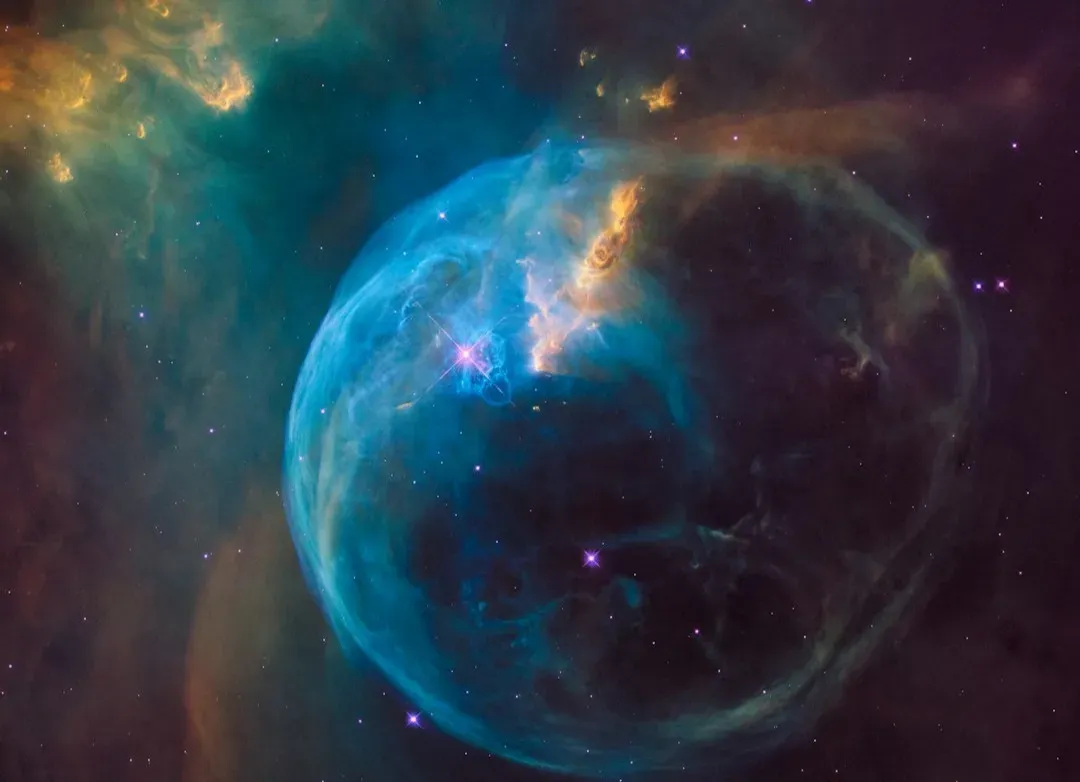
On a much larger scale, some versions of inflation theory – the idea that the early universe expanded incredibly fast – naturally produce a kind of cosmic multiverse. Instead of one big bang creating one universe, space might keep inflating in different regions, spawning countless “bubble” universes with different properties. Our observable universe would then be just one bubble in an endless sea of others.
In this picture, you do not need every choice to split reality; instead, each bubble has its own starting conditions and maybe even different constants of nature. There might be bubbles where stars never form, where gravity is slightly stronger, or where matter behaves in unfamiliar ways. The wild part is that we might never directly see these other bubbles, because the space between them could be expanding faster than light can travel. They could be unimaginably close on a cosmic scale and still forever unreachable, like ships sailing away faster than any signal can follow.
Are Parallel Universes Just Science Fiction? Where Evidence Might Hide
The harsh truth is that, right now, we do not have a smoking gun proving that other universes exist. Physics is not just about cool ideas; it is about testable predictions. That is where the multiverse often runs into trouble, because by definition other universes seem to be outside what we can observe directly with telescopes or experiments. It is hard to measure something you can never touch or see.
Still, scientists have tried to hunt for clues in subtle ways. Some have searched the cosmic microwave background – the faint afterglow of the big bang – for odd patterns that might hint at a collision with another universe in the distant past. Others look at how finely tuned the constants of nature seem to be for life and wonder if a multiverse could explain that, with life only arising in the rare universes where the conditions are just right. None of this is solid proof, but it shows that the multiverse is not just a fantasy; it shows up naturally when serious theories are pushed to their limits.
What It Would Mean for Free Will, Fate, and Identity
If parallel universes are real, the philosophical fallout is huge. Think about free will: if every possible choice is realized in some branch, what does it really mean to say “I chose this”? One way to look at it is that you still experience a single path, and your sense of responsibility does not vanish just because there are other paths where you did something else. Another way is to see it as deeply unnerving, as if your decisions are just one version among endlessly many.
It also pokes at our sense of identity. Are you still “you” if there are countless versions of you making different choices? It is a bit like looking into a fractured mirror where each shard reflects a slightly altered face. Some people find comfort in the idea that somewhere, some version of them avoided their worst mistake or lived their best dream. Others feel the opposite: that it makes our lives feel less unique. I lean toward the view that your lived experience – the one in front of you – still matters completely, even if reality is bigger and stranger than you ever imagined.
Popular Culture vs. Real Physics
Movies, novels, and games have absolutely run wild with the multiverse, turning it into a playground for alternate histories, resurrected characters, and crossover storylines. These stories can be thrilling, because they let us emotionally test drive different versions of ourselves and our world. A universe where one historical event changed, a version of you who never moved away, a world where technology took a very different turn – these ideas hit something deep in us.
Real physics is usually less cinematic, more cautious, and painfully allergic to easy answers. In serious research, nobody is hopping between universes with a gadget or chatting with their other selves. Instead, scientists are arguing over equations, running simulations, and trying not to overclaim. The connection between what you see on screen and what appears in scientific papers is often more metaphor than fact, but the stories do serve one powerful function: they make the abstract emotional, helping people care enough to ask the next question instead of tuning out when they hear the word “quantum.”
Could We Ever Visit Another Universe?
The idea of actually traveling to a parallel universe is probably the most irresistible part of the whole concept – and, from a physics standpoint, the least likely. Most multiverse models treat other universes as completely isolated, separated by distances or barriers that no known process can cross. Even if they are “nearby” in some higher-dimensional sense, they might as well be infinitely far away for any practical purpose.
Some speculative ideas imagine quantum tunneling between universes or rare cosmic events that might briefly connect them, but these are deeply theoretical and not something we are engineering anytime soon. It is a bit like asking someone in the Stone Age when they will build a rocket to another galaxy – the tools, understanding, and even the right questions are probably still missing. For now, visiting parallel universes belongs more to the realm of thought experiments and stories than travel plans, which does not make the question less fascinating. It just means that, for the moment, our trips to the multiverse are made with imagination, not with machines.
Living Your Life in a Possibly Infinite Reality

There is a strange irony in the multiverse idea: the bigger and more complicated reality becomes, the more it throws you back on the small, concrete details of your own life. If there are countless other versions of you, that does not diminish the conversation you are having right now or the decision you are sitting with tonight. In fact, it can make the present moment feel sharper, like a single glowing thread in an enormous tapestry you will never fully see.
Thinking about parallel universes also nudges you to see your choices differently. Instead of obsessing over the roads not taken, you can treat them as mental alternate universes, useful to explore in your head, but not places you can actually live in. The only universe you can act in is this one, with its particular mix of luck, pain, beauty, and chance. Whether the multiverse is ultimately real or not, the question it quietly asks is the same: given this one version of your life that you can feel and touch, what are you going to do with it now?