
Imagine waking up one morning with the unshakable feeling that somewhere, in a universe you’ll never see, another version of you made a different choice and is living a completely different life. It’s an eerie, almost haunting thought, but it’s also a serious idea that many physicists have wrestled with over the last few decades. The question of whether our reality is unique or just one slice of a much larger cosmic loaf has quietly shifted from pure science fiction into a topic of real scientific debate.
We still don’t know if parallel universes are real, and honest scientists will say that clearly. But we do know this: modern physics, from quantum mechanics to cosmology, keeps accidentally bumping into scenarios where multiple universes naturally appear. It’s as if the mathematics keeps whispering the same unsettling possibility: this might not be all there is.
The Strange Quantum Clue: When Particles Refuse to Choose
Here’s where things first get weird: in quantum mechanics, tiny particles like electrons or photons don’t behave like neat, solid marbles. Instead, they act more like smeared-out possibilities, existing in multiple potential states at once until something forces a decision. This is what’s behind the famous double-slit experiment, where a single particle appears to interfere with itself, as if it traveled down multiple paths at the same time.
One way to explain this is to say that the particle somehow “collapses” into a single outcome when we measure it. Another, more radical way – the so-called many-worlds interpretation – says the universe itself splits, and every possible outcome actually happens in a different branch of reality. In one branch, the particle goes left; in another, it goes right. And if that’s true for a particle, then in principle, it’s true for you and every decision you’ve ever made.
Many-Worlds: Every Choice You Didn’t Make Still Exists
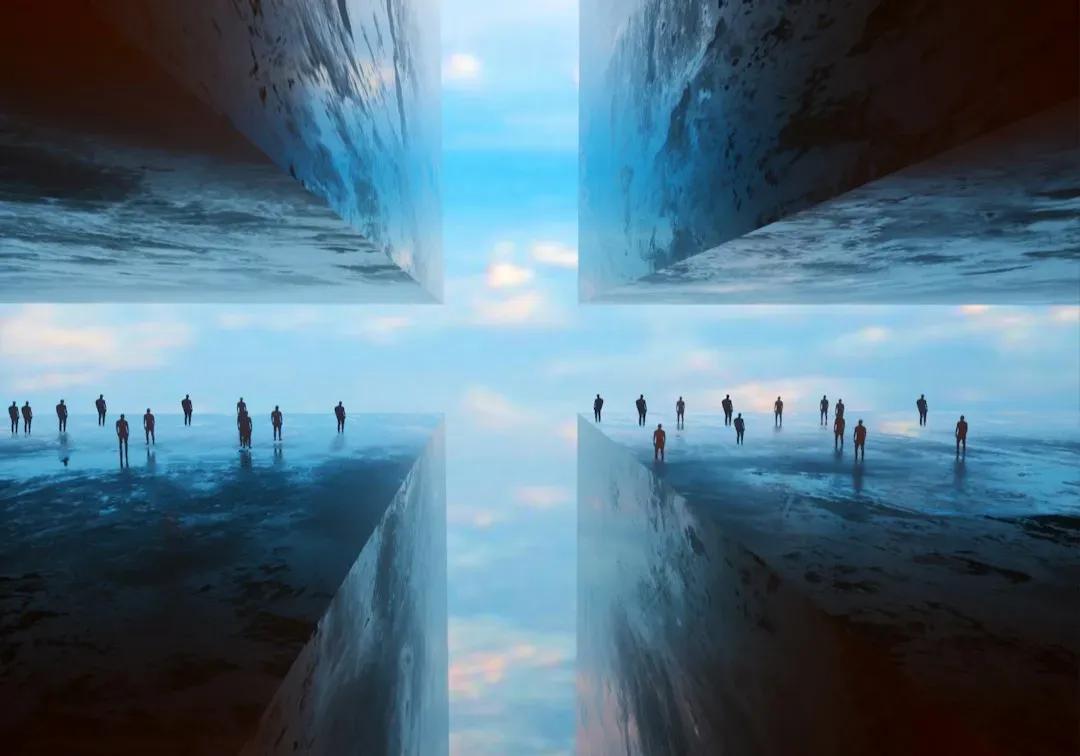
The many-worlds idea takes the math of quantum mechanics literally and refuses to add any magical collapse when we observe something. Instead, it says the universe is constantly branching into countless versions, each one realizing different outcomes of every quantum event. In this picture, when you choose coffee over tea, there’s another branch where you picked tea instead – and that version of you carries on as if that’s the only reality.
This sounds dramatic and almost theatrical, but the unsettling part is that, mathematically, many-worlds is surprisingly simple and clean. It doesn’t need extra assumptions; it just lets the equations do their thing. The downside is that it gives us a reality so huge and fragmented that our everyday intuitions feel useless. You never see the other you, you never feel the split, and yet, if this interpretation is right, the universe is endlessly fanning out behind your back.
Cosmic Inflation and the Possibility of Infinite Bubble Universes
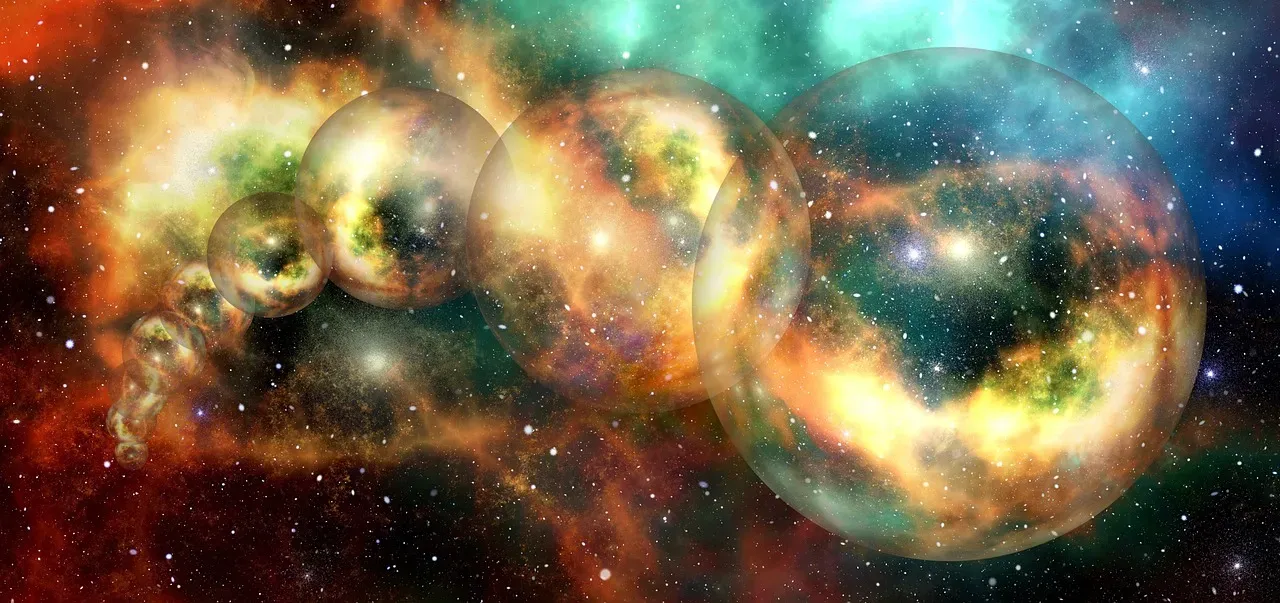
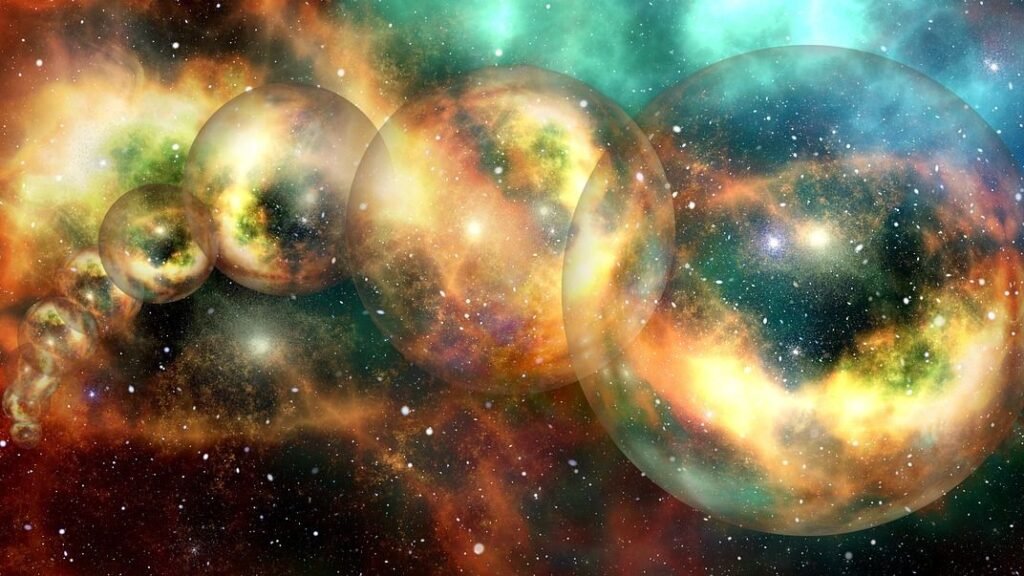
Parallel universes don’t just pop up in quantum physics; they also appear in cosmology, in the story of how our universe began. According to the theory of cosmic inflation, the universe expanded incredibly fast in its earliest moments, faster than anything we can directly picture. Some versions of this theory suggest that inflation didn’t just happen once and stop, but could be happening in different regions at different times, creating separate “bubble” universes.
Each bubble would have its own physical properties – maybe different strengths of forces, different particle types, even different numbers of dimensions. Our observable universe would be just one bubble, one patch of space where inflation stopped and stars and galaxies could form. Beyond what we can ever see, other bubbles might be inflating, colliding, or drifting away, containing realities we’ll never have access to, like neighboring houses on an endless dark street with the curtains permanently closed.
Levels of Multiverse: From Slight Variations to Wildly Alien Realities
Researchers who take multiverse ideas seriously sometimes group them into “levels” to keep the chaos organized. At one level, you get universes that are basically like ours but far away in an unimaginably large space, with the same laws of physics but different configurations of matter. It’s like rolling the same dice over and over; given enough rolls, eventually you repeat patterns, including entire life stories.
At more extreme levels, the very rules of physics might change: different constants, different particles, maybe no chemistry as we understand it. Some universes might be completely sterile, others might be unimaginably rich. We don’t know if any of this actually exists, but the fact that our current theories naturally allow such possibilities is already a kind of shock. It suggests our familiar reality could be just one style in a vast cosmic wardrobe.
Anthropic Reasoning: Are We Here Because We Could Be?
There’s an odd, slightly uncomfortable idea that becomes more plausible if many universes exist: maybe we shouldn’t be surprised that we find ourselves in a universe that allows life, because we couldn’t exist in any other kind. This is sometimes called anthropic reasoning. If there are countless universes with different physical settings, most of them might be dead and empty, and only a small fraction would be life-friendly.
From this perspective, asking why the laws of physics seem so finely tuned for stars, planets, and chemistry might be a bit like asking why you were born on a planet with breathable air rather than on a gas giant. The answer would simply be that you can only exist in places, or universes, where existence is possible in the first place. It doesn’t solve every mystery, but it softens the sense that our universe’s parameters are impossibly lucky coincidences.
What Parallel Universes Would Mean for Free Will and Identity
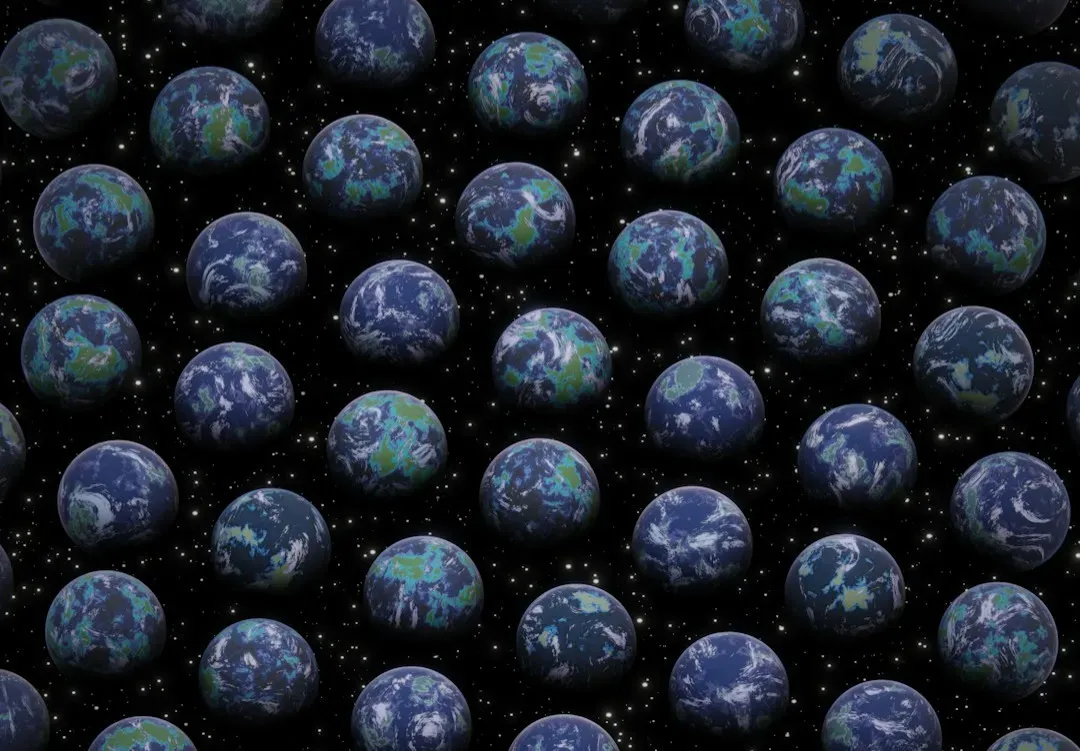
If there truly are other versions of you in other universes, making different choices and living different lives, it forces a tough question: what does free will even mean? On one hand, you feel yourself choosing in this universe right now; nothing about that feels fake or forced. On the other hand, if every possible outcome exists somewhere, then in a broader sense, every choice is realized somewhere, and you are just inhabiting one path through a huge branching tree.
There’s also a personal, almost emotional side to this. The idea that somewhere a version of you never lost that relationship, never made that mistake, or never had that accident can feel strangely comforting or painfully unfair. But those other “yous,” if they exist at all, aren’t copies you can swap places with; they’re separate people who just happen to share your past up to a point. In that sense, your specific thread of experience in this universe is still unique and irreplaceable.
Why We Still Can’t Test It (Yet) – And Why It Still Matters
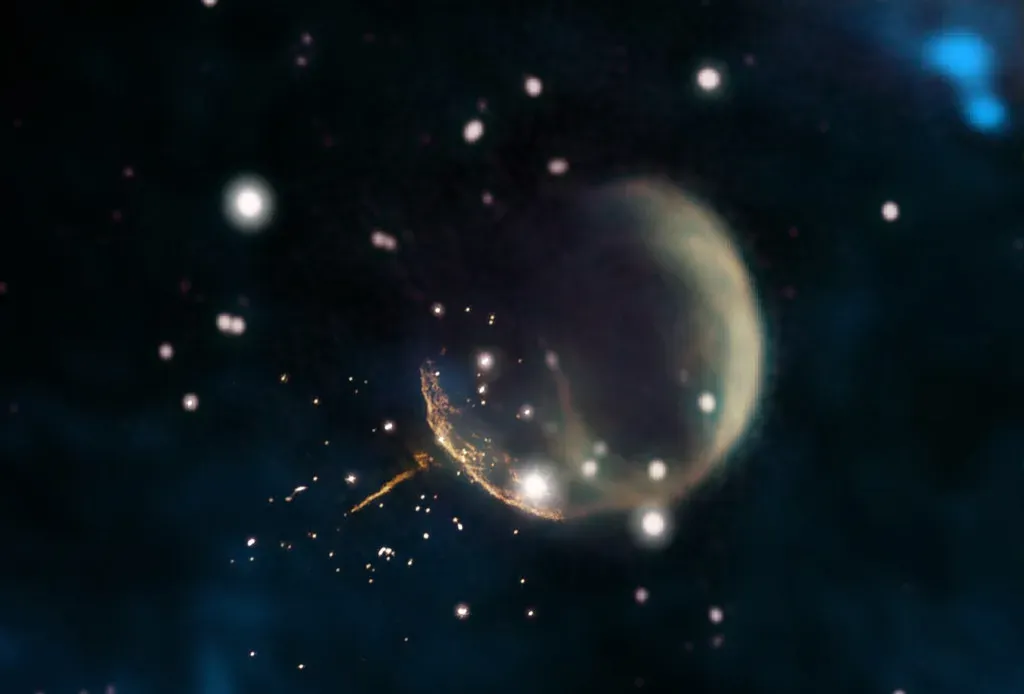
Here’s the hard reality: right now, most multiverse ideas are extremely difficult to test directly, maybe impossible with any technology we can reasonably imagine. We can’t hop between universes, we can’t send probes across cosmic bubbles, and we can’t peek into other branches of quantum reality. That makes some scientists wary, because physics is supposed to be about testable predictions, not just clever stories that sound profound.
Still, exploring these ideas isn’t a waste of time. Thinking seriously about parallel universes forces us to confront what we mean by reality, by evidence, and by scientific explanation. It sharpens our questions: Are we missing some crucial piece that would make the universe simpler again, or is the truth genuinely sprawling and layered beyond what we ever hoped or feared? In the end, whether there is one universe or many, we’re left with the same haunting, stubborn wonder: how much of existence will we ever truly get to see?