
Imagine watching a crow bend a piece of wire into a hook to fish food out of a jar. Or an elephant standing silently over the bones of a fallen companion, touching them gently with her trunk as though committing them to memory. These aren’t scenes from an animated film. They’re documented, real-world behaviors that have scientists asking one of the most profound questions of our age: do animals have an inner life?
The idea that consciousness might belong to a far wider community of creatures than we ever imagined is no longer just a philosophical notion. It sits at the center of some of the most exciting and contentious scientific debates happening right now. What you’re about to discover might permanently change the way you look at every animal you’ve ever met. Let’s dive in.
The Big Question: What Do We Even Mean by Animal Consciousness?
Here’s the thing – before you can even begin to answer whether animals are conscious, you need to grapple with what consciousness actually means. It’s slippery in the extreme. Academic reviews of the topic are equivocal, noting that the argument that animals have at least simple conscious thoughts and feelings has strong support, but some critics continue to question how reliably animal mental states can be determined. Think of it like trying to prove someone else is dreaming while they’re asleep. You can observe the twitching and the rapid eye movement, but the experience itself? Invisible.
The main problem is that consciousness in other animals cannot be directly observed, only inferred. Determining whether it is possible to scientifically infer consciousness in non-human animals, and how, is not trivial, with strong philosophical and scientific reasons to support an agnostic stance. Still, scientists haven’t given up. Rather than throwing their hands in the air, researchers have developed multi-layered frameworks to assess the probability of conscious experience across species. These frameworks highlight five significant dimensions of variation: perceptual richness, evaluative richness, integration at a time (unity) and across time (temporality), and self-consciousness (selfhood).
A Historic Turning Point: The New York Declaration on Animal Consciousness
If you think animal consciousness is fringe territory, think again. In April 2024, a group of 40 scientists at a conference in New York proposed the New York Declaration on Animal Consciousness. Subsequently signed by over 500 scientists and philosophers, this declaration says consciousness is realistically possible in all vertebrates (including reptiles, amphibians and fishes) as well as many invertebrates, including cephalopods, crustaceans and insects. That’s a remarkable moment. Half a millennium’s worth of scientific skepticism about animal inner lives, and suddenly hundreds of the world’s brightest minds are saying: pause. Reconsider.
This declaration asserts that mammals and birds experience a range of sensory stimuli, including pleasure, pain, and fear. Importantly, the declaration further asserts that “when there is a realistic possibility of conscious experience in an animal, it is irresponsible to ignore that possibility in decisions affecting that animal.” Whether you find that thrilling or unsettling depends on your point of view. Honestly, I think it’s one of the most important ethical shifts in modern science.
The Mirror Test and the Search for Self-Awareness
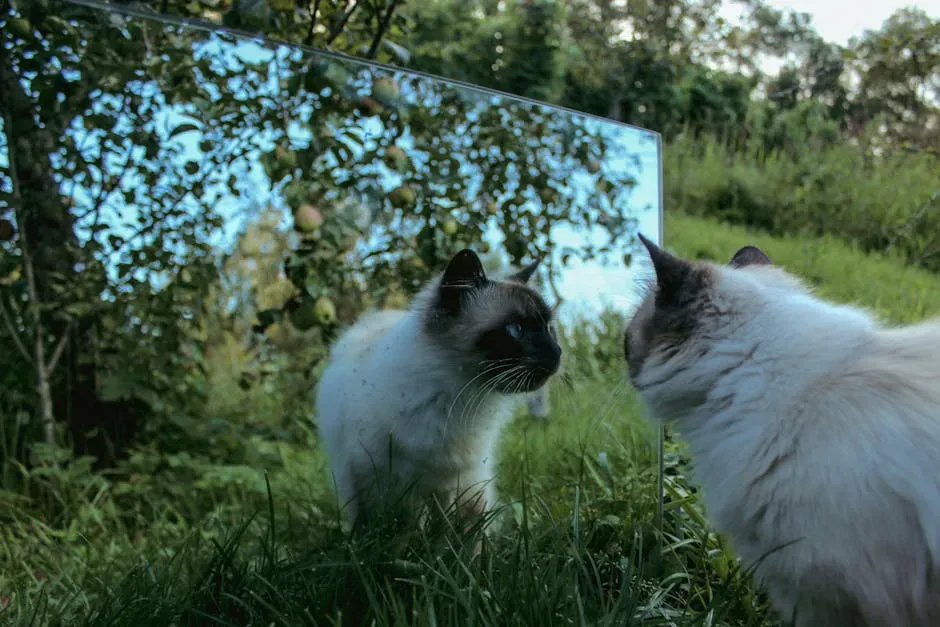
One of the most elegant tools scientists have developed for probing animal self-awareness is the mirror test. The best-known research technique is the mirror test devised by Gordon Gallup, in which the skin of an animal is marked while they are asleep or sedated, with a mark that cannot be seen directly but is visible in a mirror. The animals are then allowed to see their reflection; if the animal spontaneously directs grooming behaviour towards the mark, that is taken as an indication that they are aware of themselves.
Recognizing one’s mirror reflection appears to be a simple task, but beyond humans, few animals have demonstrated this capability. Mirror self-recognition is indicative of self-awareness, which is one’s capacity for self-directed knowledge. It’s fascinating how something as mundane as glancing in a mirror becomes such a loaded test of inner life. Frans de Waal, a biologist and primatologist at Emory University, has stated that self-awareness is not binary, and the mirror test should not be relied upon as a sole indicator of self-awareness, though it is a good test to have. In other words, failing the test doesn’t mean an animal lacks self-awareness. It might just mean the test itself is too limited.
Elephants: Ancient Minds with Deep Emotional Lives
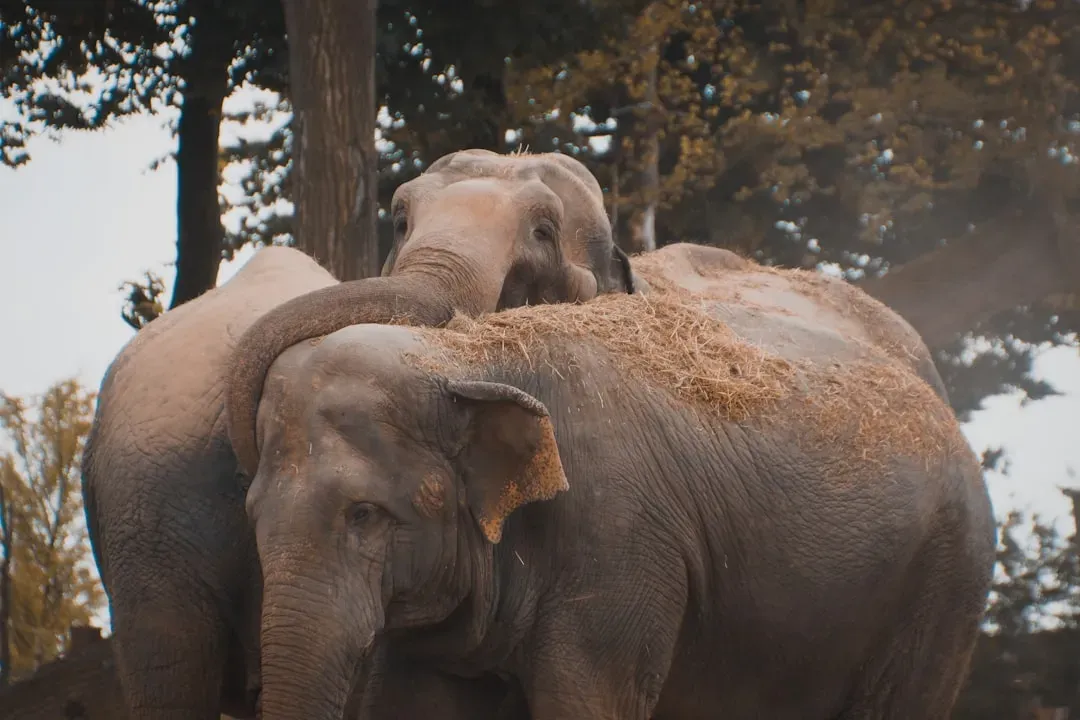
Few animals challenge our assumptions quite like elephants. Most contemporary ethologists view the elephant as one of the world’s most intelligent animals. Elephants manifest a wide variety of behaviors, including those associated with grief, learning, mimicry, playing, altruism, tool use, compassion, cooperation, self-awareness, memory, and communication. They seem to carry entire emotional histories within them. Think about that for a second. These are not simple stimulus-response machines.
One of the most moving displays of elephant emotion is the grieving process. Elephants remember and mourn loved ones, even many years after their death. When an elephant walks past a place that a loved one died, he or she will stop and take a silent pause that can last several minutes. While standing over the remains, the elephant may touch the bones of the dead elephant, smelling them, turning them over and caressing the bones with their trunk. If that doesn’t give you chills, I’m not sure what will. This is thought to be possibly why elephants suffer from psychological flashbacks and the equivalent of post-traumatic stress disorder.
Dolphins and Whales: Social Geniuses of the Deep
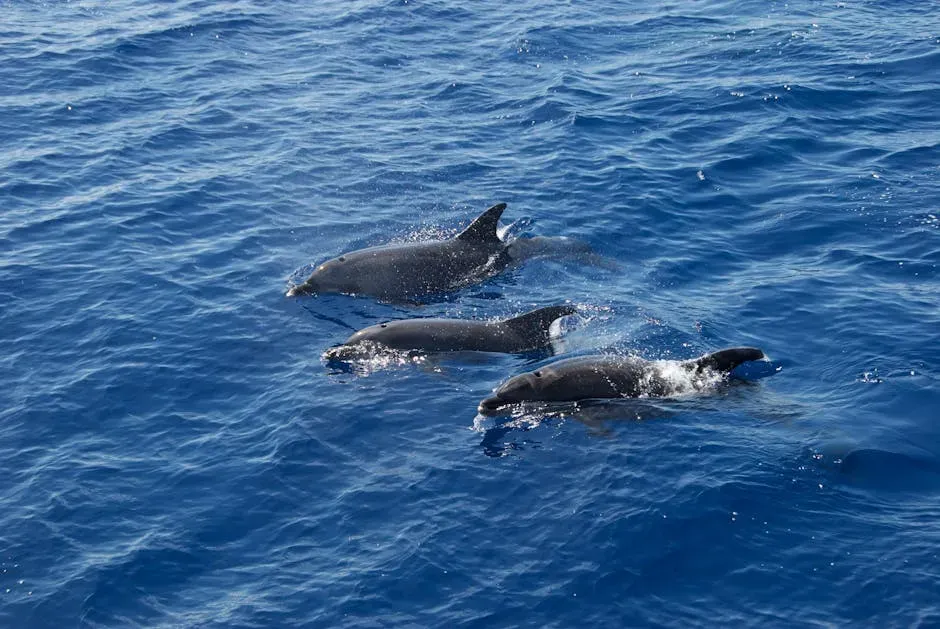
If elephants are the philosophers of the animal kingdom, dolphins might be the social strategists. The evidence suggests that whales and dolphins are not only conscious, and that bottlenose dolphins, at least, are self-aware, but also that they have complex brain structure for complex function, that they often live in complex societies, and that they are capable of experiencing a range of emotions. Dolphins aren’t just clever because they can do tricks. Their intelligence is woven into every aspect of how they live and relate to each other.
Research indicates that bottlenose dolphins are first able to recognise themselves in a mirror at ages earlier than generally reported for children and at ages much earlier than reported for chimpanzees. Let that sink in. A dolphin, encountering a mirror, grasps the concept of a self-image faster than a human toddler. Observations reveal behaviors that closely resemble human mourning – dolphins carrying dead calves for days and dogs refusing to leave their companion’s resting place. It’s hard to say for sure what a dolphin experiences emotionally, but these behaviors suggest something far deeper than pure instinct.
The Octopus: Consciousness From an Alien Blueprint
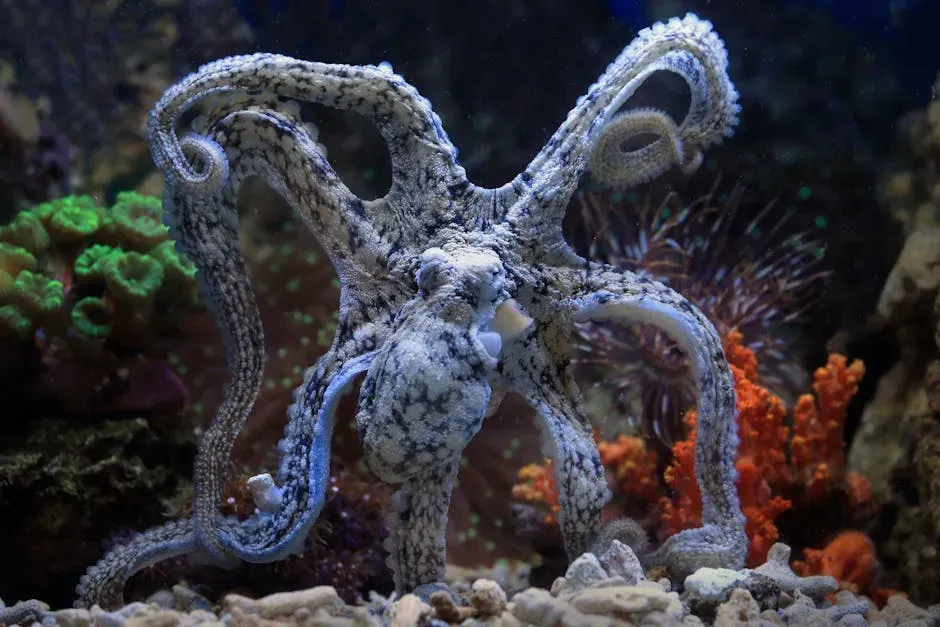
If dolphins feel almost familiar, octopuses feel like something from another planet entirely. Cephalopods like the octopus or giant squid represent “an independent experiment in the evolution of large brains and complex behaviour” predicated on the same neural systems as our closer mammalian relatives. They arrived at intelligence through an entirely different evolutionary road. While your brain sits neatly in your skull, the octopus possesses a central brain containing approximately 180 million neurons, but the majority of their neurons – about two-thirds of their estimated 500 million – are distributed throughout their eight arms.
Octopuses may demonstrate perceptual richness, neural unity, temporality, and affective evaluation, as the neural basis for consciousness. Octopuses attach a positive valence to food as “specializing generalists” with long-term learning and flexible choices. They value shelter, yet modify, adapt and even transport it where necessary. They attach a negative valence to what may be described as pain, monitoring and protecting the damaged area and learning to associate locations with pain relief. That’s not reflexive behavior. That’s learning from emotional experience. Individual personalities have been observed in captive octopuses, with some being bolder or more curious than others.
Birds, Bees, and Bugs: Rethinking the Small Minds Among Us

You might assume that insects and birds are too small, too simple, too “other” to qualify for consciousness. Science is increasingly telling you otherwise. A 2020 study found that carrion crows show a neuronal response that correlates with their perception of a stimulus, which the researchers argue to be an empirical marker of sensory consciousness in crows which do not have a cerebral cortex. The study thereby substantiates the theory that conscious perception does not require a cerebral cortex and that the basic foundations for it may have evolved before the last common ancestor over 320 million years ago or independently in birds.
Crows and ravens are very curious and intelligent and have excellent memories. These birds have even been observed using tools, and many scientists consider their intelligence to be similar to chimpanzees. Meanwhile, at the other end of the size spectrum, bumblebees like to play. Play is not just about having fun – it is also a sign of intelligence, and many animals in the wild have been observed creating their own games. Even bumblebees seem to enjoy playing with wooden balls when given the toys in an experiment. A bumblebee. Playing with a ball. For fun. Let’s be real – nobody saw that coming.
The Science Behind Animal Emotions and Grief
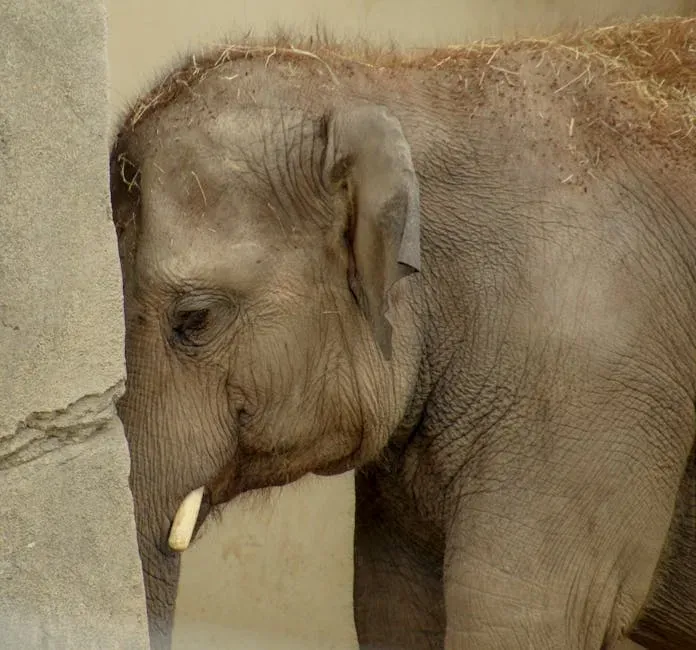
For a long time, scientists were deeply reluctant to talk about animal emotions at all. The word “grief,” for instance, carried almost professional risk. Neuroscience shows that many mammals possess the neural structures associated with emotional processing in humans, particularly in the limbic system. Animals like primates, elephants, dolphins, and domestic pets have well-developed limbic systems that process emotions. The hardware is there. The wiring is comparable. The question is whether the experience is similar.
The presence of spindle neurons in some species, previously thought unique to humans, also supports their capacity for complex emotions. These specialized brain cells are linked to deep emotions, social awareness, and empathy. While researchers must be careful not to overinterpret animal behavior, the neurobiological evidence strongly suggests that many species have the hardware necessary for experiencing grief-like emotions, even if they process these feelings differently than humans do. The scientific consensus has increasingly shifted toward acknowledging that while animal grief may differ from human grief in its cognitive components, the emotional experience likely shares core similarities.
Why This Matters: Consciousness, Ethics, and Our Moral Responsibility
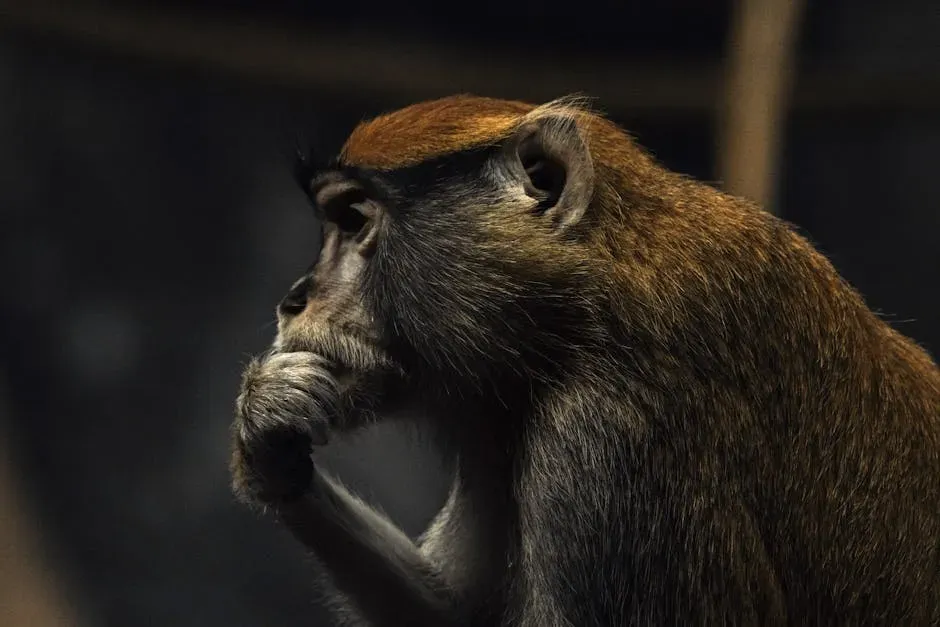
Here is where it stops being just a fascinating intellectual puzzle and starts having real-world consequences for how you live your life. Questions around consciousness have long sparked fierce debate, partly because conscious beings might matter morally in a way that unconscious things don’t. Expanding the sphere of consciousness means expanding our ethical horizons. If a lobster feels pain, does the way it ends up on your plate matter? If a pig experiences grief, does separating it from its family have moral weight?
Far more animals than previously thought likely have consciousness, top scientists say – including fish, lobsters and octopus. Recent research backs them up. The practical implications are already showing up in legislation. A decade ago, Oregon passed a law recognizing animals as sentient and capable of feeling pain, stress and fear. Washington and California are among several states where lawmakers have considered bans on octopus farming, a species for which scientists have found strong evidence of sentience. The science is actively reshaping the law. Slowly, but it’s happening.
The Skeptics Are Not Wrong: Honoring the Uncertainty
It would be unfair to wrap all of this up in a tidy bow and pretend the science is settled. It isn’t. The common bias toward favoring the hypothesis that animals have felt experiences stems partly from anthropomorphism – the tendency to believe that animals or systems that resemble us also experience feelings similar to ours. While anthropomorphism is natural, sensible, and important for guiding decisions about animal welfare, it cannot replace rigorous scientific reasoning. Projecting your own emotions onto a crow or a crab is tempting. It’s also potentially misleading.
Even if we can’t be sure something is conscious, we might err on the side of caution by assuming it is – what philosopher Jonathan Birch calls the precautionary principle for sentience. That middle-ground approach feels right to me. Given the lack of evidence that animals do not have a mind or experiences, but given that they show forms of awareness and mental functions, the current evidence favors the notion that animals have conscious experiences. While the level of consciousness may differ between species, there is a growing consensus among scientists that animals are indeed conscious. Caution and care, not reckless certainty in either direction.
Conclusion: The Wild Has Been Watching You Too
The minds of animals are not a mirror image of your own. They are something stranger, richer, and more varied than any single framework can capture. From the grieving elephant to the problem-solving octopus, from the mirror-recognizing dolphin to the ball-rolling bumblebee, nature appears to have found many different pathways to inner experience. The idea that consciousness is some rare, exclusively human gift is looking increasingly unlikely with every new study published.
What this ultimately asks of you is not certainty. Science may never fully crack open the inner life of another being. What it does ask is thoughtfulness – a willingness to look at a crow or a cow or a crab and consider, even briefly, that something might be happening in there worth protecting. The wild has its own inner world. The only question left is whether you’re willing to take that seriously.
What do you think – does discovering that animals might have rich conscious lives change the way you see the world around you? Share your thoughts in the comments below.