
The universe contains secrets that would sound like pure fiction if they weren’t backed by decades of scientific research. Picture this: somewhere in a laboratory right now, scientists are creating tiny amounts of the most dangerous and powerful substance known to humanity. and antimatter collide, the particles destroy each other, with a huge energy release. This isn’t science fiction anymore. It’s reality.
You probably encounter antimatter more often than you think. Antimatter is all around us – for example bananas emit antimatter. This is because they contain a particular type of potassium (called potassium-40) which undergoes radioactive decay releasing a positron every 75 minutes. Yet when these particles of opposite matter meet their normal counterparts, something extraordinary happens that could reshape our understanding of energy, medicine, and space travel.
The Ultimate Energy Release
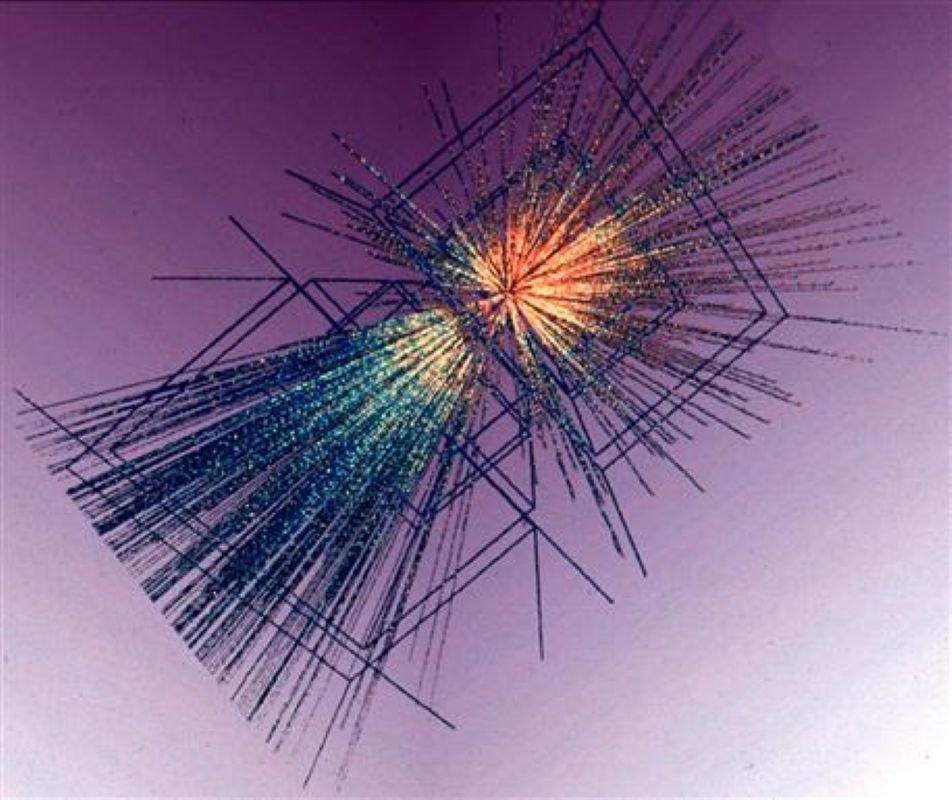
A collision between any particle and its anti-particle partner leads to their mutual annihilation, giving rise to various proportions of intense photons (gamma rays), neutrinos, and sometimes less-massive particle–antiparticle pairs. Think of it as nature’s most efficient energy converter.
E=mc² asserts that mass and energy are interchangeable. In practical terms, this means that a small amount of mass can be converted into a vast amount of energy and vice versa. The numbers are staggering. In a matter-antimatter collision, all the mass is converted into energy. For a 1kg ball of antimatter being annihilated, we get E=mc²=(1 kg+1 kg)×c²=1.7×10¹⁷ J.
To put this in perspective, 1 gram of water – if its whole mass were converted into pure energy via E=mc² – contains energy equivalent to approximately 21,500 tons of TNT exploding. The biggest nuclear bomb ever detonated was the Tzar Bomba, and by co-incidence this released about the same amount of energy as the annihilation of your 1kg of antimatter.
Different Particles, Different Outcomes
Depending on the colliding particles, not only is there a great energy release, but new, different particles may also be produced (such as neutrinos and various flavours of quark). These new particles will have a lower mass than those in the original collision, due to the law of conservation of energy and Einstein’s very famous equation E=mc² – some of the energy goes into heat and light, some into forming the new particles.
When electrons and positrons annihilate each other, they make gamma rays. This is the simplest case. However, if you collide a proton and an antiproton with enough energy, you, in fact, create a quark-antiquark collision. The complexity increases dramatically.
Electrons and quarks don’t feel just the electromagnetic force – electrons also feel the weak force while quarks feel both the weak and the strong forces. The interaction of matter and antimatter can release the energy from both of these forces in the form of exotic particles. In fact, the much-sought-after Higgs boson is one form of weak-force energy.
Why Annihilation Happens
You might wonder if matter and antimatter always destroy each other completely. But do matter and antimatter always annihilate away when they interact? Aren’t other types of interactions possible, and even likely? That’s what Brian Vant-Hull wants to know, writing in to ask: “What physics principle mandates that matter and antimatter MUST annihilate when brought together?”
The answer lies in quantum mechanics. There’s an enormous cross-section (or chances of an interaction), both at extremely low energies and at extremely high energies, that will cause matter and antimatter particles to annihilate with one another, with the energy of the collision plus the rest-mass energy of each particle that annihilates, determining how much energy is available for new particle creation.
Even though we think of protons (and antiprotons) as having a particular size and electrons (and positrons) as being point-like, their actual cross-sections are energy-and-momentum dependent, and require that we treat these particles as quantum entities: with spread-out wavefunctions in space that overlap, and that have a chance of quantum-tunneling into another state. The reason the annihilation rate is so large is due to the quantum nature of particles, and to the Heisenberg uncertainty principle.
Creating and Storing the Impossible
Antimatter cannot be stored in a container made of ordinary matter because antimatter reacts with any matter it touches, annihilating itself and an equal amount of the container. No macroscopic amount of antimatter has ever been assembled due to the extreme cost and difficulty of production and handling.
CERN estimates the cost of producing just one gram of antimatter at approximately $100 trillion using current technology. Even with significant improvements, production costs will likely limit antimatter to high-value applications for decades. According to research, the global production of anti-matter is about 10 nanograms per year, so making your 1kg of antimatter would take 100 billion years or about 10 times the age of the universe.
Storing antimatter safely involves sophisticated techniques like magnetic traps, magnetic bottles and electrostatic traps, which prevent antimatter from coming into contact with matter. Specifically, it examines mainstream capture and control approaches, including Penning traps, magnetic bottle systems, and advanced cooling methods, and analyzes key technical bottlenecks.
Medical Breakthroughs Already Here
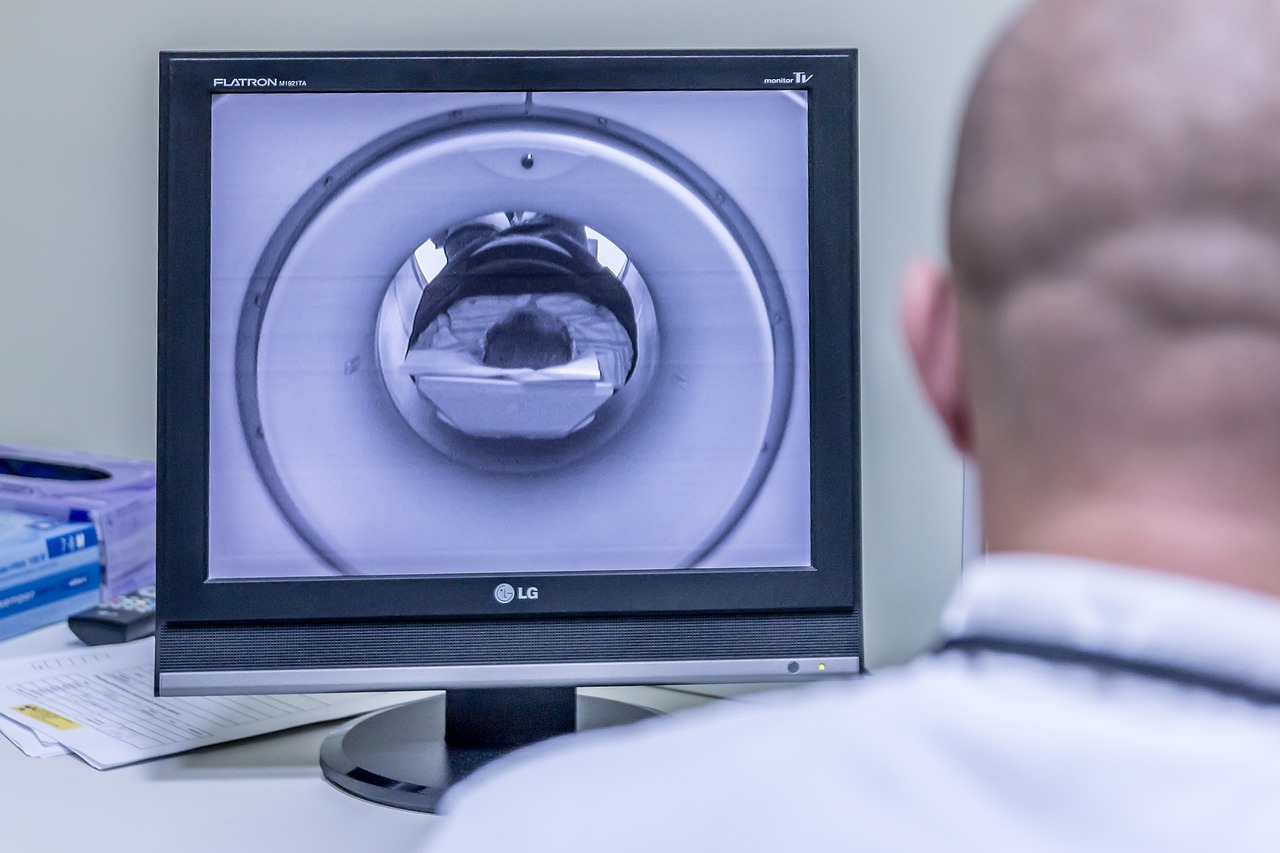
Matter–antimatter reactions have practical applications in medical imaging, such as positron emission tomography (PET). Nonetheless, antimatter is an essential component of widely available applications related to beta decay, such as positron emission tomography, radiation therapy, and industrial imaging.
Furthermore, in precision medicine and particle therapy, antimatter annihilation radiation is already used in positron emission tomography (PET) for brain and tumor imaging. Researchers have proposed using antihydrogen as a tool for cancer treatment, taking advantage of its unique properties to target and destroy cancer cells.
Antiprotons have also been shown within laboratory experiments to have the potential to treat certain cancers, in a similar method currently used for ion (proton) therapy. Positron Emission Tomography (PET) already uses antimatter principles for medical imaging, but future treatments might use microscopic amounts of antimatter to target specific tissues.
Revolutionary Spacecraft Propulsion
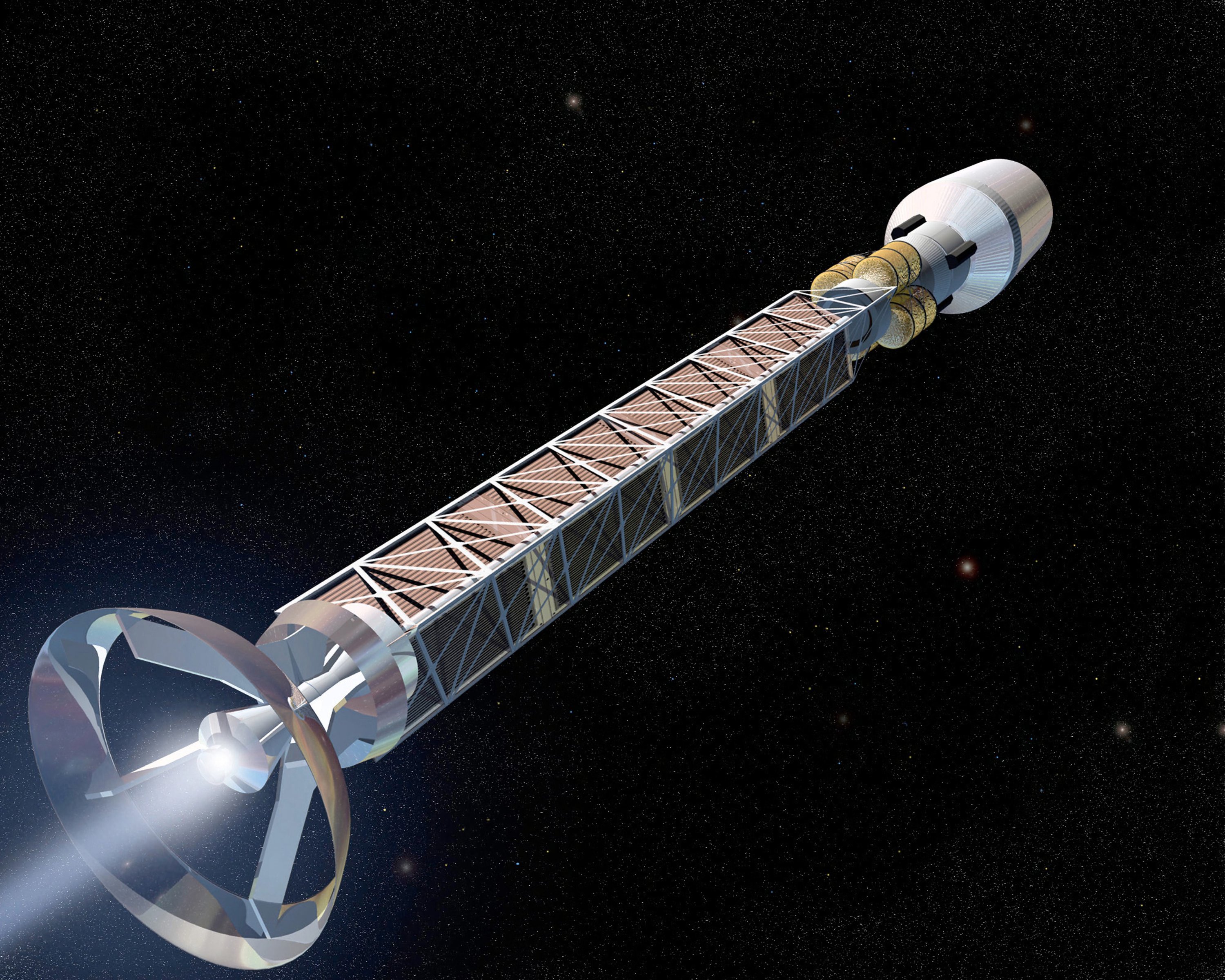
Approximately 70% of this energy can be harnessed for propulsion, offering superior efficiency compared to existing technologies, despite some practical losses. Spacecrafts can traverse the Solar System to reach nearby stars in span of days to weeks (within a human lifetime) due to this enormous energy potential.
Isolated and stored antimatter could be used as a fuel for interplanetary or interstellar travel as part of an antimatter-catalyzed nuclear pulse propulsion or another antimatter rocket. Since the energy density of antimatter is higher than that of conventional fuels, an antimatter-fueled spacecraft would have a higher thrust-to-weight ratio than a conventional spacecraft.
With an energy density approximately 10 billion times greater than chemical fuels like gasoline, antimatter could revolutionize everything from space travel to power generation. Compared to traditional rocket fuel and nuclear power, antimatter propulsion promises significant environmental benefits by reducing carbon emissions and radioactive waste. The reaction produces zero environmental footprint and is deemed the most sustainable means of propulsion.
Natural Antimatter in Our Universe
Observations by the European Space Agency’s INTEGRAL satellite may explain the origin of a giant antimatter cloud surrounding the Galactic Center. The observations show that the cloud is asymmetrical and matches the pattern of X-ray binaries (binary star systems containing black holes or neutron stars), mostly on one side of the Galactic Center.
Antiparticles are created everywhere in the universe where high-energy particle collisions take place. High-energy cosmic rays striking Earth’s atmosphere (or any other matter in the Solar System) produce minute quantities of antiparticles in the resulting particle jets, which are immediately annihilated by contact with nearby matter.
In January 2011, research by the American Astronomical Society discovered antimatter (positrons) originating above thunderstorm clouds; positrons are produced in terrestrial gamma ray flashes created by electrons accelerated by strong electric fields in the clouds. Antiprotons have also been found to exist in the Van Allen Belts around the Earth by the PAMELA module, and similar antiproton belts may exist around Jupiter, Saturn, Neptune, and Uranus.
When you think about the incredible forces happening above our heads during thunderstorms and around other planets, the universe suddenly seems far more dynamic and energetic than most people realize. The presence of the resulting antimatter is detectable by the two gamma rays produced every time positrons annihilate with nearby matter.
The Big Mystery: Where Did It All Go?
Matter and antimatter particles are always produced as a pair and, if they come in contact, annihilate one another, leaving behind pure energy. This creates one of the biggest puzzles in modern physics: if the Big Bang created equal amounts of matter and antimatter, why does our universe seem to be made almost entirely of matter?
Nevertheless, a tiny portion of matter – about one particle per billion – managed to survive. This is what we see today. Researchers have observed spontaneous transformations between particles and their antiparticles, occurring millions of times per second before they decay. Some unknown entity intervening in this process in the early universe could have caused these “oscillating” particles to decay as matter more often than they decayed as antimatter.
Most things observable from the Earth seem to be made of matter rather than antimatter. If antimatter-dominated regions of space existed, the gamma rays produced in annihilation reactions along the boundary between matter and antimatter regions would be detectable. Scientists continue searching for clues about this fundamental asymmetry that allowed stars, planets, and ultimately life to exist.
The collision of matter and antimatter represents one of nature’s most perfect demonstrations of Einstein’s famous equation in action. The majority of the total energy of annihilation emerges in the form of ionizing radiation. If surrounding matter is present, the energy content of this radiation will be absorbed and converted into other forms of energy, such as heat or light. From the banana on your kitchen counter quietly releasing positrons to the powerful engines that might one day carry humans to distant stars, antimatter continues to surprise us with its potential to reshape our understanding of energy, medicine, and exploration.
What do you think about the incredible power locked within these tiny particles? The fact that something so abundant in laboratories could theoretically power spacecraft to other star systems makes you wonder what other cosmic secrets we’re still uncovering.