
You’ve probably worried about plenty of things in your life. Maybe it’s that upcoming presentation at work. Perhaps it’s whether you remembered to lock the front door. Or possibly it’s that spider you saw but then lost track of in your bedroom. Most people don’t spend much time contemplating the possibility of a microscopic black hole shooting through their body at a significant fraction of the speed of light. Yet it turns out that physicists have actually done the math on this scenario, and honestly, the results are more fascinating than you might expect.
Here’s the thing: space is way stranger than the empty void most of us picture when we look up at the night sky. The universe contains mysterious objects formed in the first fraction of a second after the Big Bang, invisible matter we can’t detect directly, and maybe even tiny black holes with the mass of asteroids packed into spaces smaller than atoms. So let’s dive in and explore what would actually happen if one of these cosmic oddities decided to pay you a personal visit.
The Cosmic Lottery You’ll Never Win
Think about the most unlikely event you can imagine. Winning the lottery three times in a row? Getting struck by lightning while riding a unicorn? Those scenarios are practically guaranteed compared to the odds of a tiny black hole passing through your body.
The frequency of a black hole colliding with a human would occur roughly once every quintillion years, which is many times longer than the current age of the universe. There’s no need to worry about a tiny black hole crashing into you – that’s less likely than a peanut thrown at random hitting a specific blade of grass in a lawn the size of a trillion football fields. Honestly, you should worry more about that meteorite that hasn’t hit Earth yet or whether you’ll finally remember where you parked your car at the mall. The universe is vast, humans are relatively tiny, and primordial black holes – if they even exist – are incredibly sparse.
Still, the fact that the odds are astronomically small doesn’t make the physics any less interesting. Sometimes the best thought experiments explore scenarios that will never actually happen.
What Exactly Are Primordial Black Holes
Let’s be clear about what we’re discussing here. We’re not talking about the massive black holes at the centers of galaxies or the stellar-mass black holes that form when giant stars collapse. Primordial black holes are hypothetical black holes that formed in the early universe, possibly within the first second after the Big Bang. The conditions back then were extraordinary: temperatures beyond imagination, densities so extreme that tiny pockets of matter could collapse under their own gravity without needing a massive dying star to create them.
They have potential masses ranging from 100,000 times less than a paperclip to 100,000 times more than the sun. The ones we’re worried about in this scenario fall somewhere in the middle: asteroid-sized masses compressed into spaces smaller than an atom. These black holes would pack the mass of an asteroid into a space about the size of a hydrogen atom. Picture trying to cram Mount Everest into something tinier than you can see with the most powerful microscope. That’s the kind of density we’re dealing with here.
Some researchers think these objects might actually explain dark matter, that mysterious substance that makes up most of the matter in the universe but doesn’t interact with light. To date, however, no one has definitively detected one.
The Physics of a Supersonic Cosmic Bullet
Imagine a black hole racing through space at roughly 200 kilometers per second. That’s significantly faster than the speed of sound, which means it would create a supersonic shock wave as it tears through your body. A primordial black hole passing through the human body would generate supersonic shock waves on its path, destroying human tissues along the way, similar to a bullet entering the body.
The minimum mass for a primordial black hole to cause significant damage as it passes through your body is about 140 quadrillion grams – about 140 billion metric tons, around seven times heavier than the asteroid Toutatis. That’s roughly the mass you’d need for the shock wave effect alone to do serious damage. The paradox is mind-bending: we’re talking about an object with tremendous mass but an incomprehensibly small physical size.
At this mass, the black hole is tiny, with a Schwarzschild diameter of just 0.4 picometers – while the diameter of a hydrogen atom is around 106 picometers. It would slip through your atoms like a needle through fog, barely interacting with individual particles. Yet the sheer speed and the disturbance it creates in spacetime would be devastating.
When Gravity Pulls You Apart

The shock wave isn’t the only concern, though. There’s also the issue of tidal forces – the same gravitational effect that causes ocean tides on Earth. The black hole would produce tidal gravitational forces, creating a tensile force which pulls and stretches materials, tearing human cells apart, with the most sensitive to these forces being cells in the brain.
For a primordial black hole’s tidal forces to seriously damage your body, it needs to have a mass of at least 7 quintillion grams, or 7 trillion metric tons, to affect the most sensitive tissue in the human body: the brain – comparable to the mass of asteroid Iris. Your brain cells are surprisingly fragile when subjected to extreme gravitational gradients. A force of 10 to 100 nanonewtons for a few microseconds would be enough to pull apart brain cells.
Essentially, you’d experience a miniature version of “spaghettification” – that famous process where objects falling into black holes get stretched into long, thin shapes. The difference in gravitational pull between the side of your body closest to the black hole and the side farthest away would create stresses that your cells simply couldn’t withstand.
The Strange Reality of Black Hole Size
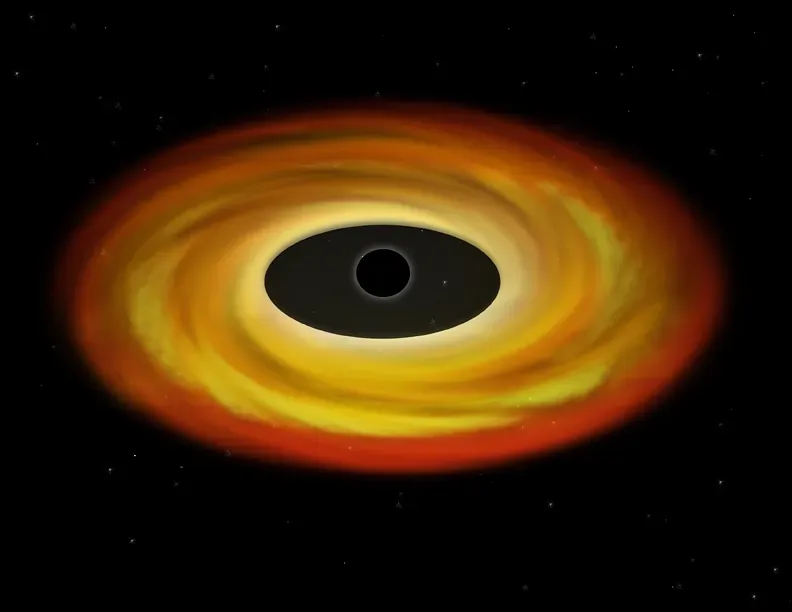
Here’s where things get truly weird. The black holes we’re discussing have masses comparable to mountains or asteroids. Yet their actual physical size – the event horizon, the point of no return – is smaller than an atom. Let me repeat that because it bears repeating: we’re talking about an object with the mass of billions of tons occupying a space tinier than the smallest thing you learned about in chemistry class.
Many primordial black holes may have the mass of an asteroid but the size of a hydrogen atom and be travelling at enormous speeds. This bizarre combination of properties means that the black hole wouldn’t actually “eat” you in the way you might imagine from science fiction movies. A tiny black hole breezing through at a velocity of around 200 kilometers per second wouldn’t interact much with the tissue around it.
The event horizon is so minuscule that the odds of it directly hitting and consuming any of your atoms are vanishingly small. Instead, it’s the gravitational effects in the space around the black hole – the shock waves and tidal forces – that would do the damage. Think of it less like being swallowed and more like being hit by an invisible gravitational wrecking ball traveling at hundreds of kilometers per second.
What Space Is Really Made Of
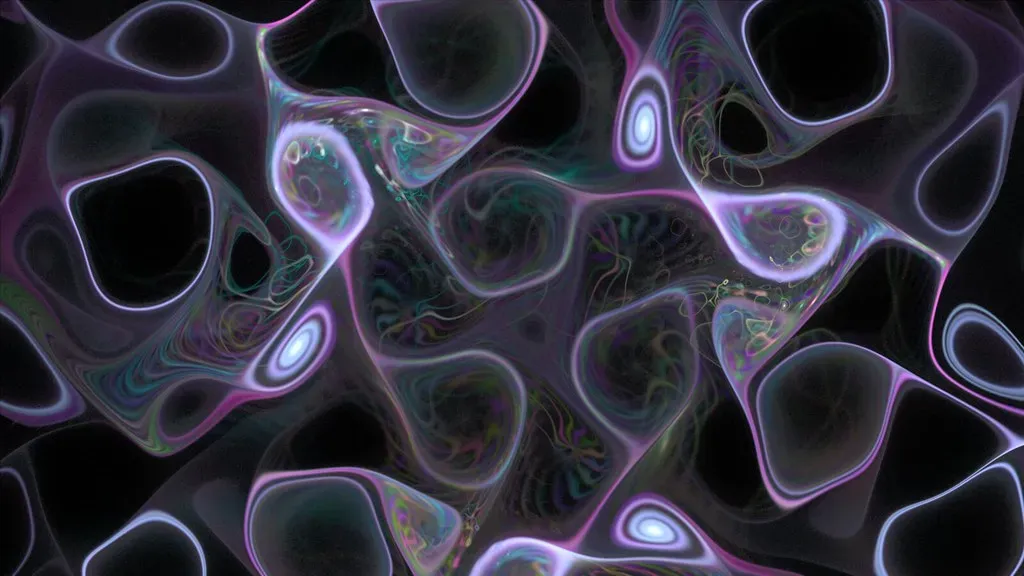
To understand why these tiny black holes might exist and what they mean for the universe, we need to rethink our concept of empty space. Most of us imagine the vacuum of space as truly empty – just nothing. The reality is far more interesting and unsettling.
Quantum foam is a theoretical quantum fluctuation of spacetime on very small scales due to quantum mechanics, where particles of matter and antimatter are constantly created and destroyed in subatomic objects called virtual particles. In a quantum theory of gravity, spacetime would consist of many small, ever-changing regions in which space and time are not definite but fluctuate in a foam-like manner, where the uncertainty principle might imply that over sufficiently small distances and brief intervals of time, the very geometry of spacetime fluctuates.
Imagine the fabric of space at the smallest scales as a seething, boiling froth of energy, where tiny particles wink in and out of existence faster than you can blink. This isn’t science fiction – this is what quantum mechanics predicts happens everywhere, all the time, at scales too small for us to observe directly.
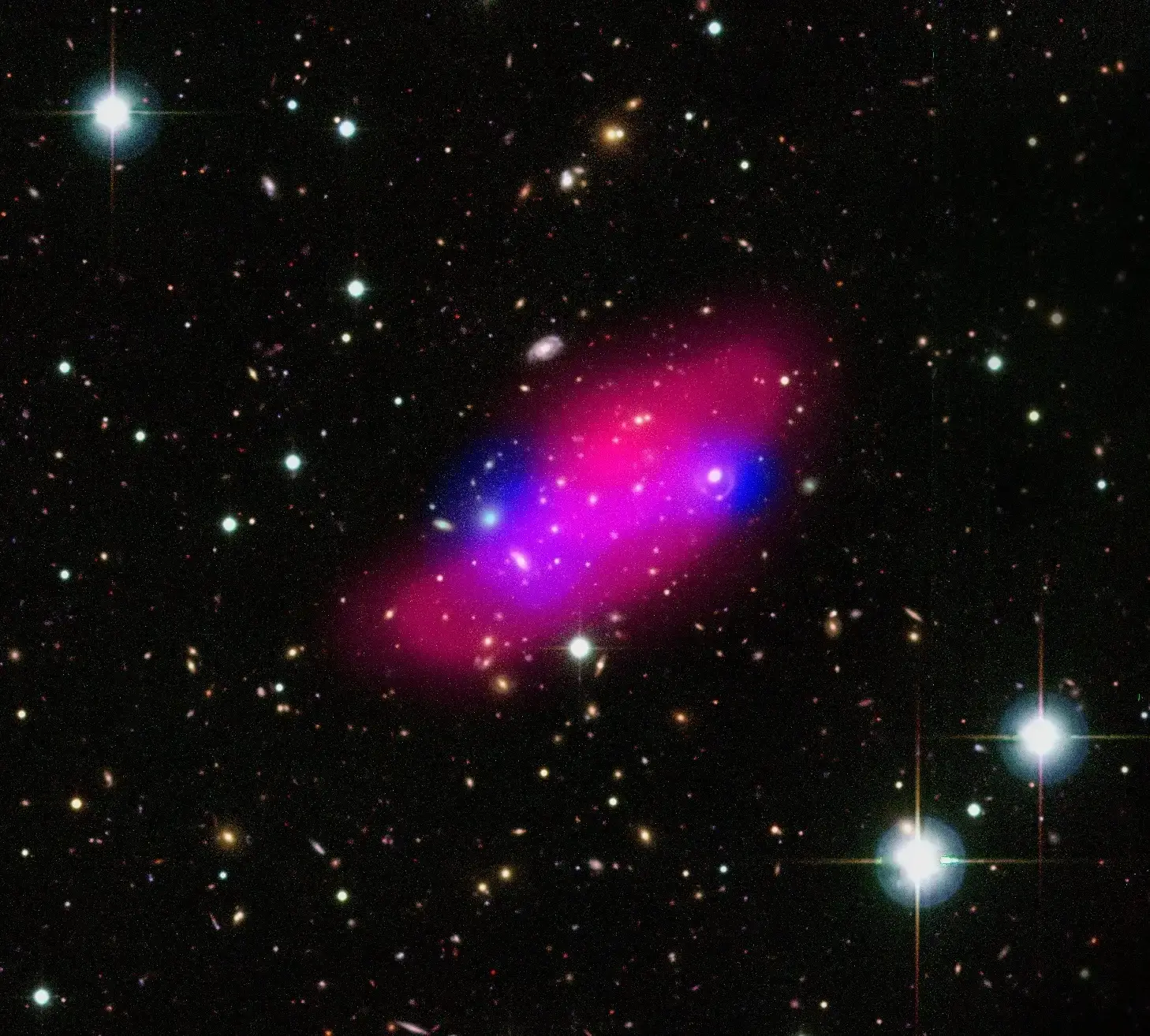
The universe is made up of three components: normal or visible matter at 5 percent, dark matter at 27 percent, and dark energy at 68 percent. Everything you can see – stars, planets, your own body – makes up less than five percent of what exists. The rest is made of stuff we can’t see directly and don’t fully understand. Some researchers think primordial black holes may make up some or all of the universe’s dark matter, which would mean these tiny cosmic monsters might actually be everywhere, just incredibly sparse and nearly impossible to detect.
The Science Behind the Calculation
Professor of Physics Robert Scherrer examined what the gravitational effects would be if a primordial black hole passed through the human body, helping scientists better understand the properties of dark matter. The calculations aren’t just academic curiosities. By understanding what size black hole would be needed to cause detectable injury or death, scientists can place limits on how many of these objects might exist.
Here’s the logic: if primordial black holes of a certain size were common, and if they were dangerous, we’d expect to see evidence of injuries or deaths caused by them over human history. MACROs would cause sufficient destruction to the human body, yet given that no deaths by MACROs have been reported, limits can be set on the properties of these particles. The same reasoning applies to primordial black holes.
Scherrer considered two main effects: shock waves and tidal forces, where a black hole moving faster than sound would generate a supersonic shock wave. The math involved isn’t trivial – it requires understanding general relativity, quantum mechanics, fluid dynamics, and human biology all at once. Scientists must calculate energy transfer rates, shock wave propagation through human tissue, and the tensile strength of cellular structures under extreme gravitational stress.
What emerges from these calculations is a surprisingly precise answer about the minimum size needed for a primordial black hole to be dangerous. Smaller than that threshold, and you’d never even notice if one passed through you. Larger, and the results would be catastrophic.
What Would Actually Happen to You
Let’s paint the full picture of what a dangerous encounter would look like. A primordial black hole crossing your path would create two main effects: supersonic shockwaves and gravitational tidal forces, with tiny black holes having masses of approximately 140 billion tons moving faster than the speed of sound forming supersonic shockwaves similar to those caused by a 22-caliber bullet.
The experience would be over in milliseconds. The black hole would enter your body, creating a cone-shaped shock wave that destroys tissue along its path. If the black hole were massive enough, the tidal forces would simultaneously begin pulling your cells apart, starting with your most vulnerable tissues. Only at the minimum threshold will the black hole’s gravity be massive enough to stretch and spaghettify your tissue on significantly damaging scales.
The injury would resemble a gunshot wound in many ways – a narrow channel of destroyed tissue, with the severity depending on what organs the black hole happened to pass through. Unlike a bullet, though, the black hole would exit the other side of your body and continue on its journey through the Earth and out into space, completely unimpeded. A sufficiently large primordial black hole would cause serious injury or death if it passed through you, behaving like a gunshot.
More massive black holes with masses on the order of seven trillion tons could tear your brain cells apart, though most primordial black holes, if they exist, could pass through your body without you even noticing. The smaller ones would slip through the spaces between your atoms like ghosts, their gravitational influence too weak and too localized to cause any harm.
Should This Keep You Awake at Night
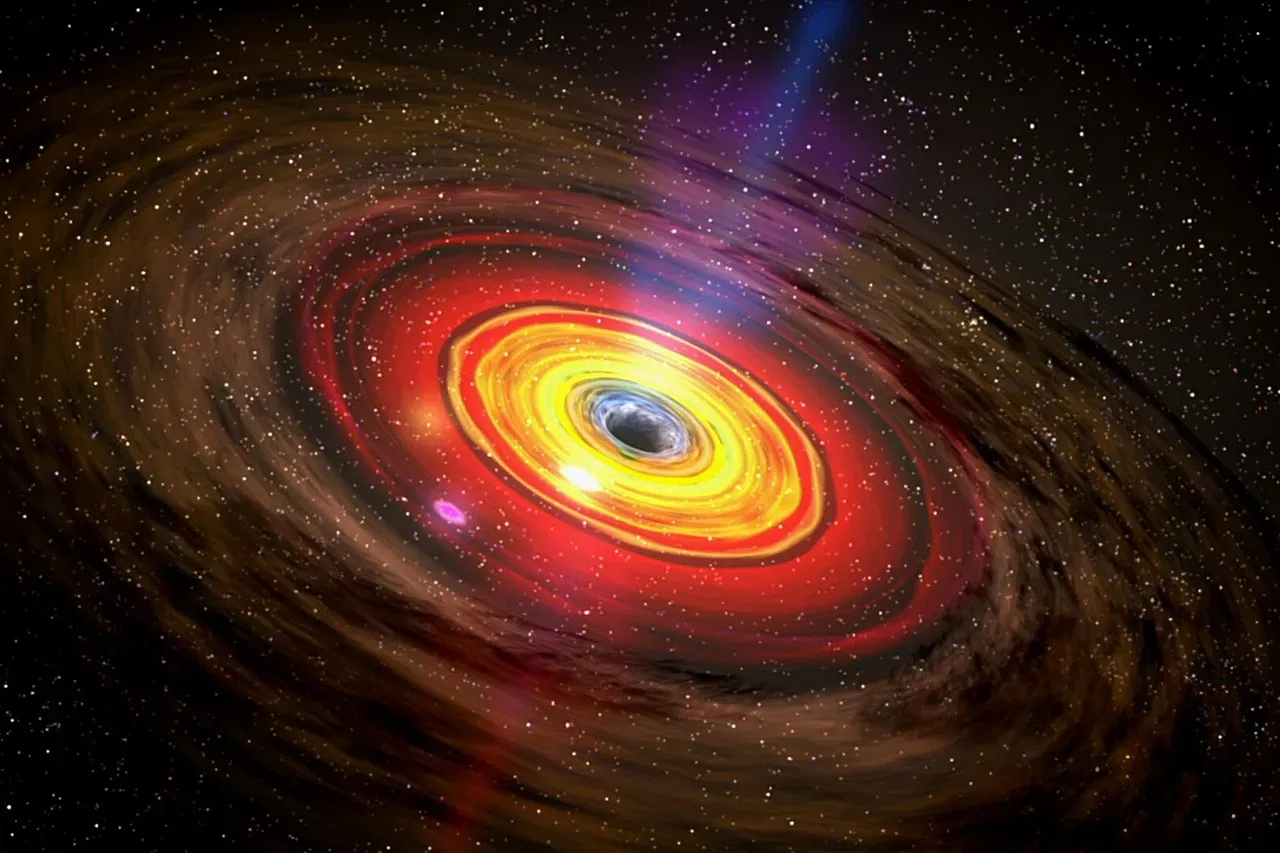
After learning all this, you might wonder whether you should add “death by microscopic black hole” to your list of worries. The answer is an emphatic no. Primordial black holes are theoretically possible but might not even exist, and a smaller primordial black hole could pass through you without notice, though the density of these black holes is so low that such an encounter is essentially never going to happen.
The numbers are reassuring. Even if these objects exist and even if they’re relatively common in the cosmic scheme of things, space is so vast and humans are so small that the odds of an intersection remain negligible. Assuming all dark matter is primordial black holes and that they are at least large enough to cause injury, the number of injuries per year would amount to around one followed by negative eighteen zeros per year – essentially zero.
You’re far more likely to be struck by lightning, hit by a meteorite, or win the lottery multiple times in succession. In fact, you’re more likely to experience all of those things on the same day than to encounter a dangerous primordial black hole. The calculations show that humanity could exist for trillions upon trillions of years before expecting even a single such incident.
What makes this thought experiment valuable isn’t the practical danger – there isn’t any. Rather, it’s what these calculations tell us about the nature of reality itself. They help constrain our theories about dark matter, test our understanding of quantum gravity, and reveal the strange, counterintuitive physics that governs the universe at its smallest and largest scales. Sometimes the most interesting questions are the ones we’ll never have to worry about in practice.
So sleep easy tonight. Your chances of being harmed by a primordial black hole are so close to zero that they might as well be. The universe is full of wonders and terrors, and this particular terror is one you can safely ignore. What do you think about the strange physics of our universe? Tell us in the comments.