
We like to think of ourselves as creatures of words, but much of what we really say never passes through our mouths at all. A raised eyebrow, a turned shoulder, a half-second pause before a handshake can shift the entire meaning of an interaction without anyone quite knowing why. In courtrooms, offices, dating apps brought into the real world, and even video calls, these silent signals can tilt decisions, fuel misunderstandings, or create instant trust. Scientists are discovering that our bodies are constantly broadcasting signals that even we, the senders, often don’t fully understand. The mystery now is not whether body language matters, but how much it shapes our lives – and what happens as technology begins to decode it in real time.
The Hidden Clues Our Bodies Leak Without Permission

Walk into a room where two people have just argued and you can feel the tension before anyone speaks – your brain is reading posture, facial tension, and the distance between them. Researchers have found that people often pick up on these non-verbal cues in a fraction of a second, long before they consciously register what they’re seeing. A slight lean away from someone, crossed arms, or hands disappearing into pockets can quietly signal discomfort or defensiveness. On the flip side, a relaxed stance with open palms and a slight forward lean can communicate interest, warmth, or respect. What makes this so powerful is that much of it happens outside deliberate control, so it can reveal emotions we might rather hide.
Micro-expressions – fleeting facial movements that flash across the face for a fraction of a second – are a striking example of this leakage. They can betray emotions like anger, contempt, or fear even when someone is trying to appear neutral. A tiny lip curl or a brief tightening around the eyes can contradict a calm tone of voice in ways trained observers are able to spot. Our pupils may dilate when we’re excited or interested; our breathing subtly quickens when we’re anxious. In daily life, most of us don’t consciously analyze these details, but our brains are quietly crunching them and nudging our gut feelings about whether someone seems trustworthy, annoyed, or secretly amused.
From Ancient Survival Tool to Modern Social Decoder

Body language is not some fancy social skill invented for job interviews; it has roots in basic survival. Long before complex speech evolved, early humans relied on posture, gaze, and gestures to coordinate hunting, signal danger, or communicate intentions without making a sound. A direct stare might have signaled a challenge, while a bowed head or averted gaze could defuse tension. Those who were better at reading these signs had an advantage: they could avoid fights, detect allies, and sense when a group was turning against them. In that sense, our knack for picking up body cues is an ancient adaptation dressed in modern clothes.
Today, that same system is at work in much more subtle and socially complex environments. In classrooms, teachers use eye contact and movement around the room to manage attention and authority. In workplaces, a manager’s relaxed stance or, conversely, rigid posture sets the tone for how safe it feels to speak up. In politics, candidates are carefully coached on hand gestures, facial expressions, and whether to stand squarely toward the camera or angle slightly to appear approachable rather than aggressive. Even if we’re not consciously aware of it, we tend to reward those whose body language fits our expectations for confidence, honesty, or warmth – sometimes more than we reward the actual content of their words.
The Science Behind Silent Signals
Over the past few decades, psychologists, neuroscientists, and behavioral scientists have moved body language from the realm of party tricks into carefully measured research. They film interactions frame by frame, track eye movements, and even monitor muscle activity in the face to understand which movements line up with which emotions. One consistent finding is that there is no single universal “tell” for complex states like lying or attraction; context and clusters of cues matter far more than any one gesture. A person crossing their arms could be feeling defensive, but they could just as easily be cold or comfortable that way. This is why responsible researchers warn against simplistic decoding manuals that promise to read anyone “like a book” from one or two signals.
Still, some patterns hold up surprisingly well across different studies. When people feel genuinely comfortable and engaged, they tend to mirror each other’s posture and gestures without realizing it, a phenomenon known as behavioral mimicry. When stress spikes, the body often reveals it through tiny self-soothing gestures: rubbing the neck, touching the face, or fidgeting with jewelry. In some experiments, trained coders who analyze facial muscles and posture can predict relationship outcomes, such as whether couples will stay together, based in part on the amount of contempt, eye-rolling, or dismissive body language they show during conflict discussions. These findings underscore that body language is not magic – but it is a rich, measurable layer of human behavior.
Culture, Context, and the Risk of Misreading
Body language may feel instinctive, but it is not a universal codebook that works the same way everywhere on Earth. In some cultures, direct eye contact is seen as confident and respectful, while in others it can be interpreted as rude or confrontational, especially toward elders or authority figures. Personal space is another cultural minefield; what feels like a friendly distance in one country can feel uncomfortably close in another. A thumbs-up gesture that signals approval in one place may carry a very different, even insulting, meaning elsewhere. These differences mean that reading body language correctly requires sensitivity to cultural norms and situational context, not just a checklist of signals.
I learned this the hard way during a reporting trip where I mistook a lack of direct eye contact as disinterest, only to realize later it was a sign of politeness in that setting. That experience still echoes in my mind whenever I hear bold claims about “universal” body language readings. Context within a single culture also matters: someone who looks tense and closed off at a networking event might simply be socially anxious, not unfriendly. Conversely, a warm smile can be a practiced professional tool rather than a window into genuine emotion. Recognizing these layers helps us approach body language as a powerful, but imperfect, lens – not a verdict.
Why It Matters: Decisions, Bias, and Power

Understanding body language is not just a curiosity; it shapes who gets hired, who gets believed, and who feels safe. In job interviews, candidates who display steady eye contact, upright posture, and animated but not chaotic gestures are often judged as more competent and confident, even when their qualifications are identical to others. In legal settings, jurors and judges may unconsciously weigh a witness’s fidgeting or eye movements when deciding whether they seem credible, despite having no reliable evidence that those behaviors indicate lying. These snap judgments can amplify existing biases, favoring people whose natural or culturally learned body language matches what a particular society reads as trustworthy or authoritative.
Compared with traditional communication methods like written applications or structured questionnaires, body language slips in under the radar. It influences decisions without being formally acknowledged or measured, which makes it harder to scrutinize for fairness. People with neurodivergent conditions such as autism may not display the expected patterns of eye contact, facial expression, or gesture, leading to misinterpretations of their intentions or abilities. The danger is that non-verbal expectations become an invisible gatekeeping tool, rewarding those who fit a narrow standard of “right” body behavior. Recognizing this helps shift the question from “What does their body language say about them?” to “What does my interpretation say about me and my biases?”
When Algorithms Start Reading Our Faces
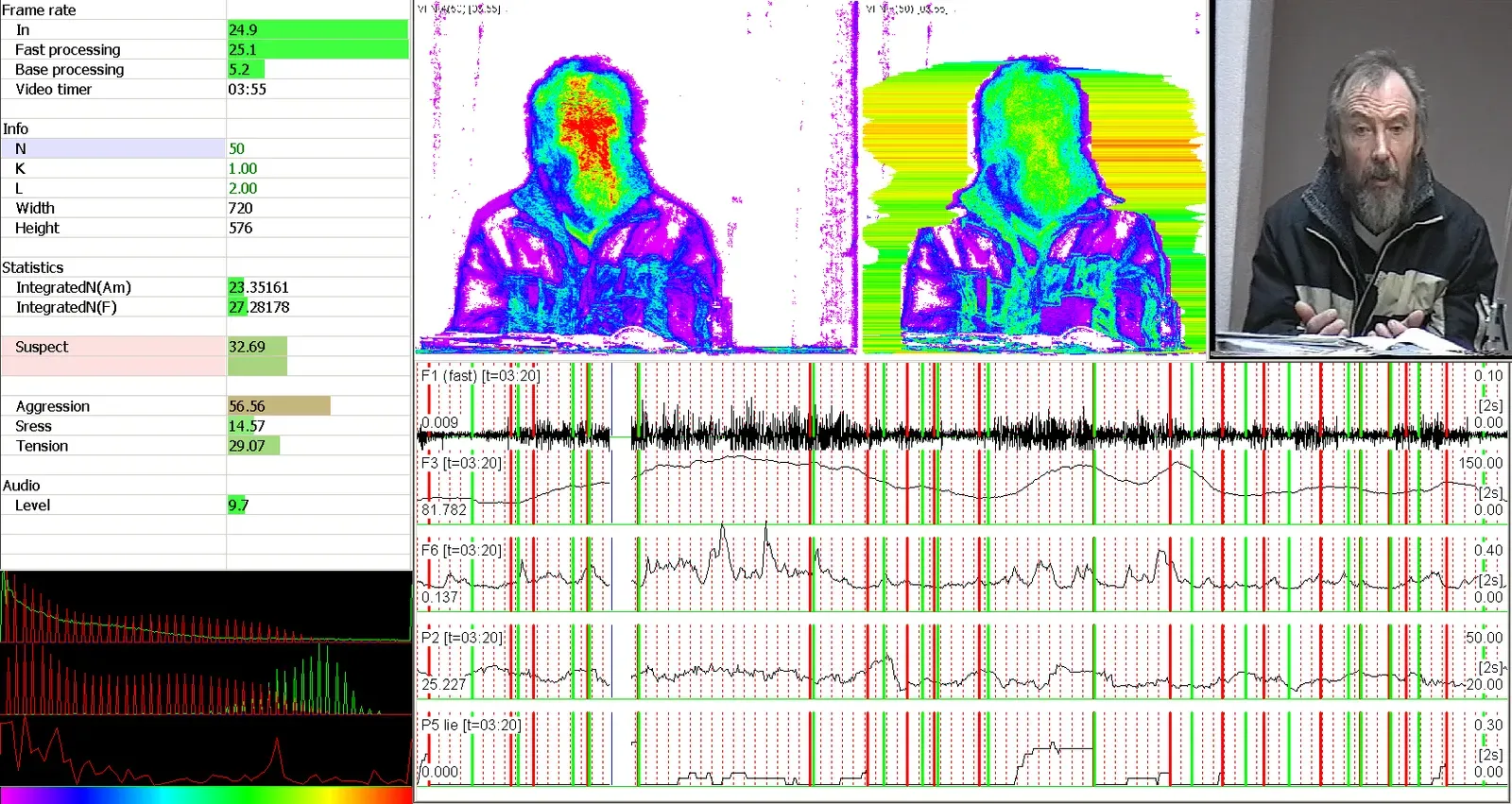
In recent years, technology has started to edge into the territory that once belonged to human intuition: reading facial expressions, posture, and gaze using cameras and algorithms. Some companies have experimented with using AI-driven facial analysis in job interviews, claiming to evaluate traits like enthusiasm or honesty from subtle movements and micro-expressions. Others explore “emotion recognition” systems in classrooms, retail environments, or even vehicles, aiming to gauge engagement, frustration, or fatigue. On paper, this sounds like a futuristic upgrade to human communication: an always-on assistant detecting what people really feel beneath their words.
The reality is more complicated and, frankly, unsettling. Many scientists argue that these systems overpromise what they can infer from facial movements alone, especially across different cultures and individual differences. There is a real risk that algorithmic readings of body language will hard-code existing social biases into automated systems, giving a technical sheen to what is essentially educated guessing. Imagine a hiring system that downranks candidates because their face looks “less enthusiastic” to a camera, or a classroom tool flagging a quiet student as disengaged based on posture. As these tools spread, the debate over who gets to interpret our bodies – and for what purpose – will only intensify.
The Future Landscape of Non-Verbal Communication

Looking ahead, the frontier of body language research is moving beyond simply labeling emotions and toward mapping dynamic, real-time interactions. New studies pair high-speed cameras with motion tracking and physiological sensors to see how body cues sync up between people over seconds, minutes, and hours. Instead of asking what one expression means in isolation, researchers are asking how two or more nervous systems talk to each other through movement and timing. This could reshape fields like telemedicine, where doctors might rely on subtle postural cues over video to detect pain, depression, or distress that patients are reluctant to verbalize. It may also influence how we design virtual and augmented reality spaces to carry more of these embodied signals.
At the same time, ethical questions are catching up. There are growing calls for strict limits on how workplaces, schools, and law enforcement use emotion or body-language-detection tools. Some researchers argue that any system claiming to infer internal states from facial or bodily data should be treated as highly sensitive, requiring consent and transparency. As social robots and digital avatars become more common, designers are wrestling with how much “human-like” body language these systems should display and what expectations that sets. The future will likely hold a blend of opportunity and unease: better tools for understanding each other, paired with new ways for our bodies to be monitored and misread.
Everyday Ways to Read – and Respect – Body Language

For most of us, the most meaningful step is not to become a human lie detector, but to tune in more thoughtfully to what bodies are saying while staying humble about our interpretations. That can start with something simple: in your next conversation, notice posture, distance, and facial tension, then check your assumptions with an open-ended question rather than a conclusion. If someone seems withdrawn, instead of deciding they are bored or rude, you might ask whether they are tired, overwhelmed, or just more comfortable listening. In group settings, watch who leans in and who leans out, whose gestures get mirrored, and who seems physically sidelined; these patterns often reveal who feels included or invisible. Paying attention this way can turn social interactions from autopilot into a kind of living laboratory.
There are also small, practical ways to use your own body language more intentionally, without trying to fake an entire personality. You can experiment with uncrossing your arms in tense conversations, maintaining a soft but steady gaze rather than a stare, and angling your body slightly toward someone you want to encourage. When you notice yourself fidgeting or shrinking back, treat it as data about your own emotional state rather than a flaw. Simple habits like pausing to breathe and planting your feet firmly on the ground can shift how centered and present you feel, which others will often sense before you say a word. In a world buzzing with noise, learning to read and respect these quiet signals might be one of the most human skills we still have.
Suhail Ahmed is a passionate digital professional and nature enthusiast with over 8 years of experience in content strategy, SEO, web development, and digital operations. Alongside his freelance journey, Suhail actively contributes to nature and wildlife platforms like Discover Wildlife, where he channels his curiosity for the planet into engaging, educational storytelling.
With a strong background in managing digital ecosystems — from ecommerce stores and WordPress websites to social media and automation — Suhail merges technical precision with creative insight. His content reflects a rare balance: SEO-friendly yet deeply human, data-informed yet emotionally resonant.
Driven by a love for discovery and storytelling, Suhail believes in using digital platforms to amplify causes that matter — especially those protecting Earth’s biodiversity and inspiring sustainable living. Whether he’s managing online projects or crafting wildlife content, his goal remains the same: to inform, inspire, and leave a positive digital footprint.