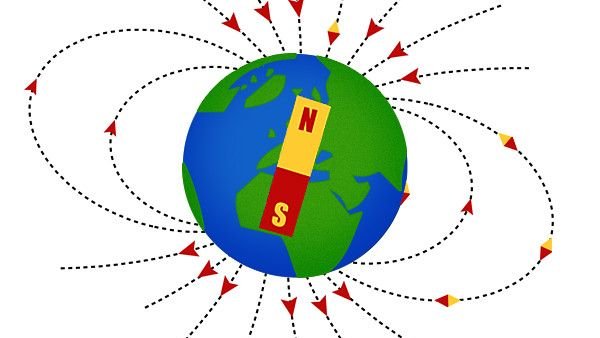

Deep beneath your feet, something extraordinary is happening right now. Thousands of kilometers below the surface, a churning ocean of liquid iron is slowly swirling, spinning, and shifting – and it’s doing something that will eventually flip the very compass directions you’ve always trusted. North will become south. South will become north. It has happened hundreds of times before in Earth’s long history, and scientists are fairly certain it will happen again.
The question is not really “if.” The question is “why” – and understanding that “why” opens a window into one of the most fascinating, slightly unsettling, and genuinely mind-blowing processes our planet goes through. Let’s dive in.
The Invisible Shield You Never Think About
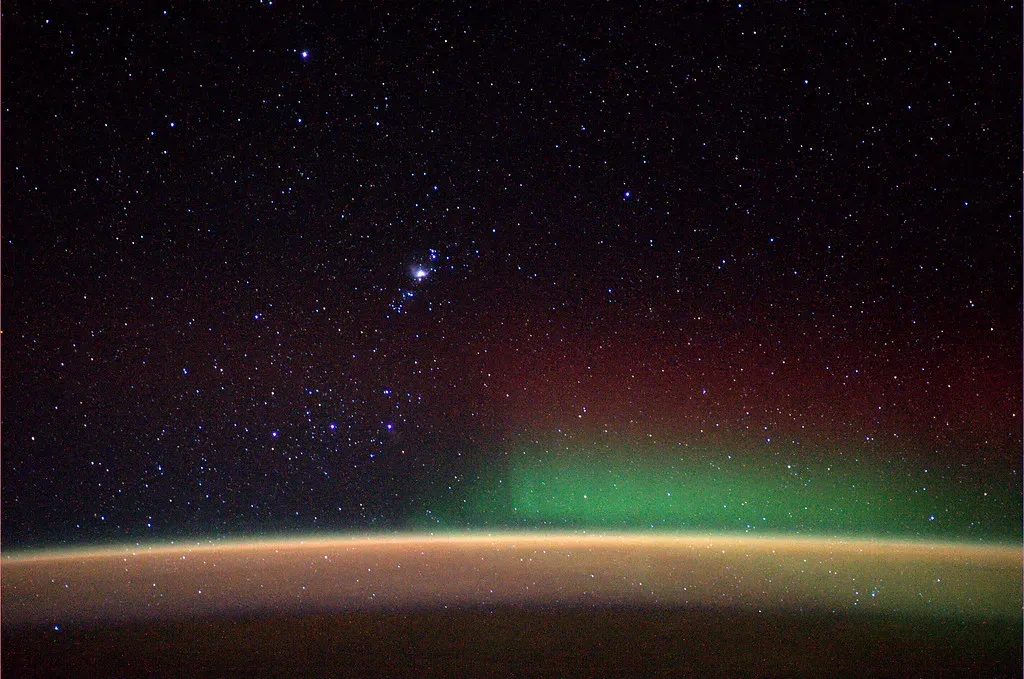
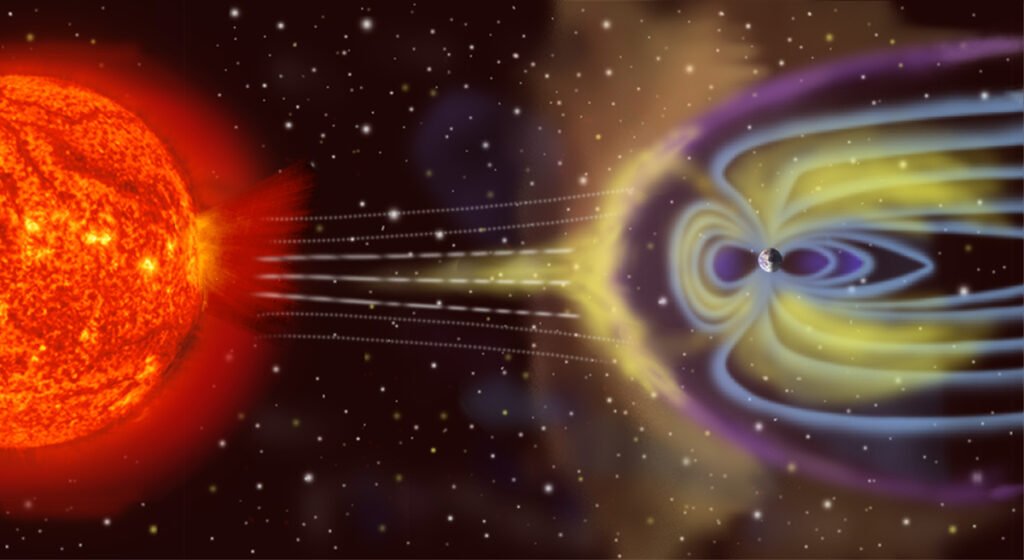
You are surrounded by a vast, invisible shield that extends thousands of kilometers into space. This magnetosphere protects you from the relentless stream of charged particles emitted by the Sun, known as the solar wind, and from high-energy cosmic rays originating from deep space. Think of it like a planetary force field – except it’s real, and without it, life as you know it probably wouldn’t exist.
Without this protective barrier, the atmosphere would be stripped away over geological timescales, and the surface would be bathed in harmful radiation. This magnetic field is not a permanent fixture of the planet. It is dynamic, shifting, and occasionally, it flips entirely. That last part is the one worth paying attention to.
What Actually Generates Earth’s Magnetic Field?
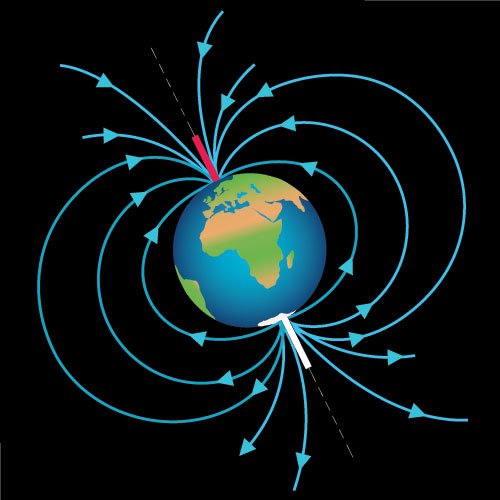
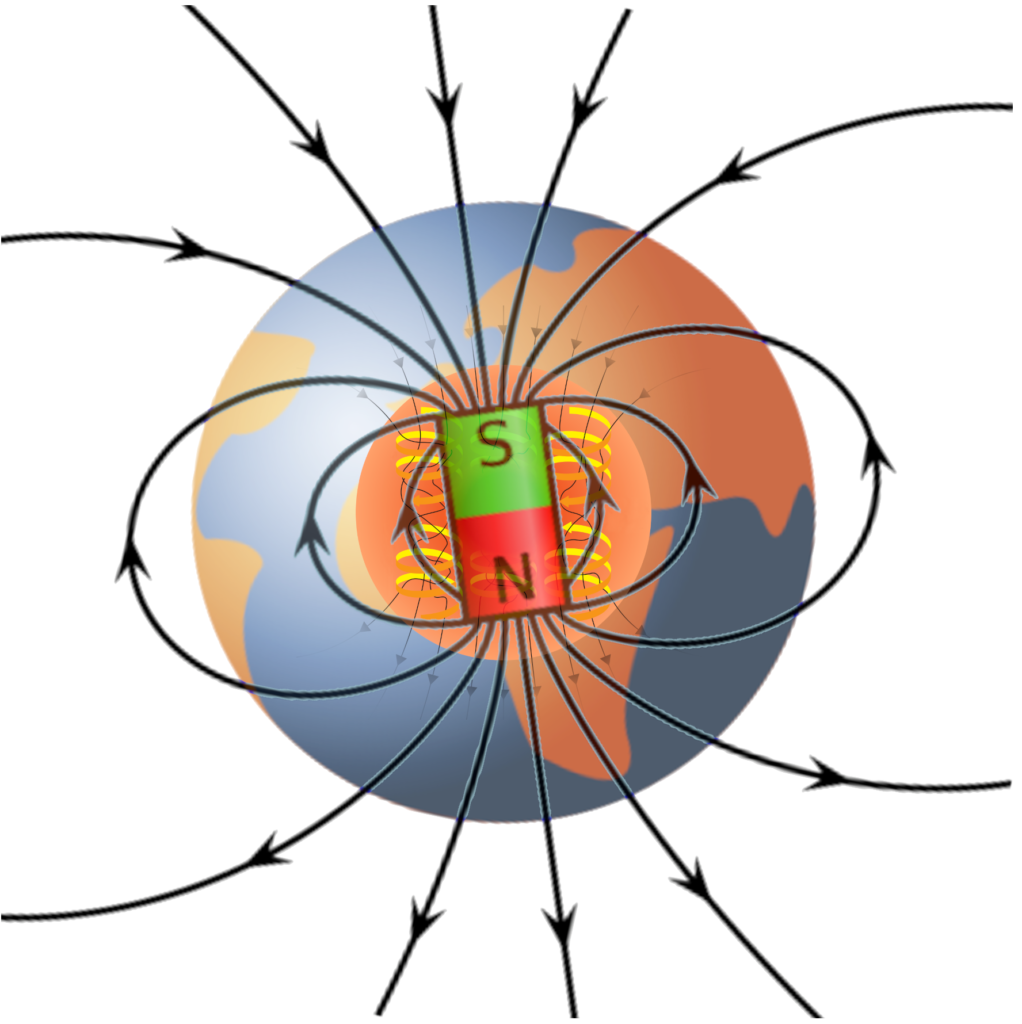
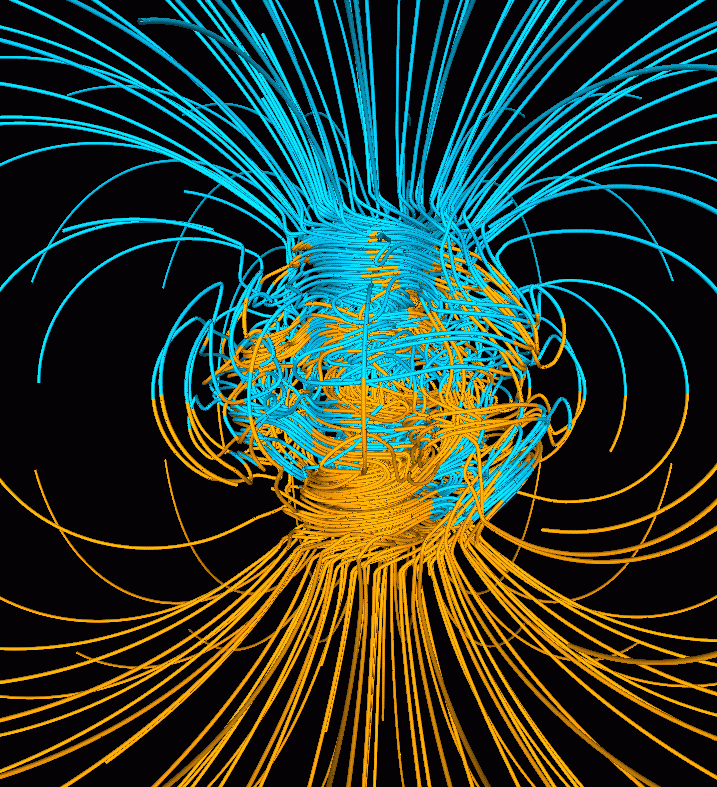
Earth’s magnetic field is generated by the churn of its liquid nickel-iron outer core. Picture a giant pot of molten metal rotating inside the planet – because that’s essentially what it is. As this liquid iron moves, it generates electric currents, and those currents produce the magnetic field that wraps around the entire planet. Scientists call this process the geodynamo, and it’s been running for billions of years.
One prevailing hypothesis suggests that reversals arise from the complex dynamics of the Earth’s liquid outer core, where the planet’s magnetic field is generated. It is believed that changes in the convective flow of molten iron within the outer core can lead to the generation of new magnetic fields with reversed polarity. So when that churning liquid iron starts moving differently, everything changes. Honestly, it’s a bit like a cosmic storm brewing deep underground.
How Often Does the Magnetic Field Flip?
Reversal occurrences appear to be statistically random. There have been at least 183 reversals over the last 83 million years, averaging roughly once every 450,000 years. The latest, the Brunhes-Matuyama reversal, occurred 780,000 years ago with widely varying estimates of how quickly it happened. So you’re not due for one tomorrow. But you’re also well past the average interval.
The rate of reversals in Earth’s magnetic field has varied widely over time. Around 72 million years ago, the field reversed five times in a single million-year period. In a four-million-year period centered on 54 million years ago, there were ten reversals; at around 42 million years ago, seventeen reversals took place in the span of three million years. That kind of variability makes prediction nearly impossible, which is, to put it mildly, a little unnerving.
Why Does the Flip Actually Happen? The Deep Causes Explained
Research shows that reversals in numerical dynamo models with heterogeneous outer boundary heat flux appear when the amplitude of heat flux variation is increased. The reversals are triggered at regions of large heat flux in which strong small-scale inertial forces are produced, while elsewhere inertial forces are substantially smaller. In plain language: uneven heating at the boundary between the Earth’s core and mantle can destabilize the geodynamo enough to trigger a flip.
Some scientists think that geomagnetic reversals are not spontaneous processes but rather are triggered by external events that directly disrupt the flow in the Earth’s core. Proposals include impact events or internal events such as the arrival of continental slabs carried down into the mantle by the action of plate tectonics at subduction zones or the initiation of new mantle plumes from the core-mantle boundary. It’s not a single smoking gun – it’s a collection of suspects, and science hasn’t fully solved the case yet.
How Long Does a Magnetic Flip Take?
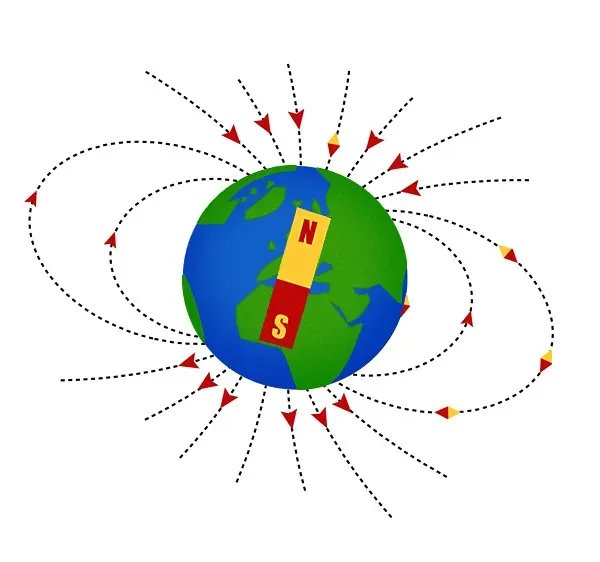
These reversals don’t happen suddenly, but over several thousand years, where the magnetic field fades and wobbles while the two poles wander and finally settle in the opposite positions of the globe. So you won’t wake up one morning with your compass pointing south. It’s a slow, grinding, millennia-long process, more like a gradual reshuffling than a sudden switch.
Analysis of Eocene sediment cores reveals that some geomagnetic reversals 40 million years ago lasted up to 70,000 years, far exceeding the typical 10,000-year duration. The difference between a geomagnetic reversal that takes 10,000 years and one that takes 70,000 years is significant because prolonged intervals of weaker geomagnetic fields would have exposed the Earth to higher amounts of cosmic radiation for longer. A longer flip means a longer window of vulnerability – for technology, ecosystems, and everything in between.
What Happens to Life – and Technology – During a Flip?
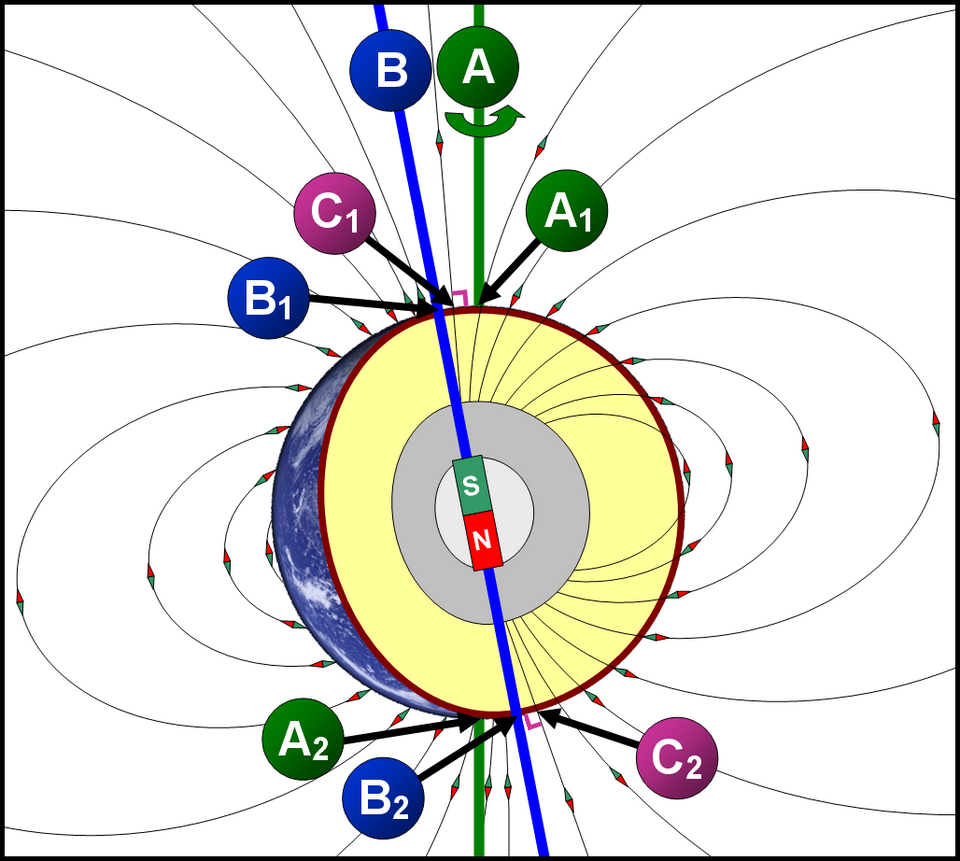
The strength of the dipole field can decrease by as much as 90% at Earth’s surface during a reversal or an excursion. That’s not a small dip. That’s a near-total collapse of the shield that separates you from the full force of space radiation. During this transition, the magnetic field doesn’t just weaken – it becomes jumbled, and multiple magnetic poles can emerge in unexpected places. Imagine having five different “norths” at the same time. Your compass would be useless.
A flip would disrupt radio communication and scramble navigation systems. Orbiting satellites would be at risk, as a weakened magnetic field would offer less protection against space weather. While life on Earth has weathered multiple magnetic reversals over more than 100 million years, we’ve never experienced a reversal when modern technology was present. That last point is the one that keeps scientists quietly concerned. Past life survived – but past life didn’t depend on GPS, power grids, or the internet.
Are We Heading Toward a Flip Right Now?
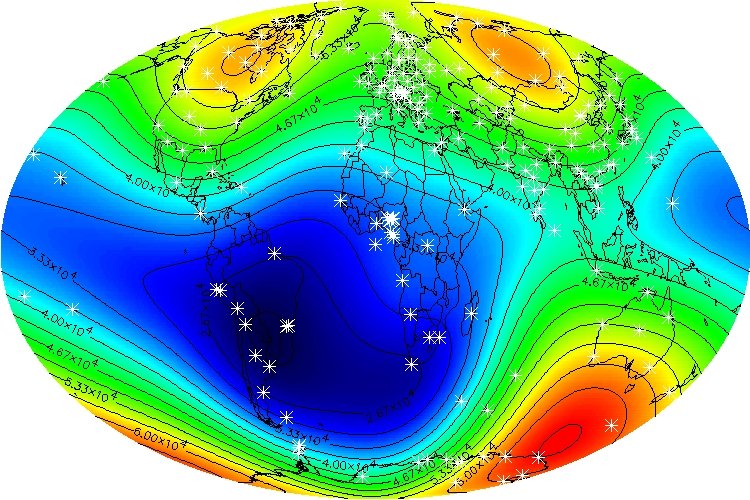
Over the last two centuries, Earth’s magnetic field has weakened by roughly 10%, and the north magnetic pole has been drifting at an accelerating pace, moving from the Canadian Arctic toward Siberia. While these changes may signal a forthcoming reversal, they could also represent a temporary geomagnetic excursion, in which the field deviates significantly but ultimately returns to its original polarity. So the jury is still out. It might be the beginning of a flip – or just a brief wobble in the long story of our planet.
Throughout Earth’s history, there have been several such extremes, including complete polarity reversals like the Matuyama-Brunhes event, in which the north and south magnetic poles traded places. Researchers don’t know when, or if, that will happen again. Even if another magnetic flip were to happen in the future, polarity reversals are not correlated with mass extinction events. That’s the reassuring part. Life is resilient. The planet has been here before. What changes isn’t survival – it’s the shape of the world we’ve built on top of nature.
Conclusion: A Planet That Never Stops Changing
The Earth’s magnetic field is one of those things most people take completely for granted. You don’t see it, you can’t feel it, and unless you’re navigating by compass in the wilderness, it rarely crosses your mind. Yet it is one of the most important forces shaping the conditions for life on this planet – and it is anything but static.
What you’ve just read is a story about deep time, liquid iron, invisible forces, and a planet that never truly sits still. The flip will happen again. Scientists can’t tell you exactly when, but the geological record makes it clear that it’s not a matter of “if” but “when.” The encouraging part is that life has survived every single one of these reversals before. The real question is how well our modern world – all its satellites, power systems, and digital infrastructure – will adapt when the time comes.
Here’s the thing worth sitting with: we live on a planet that is quietly, constantly transforming beneath us in ways we’re only just beginning to understand. What do you think would change most dramatically if the poles flipped tomorrow? Tell us in the comments.