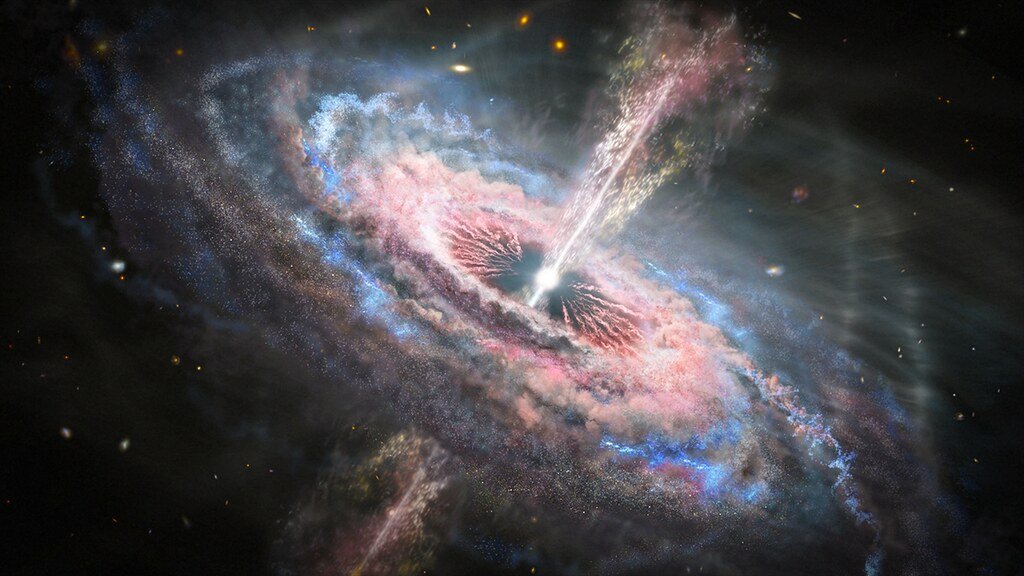

If the universe had a “breaking news” alert, gamma-ray bursts would trigger it almost every single time. These events are so intense that for a few fleeting seconds, a single burst can outshine every star in its galaxy combined. Yet most people have never even heard of them, and they flash by so fast that if you blink at the wrong moment, you miss the most violent show in the cosmos.
Gamma-ray bursts, often shortened to GRBs, are like cosmic camera flashes: brief, blinding, and packed with energy that’s almost impossible to wrap your head around. Astronomers have spent decades trying to understand what they are, where they come from, and whether they could ever pose a threat to life on Earth. The answers are wild, sometimes unsettling, and surprisingly beautiful.
Cosmic Fireworks: What Exactly Is a Gamma-Ray Burst?
A gamma-ray burst is an extremely energetic flash of gamma radiation, the highest-energy form of light in the universe. These bursts typically last from a fraction of a second to a few minutes, and during that time, they can release more energy than the Sun will emit over its entire ten-billion-year lifetime. Imagine every lightbulb, every star, every fusion reaction you can think of, all crammed into one violent cosmic blink.
What makes GRBs so shocking is not just their power but their distance. Astronomers usually detect them coming from galaxies billions of light-years away, meaning the explosions happened before humans, before Earth’s dinosaurs, sometimes even before our own Milky Way fully formed. Yet their energy is so extreme that our space telescopes still pick them up as sudden spikes of radiation that stand out above almost everything else.
How We First Discovered These Mysterious Blasts
Gamma-ray bursts were found by accident in the late twentieth century, not by astronomers searching the skies, but by military satellites watching for nuclear tests on Earth. These satellites started seeing unexplained flashes of gamma rays coming from space, not from any country on the ground. It was an awkward surprise: the universe itself was setting off “alarms” meant for human weapons.
For years, GRBs were a total mystery, partly because no one could tell exactly where they were coming from. Early detectors could only say something like, “It came from somewhere in that huge chunk of sky.” Over time, as dedicated space observatories improved, scientists realized these bursts were scattered across the entire sky, not clustered near the Milky Way. That was the turning point: the explosions weren’t local at all; they were happening in distant galaxies, on scales far beyond anything we could produce on Earth.
Long vs Short Bursts: Two Very Different Cosmic Catastrophes
Not all gamma-ray bursts are created equal. Astronomers now group them into two main types: long-duration bursts that last several seconds to a few minutes, and short-duration bursts that vanish in less than about two seconds. That tiny difference in timing points to completely different kinds of disasters playing out in deep space. It’s like learning that a thunderclap and an earthquake come from very different sources, even if they both shake you.
Long GRBs are generally linked to the deaths of massive stars, while short GRBs seem to come from the collisions of ultra-dense neutron stars. Long bursts often have bright, lingering “afterglows” that make them easier to study, while short bursts can be so brief and faint that if a telescope isn’t already watching the right patch of sky, they’re gone forever. This split into long and short bursts gave scientists their first real foothold in understanding what kind of engines could power such enormous explosions.
When Stars Die Violently: Collapsars and Hypernovae
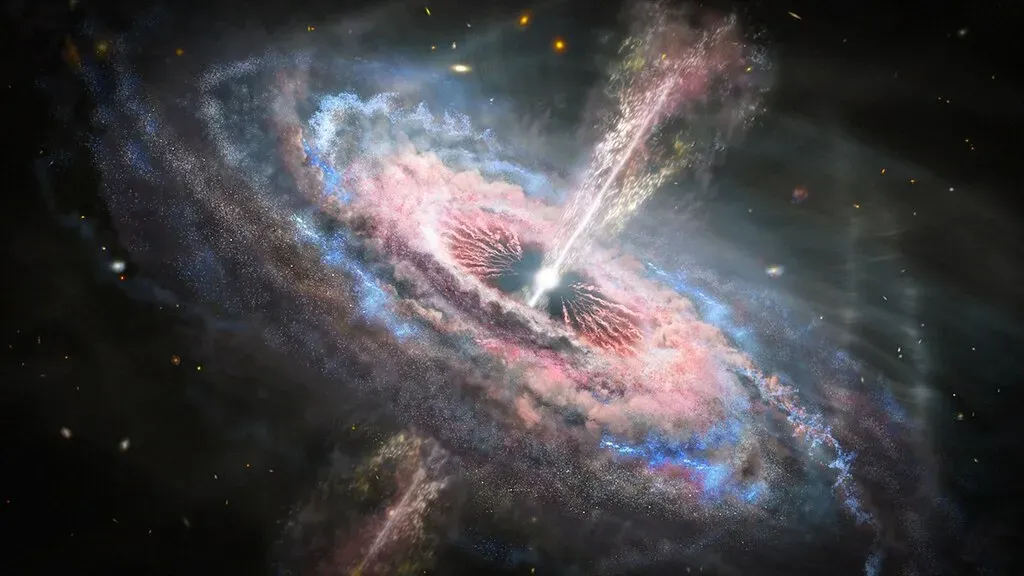
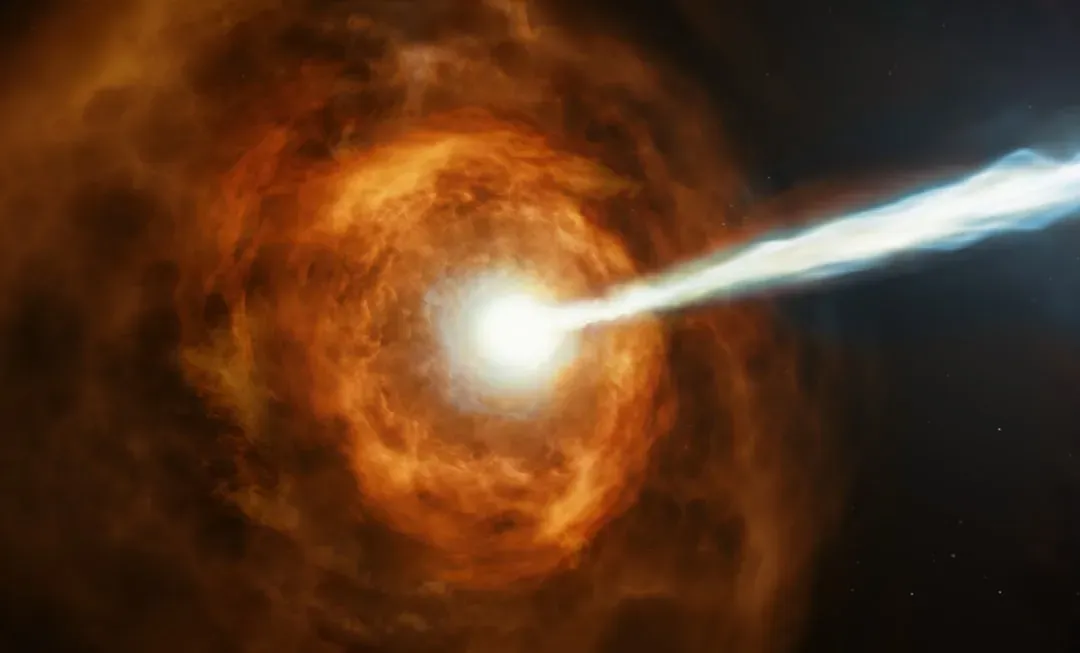
The longer gamma-ray bursts are usually tied to the deaths of huge, rapidly spinning stars many times more massive than the Sun. When these stars run out of fuel, their cores collapse into black holes in a matter of seconds. Instead of a gentle fade-out, their outer layers plunge inward, then are blasted outward in a titanic explosion sometimes called a hypernova. In that chaos, narrow, ultra-fast jets of particles can be launched from near the forming black hole.
These jets punch their way through the dying star and shoot into space at speeds very close to that of light, spraying gamma rays in tight beams like cosmic laser pointers. If one of those beams just happens to line up with Earth, we see it as a long gamma-ray burst. Astronomers have confirmed this connection by catching some GRBs in the act and then spotting bright supernovae appearing in the same spot days later, like a firework fading into a glowing ember.
Neutron Star Smashups: The Engines Behind Short Bursts
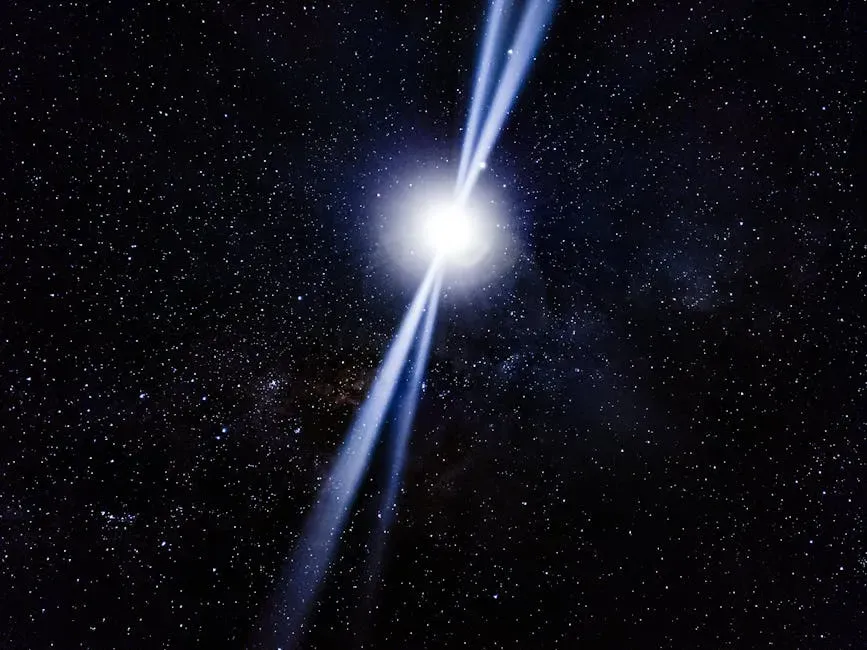
Short gamma-ray bursts seem to come from a different kind of horror story: the collision of neutron stars, the ultra-dense cores left over after certain stars explode as supernovae. A neutron star crams more mass than the Sun into a sphere only about the size of a city. When two of these objects orbit each other, they gradually spiral inward, losing energy in the form of gravitational waves until they finally slam together in a catastrophic merger.
That merger can briefly form a black hole surrounded by a swirling disk of super-hot matter, which powers narrow jets of particles and radiation. Those jets generate the short, intense flash of gamma rays we see as a short GRB. In recent years, this picture has been strengthened dramatically by a rare event where gravitational waves from a neutron star merger were detected, followed by a burst of gamma rays and a glowing aftermath rich in heavy elements like gold and platinum.
GRBs don’t just light up the sky; they rewrite the periodic table. The extreme conditions in neutron star mergers can forge heavy elements that ordinary stars can’t easily make. Astronomers now think that a significant fraction of the gold in your jewelry or electronics may have come from one of these violent smashups in our galaxy’s past. It’s a strange thought: something as delicate as a wedding ring owes its existence to a blast capable of shredding entire star systems.
Could a Gamma-Ray Burst Ever Threaten Life on Earth?
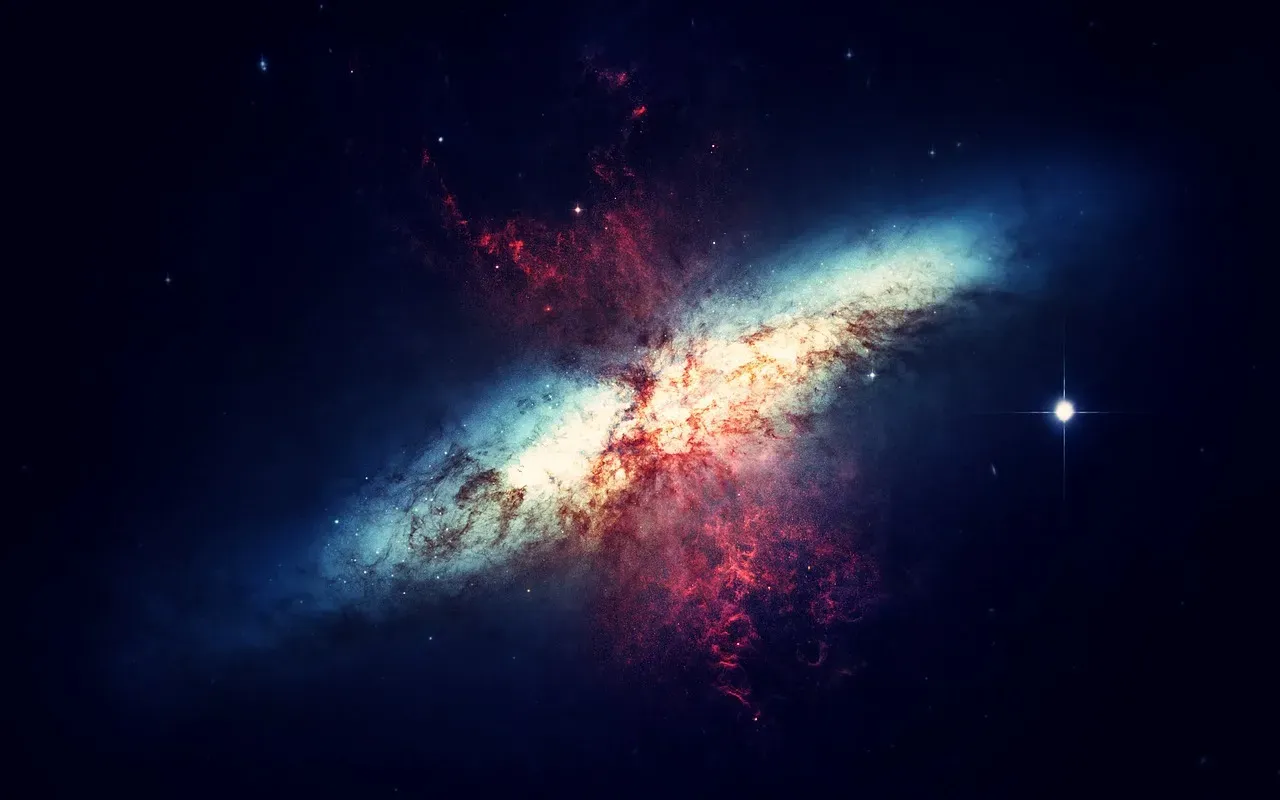
Whenever people hear “most powerful explosion in the universe,” the next question is usually, “Should I be worried?” Technically, yes, a nearby gamma-ray burst pointed directly at Earth could be devastating. The intense radiation could strip away part of our atmosphere, especially the ozone layer, bathing the surface in harmful ultraviolet light and disrupting climate and ecosystems. Some researchers have even suggested that a GRB might have contributed to at least one mass extinction event in Earth’s distant past.
Fortunately, the odds of this happening anytime soon are extremely low. GRBs are rare, their beams are narrow, and the nearest known potential sources are still far away on human timescales. It’s a bit like worrying about being hit by a bullet fired from the other side of the planet: physically possible, but not the kind of thing you lose sleep over. For now, GRBs are more of a science fascination than a real-world threat, though they do remind us how fragile our little blue planet is in a wild, unpredictable universe.
How We Detect and Study These Ultra-Fast Flashes
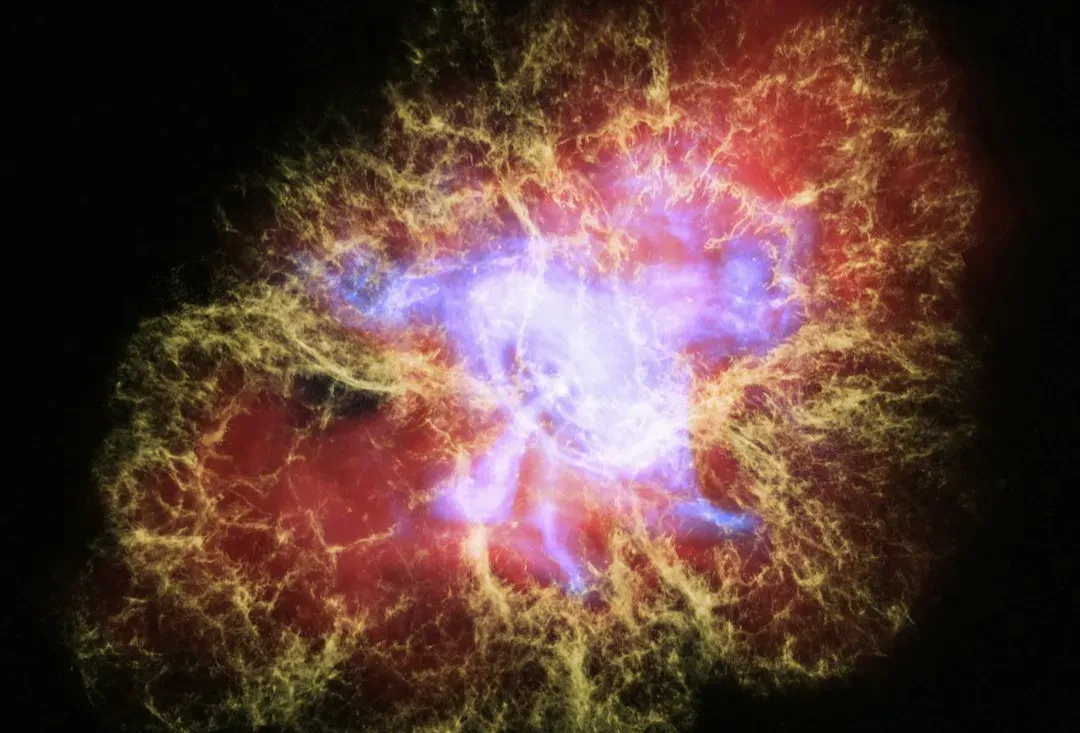
Because Earth’s atmosphere blocks most gamma rays, we can’t observe GRBs from the ground; we need satellites in space. Modern observatories like specialized gamma-ray telescopes constantly scan the sky for sudden spikes in high-energy radiation. When they catch a burst, they automatically send alerts to telescopes all over the world and in orbit, triggering a global scramble to observe the fading afterglow in X-ray, visible, and radio light. Timing is everything, because the most valuable details vanish quickly.
Astronomers then use these follow-up observations to pinpoint the burst’s host galaxy, measure its distance, and figure out what kind of environment it came from. Patterns in the light curve and spectrum tell them how the jet evolved, how fast particles were moving, and how much matter they plowed through. Over the past few decades, this coordination between space missions and ground-based observatories has turned GRBs from mysterious blips on a screen into well-characterized events with surprisingly rich stories behind them.
Why Gamma-Ray Bursts Matter for the Big Picture of the Universe
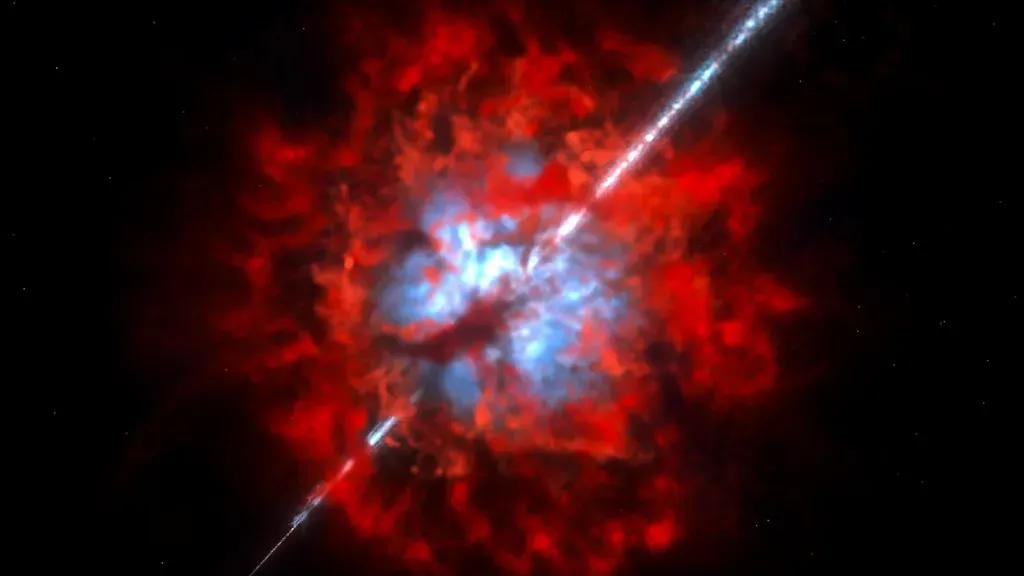
Gamma-ray bursts aren’t just isolated fireworks; they’re powerful tools for understanding the universe itself. Because they’re so bright, we can see them from very early cosmic times, when the first generations of stars and galaxies were forming. GRBs act like cosmic lighthouses shining through the fog of the early universe, allowing astronomers to study how gas, dust, and elements were distributed billions of years ago. In a way, each burst is a time capsule from a different era of cosmic history.
They also force our physics to stretch to its limits. The jets from GRBs approach light speed, the magnetic fields are extreme, and the densities and temperatures are beyond anything we can reproduce in a lab. Studying these extremes helps scientists test theories of relativity, particle acceleration, and how space-time behaves around black holes. For me, that might be the most powerful thing about gamma-ray bursts: they remind us that even in a universe nearly unimaginably old, there are still events so intense and strange that they push our understanding right to the edge.