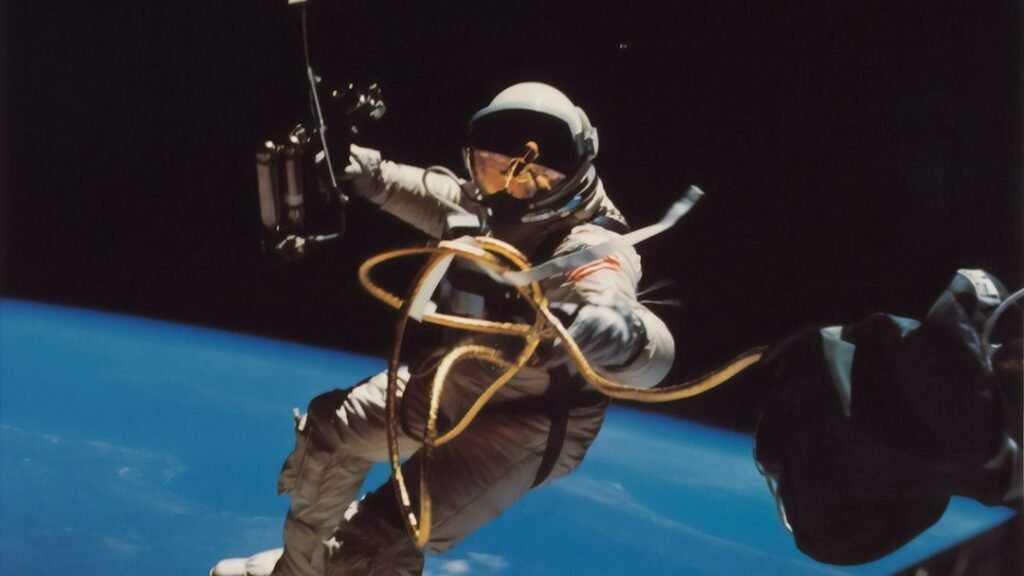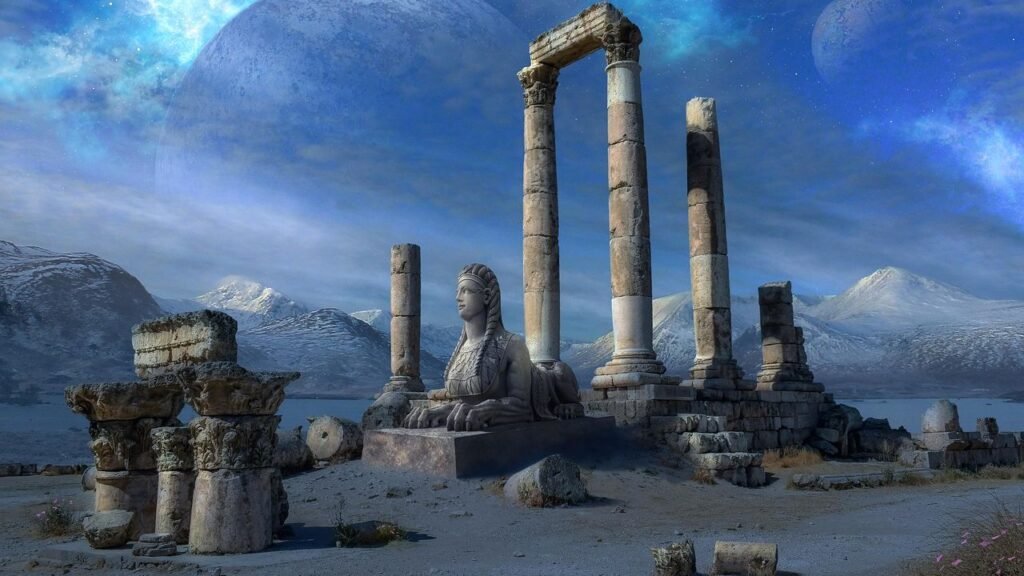

Humanity has always looked up at the stars and wondered. Were we truly alone in building the towering wonders of the ancient world, or did we have a little help from somewhere very far away? It’s one of those rabbit holes that, once you fall in, becomes genuinely difficult to climb out of. The sheer scale of what ancient peoples achieved – without modern tools, satellites, or even the wheel in some cases – can make your head spin when you stop and really think about it.
The ancient astronaut theory suggests that intelligent extraterrestrial beings visited Earth and made contact with humans in antiquity and prehistoric times, with proponents claiming this contact influenced the development of modern cultures, technologies, and religions. Whether you’re a firm believer, a skeptic, or simply someone who enjoys a fascinating mystery, the civilizations on this list will make you question everything you thought you knew. Be warned – some of what follows is genuinely surprising. Let’s dive in.
Ancient Egypt: The Civilization That Just Doesn’t Add Up
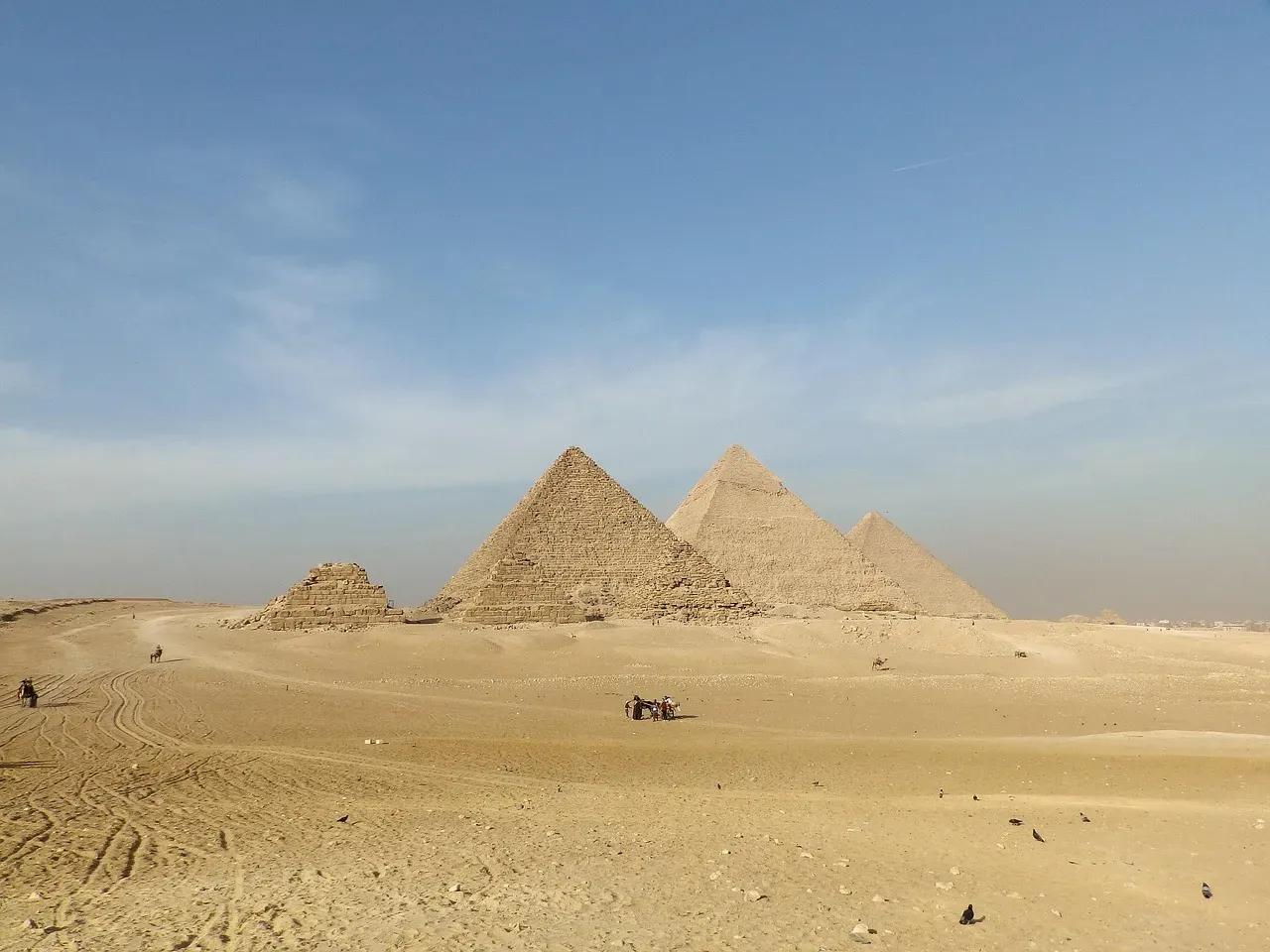
Let’s be real. Ancient Egypt is always the first stop on this journey, and for good reason. The Great Pyramids of Giza are usually the first to pop up in discussions of ancient aliens, and the sheer size, precise alignment with the cardinal directions, and incredible precision with which they were made and aligned with celestial bodies have led some to argue they could only have been achieved with extraterrestrial assistance. That’s a bold claim. But when you stand at the base of the Great Pyramid, which weighs roughly six and a half million tons, it starts to feel a little less crazy.
The so-called Tulli Papyrus is described by some as the first written account of a UFO sighting, recording an event which supposedly occurred during the 18th dynasty, around 1480 BC. The papyrus describes “circles of fire” that appeared in the sky during the reign of Pharaoh Thutmose III. Honestly, when you combine that with the astronomical precision of the pyramids and the mysterious elongated skulls of certain pharaohs, it’s easy to understand why Egypt sits at the very top of this list.
The Sumerians: The World’s First Civilization and Their Otherworldly Gods
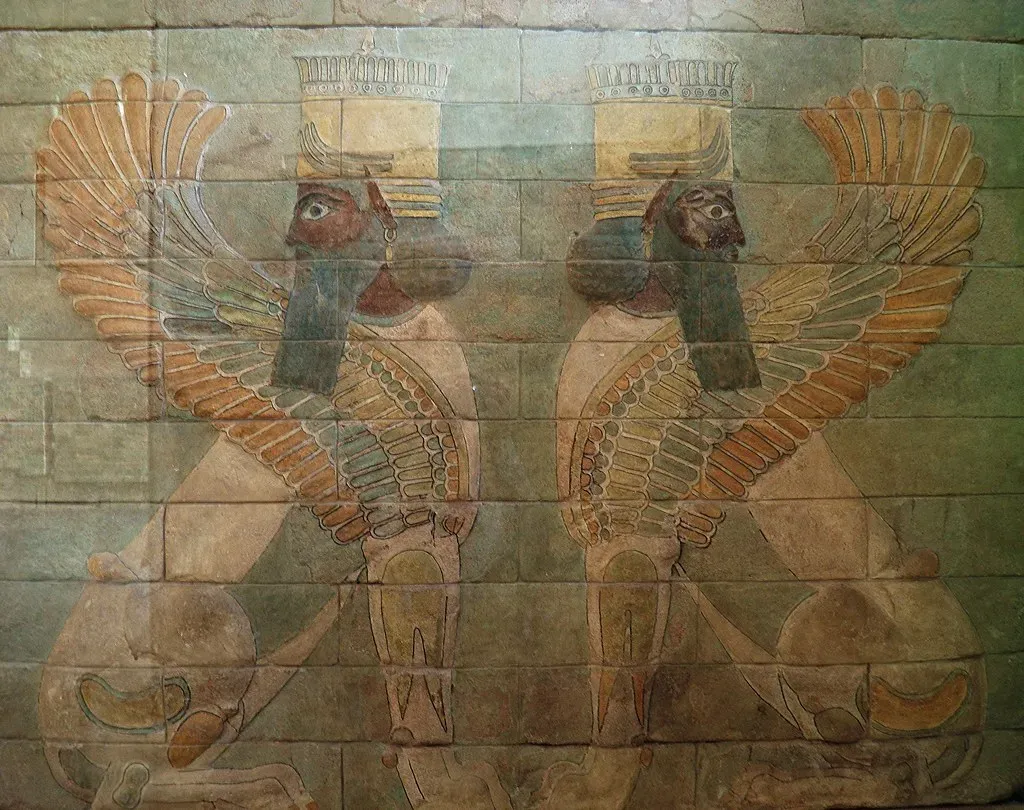
Over 6,000 years ago, the world’s first civilization, the Sumerians, were recording stories of strange celestial gods who they believed came from the heavens to create mankind. These gods, known as the Anunnaki, are often neglected by mainstream historians. The Sumerians themselves are so puzzling that scholars have described their origin as “The Sumerian Problem.” Think about that for a second. The very people who invented writing, the wheel, and complex astronomy are considered a mystery even by the experts.
The Sumerians believed that the Anunnaki were gods who came from the heavens to create humanity and teach them skills such as agriculture and writing. The term Anunnaki can be translated to mean “those who came from the heavens,” which has led some to believe that these gods were actually ancient alien visitors. Proponents like Zecharia Sitchin have suggested that the Anunnaki came from a distant planet, and their advanced knowledge and technology were seen as divine powers by the Sumerians. Whether you take Sitchin’s interpretation literally or not, the mythology here is almost too on-the-nose to dismiss entirely.
The Nazca of Peru: Drawing Messages in the Desert for Someone Above
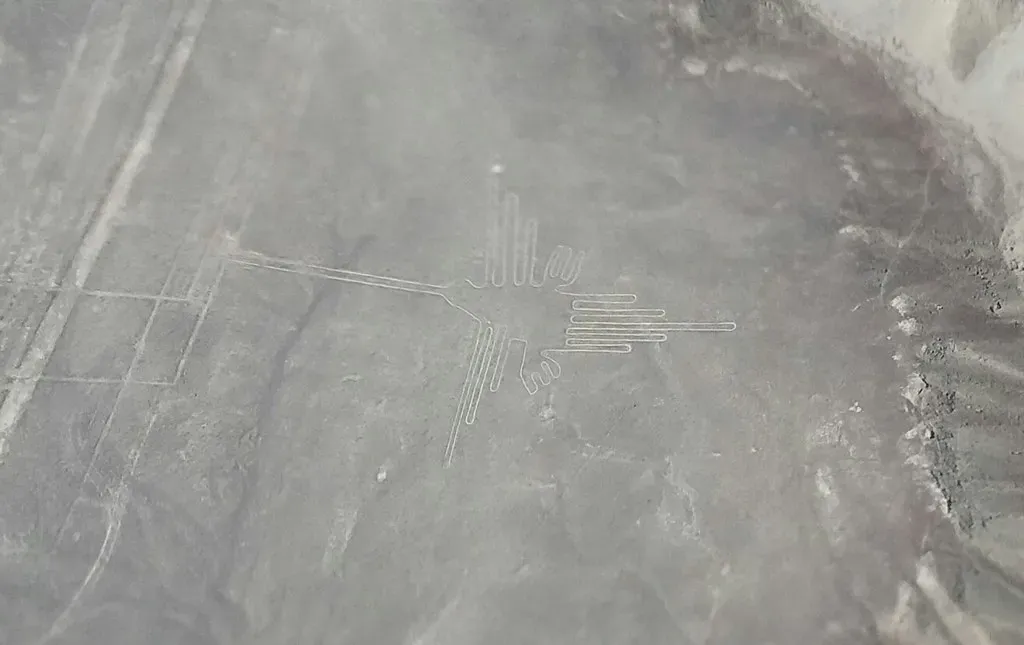
The ancient Nazca Lines are hundreds of huge ground drawings etched into the high desert of southern Peru. Some are stylized animals and humanoid figures, while others are merely straight lines hundreds of meters long. Because the figures were made to be seen from a great height, they have been linked with the ancient astronaut hypothesis. Here’s the thing – you genuinely cannot see these designs from the ground. It’s physically impossible to appreciate what you’ve built if you’re standing right next to it.
In total, there are over 800 straight lines, 300 geometric figures, and 70 animal and plant designs, also called biomorphs. Some of the straight lines run up to 30 miles, while the biomorphs range from 50 to 1,200 feet in length. The strange part is that these lines can only be seen from a few hundred feet in the air, which is bizarre considering they were created thousands of years ago – and thousands of years before aviation was supposedly invented. Some ancient alien theorists argue the lines could have been used as a runway for alien aircraft, or as a way for the ancient people to attempt contact. It’s an interpretation that raises more questions than it answers.
The Maya: Astronomers Who Knew Too Much
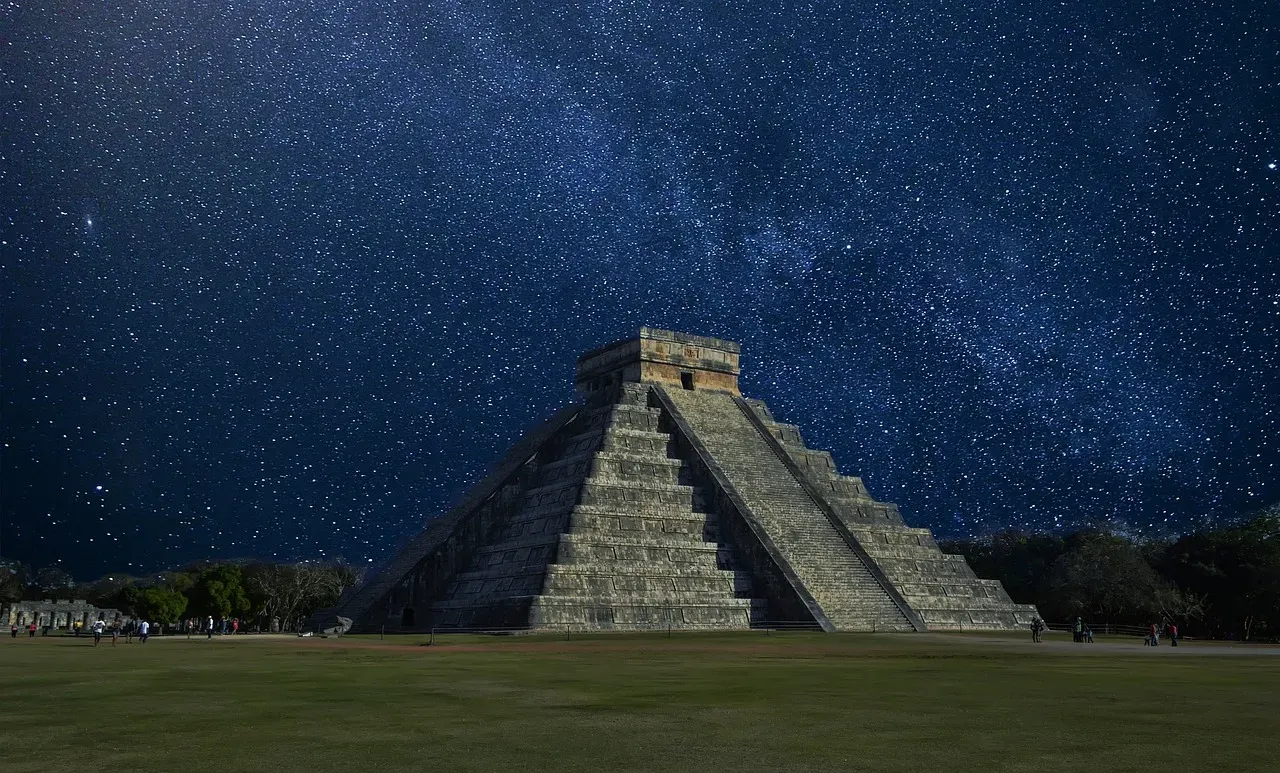
Teotihuacán, meaning the “City of the Gods,” is a sprawling ancient city in Mexico best known for its pyramidal temples and astronomical alignments. Built more than 2,000 years ago, its age, size, and complexity can make it seem otherworldly. Scientists suspect that over centuries, a mix of cultures including Maya, Zapotec, and Mixtec built the city, which could house more than 100,000 people. With its murals, tools, transportation system, and evidence of advanced agricultural practices, Teotihuacán is often considered far more technologically developed than should have been possible in pre-Aztec Mexico.
The ancient astronaut theory often cites the Maya and Babylonians as civilizations with sophisticated astronomical systems that serve as evidence of alien influence. The Maya tracked celestial cycles with a precision that rivaled modern astronomy – all without telescopes or computers. I think what makes the Maya so compelling in this debate is not just what they built, but how deeply they seemed to understand the cosmos. It feels less like observation and more like instruction.
Ancient India: Flying Ships and Cosmic Weapons in Sacred Texts
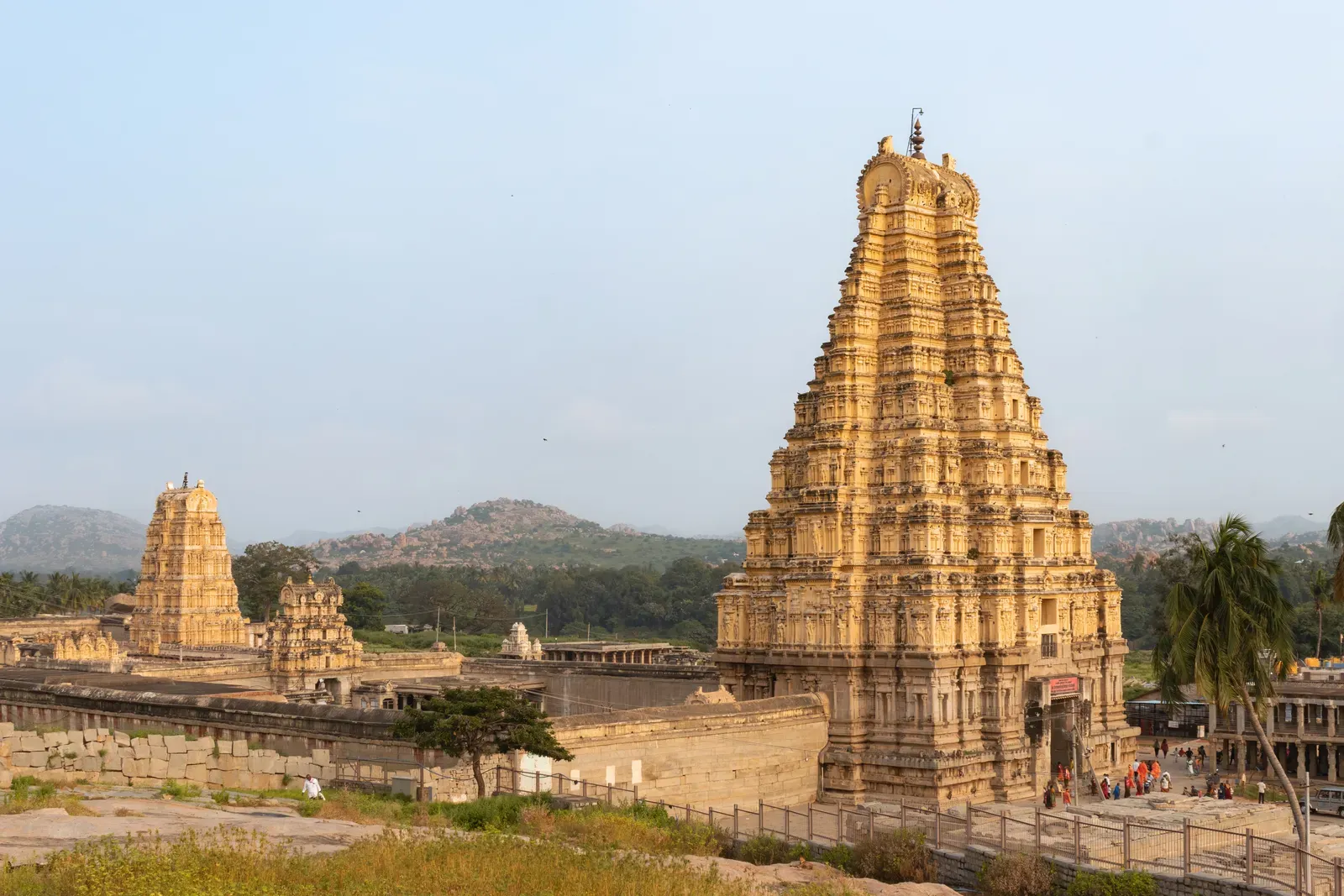
In the ancient Indian temples of Vijayanagara, intriguing alien-like images are carved into the stonework, including depictions of people flying and alien-like figures. One ancient alien theory is that aliens visited this ancient Indian culture and, as a result, the people depicted their interactions on their temples. Another theory is that the temples were used to harness cosmic energy between aliens and people. That second one is particularly wild, but you can’t look at some of those carvings and not feel a chill.
Ancient Sanskrit texts called the Vedas describe flying vehicles known as Vimanas in remarkable detail. In time, the theory that extraterrestrials influenced ancient civilizations incorporated claims that not only great structures were alien-made, but also religions, mythologies, and many innovations in history. Most of all, the theory posits that the gods of ancient civilizations were actually alien beings, misinterpreted as deities by primitive humans. When you read descriptions of weapons that sound eerily nuclear in the Mahabharata, that theory becomes a lot harder to laugh off.
Easter Island: Stone Giants in the Middle of Nowhere
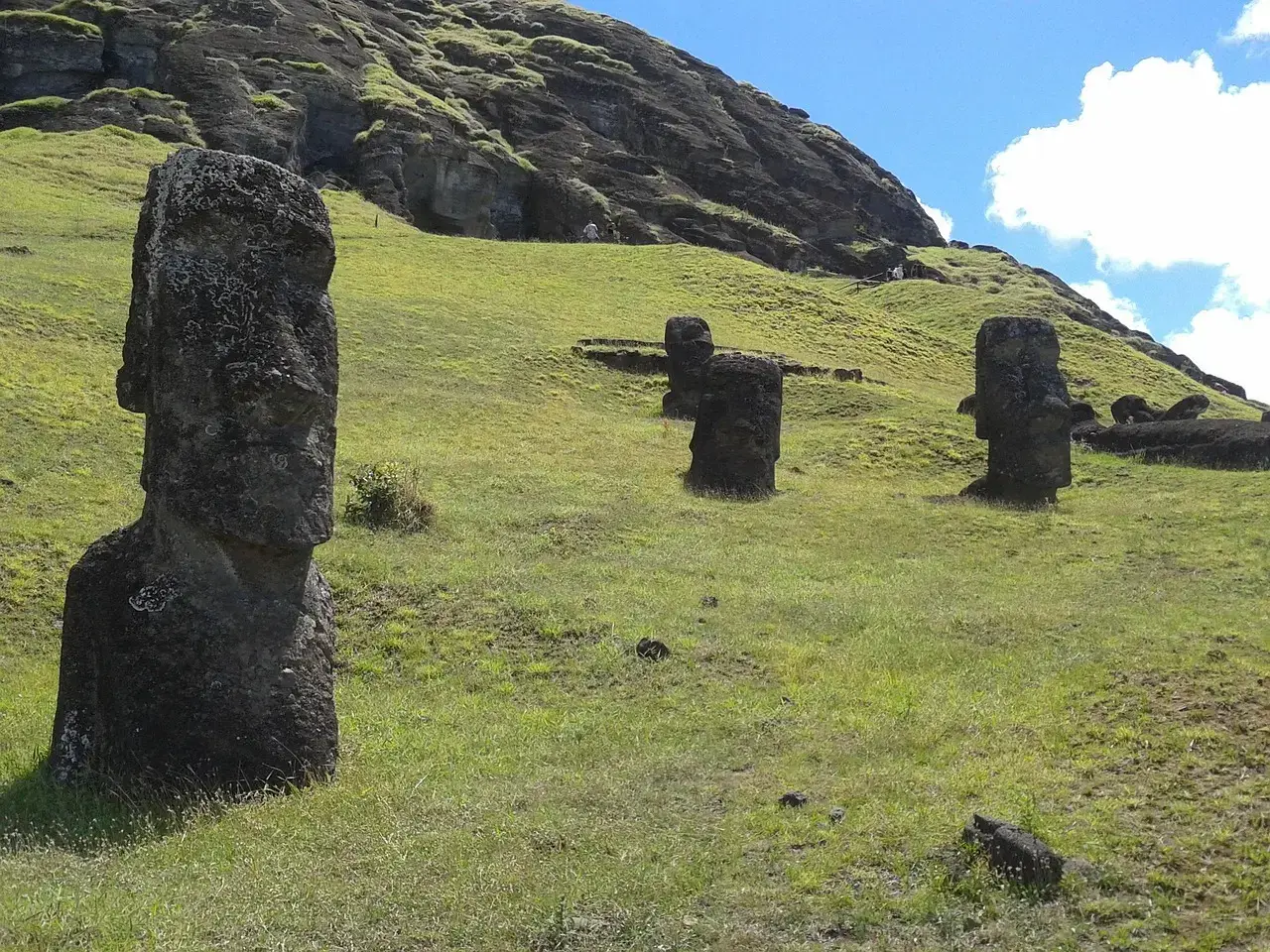
Proponents of ancient astronaut theories often claim that travelers from outer space built many of the structures on Earth, including the Egyptian pyramids and the Moai stone heads of Easter Island, or aided humans in building them. The island sits roughly 2,300 miles off the coast of Chile. It’s one of the most isolated inhabited places on the planet. So how did a small population of people quarry, carve, transport, and erect nearly 900 massive stone statues – some weighing well over 80 tons – with no outside help?
Unexplained phenomena like the construction of massive monuments fuel speculation about extraterrestrial influence, and the gaps in our historical knowledge leave room for imaginative theories. Mainstream archaeology credits brilliant engineering and community effort. That’s entirely plausible. Still, the sheer number of statues combined with the remoteness of the island makes Easter Island feel like a place that was trying to communicate something to someone very far away.
The Dogon of Mali: Astronomical Knowledge With No Explanation
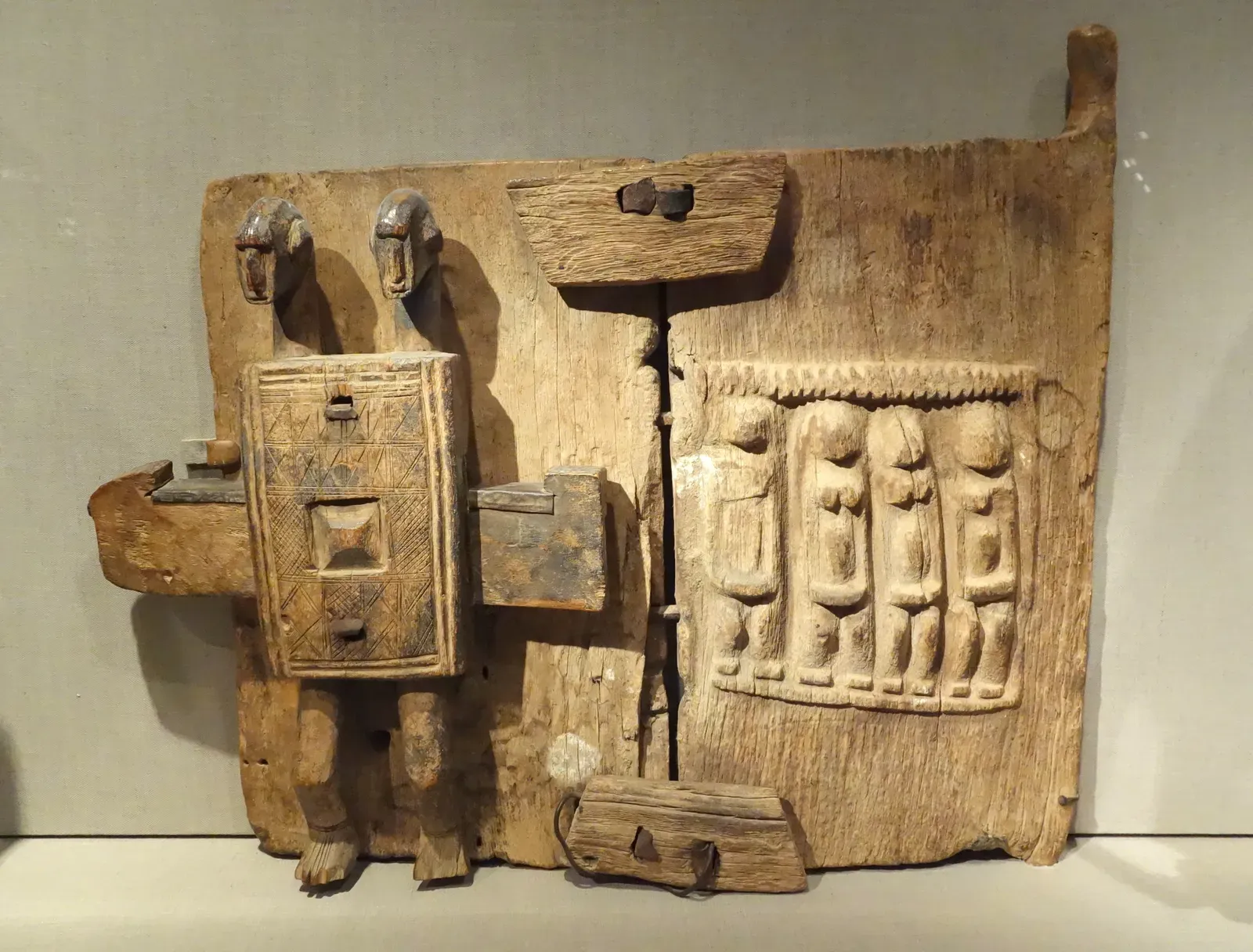
Robert K. G. Temple’s 1976 book, “The Sirius Mystery,” argues that the Dogon people of northwestern Mali preserved an account of extraterrestrial visitation from around 5,000 years ago, citing advanced astronomical knowledge inherited by the tribe and comparative belief systems with ancient civilizations such as ancient Egypt and Sumer. What makes the Dogon case especially fascinating is the specific nature of their knowledge. They reportedly possessed detailed information about Sirius B, a companion star invisible to the naked eye, long before modern telescopes confirmed its existence.
Temple’s conclusions have been criticized by scientists, who point out discrepancies within his account, and suggested that the Dogon may have received some of their astronomical information more recently, probably from European sources. That’s the mainstream counter-argument, and it’s a reasonable one. It’s hard to say for sure, but the precision of the Dogon’s celestial knowledge – down to the orbital period of Sirius B – still doesn’t have a fully satisfying conventional explanation. That’s the part that keeps this one alive in the debate.
Stonehenge: A Monument That Baffles Science to This Day
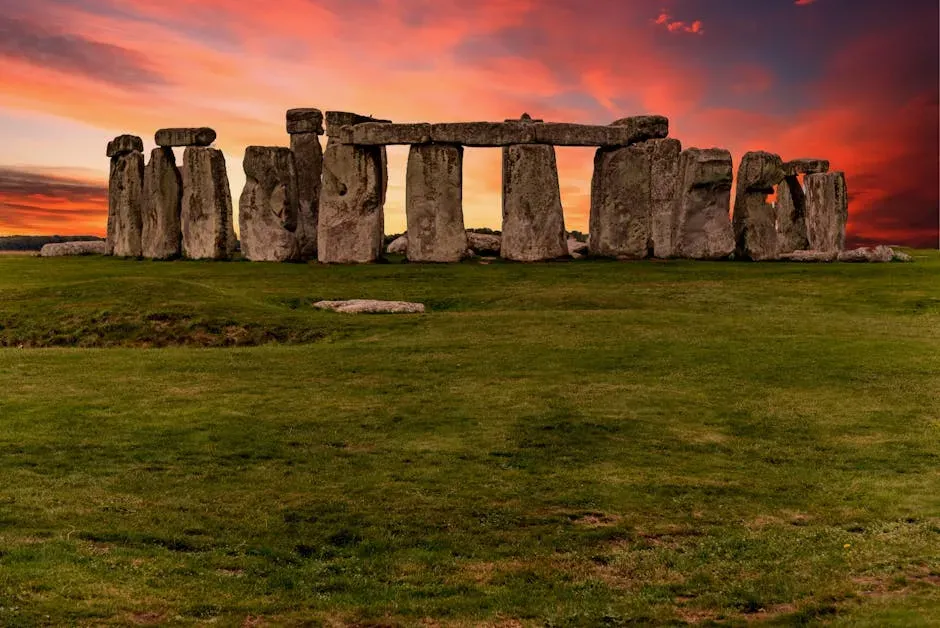
Stonehenge, one of the UK’s most unique and mysterious architectural wonders, has long baffled experts on just how exactly it was built and for what purpose. This circle of ancient stones has long been associated with ancient alien theories, one being that aliens constructed it and another that it was used as a landing pad for alien spacecraft. Even setting the alien theories aside completely, the conventional explanations still require an enormous leap of faith. Those stones were transported hundreds of miles, some from Wales, using methods that remain hotly debated to this day.
The construction of megalithic structures raises genuine questions about the tools and techniques available at the time, and some ancient cultures possessed mathematical knowledge that seemed ahead of its time. Some supporters of the ancient astronaut hypothesis point to cave drawings and ancient figures in locations like Australia and Valcamonica, Italy, as bearing a resemblance to modern astronauts. Supporters argue that similarities such as dome-shaped heads, interpreted as beings wearing space helmets, prove that early humanity was visited by an extraterrestrial race. Stonehenge, with its precise solar alignments and massive scale, fits neatly into that narrative whether you’re a believer or not.
Conclusion: The Mystery Is the Point
Belief in ancient alien contact reflects humanity’s desire to connect with something greater. It offers an explanation for our achievements and a sense of cosmic significance. And I think that’s what makes this topic so enduring. It’s not just about little green men helping build pyramids. It’s a deeper question about who we are, how we got here, and whether we’ve ever been truly alone in this vast universe.
The ancient alien theory continues to grow in popularity, even as modern science remains adamantly unconvinced, with most scholars dismissing these claims as built upon misinterpretation of evidence and an underestimation of our ancestors. That’s a fair point too. Our ancestors were brilliant, resourceful, and far more capable than we sometimes give them credit for. Still, you have to admit – some of what they accomplished feels almost impossible, even today.
The truth is, the debate between human genius and cosmic intervention may never fully be resolved. The evidence on both sides is fascinating, the mysteries are real, and the question itself says something profound about us as a species. We are the only creatures on Earth who look up and ask “why?” Maybe that instinct came from somewhere very, very far away. What do you think? Drop your thoughts in the comments – are we giving our ancestors enough credit, or is there something more going on?