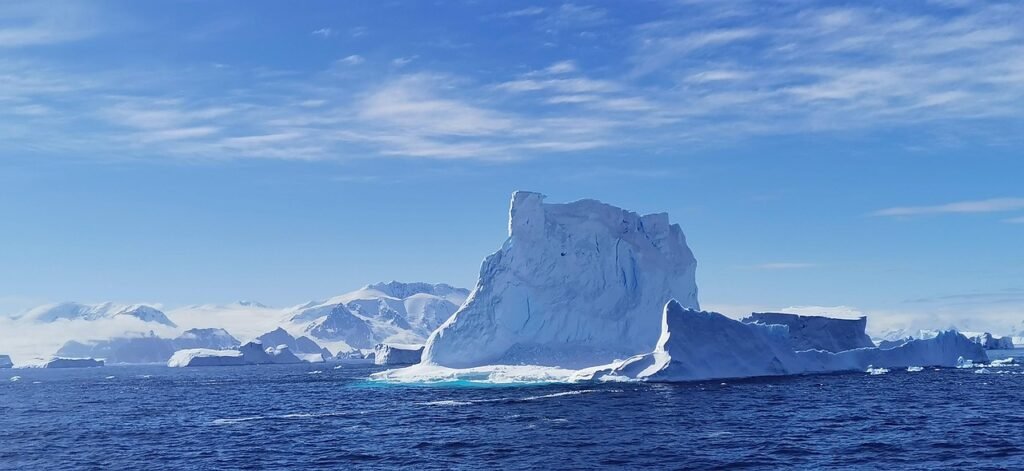
If the world’s climate continues warming, West Antarctica’s massive ice sheet could not only raise global sea levels but also trigger dramatic geological upheaval beneath the continent, new research suggests. Scientists studying sediment cores from the seafloor and ancient climate records have uncovered evidence that when this ice sheet collapsed repeatedly in the past, the land beneath responded with earthquakes, volcanic surges, landslides and coastal reshaping — signs of “catastrophic geology” that could return if the ice retreats again.
These findings underscore that the effects of melting ice go far beyond rising oceans; they can fundamentally rearrange Earth’s crust and ecosystems. With parts of the West Antarctic Ice Sheet already showing signs of instability due to modern warming, researchers warn that rapid changes felt locally could have global implications as new landscapes emerge and old ones fracture under shifting pressures.
Ancient Ice Loss Tells a Warning Story
During the Pliocene Epoch roughly 3 million years ago, West Antarctica underwent cycles of retreat and regrowth, with ice sheets repeatedly melting back — sometimes exposing open ocean where today there is ice. Sediment layers drilled from the seabed show distinct deposits of iceberg-carried pebbly clay followed by fine muds, indicating repeated episodes of deglaciation and regrowth.
Chemical signatures from distant mountain bedrock found in these sediments reveal that glaciers once extended far inland, flowing from the continent’s interior into the ocean. These shifts weren’t slow and gentle but part of rapid cycles of ice loss and rebounding land, painting a dynamic history of collapse and return.
Land Rebound and Geologic Mayhem
As thick ice sheets melt, the land beneath them is released from the immense weight they once bore. This isostatic rebound can occur surprisingly quickly in geological terms, unleashing seismic activity as the crust adjusts. In West Antarctica, scientists infer that past ice loss triggered large earthquakes and volcanic activity, including ash layers in sediment cores that testify to ancient eruptions.
Without the ice’s downward weight, rock avalanches, landslides and coastal collapses followed, and the redistribution of massive sediment deposits reshaped shorelines and seascapes. When the ice eventually regrew, it froze new landscapes into place, but such violent transitions marked each cycle of loss and return.
What the Geological Record Implies for Today
Modern observations confirm that West Antarctica is one of the most vulnerable parts of the ice sheet, with glaciers such as Thwaites and Pine Island already thinning and retreating rapidly. Warm ocean waters are reaching deeper into grounding zones, dissolving ice from below and weakening its structural support — a pattern similar to conditions that preceded past collapses.
As the ice lightens its grip on the land, the same forces that triggered earthquakes and volcanic responses in the past are likely to pitch today’s West Antarctica into a state of dynamic readjustment. If history is any guide, retreating ice could lead to rapid geological responses that are “felt locally as apocalyptic events” — not centuries from now but on human-relevant timescales.
A Changing Landscape With Far-Reaching Effects
Should the West Antarctic Ice Sheet enter a persistent melt phase, the physical changes won’t stay confined to Antarctica. Coastal cities around the world already brace for sea level rise of meters or more, threatening infrastructure, ecosystems and human communities. Past collapses show that rising seas are only one chapter in a larger story of planetary change.
Emerging ecosystems — from algal blooms fed by new meltwater flows to nascent moss and vegetation on newly exposed land — hint at transformations that the biosphere itself must adapt to. These shifts could redistribute marine species and prompt new ecological interactions in the Southern Ocean and beyond.
Bridging Past and Future
The sedimentary record of West Antarctica’s ancient ice cycles offers a powerful analogue for the future. It suggests that the next major retreat of the ice sheet will not be a slow, incremental process but a cascade of changes echoing through Earth’s geological systems. Today’s retreat, unlike past natural cycles, is accelerated by human-induced warming, raising the stakes for global societies and ecosystems.
Scientists emphasize that while millennia-scale rebound and volcanic adjustments won’t be instantaneous, their onset could be far swifter than traditional models assume — making it crucial to integrate geological history into climate projections and adaptation planning.
A Planet in Motion
The emerging picture of West Antarctica isn’t one of passive ice slowly slipping away; it’s one of an active, responsive Earth system where ice, land, oceans and life are interconnected in profound ways. The evidence from millions of years ago shows that when ice sheets melt, the ground beneath does not stay still — it rebounds, roils and reshapes itself with consequences that ripple out across oceans and continents.
As climate change hastens ice loss today, ignoring these deeper geological dimensions would be a grave oversight. Humanity must not only prepare for rising seas but also reckon with the possibility of a changing Earth beneath our feet, where frozen once-stable landscapes return to motion and challenge our assumptions about what is permanent in the natural world. The past may be prologue, but we still have the agency to shape how this chapter unfolds.