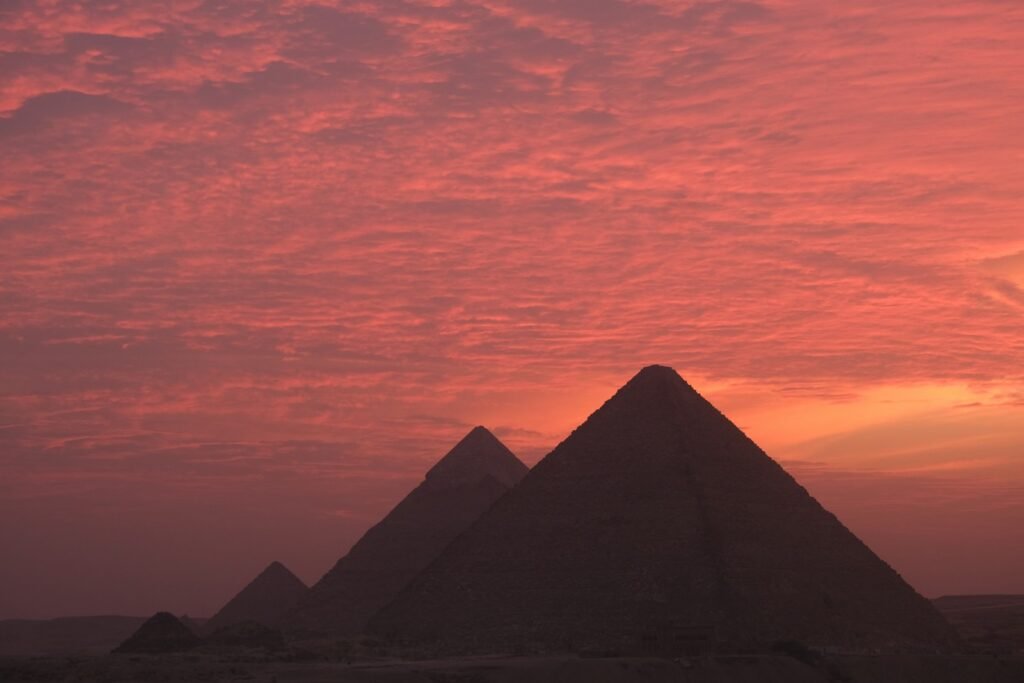

The idea that ancient Egyptian builders raised the pyramids by following patterns written in the sky sounds like something out of a late-night documentary, yet the question refuses to die because it taps into something deeply human: the sense that our greatest works might be guided by a larger cosmic script. Standing at the base of the Great Pyramid at Giza, it is hard not to look up – from the limestone blocks to the open sky – and wonder whether those lines were ever meant to meet the stars. Archaeologists, astronomers, and engineers have spent more than a century pulling this puzzle apart, weighing precise measurements against myth and modern fantasy. What they are uncovering is less a story about alien blueprints and more a story about what happens when a civilization stares at the night sky for thousands of years and decides to build its beliefs into stone. The answer to whether the builders were “following knowledge from the stars” turns out to be both more grounded and more wondrous than it first appears.
Reading the Night Sky in the Age of Stone
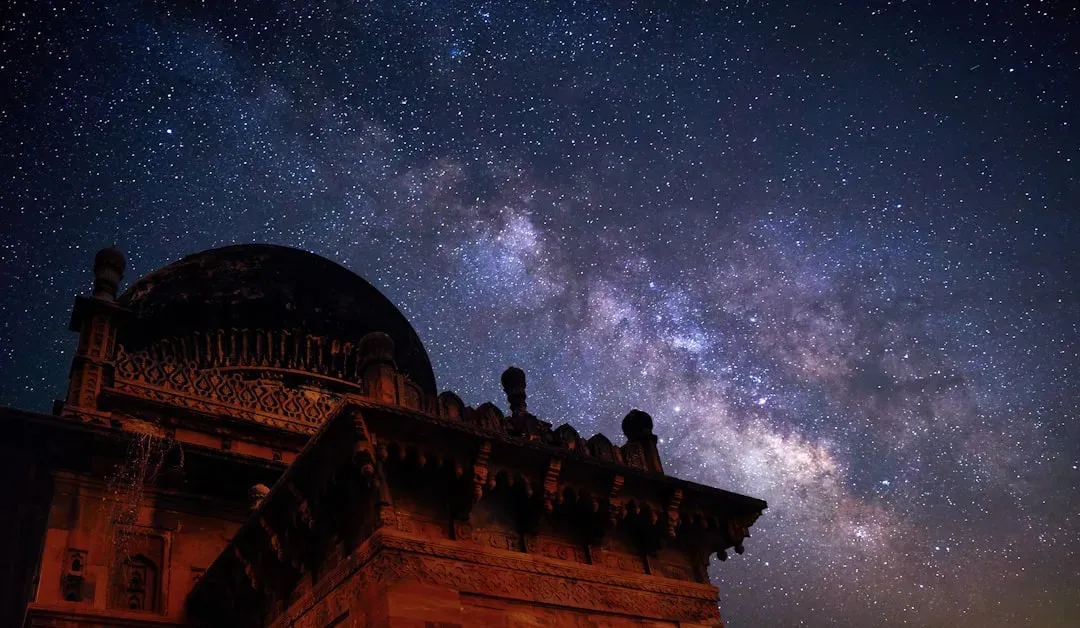
Long before pharaohs dreamed of pyramids, the Nile Valley was already a natural observatory. With dry air, clear horizons, and a predictable cycle of stars rising before dawn, the ancient Egyptians had both the conditions and the incentive to watch the sky closely. The flooding of the Nile, the backbone of their agriculture, coincided with the heliacal rising of Sirius, the bright star that appeared before sunrise after being hidden by the sun’s glare, turning the night sky into a seasonal calendar. Over generations, this recurring pattern would not have looked like abstract data but like a promise renewed: the heavens signaling when life-giving water would return.
This kind of sky-watching is not “advanced astronomy” in the modern sense, but it is systematic, careful, and rooted in survival. When you depend on a river that rises and falls with a rhythm you do not control, you start paying attention to any reliable sign that hints at what comes next. The sky becomes less a backdrop and more an information layer, as practical as a weather report and as emotionally loaded as a prophecy. That fusion of utility and meaning is the seed from which the idea of star-guided monuments could grow. The pyramids emerged in a culture that already saw the heavens and the earthly world as deeply entangled.
Laser-Straight Alignments That Still Bother Modern Engineers
The Great Pyramid of Khufu at Giza is aligned to the cardinal directions with an accuracy that still makes surveyors raise an eyebrow. The sides deviate from true north–south and east–west by only a tiny fraction of a degree, a feat achieved without steel instruments, GPS, or even a magnetic compass. For decades, researchers have debated how this was done, and many of the most convincing explanations involve careful observations of the sun’s shadow or the motion of circumpolar stars around the north celestial pole. In other words, the pyramid is locked onto the planet’s orientation through the language of light and shadow written across the sky.
What makes this alignment so compelling is that it is unnecessary if the pyramid is just a big tomb; nobody inside would care whether one wall faced true north or was slightly off. But if the monument is also a cosmic machine, meant to situate the king’s resting place within a celestial order, that precision makes more emotional and symbolic sense. The builders seem to have used the stars and the sun not as mystical instructions but as reference points, like a giant cosmic grid. For an engineer today, that is recognizable: you align your structure to something stable and reliable. For a priest-astronomer in ancient Egypt, the pole of the heavens would have felt like the ultimate stability.
Orion, Sirius, and the Seductive Power of Star Maps
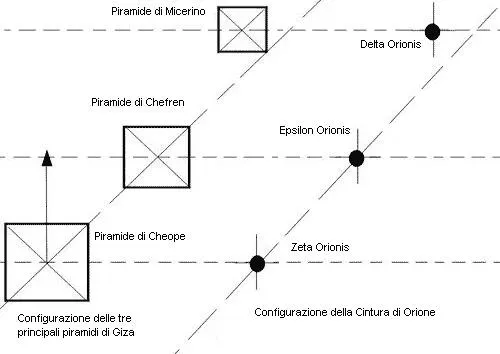
Few ideas have captured public imagination like the claim that the three main pyramids at Giza mirror the three stars of Orion’s Belt. The proposed correspondence is visually striking: a line of three points, with one slightly offset, echoed both in the sky and on the desert plateau. Advocates of the so‑called Orion correlation theory argue that this was deliberate, suggesting the builders laid out the pyramids as a snapshot of the heavens as they saw them. Orion, associated with a powerful god of rebirth and kingship, would have been a natural celestial destination for a divine ruler’s soul.
Professional Egyptologists and astronomers, however, are far more cautious. When the positions and dates are examined in detail, the match between the star pattern and the pyramid layout is not as perfect as popular accounts suggest, and alternative explanations fit the archaeological evidence better. Site constraints, quarry locations, and practical engineering considerations likely shaped the precise placement of each pyramid. Yet the theory’s grip on the public imagination reveals something important: we are drawn to the idea that enormous effort must encode a grand cosmic picture. Even if Giza is not a literal map of Orion, Egyptian texts and tomb art make it clear that the journey of the king’s soul was imagined in explicitly stellar terms, and that is no small thing.
Star Shafts and the King’s Path Through the Cosmos
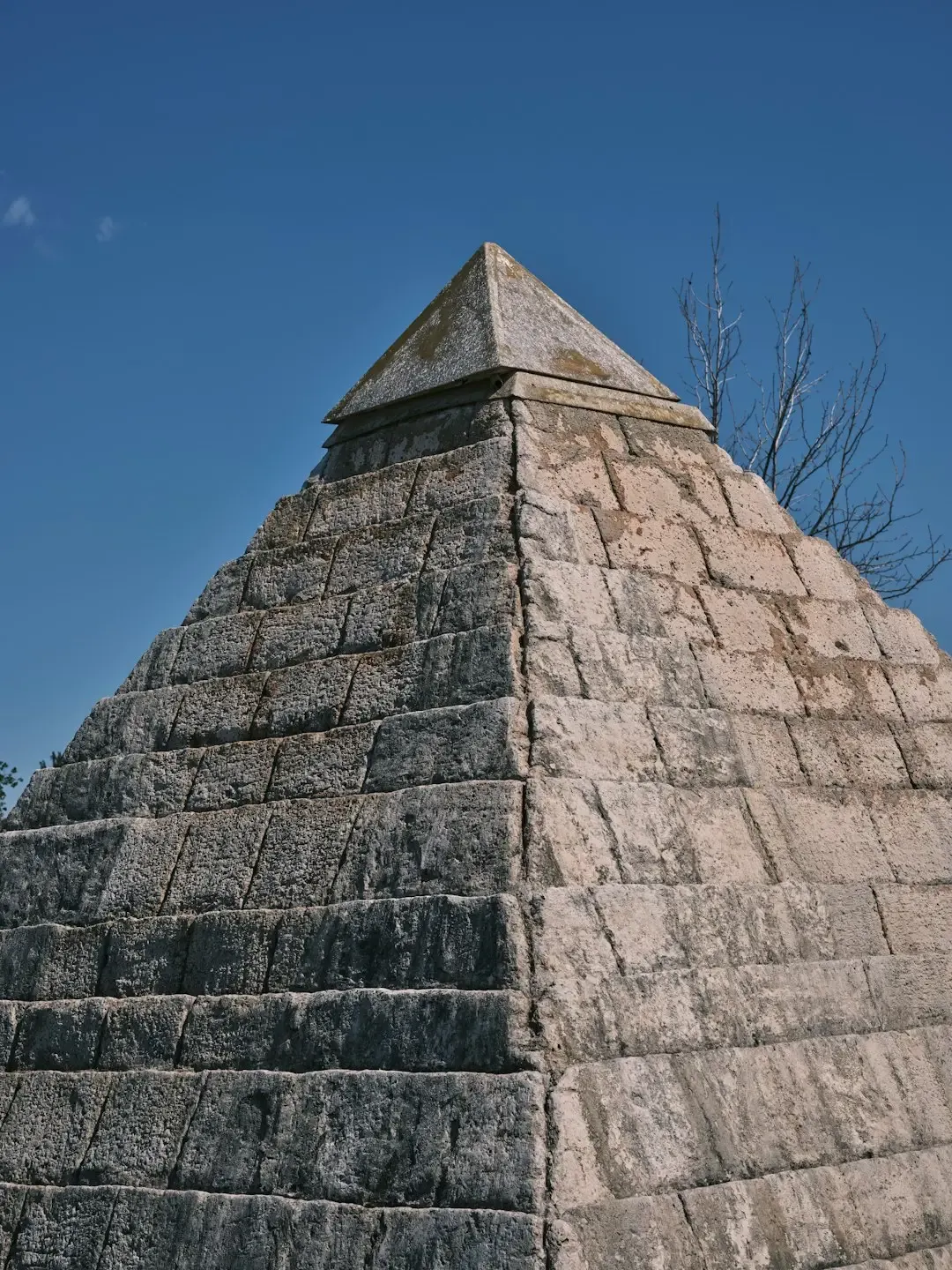
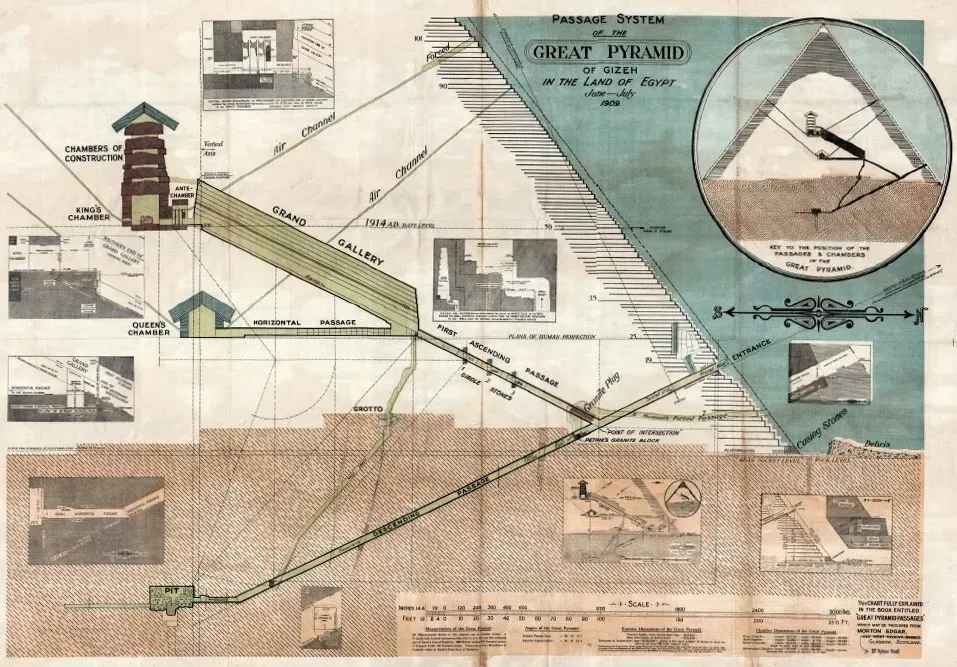
Inside the Great Pyramid, the narrow “air shafts” leading out of the king’s and queen’s chambers have fueled some of the most intense debates about star alignment. These passages, angled upward and emerging on the pyramid’s faces, do not function well as ventilation channels, prompting researchers to ask whether they were instead sight lines to particular stars. Measurements and simulations suggest that, around the time the pyramid was built, some shafts pointed toward regions of the sky associated with circumpolar stars and perhaps with Orion and Sirius, all of which were linked in Egyptian belief to immortality and royal destiny.
If that interpretation is correct, the pyramid is not just aligned to Earth’s cardinal directions but pierced with stellar pathways. That idea is reinforced by religious texts from later pyramids and tombs, which describe the deceased king joining the “imperishable” stars that never set, circling forever in the northern sky. Even if the Great Pyramid predates those writings, the continuity of theme is striking: the royal afterlife is cast as an ascent into a specific architecture of constellations. The builders would not have needed “secret advanced knowledge” to design such shafts, just clear skies, time, and a worldview where the sky was a map of power and eternity.
Knowledge From the Stars or Knowledge About Them?
At the heart of the “knowledge from the stars” question lies a subtle distinction: were the Egyptians receiving information from some external cosmic intelligence, or were they extracting patterns from the sky through observation and weaving those into their culture? Every piece of physical evidence we have points overwhelmingly to the latter. What looks to a modern eye like impossible precision or mysterious correspondences can usually be explained by incremental improvements in craftsmanship, trial and error over generations, and an intense religious motivation to get the details right. The sky was a guide in the same way a coastline is a guide to a sailor: real, useful, but not supernatural.
There is, however, a different kind of “knowledge from the stars” that is less literal and more psychological. When a society constructs its most massive monuments to echo the rhythms of the heavens, it is effectively saying that meaning flows downward from the sky to the ground. That orientation shapes everything from ritual calendars to political legitimacy. Pharaohs claimed a special relationship to the sun and the stars, so a pyramid precisely aligned to those powers is not just a clever feat of engineering; it is propaganda in stone. What we see, then, is a civilization learning about the stars and then letting that knowledge tell them who they are.
The Deeper Significance: What Star-Guided Pyramids Reveal About Us
The debate over whether pyramid builders followed stellar knowledge says as much about modern anxieties as it does about ancient techniques. On one side, there is a reluctance to accept that people working with copper tools and simple sighting instruments could have achieved such accuracy, which sometimes leads to extravagant claims about lost technologies or alien advisors. On the other, there is a tendency to flatten the story into pure practicality, as if the spiritual and symbolic motivations of the builders were mere decoration on top of pragmatic engineering. Both extremes miss the deeper point: technological skill and cosmic storytelling were inseparable in this project.
Comparing older, more romantic interpretations of the pyramids with modern archaeological and astronomical studies highlights how our understanding has matured. Early travelers often saw the pyramids as inexplicable wonders, stripped of their cultural context, while later pseudo-scientific movements tried to recast them as repositories of secret universal codes. Contemporary research, by contrast, tends to place the monuments back into the lived world of the Old Kingdom: a world where a king’s authority, the river’s flood, the sun’s path, and the slow circle of stars were all parts of one reality. The scientific significance of this shift is profound, because it shows how human societies can develop surprisingly sophisticated observational astronomy without anything we would call modern science. The cultural significance is perhaps even greater: it reveals that when people invest huge resources into a project, they are rarely chasing just one thing – they are pursuing survival, power, beauty, and a sense of cosmic belonging all at once.
Modern Instruments, Ancient Questions
In the last few decades, satellite imagery, 3D scanning, and precise surveying equipment have let researchers revisit old claims about stellar alignments with new rigor. Some beloved ideas have not survived this scrutiny; alignments that once seemed uncanny turn out to be within the range of chance when measured carefully or compared across many sites. Others, like the cardinal orientation of the Great Pyramid and the broader tendency of Egyptian temples to line up with specific solar events, have only grown more impressive under detailed analysis. The monuments do not reveal hidden extraterrestrial mathematics, but they do show a careful, long-term engagement with cycles of the sun and stars.
What is striking is how these modern tools end up mirroring, in a way, the ancient project. Researchers today also stand between stone and sky, trying to decode what the builders were aiming for, only now the “stars” include data points and computer models. Radiocarbon dating, detailed stone-by-stone models, and simulations of ancient skies have pushed our understanding forward, but they have not eliminated the sense of mystery; they have simply moved it to a different level. Instead of asking how people could align a pyramid, we now ask how a society could sustain the logistics, belief systems, and political stability needed to pull it off. The questions have changed scale, but the awe remains.
Why the Star-Pyramid Story Still Grabs Us
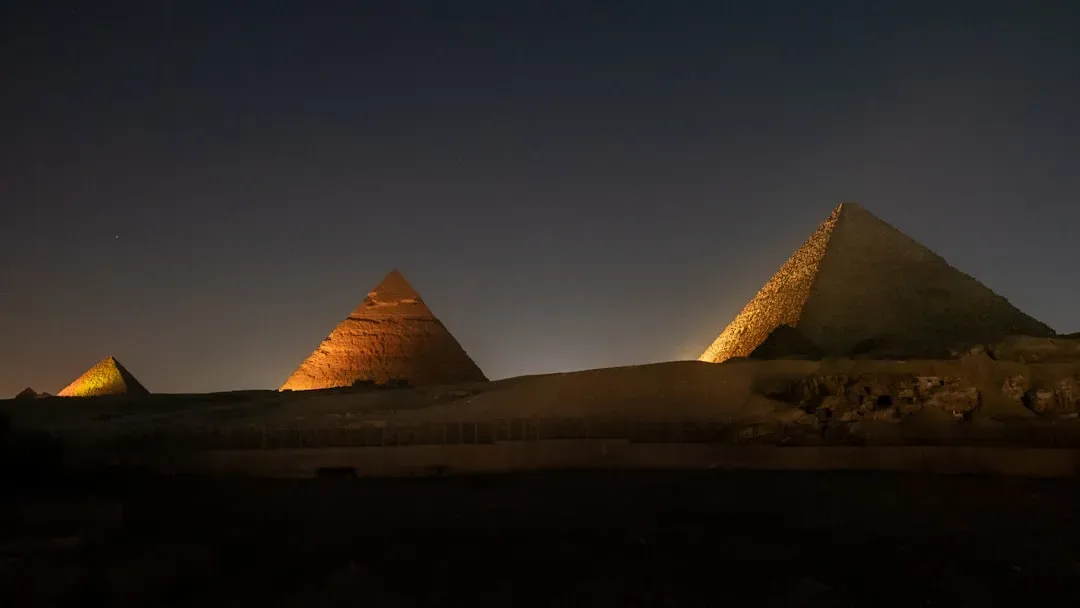
Even knowing the technical explanations, the idea that pyramids might be wired into the night sky still hits an emotional nerve. Part of that is because we, too, live under a sky filled with unsolved questions, from dark matter to planetary systems around distant suns, and we project our own curiosity backward. When we hear that ancient builders tracked Sirius to time their agricultural cycles or lined up temples with solstices, it feels strangely familiar, like an earlier chapter of a story we are still in. At the same time, there is a quiet discomfort: if they tuned their monuments to the cosmos without telescopes or digital models, what might we be underestimating about other ancient cultures?
On a more personal level, there is something deeply relatable about trying to anchor the chaos of human life to something stable in the sky. Many of us have had moments lying under the stars, feeling very small and yet oddly connected, and wondering what, if anything, it all means. The pyramids are that moment turned into architecture. They suggest that when a society cares enough about its dreams of eternity, it will literally move mountains of stone to give those dreams a shape. You can stand in front of them today and feel an uncomfortable question settle in: if they could build this from their reading of the stars, what are we building from ours?
Looking Up, Looking Back: How to Engage With the Question Today
For modern readers, the most productive response to the star-pyramid mystery is not to chase ever wilder theories, but to let it sharpen our curiosity and humility. Visiting museum collections, reading accessible archaeological reports, or exploring planetarium programs on ancient skies can turn vague wonder into informed fascination. You do not need to learn hieroglyphs or orbital mechanics to appreciate how much careful observation and cultural imagination went into these monuments; you just need to be willing to sit with the idea that people very unlike us wrestled with very familiar questions. Supporting scientific research, preservation efforts, and responsible tourism around ancient sites also helps ensure that future generations can keep asking better questions with better tools.
Ultimately, whether you believe the builders followed “knowledge from the stars” comes down to how you define that phrase. If it means secret instructions from beyond Earth, the evidence is not on that side. If it means that they watched the heavens closely, drew patterns from what they saw, and then used those patterns to shape their deepest stories about life and death, then the case is overwhelming. In that sense, the pyramids are a mirror held up to us: a reminder that we, too, are constantly turning data into meaning, sky into story. The next time you look up at a clear night sky, you might find yourself wondering what, in your own life, is quietly being built along those same invisible lines.
Suhail Ahmed is a passionate digital professional and nature enthusiast with over 8 years of experience in content strategy, SEO, web development, and digital operations. Alongside his freelance journey, Suhail actively contributes to nature and wildlife platforms like Discover Wildlife, where he channels his curiosity for the planet into engaging, educational storytelling.
With a strong background in managing digital ecosystems — from ecommerce stores and WordPress websites to social media and automation — Suhail merges technical precision with creative insight. His content reflects a rare balance: SEO-friendly yet deeply human, data-informed yet emotionally resonant.
Driven by a love for discovery and storytelling, Suhail believes in using digital platforms to amplify causes that matter — especially those protecting Earth’s biodiversity and inspiring sustainable living. Whether he’s managing online projects or crafting wildlife content, his goal remains the same: to inform, inspire, and leave a positive digital footprint.