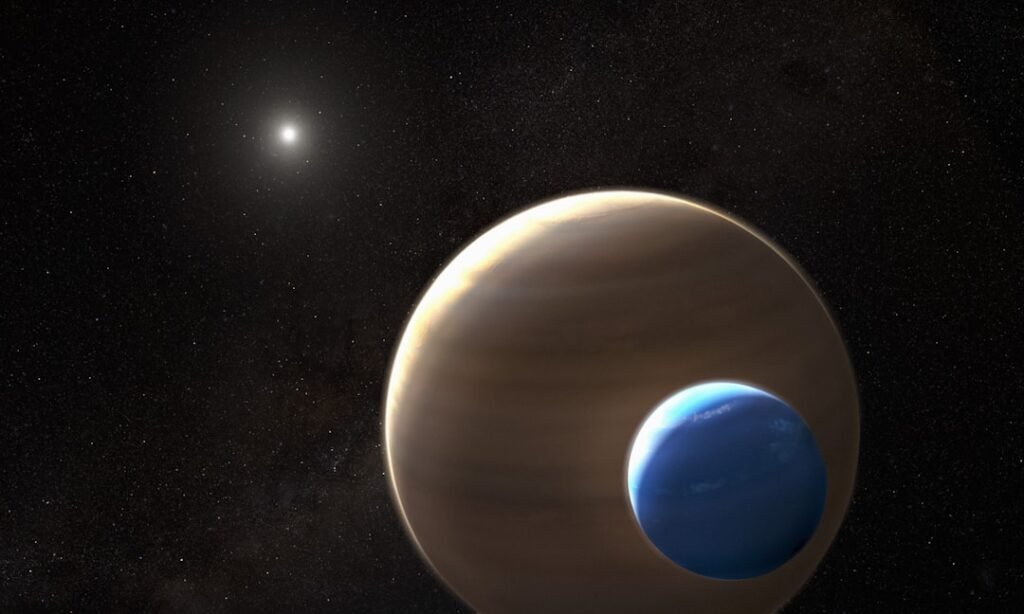

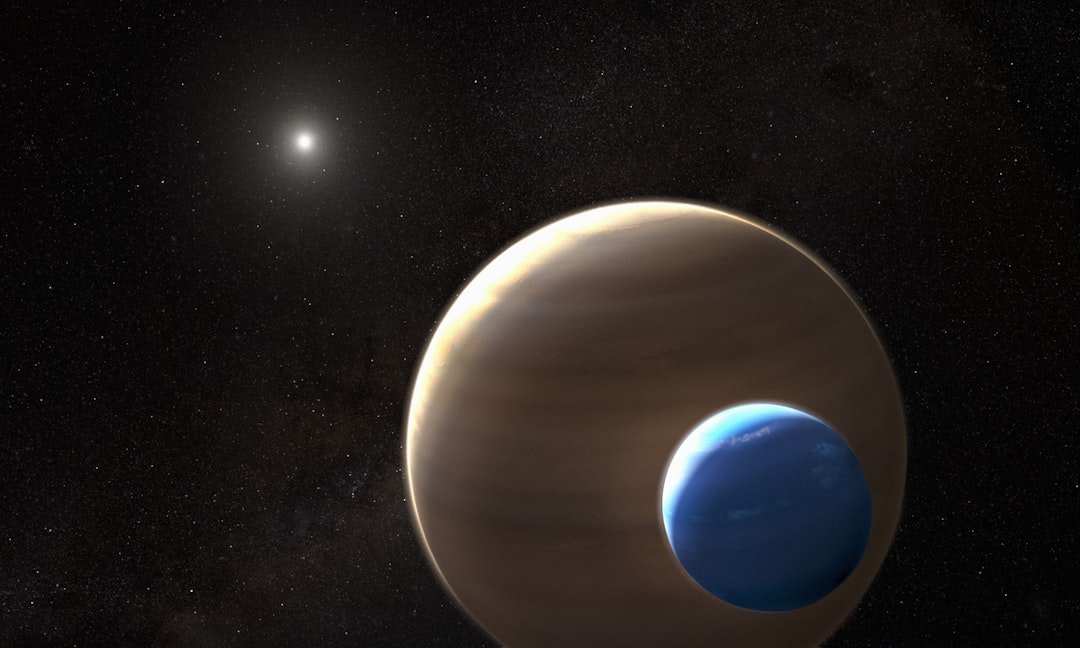
Why Free-Floating Planets Offer a Clearer View (Image Credits: Unsplash)
Our solar system boasts nearly 300 moons, from fiery Io to icy Enceladus, shaping planetary histories and hinting at life’s possibilities.[1]
Beyond these familiar orbits, exomoons around distant worlds have proven stubbornly difficult to detect. Astronomers recently repurposed James Webb Space Telescope observations of WISE 0855 – a free-floating object with planetary mass drifting through interstellar space – to scour for these elusive satellites. This innovative approach highlights JWST’s versatility in tackling one of astronomy’s enduring challenges.[1]
Why Free-Floating Planets Offer a Clearer View
Traditional exomoon hunts face stiff odds around planets orbiting stars. The host star’s glare overwhelms the faint transit signals produced by a moon passing in front of its planet. Free-floating planets like WISE 0855 change that equation entirely.[1]
These rogue worlds wander without a stellar parent, eliminating background noise and sharpening detection prospects. WISE 0855 stands out as an ideal candidate. Located just 2.3 parsecs away, it ranks as the coldest known brown dwarf, with temperatures between 250 and 285 Kelvin and a mass estimated at 3 to 10 Jupiters. Despite its planetary traits, researchers classify potential companions here as moons.[1]
The object’s atmosphere shows variability, likely from shifting clouds and dynamic weather patterns that vary by wavelength. This intrinsic flux posed a hurdle, but also an opportunity to test JWST’s precision against real-world complexities.
Harnessing JWST’s Infrared Gaze
James Webb Space Telescope delivered 11 hours of near-infrared time-series spectra spanning 2.87 to 5.27 microns. Initially gathered to probe water clouds and atmospheric behavior on WISE 0855, the data proved ripe for a secondary mission: exomoon transit searches.[1]
Exomoon transits manifest as “gray” events, uniformly dimming light across wavelengths unlike the object’s patchy, color-dependent variability. Researchers selected two wavelength bands with contrasting patterns to isolate potential signals. This setup allowed them to distinguish true transits from natural atmospheric noise.
Modeling relied on Gaussian processes to capture the quasi-periodic fluctuations. These flexible tools handled the data’s complexities far better than simpler fits. The team then pitted a baseline Gaussian process model against an enhanced version incorporating trapezoidal transit shapes.
Scrutinizing Signals in the Data
Bayesian evidence weighed the competing models. The pure variability explanation prevailed, yielding no statistically significant exomoon detections. A faint hint emerged for a moon roughly 0.53 Earth radii in size orbiting at a wide separation, though its low transit probability rendered it improbable.[1]
To gauge reliability, the researchers injected synthetic transits into the light curves and attempted recoveries. Success hinged on transit depth, a proxy for moon size relative to the host.
- Depths of 1% (large moons) recovered nearly every time.
- 0.5% depths, akin to Titan, succeeded 96% of the time.
- Smaller 0.1% signals proved elusive, mirroring Io-sized moons.
- Overall, Io analogs recovered more than half the trials.
These tests confirmed JWST’s prowess, even amid variable conditions.[1]
Charting Detection Thresholds
Injection results painted a clear picture of JWST’s limits. The table below summarizes recovery rates for various transit depths:
| Transit Depth (%) | Moon Analog | Recovery Rate (%) |
|---|---|---|
| 1.0 | Large | ~100 |
| 0.5 | Titan-like | 96 |
| 0.4 | – | High |
| 0.3 | – | Moderate |
| 0.2 | – | Lower |
| 0.1 | Io-like | >50 |
This framework sets benchmarks for future surveys. Wide-orbit moons face steeper odds due to rarer alignments, but closer companions could shine through.[1]
Paving the Way for Exomoon Breakthroughs
The study, led by Mikayla J. Wilson and colleagues including Mary Anne Limbach and Andrew J. Skemer, appeared in The Astronomical Journal. It repurposed existing data to push boundaries without new telescope time.Read the full paper.[2]
Though empty-handed this round, the effort underscores JWST’s readiness. “We’re still waiting for the first confirmed exomoon, but when that transit finally happens, we know that JWST will be ready,” the analysis noted.[1] Future observations of other free-floaters, brown dwarfs, and even orbiting exoplanets promise a census of these worlds.
Key Takeaways
- Free-floating planets sidestep stellar noise, ideal for exomoon transits.
- JWST detects Titan-sized moons with 96% efficiency in variable data.
- No confirmed exomoons yet, but tools and targets align for imminent discoveries.
Exomoons could reshape our grasp of planetary formation and habitability far from any sun. As JWST continues its vigil, the cosmic lonely hearts club might soon reveal hidden partners. What do you think the first exomoon detection will reveal? Tell us in the comments.