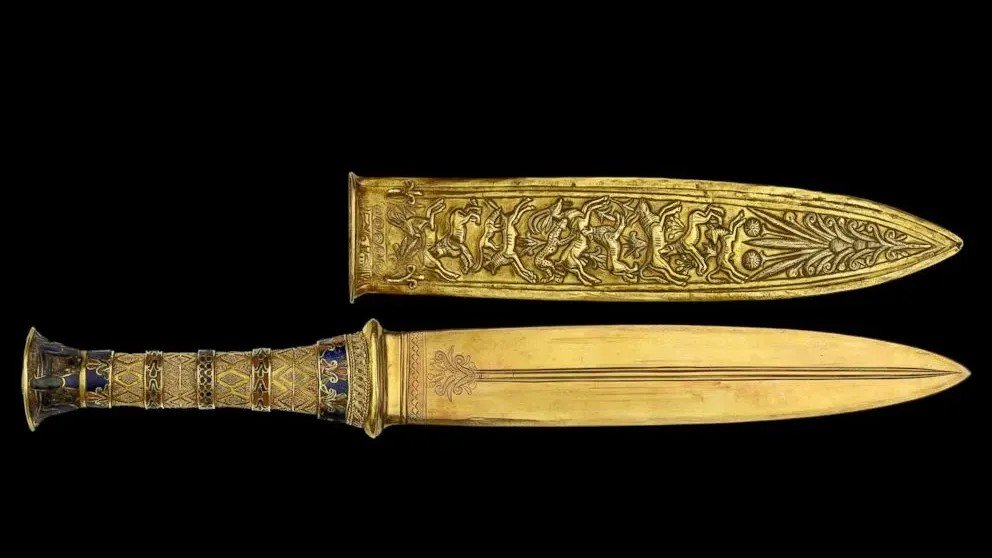

Imagine opening a three‑thousand‑year‑old tomb and finding a weapon that seems to come from the sky itself. That’s essentially what happened when archaeologists studied one of Tutankhamun’s most mysterious treasures: a beautifully crafted dagger discovered on the wrapped body of the boy king. Its blade doesn’t rust, its composition is unusual, and its origin story reaches far beyond the Nile and into outer space.
Over the last decade, this single object has fueled everything from careful scientific studies to wild theories about extraterrestrial visitors. Some people are convinced it’s proof of alien contact; others see it as a powerful sign of how ancient Egyptians understood and revered the cosmos. To make sense of it, you have to step back into a world where iron was rarer than gold, the sky was seen as divine, and a blade from a meteorite might feel like a literal piece of heaven.
A Dagger Wrapped with a Pharaoh: Why This Object Matters So Much
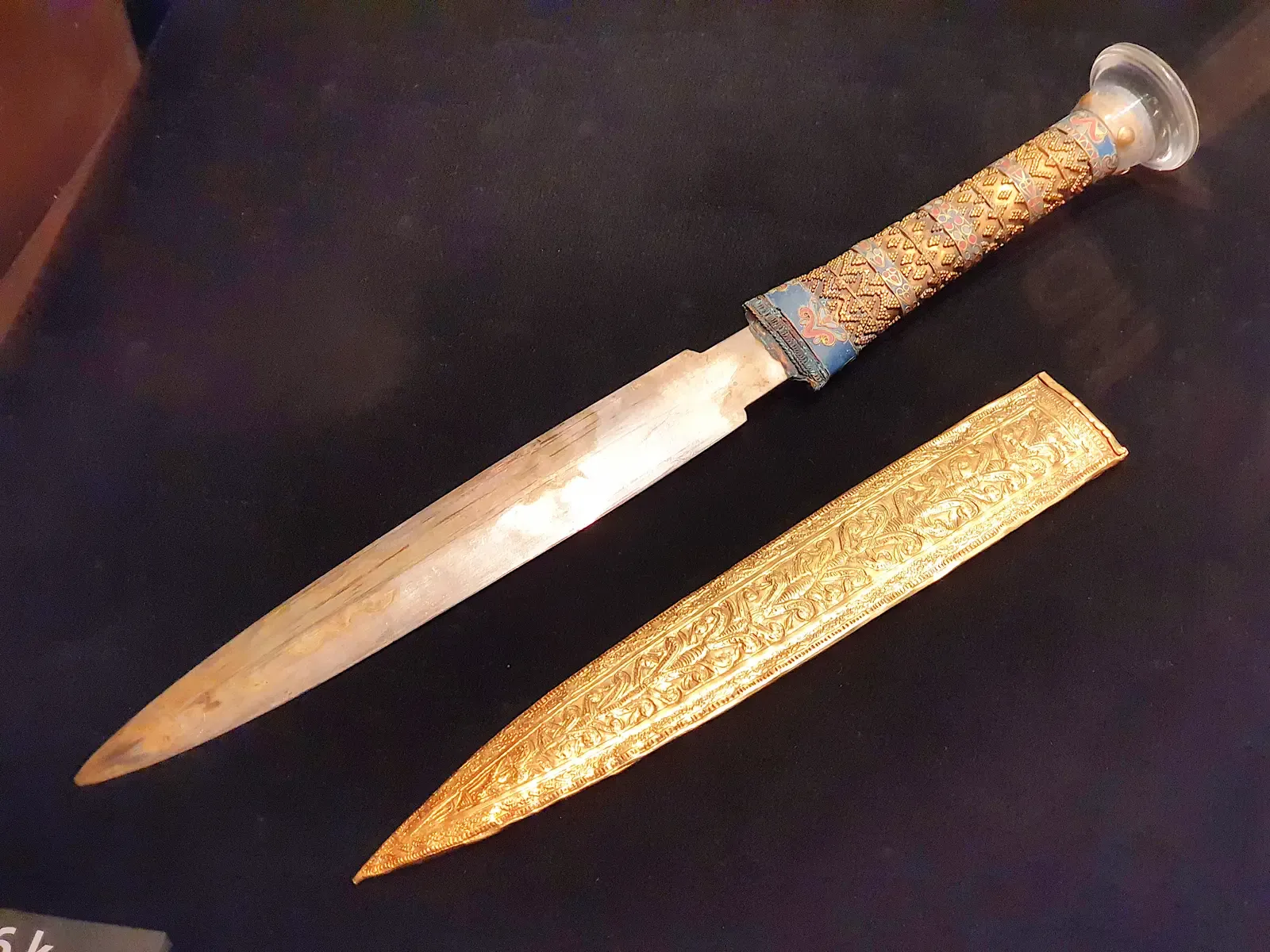
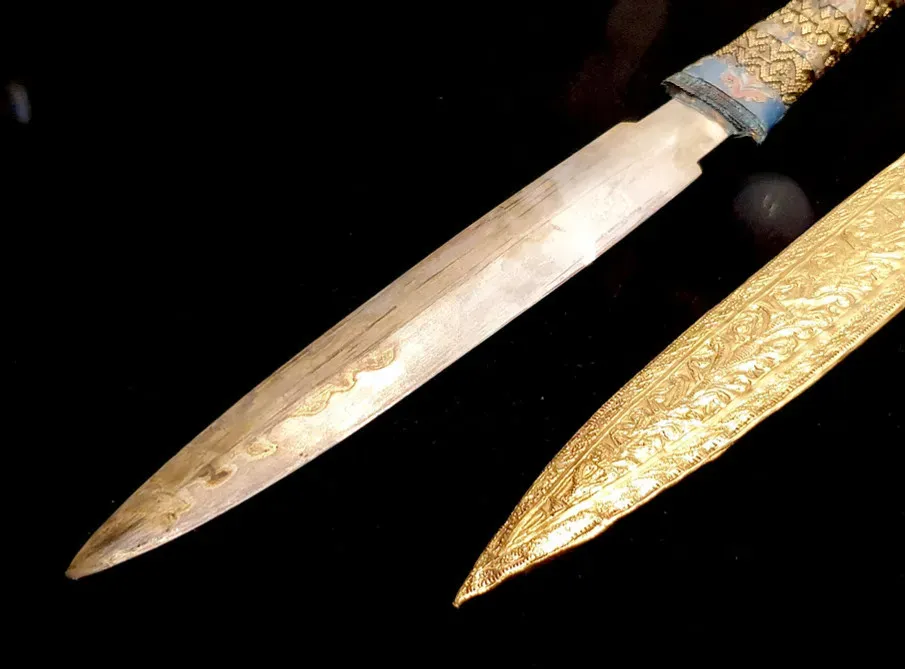
When Tutankhamun’s tomb was opened in 1922, archaeologists found not just a few royal trinkets but an overwhelming flood of objects, many of them incredibly well preserved. Among the jewelry and weapons placed directly on the mummy were two daggers at his side: one with a gold blade and another with a dark, metallic blade that simply shouldn’t have looked so pristine after more than three millennia. This second dagger, with its ripple-like pattern and golden handle, immediately stood out, even to early researchers who didn’t yet understand why.
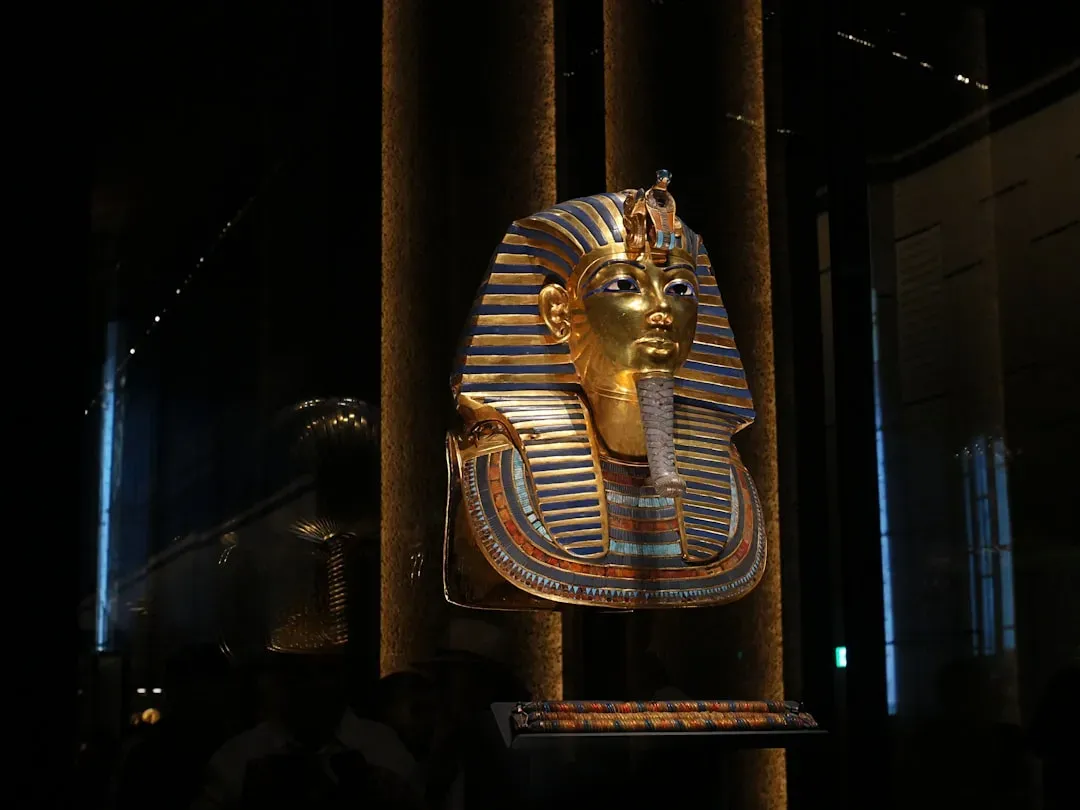
The placement of the dagger is important: it wasn’t buried in a random chest or tucked away in a corner of the tomb. It was right there on the king’s body, part of his personal, sacred equipment for the afterlife. In a culture where symbolism was everything, that position tells us this wasn’t just a fancy knife. It was an object of deep meaning and status, essentially a cosmic-level heirloom meant to protect and empower Tutankhamun beyond death.
The Sky Metal: How Scientists Discovered the Blade Was Not From Earth’s Crust
For decades, nobody could really test the dagger without risking damage, so a lot of speculation floated around with very little data. That changed when researchers used non-destructive techniques like X-ray fluorescence to analyze the blade’s composition without so much as scratching it. What they found was astonishing: the metal is mostly iron, mixed with a notable amount of nickel and cobalt in ratios that match known meteorites rather than typical earthly iron ores.
Ancient Egyptians did not yet have the kind of advanced smelting needed to produce high-quality iron from terrestrial sources on a routine basis, and certainly not in quantities for luxury goods. On top of that, the chemical pattern in the blade strongly matches iron meteorites recovered and studied in modern times. In other words, the data backs up a simple but mind-blowing conclusion: this dagger is literally made from space rock that fell to Earth long before Tutankhamun was born.
Before Aliens: Iron from the Heavens in the Ancient World
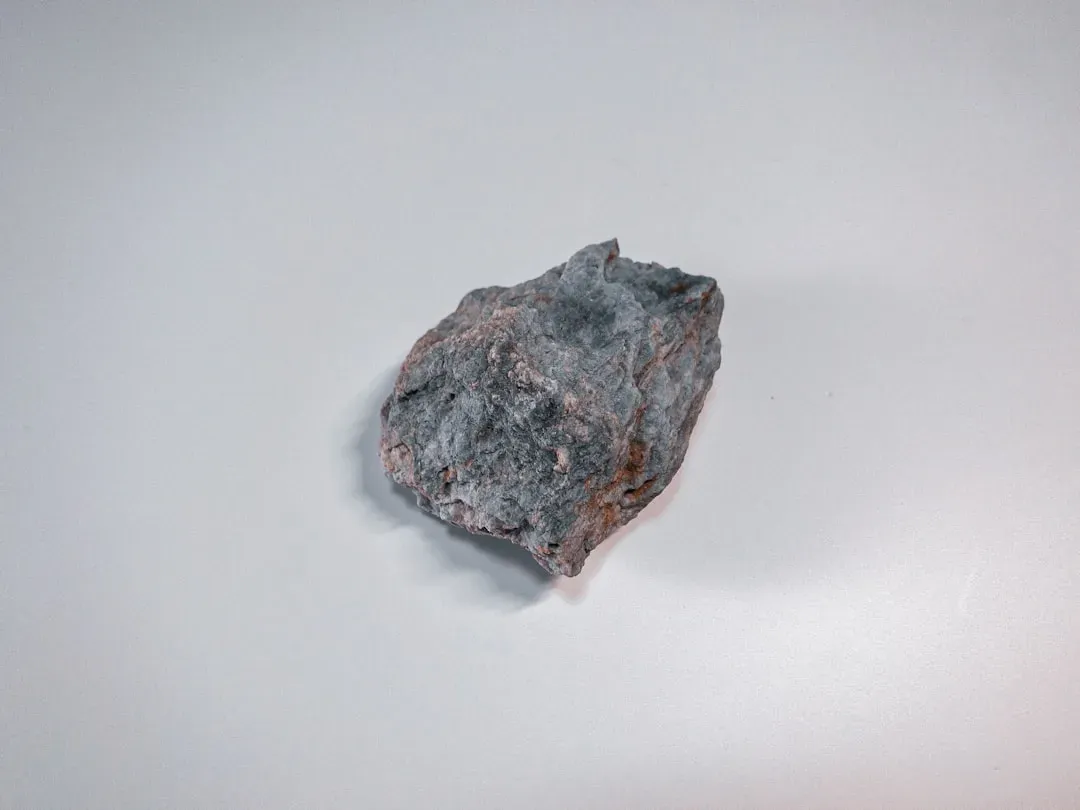
Long before iron became a common metal, it had a kind of almost magical status in many ancient cultures. In the Bronze Age, when most tools and weapons were made from bronze or stone, iron objects were incredibly rare and usually reserved for elites, religious contexts, or symbolic purposes. The Egyptians themselves used a word for some early iron that essentially translates to “iron of the sky,” suggesting they already knew, at least in a broad sense, that this strange metal came from above.
Other ancient societies also treated meteorites as sacred or special, sometimes crafting them into ritual objects or enshrining them as holy stones. When you think about it, it’s not hard to see why: a blazing light streaks across the night sky, something crashes to Earth, and people later find a heavy, unusual stone hidden in the ground. Without modern astrophysics, that would feel like a gift from the gods, not just a chunk of nickel-iron. In that worldview, a meteorite dagger was far from ordinary metal; it was a divine material turned into a royal weapon.
Craftsmanship or Contact? What the Design Really Tells Us
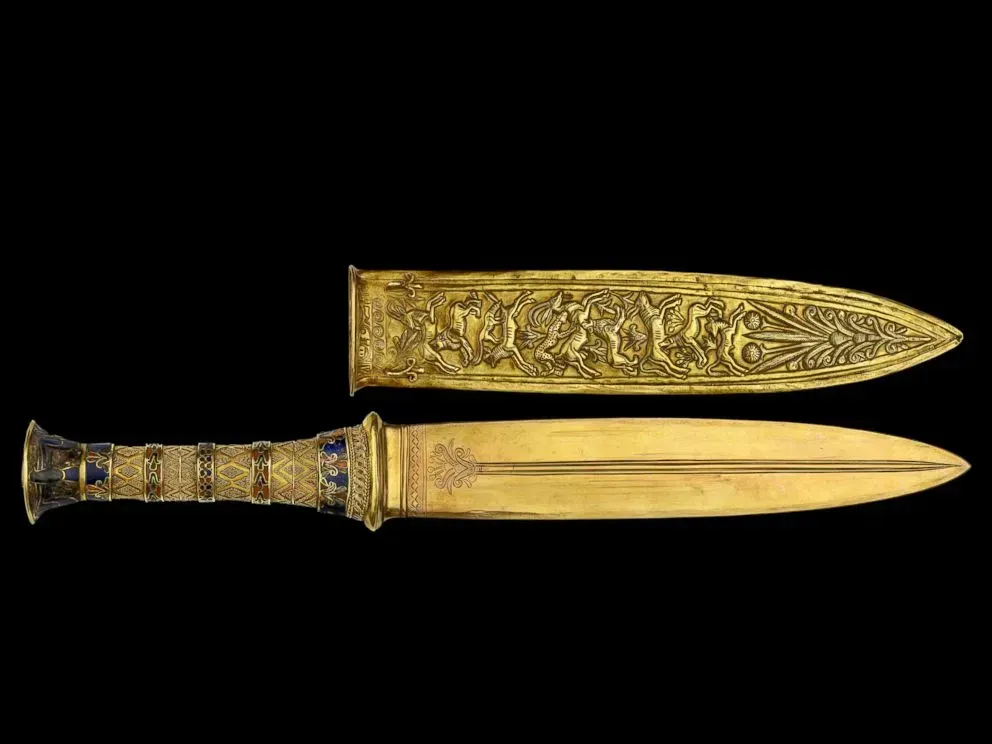
If someone really wanted to claim Tutankhamun’s dagger came from aliens, the design might be the first thing they’d try to use as evidence. The blade is elegant yet practical, and the handle is richly decorated with gold, crystal, and a carefully worked pommel. Nothing about its shape or construction, though, looks out of step with Egyptian craftsmanship of the late Bronze Age, and the decorative style fits neatly into other objects from the same period. It’s stunning, but it’s not technologically out of place for its time.
What is unusual is the achievement of working meteorite iron so well, which required a level of skill most smiths of that era simply did not have. Yet that’s a leap in technique, not a leap in physics. Skilled metalworkers could heat and hammer meteorite iron just like other metals, even if they didn’t fully understand its cosmic origin. The impressive part here isn’t that an alien civilization slipped humanity a cheat code; it’s that human artisans took an incredibly challenging material and turned it into something precise, balanced, and beautiful.
Why People Keep Calling It “Alien” Anyway
The idea that Tutankhamun’s dagger is made from “alien material” sounds irresistible, and you can see why it spread so quickly across documentaries, social media, and forums. The phrase evokes images of spaceships, visitors from other worlds, and secret advanced knowledge hidden in an ancient tomb. It’s a lot less glamorous to say “It’s made from an iron meteorite,” even though that’s already extraordinary in its own right. Marketing, headlines, and our natural love of mystery did the rest.
There’s also the simple fact that space itself feels alien to most of us, so a stone that traveled across the cosmos before slamming into Earth feels like it belongs in that category. Calling it “alien” is emotionally satisfying, but in a strict sense, it’s just natural cosmic material, the same kind that helped build our own planet. It didn’t come from an alien civilization; it came from the same kind of processes that shape stars and planets everywhere. The wonder is still there; it just doesn’t need a spaceship attached to it.
Egyptians, the Cosmos, and the Power of a Celestial Blade
What really makes this dagger fascinating is how it fits into the Egyptian way of linking heaven and earth. Ancient Egyptian religion was packed with symbols of the sky: stars guiding the dead, solar boats carrying the sun god, and constellations woven into tomb ceilings. A weapon forged from a stone that literally fell from the sky would have carried enormous symbolic weight in that world. It made sense that a king, seen as a bridge between gods and humans, would carry such a blade into the afterlife.
In that light, the dagger becomes less of a question about science fiction and more a window into how Egyptians understood power and the divine. A blade from the heavens could protect the pharaoh against chaotic forces in the next world, just as meteorites visually linked the earth to the glittering sky. Instead of being a random curiosity, this dagger is a perfect expression of their cosmic imagination: a piece of the stars, caught, shaped, and given to a god-king.
So, Was Tutankhamun’s Dagger Really Alien?
When people ask if Tutankhamun’s dagger was made from alien material, the honest answer lives in a kind of middle ground. No, it was not crafted by extraterrestrial beings or delivered by advanced visitors with unknown technology. Every part of its design, from the shape of the blade to the fine gold work on the handle, sits comfortably within what we know human artisans of that era could do. There is no secret engineering, no strange alloys beyond what we find in natural iron meteorites.
At the same time, the metal itself really did come from beyond our planet, formed in deep space long before humans ever existed. In that sense, it is literally extraterrestrial material, a cosmic traveler turned into a royal weapon. That mix of the ordinary and the unbelievable might be the most powerful part of the story: an ancient craftsman took a rock that fell from the sky and shaped it into something a young king carried into eternity. How many of our most extraordinary stories turn out, in the end, to be humans doing something remarkable with what the universe drops into their hands?