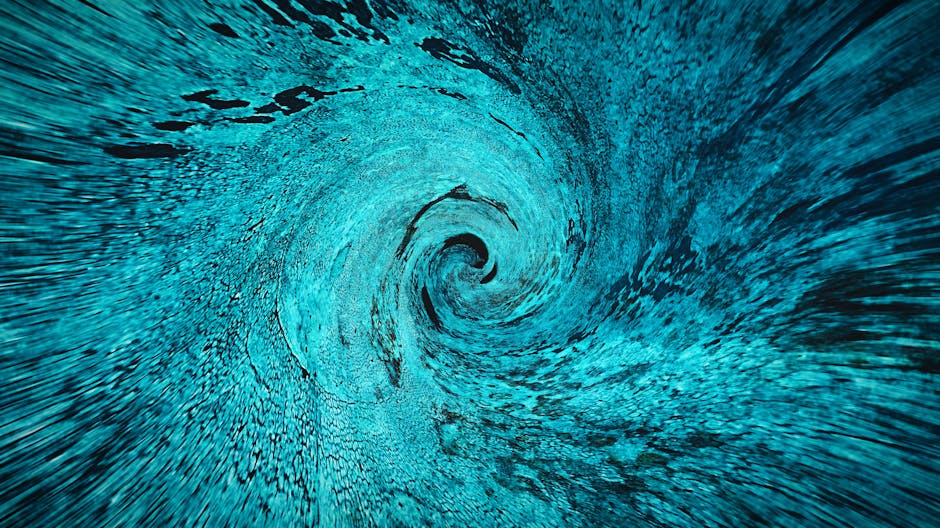
Mesmerizing vortexes swirl near an Antarctic volcano | Space photo of the day for May 12, 2026 – Image for illustrative purposes only (Image credits: Pexels)
High above the Southern Ocean, a satellite has recorded an intricate pattern of counter-rotating clouds forming in the wake of a solitary volcanic island. The image, captured by NASA’s Landsat 8 on February 11, 2026, shows these swirling formations stretching for dozens of kilometers downwind of Peter I Island. Such patterns arise when steady winds encounter an obstacle and break into repeating spirals.
The phenomenon offers a clear view of how topography shapes atmospheric flow in one of Earth’s most remote regions. Peter I Island rises from the sea as an ice-covered peak, its volcanic origins still evident in the rugged terrain. Winds between roughly 18 and 54 kilometers per hour interact with the island to produce the striking visual effect.
How the Vortexes Form
Air flowing over and around the island’s elevated profile creates alternating zones of high and low pressure. These pressure differences cause the air to curl into paired spirals that rotate in opposite directions. The result is a series of cloud streets that resemble a chain of spinning wheels trailing behind the landmass.
Scientists refer to these features as von Kármán vortex streets, named after the Hungarian-American engineer who first described the fluid dynamics involved. The clouds themselves form when moisture condenses in the rising and sinking air currents. Without the island acting as a barrier, the same winds would produce only uniform cloud bands or clear skies.
Why This View Matters
Images like this one help researchers track how isolated landforms influence regional weather patterns. In the Southern Ocean, where few weather stations exist, satellite observations provide essential data on wind behavior and cloud development. The February capture occurred during a period of consistent airflow, allowing the vortex pattern to develop fully and remain visible for hundreds of kilometers.
Similar vortex streets appear elsewhere when strong winds meet islands or mountains, yet the Antarctic setting adds a layer of interest because of the extreme cold and sparse human presence. The clear contrast between the white clouds and the dark ocean surface makes the spirals especially easy to trace from orbit.
What Remains to Be Learned
While the basic mechanism is well understood, questions persist about how these vortices affect local heat transfer and moisture distribution. Researchers continue to study whether the spirals influence sea-surface temperatures or contribute to the mixing of surface waters. Future satellite passes over the same region may reveal how often the pattern repeats and under what wind conditions it becomes most pronounced.
The Landsat 8 observation adds one more data point to a growing archive of high-resolution Earth imagery. Each new capture refines models of atmospheric flow around small islands and improves forecasts for the surrounding ocean. For now, the image stands as a striking reminder of the hidden order that can emerge from seemingly chaotic winds.