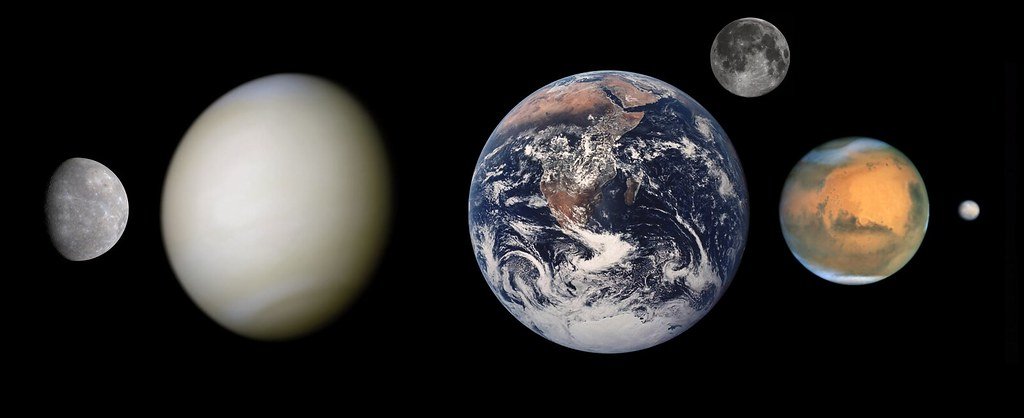

Picture this: you wake up on a planet where the temperature could melt lead, the pressure would crush you instantly, and acid rain never touches the ground because it evaporates before reaching the surface. Welcome to Venus, our closest planetary neighbor and arguably the most mysterious world in our solar system. Despite being called Earth’s twin due to its similar size and mass, Venus has evolved into a hellscape that continues to puzzle scientists around the globe.
What makes Venus particularly intriguing isn’t just its extreme conditions. It’s the volcanic secrets hidden beneath those thick clouds that have captivated researchers for decades. Recent discoveries suggest that this scorching world might be far more active than we ever imagined, challenging everything we thought we knew about planetary evolution.
The Hidden Volcanic Activity Beneath the Clouds
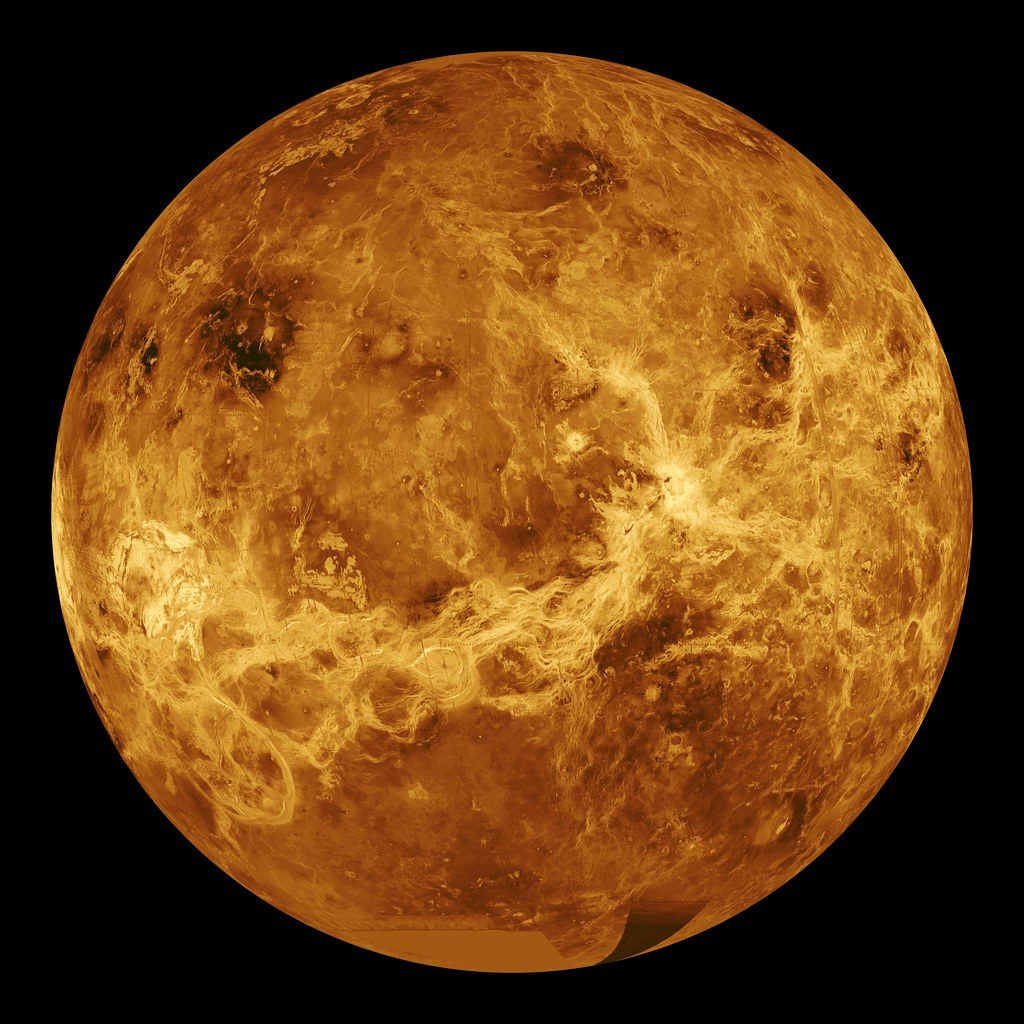
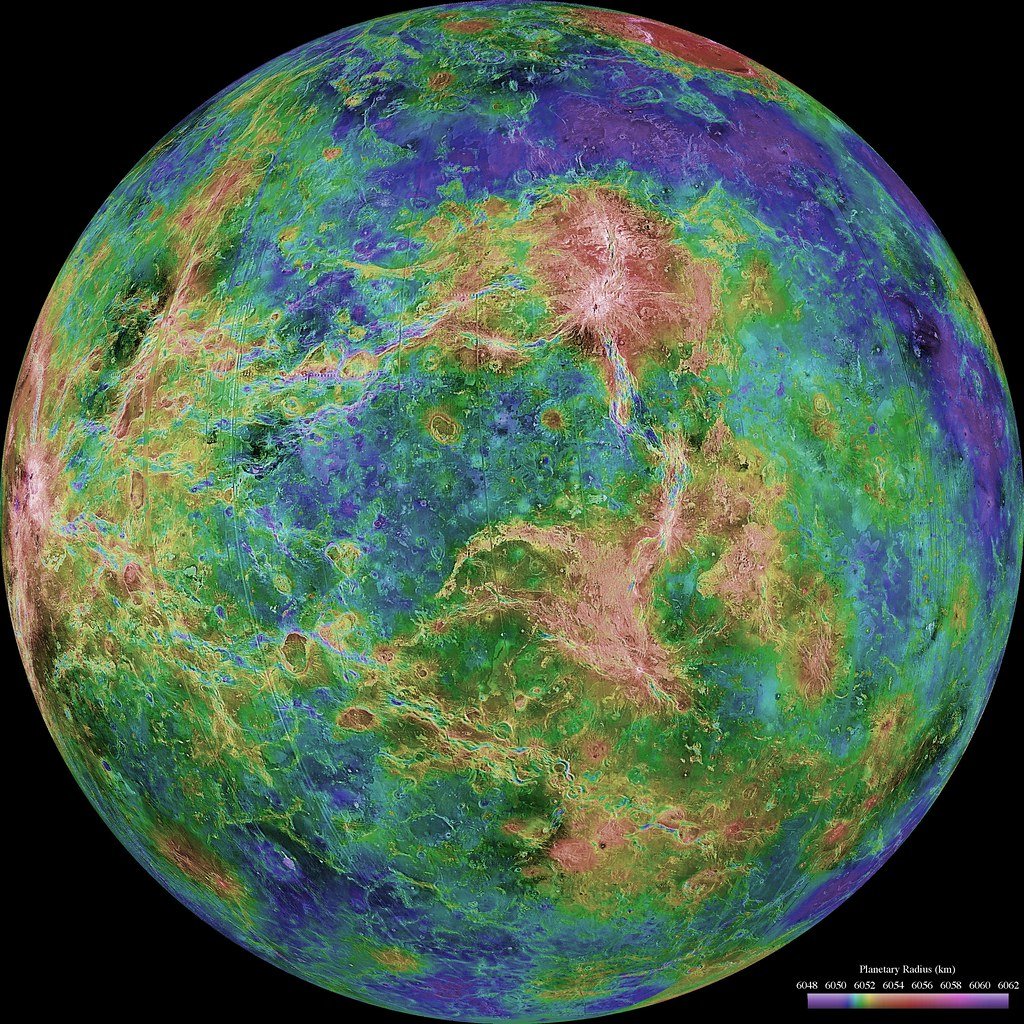
For years, scientists wondered whether Venus was a dead world or still geologically active. Recent analysis using data from NASA’s Magellan spacecraft has revealed changes to volcanic vents and lava flows, providing the first direct evidence of recent volcanic eruptions on the planet. Italian researchers reportedly identified what appear to be new lava flows in two regions by comparing radar images taken between 1990 and 1992, suggesting volcanic activity may be more widespread than previously thought.
The volcanic discovery goes beyond simple detection. Scientists analyzing lava flows have discovered that volcanic activity on Venus could be comparable to that on Earth. New lava flows observed between different radar scans in regions of Sif Mons and Niobe Planitia confirm that volcanism on Venus is still ongoing, with evidence suggesting the planet’s volcanic activity exceeds previous estimates.
The Magellan Mission’s Groundbreaking Revelations
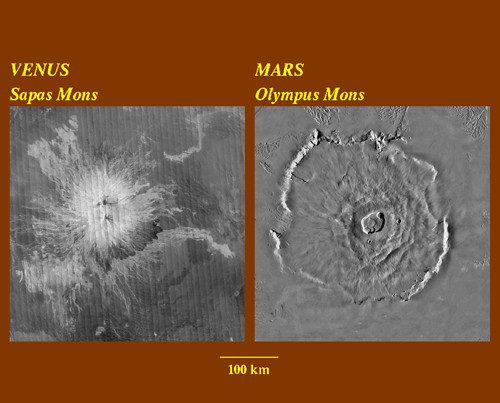
The Magellan mission revealed volcanic vents changing shape and increasing significantly in size in less than a year through radar images taken in the 1990s. This discovery was revolutionary because it provided the first concrete proof that Venus wasn’t the dormant world many had assumed it to be.
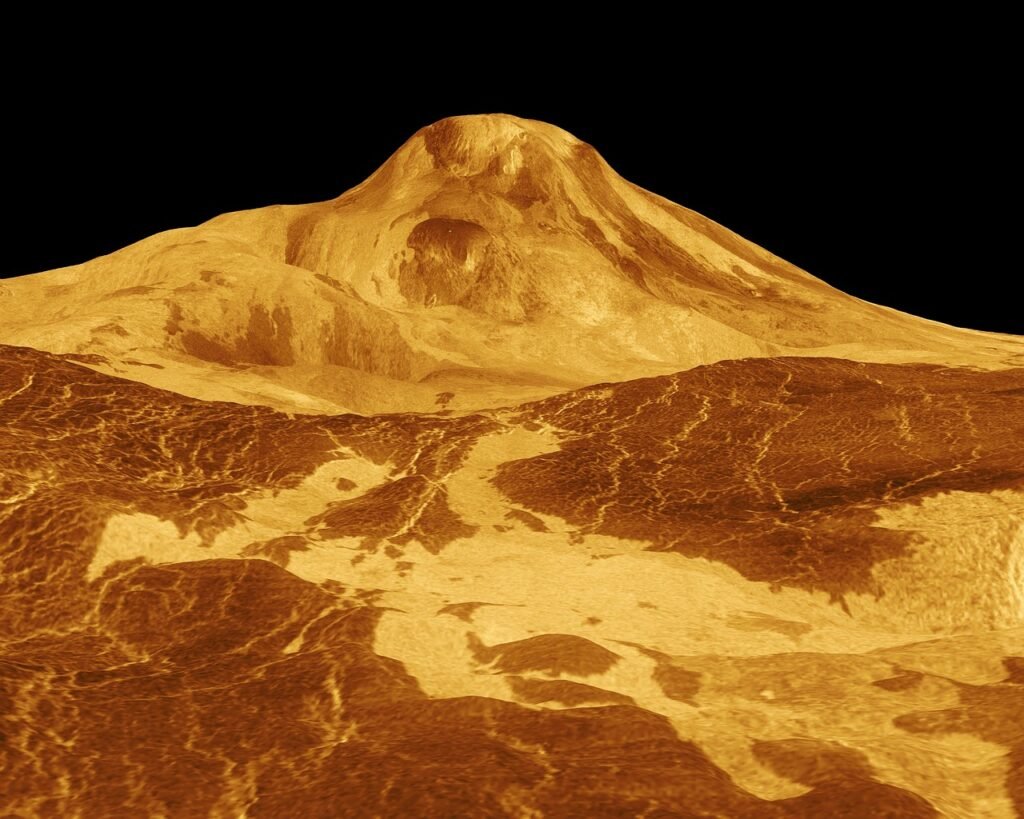
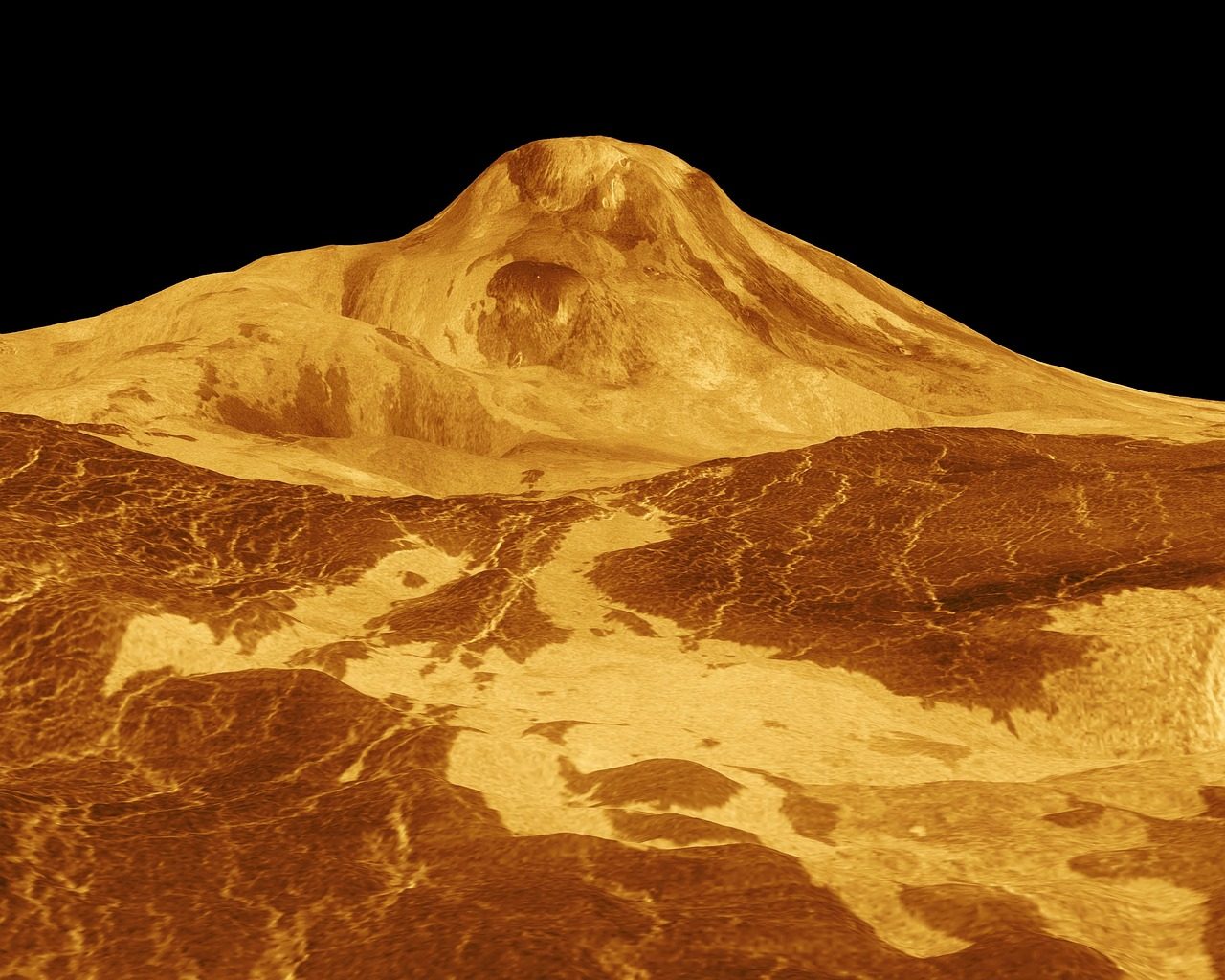
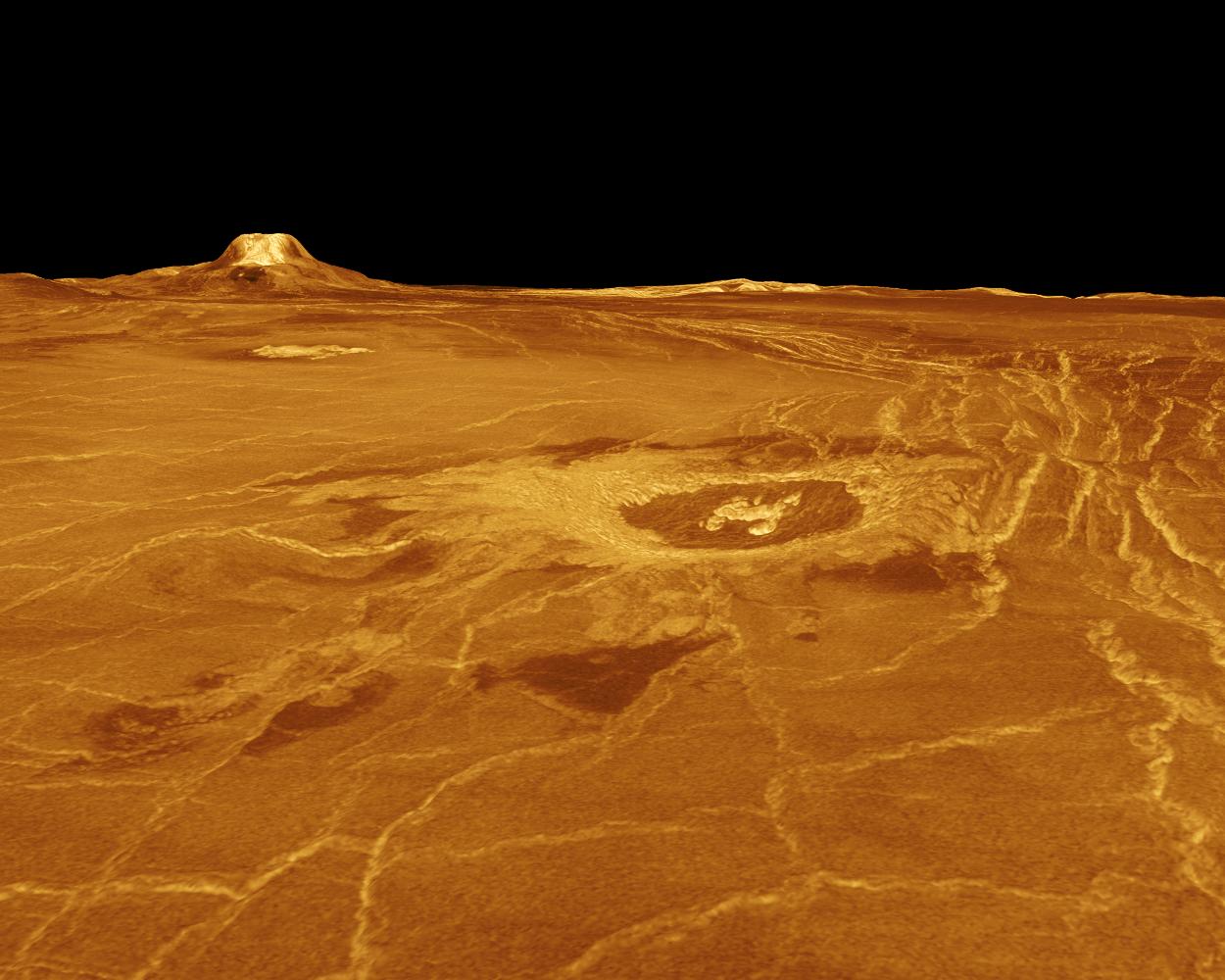
Magellan mapped 98% of the planet’s surface from 1990 to 1992, and the images it generated remain the most detailed of Venus to date. Scientists identified a volcanic vent near Maat Mons that changed from nearly circular covering less than 1 square mile in February 1991 to doubled in size and misshapen by October, appearing filled with a lava lake.
Atmospheric Clues: Sulfur Dioxide’s Tell-Tale Signature
Sulfur dioxide molecules are destroyed by sunlight in Venus’s upper atmosphere after just a couple of days, meaning any detection must indicate recent volcanic activity or atmospheric circulation processes. Six years of observations by Venus Express showed large changes in sulfur dioxide content, with volcanic eruptions being one intriguing possible explanation.
Scientists speculate that if volcanism was responsible for atmospheric changes, it could come from relatively gentle increased output of several active volcanoes rather than one dramatic eruption, or possibly decadal-scale atmospheric circulation variability. This atmospheric detective work provides crucial insights into Venus’s ongoing geological processes, even when direct observation through the thick clouds remains challenging.
The Coronae Mystery: Unique Geological Features
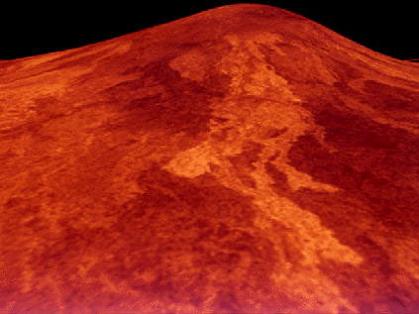
Vast, quasi-circular features called coronae on Venus’s surface may reveal ongoing tectonics, with the planet’s surface being deformed by molten material from below despite lacking tectonic plates. These enigmatic features were among the most puzzling geological structures mapped by Magellan, with scientists later finding many in locations where the lithosphere is thin and heat flow is high.
Research shows coronae tend to be located where Venus’s lithosphere is thinnest and most active, with the lithosphere around each corona averaging about 7 miles thick and estimated heat flow greater than Earth’s average, suggesting geological activity. These features might represent a unique form of planetary heat loss that doesn’t exist on Earth today.
Missing Magnetic Field: A Planetary Enigma
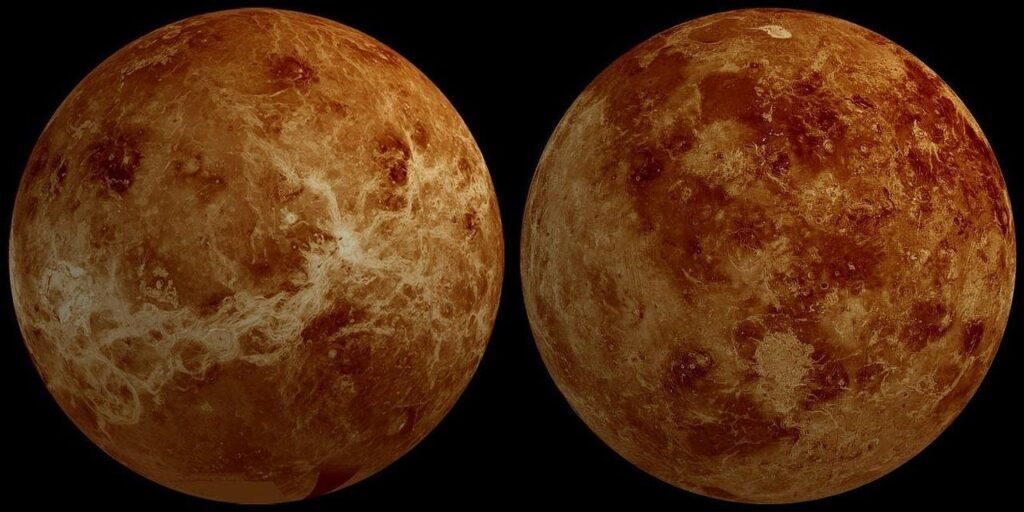
Venus lacks its own internally generated magnetic field despite having a similar-sized iron core to Earth, instead having only an induced magnetic field created by interaction between the Sun’s magnetic field and the planet’s outer atmosphere. This absence has profound implications for the planet’s evolution and current state.
Although Venus has an electrically conductive core and slow rotation that simulations show is adequate to produce a dynamo, it lacks convection in its outer core, possibly suppressed by a warm mantle due to the absence of plate tectonics. The combination of Venus’s extremely slow rotation (once every 243 Earth days) and lack of convection in the liquid core prevents generation of a global magnetic field.
The Greenhouse Effect Gone Wrong
Venus’s atmosphere is mostly carbon dioxide with sulfuric acid clouds, and the hot, high-pressure carbon dioxide behaves corrosively at the surface. Without water to absorb carbon dioxide as on Earth, this gas has accumulated to over 96% of the atmosphere, causing extreme greenhouse effects that raise surface temperatures to around 462°C.
Without magnetic field protection, solar radiation splits water molecules into hydrogen and oxygen, with light hydrogen atoms lost to space and heavy oxygen reacting to form new compounds, causing Venus to lose much of its water that once probably existed in liquid form. This runaway process transformed what might once have been a habitable world into today’s inferno.
Comparing Earth and Venus: Divergent Evolutionary Paths
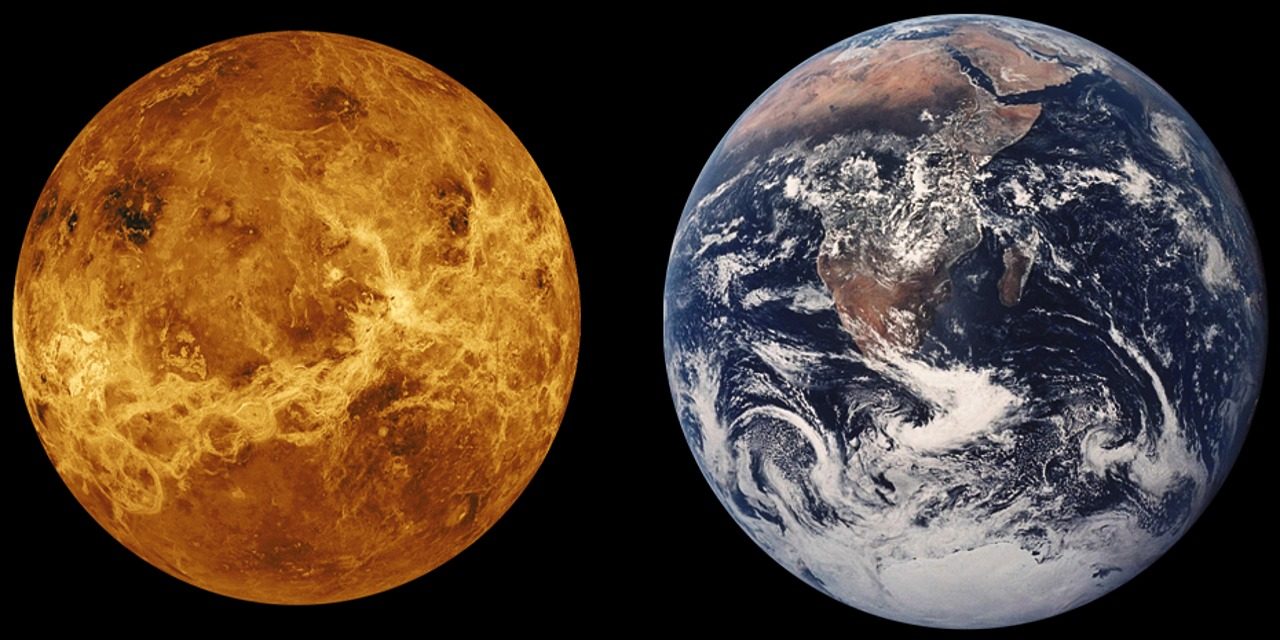
If sliced pole to pole, Venus and Earth would look remarkably similar with iron cores enveloped by hot-rock mantles and thin rocky crusts, with both planets’ surfaces changing form and erupting into volcanoes in response to internal heat and pressure. Yet their evolutionary paths diverged dramatically.
Coronae features aren’t found on Earth today but may have existed when our planet was young before plate tectonics became established, providing insights into possible subsurface processes currently shaping Venus’s surface. Venus provides a window into Earth’s past, helping us understand how our planet may have looked over 2.5 billion years ago.
Future Missions: Unlocking Venus’s Secrets
NASA’s planned VERITAS mission, though delayed, aims to launch in the coming years, using state-of-the-art synthetic aperture radar to create 3D global maps and near-infrared spectrometry to determine surface composition. EnVision’s high-resolution infrared spectrometer will look for trace amounts of volcanic gases in the atmosphere to confirm if Venus is still volcanically active.
These new missions will have comprehensive approaches for identifying surface changes with far higher resolution than Magellan, potentially revolutionizing our understanding of this enigmatic world. Scientists are particularly excited about the possibility of monitoring active volcanic eruptions in real-time, something that has never been accomplished on Venus before.
Conclusion
Venus continues to challenge our understanding of planetary evolution and volcanic processes. Scientists study active volcanoes to understand how a planet’s interior shapes its crust and drives evolution, with the discovery of recent volcanism on Venus providing valuable insights into the planet’s history and why it took a different evolutionary path than Earth. The volcanic secrets hidden beneath those sulfuric acid clouds aren’t just academic curiosities. They hold keys to understanding how rocky planets evolve, what conditions lead to habitability versus hellish landscapes, and perhaps most importantly, what lessons Venus can teach us about Earth’s own future.
What do you think about Venus’s mysterious volcanic activity? Does it surprise you that our closest neighbor remains such an enigma? Tell us in the comments.
Hi, I’m Andrew, and I come from India. Experienced content specialist with a passion for writing. My forte includes health and wellness, Travel, Animals, and Nature. A nature nomad, I am obsessed with mountains and love high-altitude trekking. I have been on several Himalayan treks in India including the Everest Base Camp in Nepal, a profound experience.