
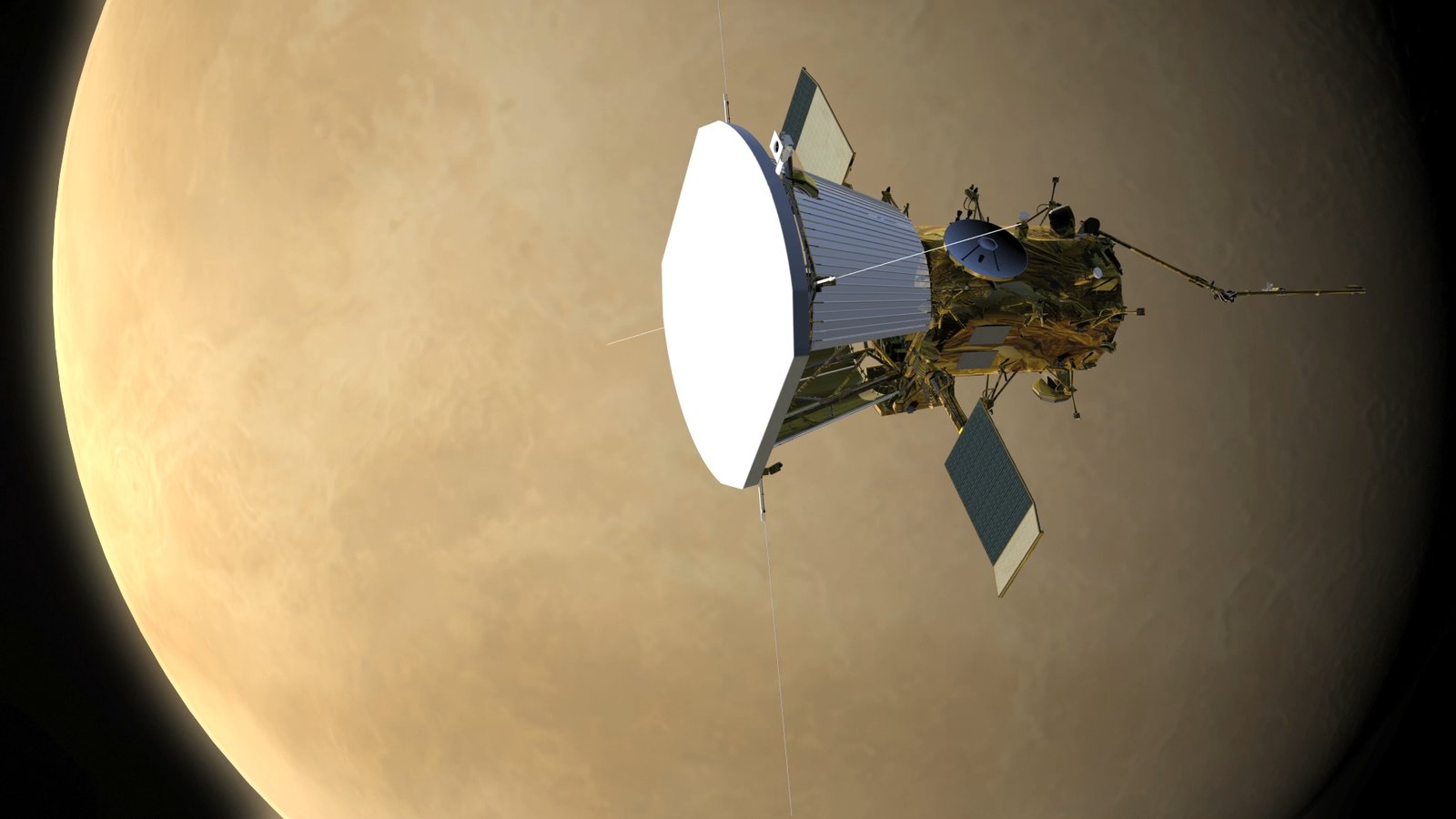
A Hellish World with Earth-Like Roots (Image Credits: Upload.wikimedia.org)
Venus, Earth’s closest planetary neighbor and a once-potentially habitable world turned infernal, stands at the center of renewed scientific interest. NASA envisioned a transformative “decade of Venus” in the 2030s, anchored by three flagship missions to unravel the planet’s mysteries. Recent budget constraints, however, have introduced tough decisions that could limit the agency’s ambitions to a single probe.
A Hellish World with Earth-Like Roots
Scientists long viewed Venus as a cautionary tale for planetary evolution. Surface temperatures exceed 460 degrees Celsius, and atmospheric pressure crushes like Earth’s oceans at depth. Yet evidence suggests the planet may have hosted liquid water and milder conditions billions of years ago.[1]
Decades since NASA’s Magellan orbiter mapped its surface, Venus demands fresh scrutiny. The upcoming missions promised complementary views: atmospheric dives, orbital mapping, and radar scans. Such efforts could reveal active volcanism, trace volatile histories, and probe why Venus diverged from Earth.[2]
Proponents hailed the trio as a coordinated assault on unanswered questions. Together, they aimed to chart surface geology, sample noble gases, and monitor weather patterns. This synergy positioned the 2030s as a pivotal era for comparative planetology.
The Trio of Missions Under Pressure
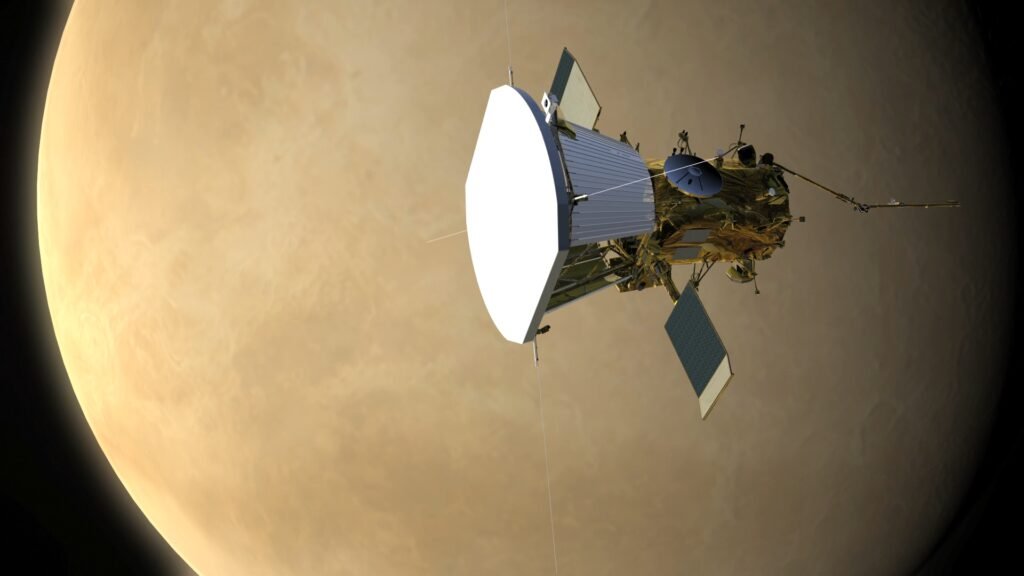
DAVINCI leads the pack with its descent probe, set to plunge through Venus’s corrosive clouds. Engineers advanced its launch to December 2030, ahead of initial projections, to accelerate data collection. The probe will relay images and chemical profiles right to the surface, targeting arrival in January 2033.[1]
VERITAS, another NASA effort, focuses on orbital topography and spectroscopy. It promises detailed emissivity maps to identify rock types and tectonic scars. Development proceeds cautiously as resources stretch thin.
EnVision, led by the European Space Agency, rounds out the set with comprehensive orbital observations. NASA originally pledged its VenSAR radar for high-resolution surface imaging. Construction started in 2025, but the probe eyes a 2031 liftoff on Ariane 6, hinging on timely alignments.[2]
| Mission | Lead Agency | Key Focus | Launch Target |
|---|---|---|---|
| DAVINCI | NASA | Atmospheric descent probe | Dec 2030 |
| VERITAS | NASA | Surface mapping & spectroscopy | TBD |
| EnVision | ESA (NASA contrib.) | Orbital radar & subsurface | 2031 |
Budget Realities Force Hard Choices
Congress approved $2.54 billion for NASA’s planetary science division in fiscal year 2026, surpassing the administration’s $1.89 billion request but falling $200 million short of the previous year. This gap ripples across projects, demanding prioritization.[1][3]
Louise Prockter, director of the division, addressed the strain at the Lunar and Planetary Science Conference. “Not everything can continue forward or continue forward in the same way,” she stated. Negotiations with ESA over EnVision persist, with the agency eyeing domestic alternatives for VenSAR.[1]
The 2026 bill earmarks $99 million for DAVINCI, signaling its frontrunner status. VERITAS ramps up gradually, while extended missions like Mars orbiters face one-year limits. Prockter emphasized strategic trade-offs to sustain core developments, such as Dragonfly to Titan.
Teams Push Ahead Despite Constraints
Progress endures amid fiscal hurdles. DAVINCI conducted field tests in Iceland analogs, honing instruments for Venus’s extremes. Natasha Johnson of Goddard Space Flight Center noted the team’s resilience: “Even though our funding has been very limited, we’ve still been pressing forward.”[1]
These efforts underscore Venus’s priority. The missions address why a world so similar to Earth became uninhabitable, informing exoplanet studies and climate models. Delays risk missing 2031-2033 windows, pushing timelines by years.
- Atmospheric composition and noble gases (DAVINCI)
- Geological mapping and volcanism (VERITAS)
- Subsurface radar and weather dynamics (EnVision)
- Volatile reservoirs and loss rates
- Links to past habitability
Key Takeaways
- Funding shortfall of $200 million challenges all three missions.
- DAVINCI secures $99 million and eyes 2030 launch.
- EnVision may proceed without full NASA radar support.
Venus exploration teeters on fiscal decisions that will shape solar system science for decades. Prioritizing one mission preserves momentum, yet sacrifices collaborative depth. As NASA finalizes its 2026 plan, the planet’s secrets await – will the decade deliver? What do you think about these trade-offs? Tell us in the comments.