
The Ingenious Tool Revolutionizing Star Hunts (Image Credits: Cdn.mos.cms.futurecdn.net)
Astronomers have turned to an advanced instrument named CAFFEINE to peer into the hidden nurseries where stars are born.
The Ingenious Tool Revolutionizing Star Hunts
CAFFEINE emerged as a game-changer in the search for protostars, the earliest detectable phases of stellar birth. Researchers deployed this specialized system to scan vast cosmic regions for faint signatures of these embryonic objects. The instrument’s precision allowed teams to isolate signals that traditional methods often missed.
Its design focused on capturing elusive light patterns from collapsing gas clouds. Operators fine-tuned the setup over months of testing before full deployment. Early results confirmed its ability to detect objects as young as a few thousand years old, far younger than previously observed specimens.
Why Newborn Stars Matter to Science
Newborn stars hold clues to the universe’s formation processes. These protostars form when dense molecular clouds fragment under gravity, igniting nuclear fusion over millions of years. Studying them reveals how galaxies build their stellar populations over time.
CAFFEINE targeted regions rich in such activity, including nebulae teeming with raw material. The effort built on decades of observations from ground-based and space telescopes. Teams prioritized areas with high dust concentrations, where stars emerge shrouded from direct view.
Key Techniques in the CAFFEINE Campaign
The project employed a multi-wavelength approach to pierce through obscuring dust. Infrared observations proved essential, as they revealed heat from forming stars invisible in optical light. Data processing algorithms sifted through terabytes of imagery to flag candidates.
Here are the primary methods used:
- High-resolution imaging to map cloud densities.
- Spectroscopy for chemical composition analysis.
- Time-lapse monitoring to track evolutionary changes.
- Cross-referencing with archival datasets.
- Machine learning filters for anomaly detection.
These steps ensured reliable identifications amid cosmic noise.
Insights from Recent Observations
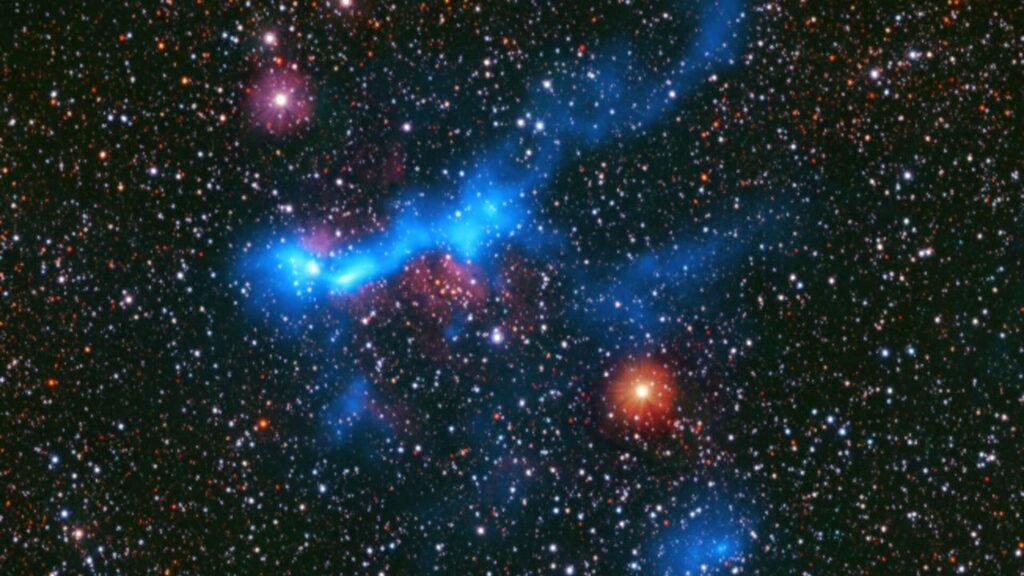
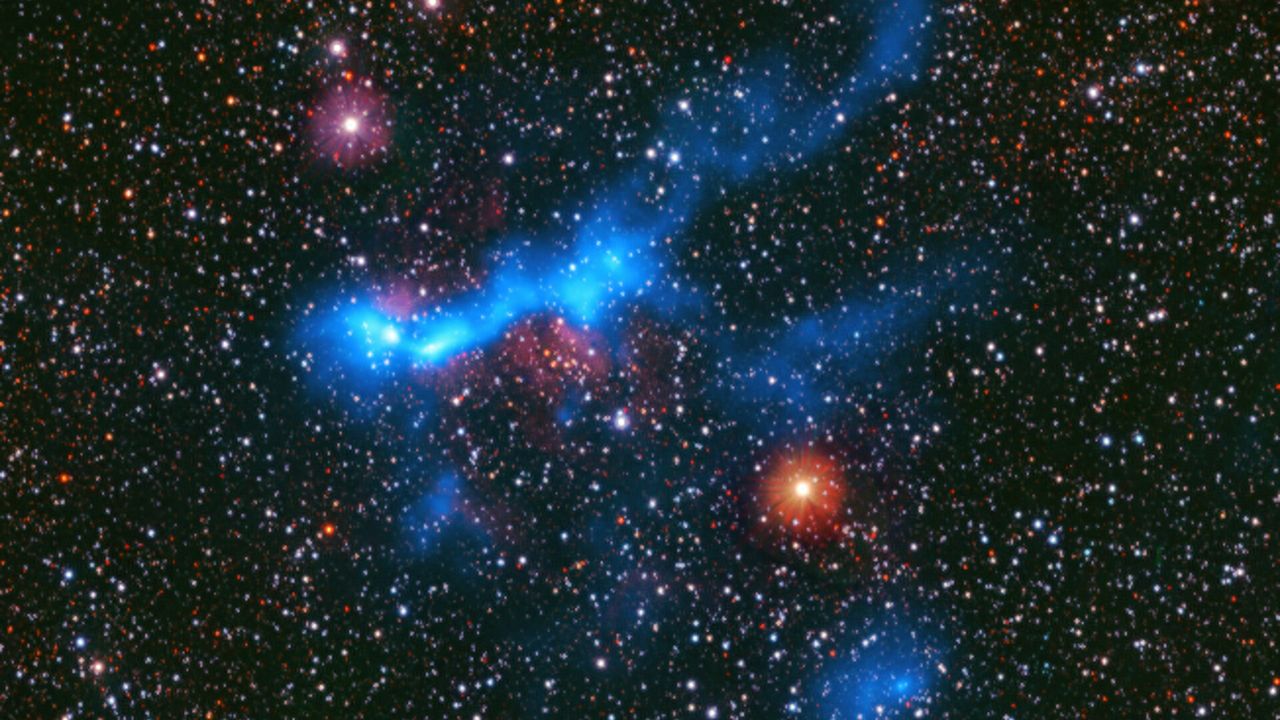
Recent scans yielded images showcasing clusters of protostars in active star-forming zones. The visuals highlighted glowing cores amid swirling gas filaments, offering a glimpse into stellar infancy. Astronomers noted variations in brightness that suggested different developmental stages.
Comparisons with older star clusters provided context on long-term evolution. The findings aligned with models predicting rapid growth in dense environments. Further analysis promised refinements to theories on star formation efficiency.
| Observation Type | Target Wavelength | Main Advantage |
|---|---|---|
| Infrared | 3-5 microns | Penetrates dust |
| Submillimeter | 0.1-1 mm | Detects cold gas |
| Radio | >1 mm | Maps magnetic fields |
Looking Ahead to Stellar Discoveries
CAFFEINE’s success paves the way for expanded surveys across the sky. Upcoming upgrades will enhance sensitivity for even fainter targets. Collaborations with space observatories will deepen the insights into these cosmic births.
Key Takeaways:
- CAFFEINE excels at detecting protostars hidden by dust.
- Multi-wavelength data unlocks details on star formation.
- These observations refine models of galactic evolution.
The pursuit of newborn stars underscores humanity’s drive to decode the universe’s origins. What aspects of star formation intrigue you most? Share your thoughts in the comments.