Exceptional Brightness Draws Crowds (Image Credits: Pexels)
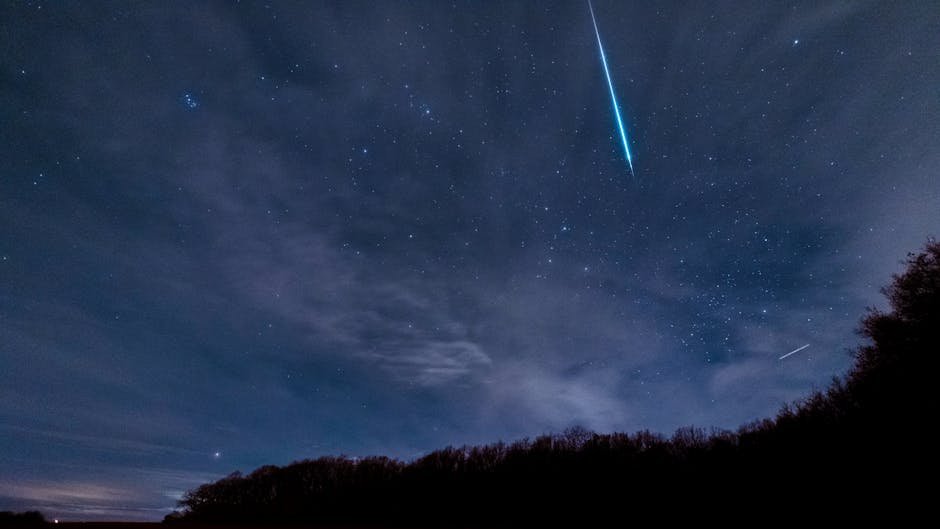
Observers from Europe to Canada and the United States reported a notable increase in bright fireballs during March 2026. These vivid meteors, some producing sonic booms and even rare meteorite falls, drew widespread attention. The American Meteor Society launched an investigation to determine if a specific cause lay behind the uptick, analyzing data from thousands of witnesses.
Exceptional Brightness Draws Crowds
Fireballs stood out this quarter not just for their frequency but for the sheer number of witnesses each attracted. The American Meteor Society documented 38 events with more than 50 reports each, far exceeding the typical 18 per quarter. Another 14 incidents garnered over 100 accounts, doubling the average.
Many sightings lasted longer than usual and originated from unusual directions, including the antisolar point and high-declination radiants. These paths suggested meteoroids entering at steep angles, outside the common plane of the solar system. Such patterns raised questions about potential shifts in the near-Earth environment.
Key Sightings Light Up the Month
On March 3, a meteor streaked over Vancouver in British Columbia, Canada, and parts of Washington state in the U.S., shattering the sound barrier and generating a sonic boom. Western Europe saw activity on March 8 and 11, with bright trails visible across the region.
Later events intensified the trend. A fireball over Ohio on March 17 produced a powerful sonic boom that rattled homes in Cleveland and Pennsylvania. Residents captured video footage of the event. California experienced two fireballs on March 19, followed by sightings in Michigan and Georgia the next day.
The month peaked on March 21 when a meteor punched through a house roof in Houston, Texas, leaving a fragment behind. Dashcam recordings documented the dramatic descent.
- March 3: Vancouver, Canada, and Washington, U.S. – Sonic boom reported.
- March 8 and 11: Western Europe – Multiple bright fireballs.
- March 17: Ohio and Pennsylvania, U.S. – Sonic boom and video evidence.
- March 19: California, U.S. – Two separate events.
- March 20: Michigan and Georgia, U.S.
- March 21: Texas, U.S. – Meteorite fall in Houston.
AMS Dives into the Data
The society reviewed its database, which has tracked fireballs since 2011. First-quarter 2026 tallied 2,046 events, edging out the previous record of 2,037 from 2022. Sonic booms accompanied 30 of the 38 high-report incidents, occurring roughly every three days.
Rare meteorites added intrigue. Fragments classified as eucrite achondrites – likely from asteroid Vesta – landed in Ohio and Germany, entering from nearly opposite directions. The AMS released its findings on March 24 and elaborated publicly two days later in a detailed analysis.
| Quarter | Total Events | Events >50 Reports | Events >100 Reports |
|---|---|---|---|
| Q1 2026 | 2,046 | 38 | 14 |
| Q1 2022 | 2,037 | ~18 (avg) | ~7 (avg) |
| Q1 2021 | 1,947 | ~18 (avg) | ~7 (avg) |
Searching for the Cause
Experts ruled out several explanations early. No new meteor shower emerged, and seasonal patterns or geographic biases failed to account for the distribution. Increased smartphone use and time-of-day factors also did not fully explain the surge.
Artificial intelligence and social media likely amplified witness counts by facilitating rapid sharing. However, they could not account for physical phenomena like sonic booms or confirmed meteorite recoveries. The AMS noted unusual radiant positions as a point for further research.
“Whether this reflects a genuine change in the near-Earth meteoroid environment, an amplification of reporting through AI and social media, or some combination of both, we cannot yet say definitively,” the society stated. “What we can say is that the question deserves both public awareness and scientific attention.”
Key Takeaways
- Total Q1 events hit a record high, driven by high-witness incidents.
- Sonic booms and rare meteorites marked many events as unusually large.
- No single cause identified; monitoring continues amid unusual patterns.
This fireball flurry underscores the dynamic nature of our planet’s interaction with space debris. As detection improves, such events may reveal more about cosmic visitors. Scientists urge skywatchers to report sightings via the AMS platform to aid ongoing studies. What do you think is fueling this activity? Share your thoughts in the comments.