
If you could peel back the surface of Earth like the lid on a box, you’d find a world almost no one ever sees but that quietly controls nearly everything we care about: climate, oceans, earthquakes, even the air we breathe. Most of the real action isn’t happening where we live, but deep below our feet and far beyond our skies, driven by forces we can’t touch, barely detect, and are only now beginning to understand.
In the last few decades, satellites, deep-sea probes, quantum sensors, and massive computer models have started to reveal a planet that’s far more alive, dynamic, and interconnected than most of us were ever taught in school. It’s a little unsettling, honestly. We like to believe we’re in charge, but the more we learn, the more obvious it becomes that we’re passengers on a ship steered by invisible hands of gravity, magnetism, microbes, and shifting rock. Once you see those hidden patterns, it’s hard to look at Earth the same way again.
The Restless Interior: A Churning Planet Beneath Our Feet
It’s easy to think of Earth’s interior as a static mass of rock, but the planet is closer to an engine that’s been running nonstop for billions of years. Deep inside, radioactive elements slowly decay, releasing heat that makes rock behave almost like an ultra-thick liquid over long timescales. This slow-motion flow drives plate tectonics, the grinding and drifting of continents that rearrange oceans, shape mountains, and set the stage for where people can live.
The surprising part is how much this hidden movement affects our daily reality. The collision of plates lifts up mountain ranges that redirect winds, alter rainfall, and even influence monsoon systems far away. Volcanic eruptions, fed by molten rock from deep inside, can loft ash and gases high into the atmosphere, cooling the planet for months or years. When you stand on stable ground, it feels permanent, but under that calm surface is a world of creeping motion that quietly dictates the places we call home.
Gravity’s Invisible Map: How Tiny Variations Reshape Water and Ice
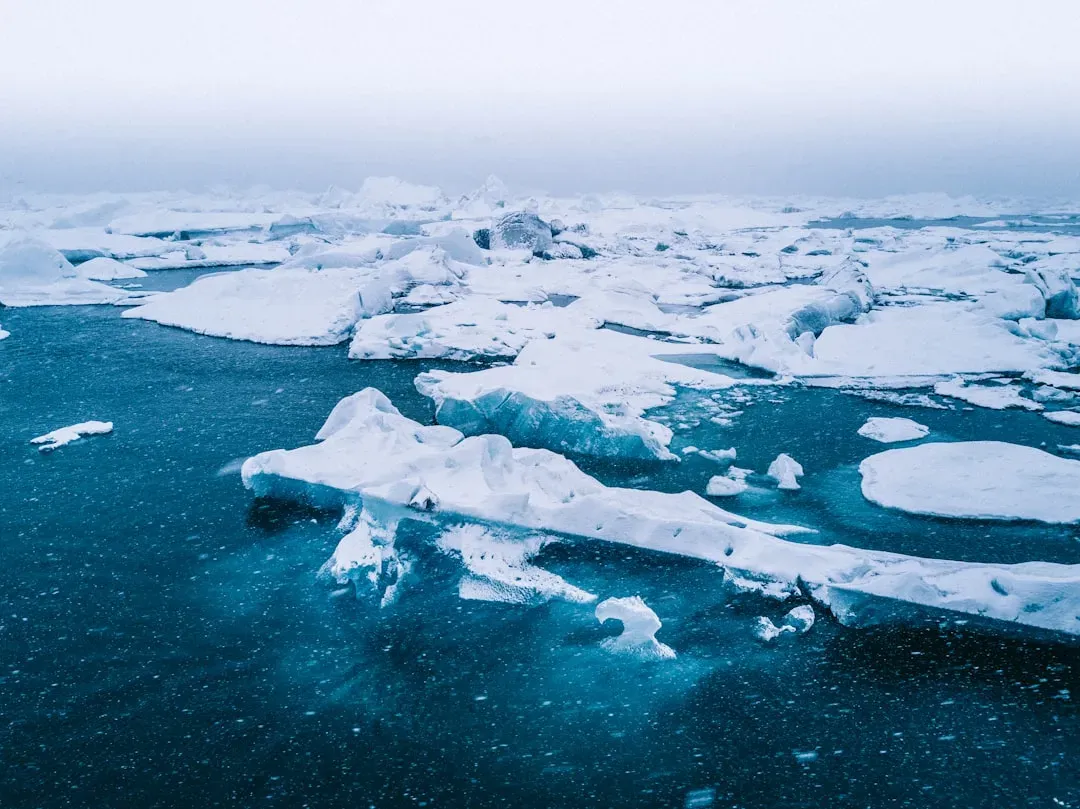
Gravity sounds simple: things fall down. But Earth’s gravity field isn’t uniform; it’s slightly stronger in some places and weaker in others, depending on how mass is distributed inside the planet and across its surface. Satellites designed to measure these tiny changes, by tracking the distance between paired spacecraft with absurd precision, have revealed shifting patterns of water and ice that we can’t see just by looking. Where glaciers are melting, where aquifers are being drained, where oceans are gaining mass – all of it shows up in gravity’s subtle fingerprints.
The stunning realization is that we now “watch” water move without directly seeing a drop of it. As ice sheets in places like Greenland and Antarctica thin and retreat, local gravity weakens slightly, and satellites pick that up. When regions pump groundwater faster than it can be replenished, the reduced mass subtly changes Earth’s gravitational pull in that area. These signals tell a story of a planet in flux, where human activity and natural processes are literally lightening and redistributing the weight of Earth, with long-term consequences for sea levels and water security.
The Planet-Sized Shield: Earth’s Magnetic Field and Its Hidden Drama
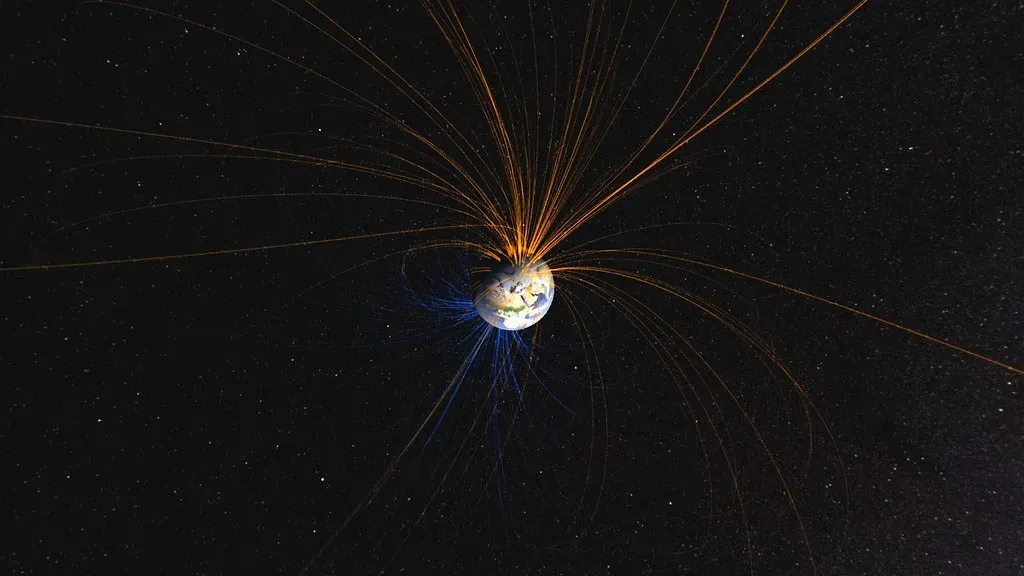
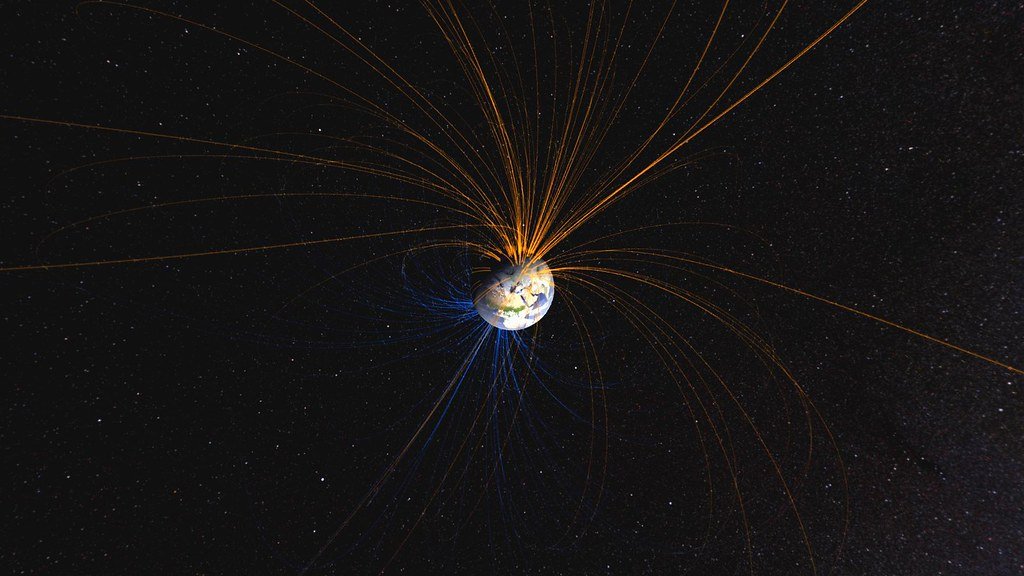
Most days, you never think about Earth’s magnetic field, and yet without it, life on the surface would be in serious trouble. Generated by molten, iron-rich fluid swirling in the outer core, this invisible field stretches far into space, forming a protective bubble that deflects much of the charged particle radiation streaming from the Sun. It’s like an unseen force field, constantly battered by solar winds but quietly keeping our atmosphere and technology safer than we realize.
The unnerving twist is that this shield is not perfectly stable. Measurements show that the magnetic field weakens and strengthens over time, and the magnetic poles wander, sometimes dramatically. In Earth’s deep past, the field has even flipped so that north became south and vice versa, a process recorded by ancient rocks and seafloor crust. Today, regions like the South Atlantic show noticeable weakening, and while scientists don’t fully agree on what it means, they’re watching closely. It’s only in recent decades, thanks to satellite constellations and global sensor networks, that we’ve started to see just how complex and restless this planetary shield really is.
The Deep Ocean Engine: Currents, Heat, and a Hidden Climate Machine

The surface of the ocean is familiar – waves, storms, sunlit shallows – but its real power lies in the slow, deep currents that flow thousands of meters below. This global conveyor, driven by differences in temperature and saltiness, quietly redistributes heat around the world, moderating climates and defining where deserts, forests, and fertile coasts can exist. Without this deep circulation, some regions would be brutally cold, while others would be far hotter and more volatile than they are today.
What’s startling is how sensitive this hidden engine is to seemingly small changes. As polar regions warm and ice melts, the influx of fresher water can disrupt the sinking of dense, salty water that helps power these currents. Sensor-equipped floats and deep-sea instruments have shown that some key circulation patterns may already be slowing or shifting. These changes don’t just rearrange ocean temperatures; they can alter storm tracks, rainfall patterns, and even the reliability of major food-growing regions that billions of people depend on.
The Microbial World: Invisible Life That Regulates the Atmosphere

When we talk about life shaping the planet, we usually picture forests, coral reefs, or animals migrating across landscapes. But the real planetary engineers are often microscopic. In the oceans, vast communities of plankton and bacteria take in carbon dioxide, release oxygen, and create particles that can help seeds of clouds form. On land, soil microbes cycle nutrients, lock away carbon, and influence everything from plant growth to how much greenhouse gas leaks into the atmosphere.
We’re only now starting to grasp the scale of this influence because it operates at a level we can’t see with the naked eye. Modern DNA sequencing, autonomous ocean gliders, and long-term ecosystem studies have revealed entire networks of microbes that respond quickly to temperature shifts, pollution, and changing rainfall. When climate changes, these organisms adjust their behavior and chemistry, sometimes amplifying warming and sometimes muting it. It’s like discovering that the planet’s thermostat is partly controlled by an invisible community that’s constantly negotiating behind the scenes.
Subtle Shakes: Slow Earthquakes, Silent Faults, and Hidden Risks
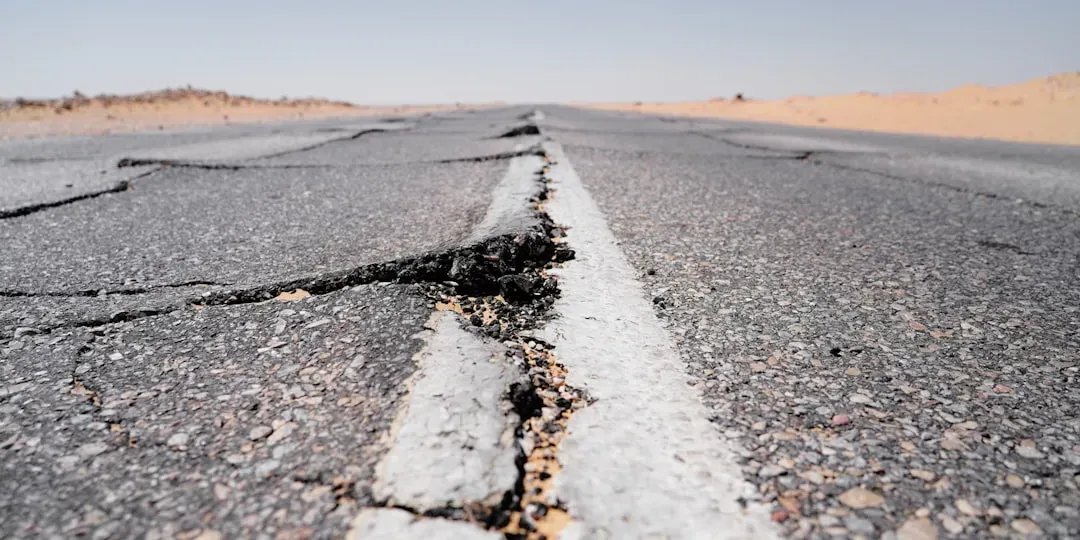
Earthquakes usually conjure images of sudden, violent shaking, but not all tectonic movement is fast or loud. In the last couple of decades, ultra-sensitive GPS stations and seismometers have revealed a strange phenomenon: slow earthquakes and creeping faults that move quietly over days or weeks. These events release strain gradually and may not be felt at the surface at all, yet they still shift the positions of plates by measurable amounts.
What makes this discovery so important is that these slow slips can interact with more familiar, damaging quakes. In some regions, scientists have found that slow earthquakes may cluster before or after larger events, like a silent rehearsal before the main performance. This opens a new window into understanding seismic risk, but it also complicates the picture. We used to think of faults as either locked or slipping; now we know there is a whole spectrum of subtle behavior in between, operating out of sight but possibly nudging the timing and severity of future quakes.
Cosmic Influences: Solar Storms, Space Weather, and Our Fragile Systems
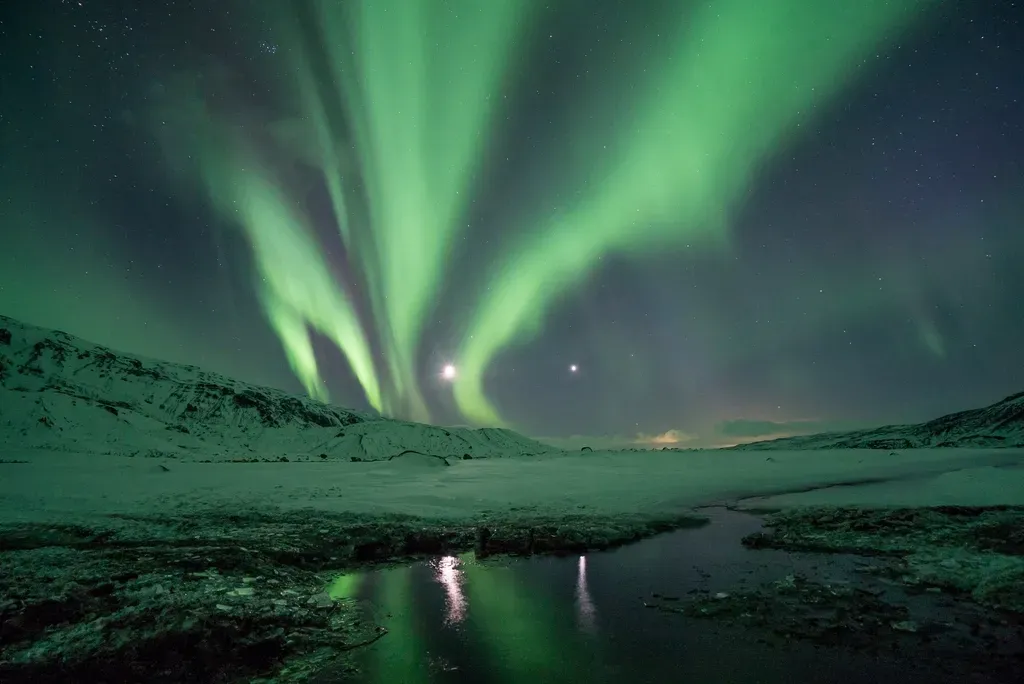
It’s easy to imagine Earth as sealed off from space, but in reality, the planet is constantly bombarded by energy and particles from the Sun and beyond. Most of the time, our atmosphere and magnetic field absorb the impact, and we’re blissfully unaware. But during intense solar storms, bursts of charged particles and radiation can disturb the upper atmosphere, disrupt GPS signals, and induce powerful currents in power grids on the ground. To most of us, it feels like bad luck when systems fail; in truth, it’s space weather reaching into our daily lives.
Satellites, ground-based telescopes, and monitoring stations now track these events with increasing sophistication, turning what was once mysterious into something we can at least partially anticipate. Still, our modern world – with its dense web of communications, navigation, and energy infrastructure – is more exposed than ever. A storm that would have passed almost unnoticed a century ago can now ripple through aviation routes, internet connections, and financial systems. These distant solar outbursts are a reminder that Earth’s story is intertwined with forces far beyond the atmosphere, shaping our future in ways we’re just beginning to perceive.
Living on a Planet of Hidden Motion
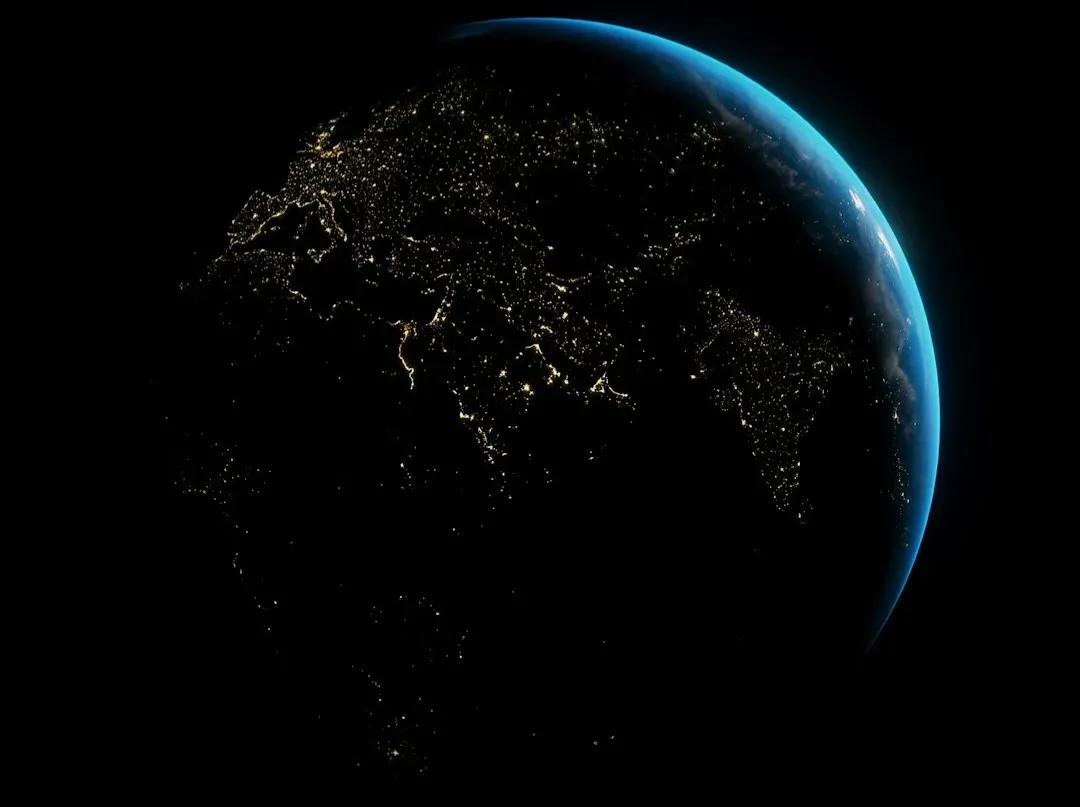
The deeper we look, the clearer it becomes that Earth is not a quiet, stable platform but a layered symphony of unseen forces. Heat from the core drives continents, gravity maps shifting water, the magnetic field shields us, deep oceans and microbes regulate climate, faults creep in silence, and the Sun itself sometimes reaches through our protective shell. None of this is obvious when you glance out a window, yet all of it shapes the conditions that make our lives possible.
In a strange way, finally perceiving these hidden dynamics makes the planet feel both more dangerous and more extraordinary. We are not just residents of a rock in space; we are participants in a complex, ever-changing system whose secret workings we’re only now learning to read. Knowing that, it’s hard not to wonder: what other unseen forces are still out there, quietly shaping our world while we go about our day?