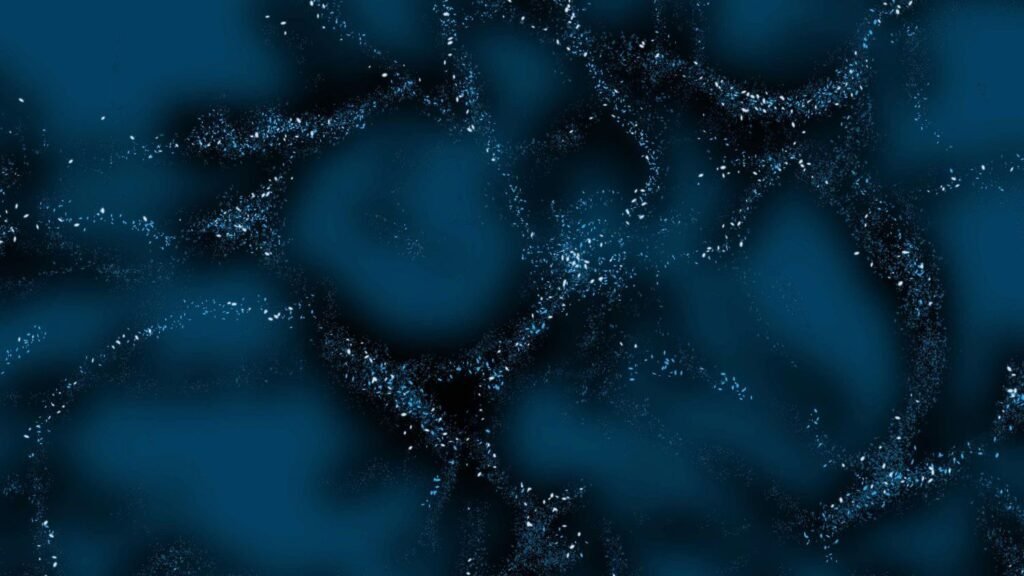

Imagine standing in a room where roughly ninety-five percent of the furniture is completely invisible to you. You can feel it when you bump into it, you can watch how the room’s visible objects move around it, but no matter how bright a light you shine, it reveals nothing. That, in an almost uncomfortably accurate nutshell, is what it is like to live in our universe.
Most people assume we have a pretty good handle on what the cosmos is made of. Stars, galaxies, planets, gas clouds. Honestly, though, that picture couldn’t be more incomplete. What we can actually see and touch amounts to just a tiny sliver of reality. The rest? A profound, beautiful, and deeply frustrating mystery. So let’s dive in.
A Universe Made of Almost Nothing We Recognize
Here is the thing that stops most people cold when they first hear it. Roughly ninety-five percent of the cosmos is made up , leaving just five percent as the familiar matter we can see around us. Everything you’ve ever touched, every star you’ve ever seen, every planet and galaxy measured by our most powerful telescopes – all of that makes up just a tiny fraction of everything that exists.
Dark matter and dark energy are named for what scientists do not yet know about them. Although both are abundant, neither gives off, absorbs, nor reflects light, which makes direct observation extremely difficult. Think of it like trying to describe a thunderstorm using only your sense of touch. You know something powerful is there. You just can’t see the shape of it.
The Invisible Scaffolding: What Dark Matter Actually Does
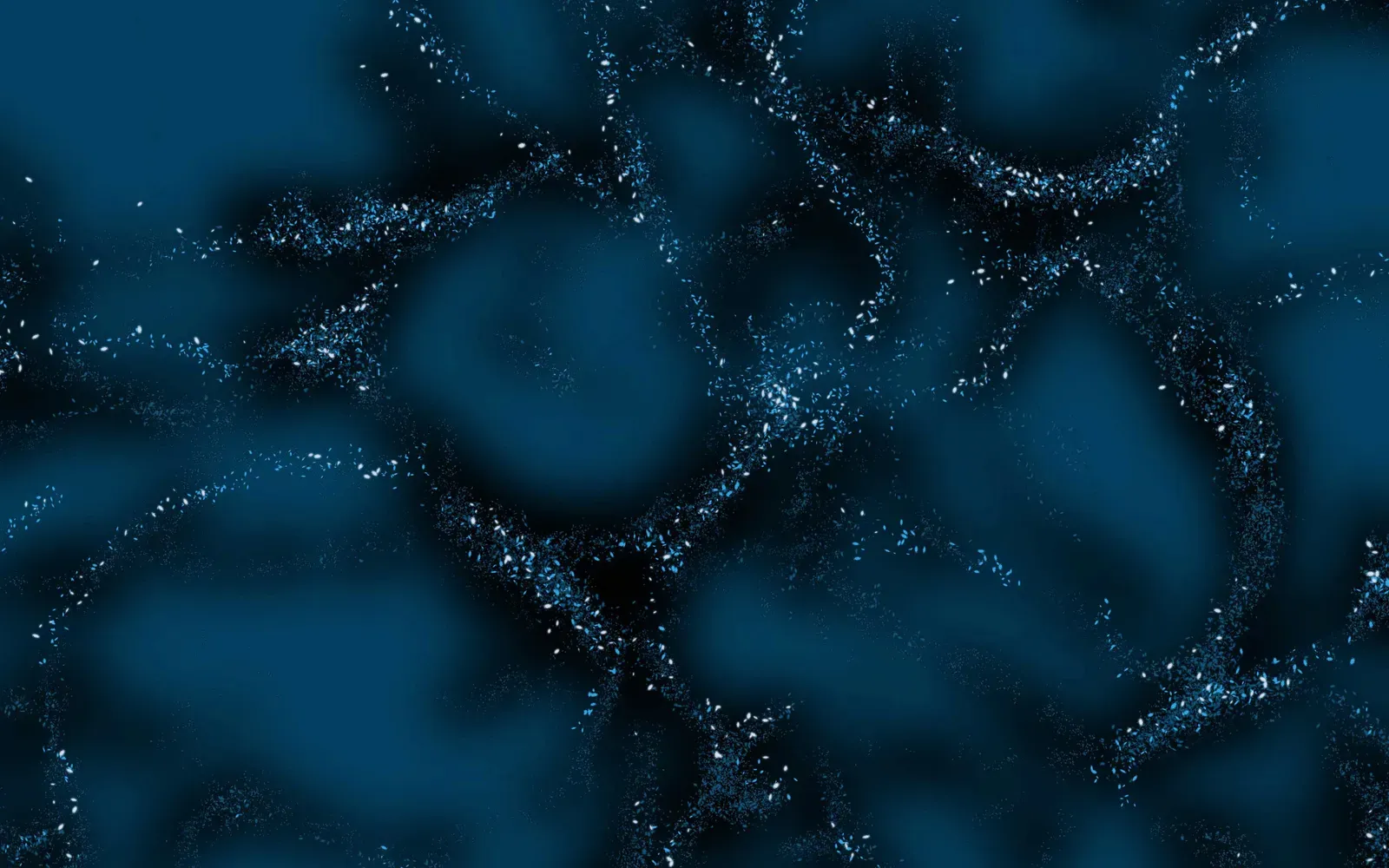
Dark matter exerts a gravitational pull, while dark energy drives the universe’s accelerating expansion. Those two sentences alone reveal just how different these two invisible components are, despite often being mentioned in the same breath. Dark matter is the cosmic glue. Dark energy is the cosmic repellent. One holds things together; the other tears them apart.
After the Big Bang, dark matter and ordinary matter were probably evenly distributed throughout space. Over time, dark matter began to clump together, which in turn pulled ordinary matter into increasingly dense pockets, where it eventually collected enough mass to spark star formation. Without dark matter doing this invisible heavy-lifting in the early universe, there would be no galaxies. No stars. No us.
How Science First Noticed Something Was Missing
In the 1930s, an astrophysicist named Fritz Zwicky realized that, in order to act the way they do, galaxy clusters must contain a lot more mass than was actually visible. If the galaxies also contained unseen dark matter, everything made a lot more sense. Then, in the 1970s, astronomer Vera Rubin discovered that stars at the edge of a galaxy move just as quickly as stars near the center. This observation makes sense if the visible stars were surrounded by a halo of something invisible: dark matter.
I think it’s worth pausing on that for a moment. Vera Rubin wasn’t looking for dark matter. She was simply measuring something that didn’t add up, and the only logical answer changed our understanding of the cosmos forever. Science often works exactly like that – a number that won’t behave, an orbit that refuses to cooperate, a galaxy spinning too fast. We infer dark matter’s presence from its gravitational effects on galaxies, galaxy clusters, gravitational lensing, and the cosmic microwave background.
JWST’s Groundbreaking Dark Matter Map of 2026
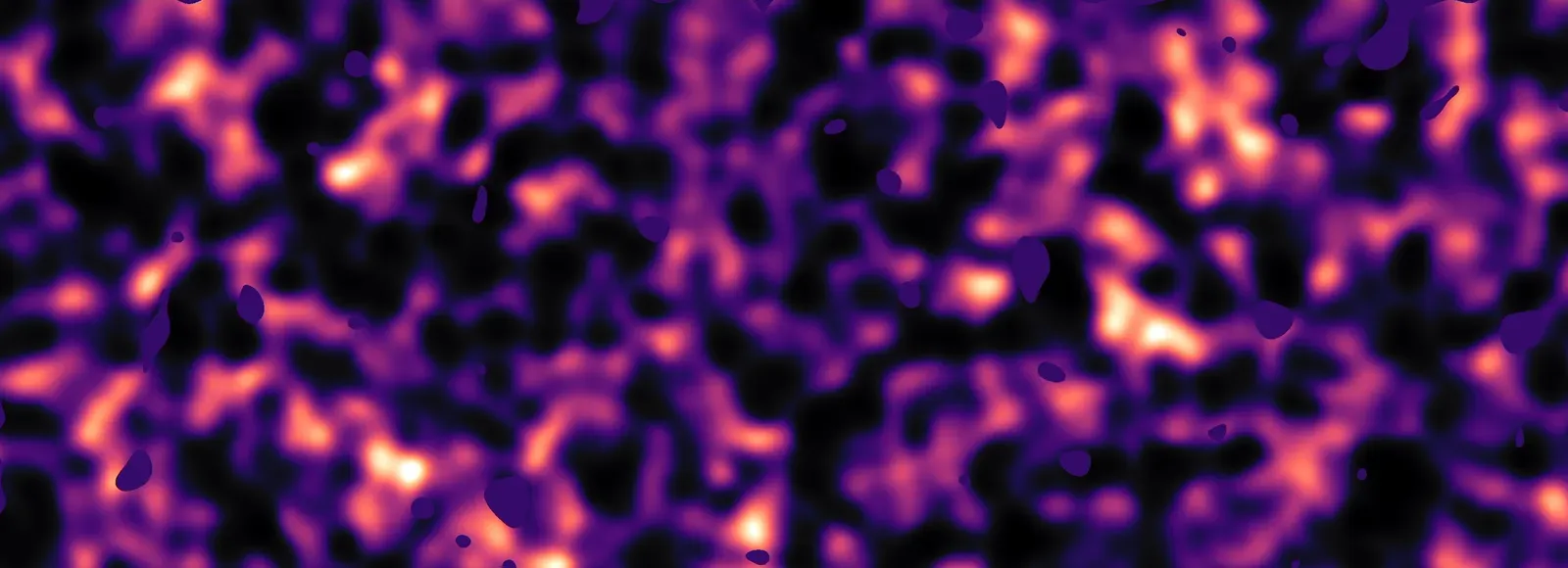
Scientists using data from NASA’s James Webb Space Telescope have made one of the most detailed, high-resolution maps of dark matter ever produced. It shows how the invisible, ghostly material overlaps and intertwines with regular matter, the stuff that makes up stars, galaxies, and everything we can see. This map, published in January 2026, represents a genuinely staggering leap forward in our ability to visualize what was, until recently, completely hidden.
The new JWST map results from the measurement of around 250,000 galaxies within a region of sky only 0.54 square degrees in size. It reveals a complex network of filamentary bridge-like features stretching between galaxy clusters. These strands of dark matter appear to act as a skeletal system along which gas and galaxies are distributed. Picture a spider web stretched across the universe, invisible but structurally essential. That’s exactly what this map shows you.
Dark Energy: The Force Ripping the Universe Apart
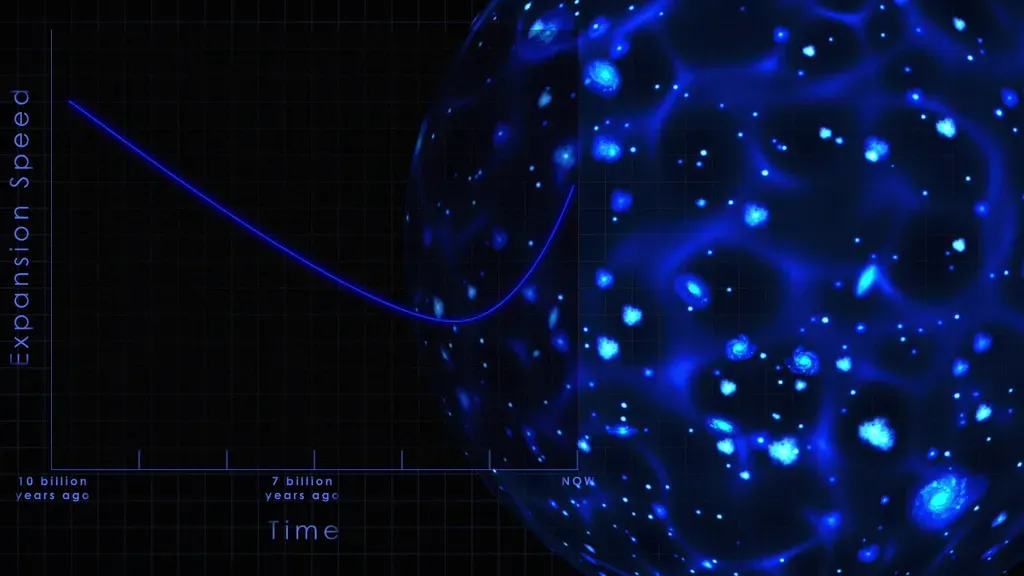
The universe is expanding, and it expands a little faster all the time. Scientists call this speeding-up of expansion cosmic acceleration. This growth increases the distance between points in the universe, just like stretching a rubber sheet would make points on that sheet move further and further apart. Dark energy is what drives that relentless stretching, and it’s been doing so for billions of years.
Somewhere between three and seven billion years after the Big Bang, instead of the expansion slowing down, it sped up. Dark energy started to have a bigger influence than gravity. The expansion has been accelerating ever since. Right now, dark energy is just the name that astronomers gave to the mysterious something that is causing the universe to expand at an accelerated rate. Honestly, naming it feels more like an acknowledgment of ignorance than an explanation.
The Cosmological Constant: Einstein’s “Biggest Blunder” That Wasn’t
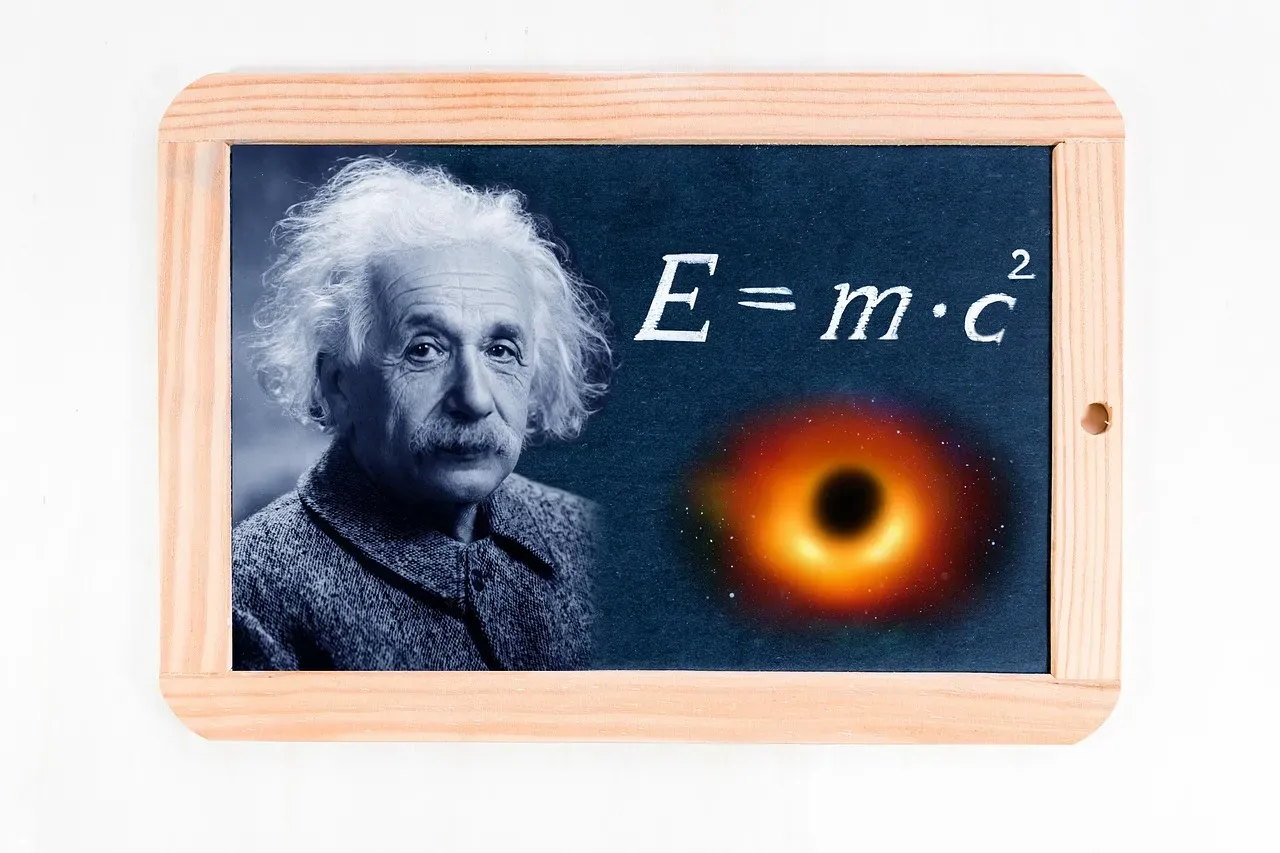
The cosmological constant, usually denoted by the Greek capital letter lambda, is a coefficient that Albert Einstein initially added to his field equations of general relativity. He later removed it, though much later it was revived to express the energy density of space, or vacuum energy, that arises in quantum mechanics. It is closely associated with the concept of dark energy. Einstein introduced the constant in 1917 to counterbalance the effect of gravity and achieve a static universe.
When Hubble confirmed that the universe was actually expanding, Einstein removed the constant, reportedly calling it “my biggest blunder.” But when it was later discovered that the universe’s expansion was actually accelerating, some scientists suggested that there might actually be a non-zero value to the previously-discredited cosmological constant. What Einstein threw away as a mistake turned out to be one of the most important concepts in modern cosmology. You genuinely cannot make that kind of thing up.
Is Dark Energy Actually Changing Over Time?
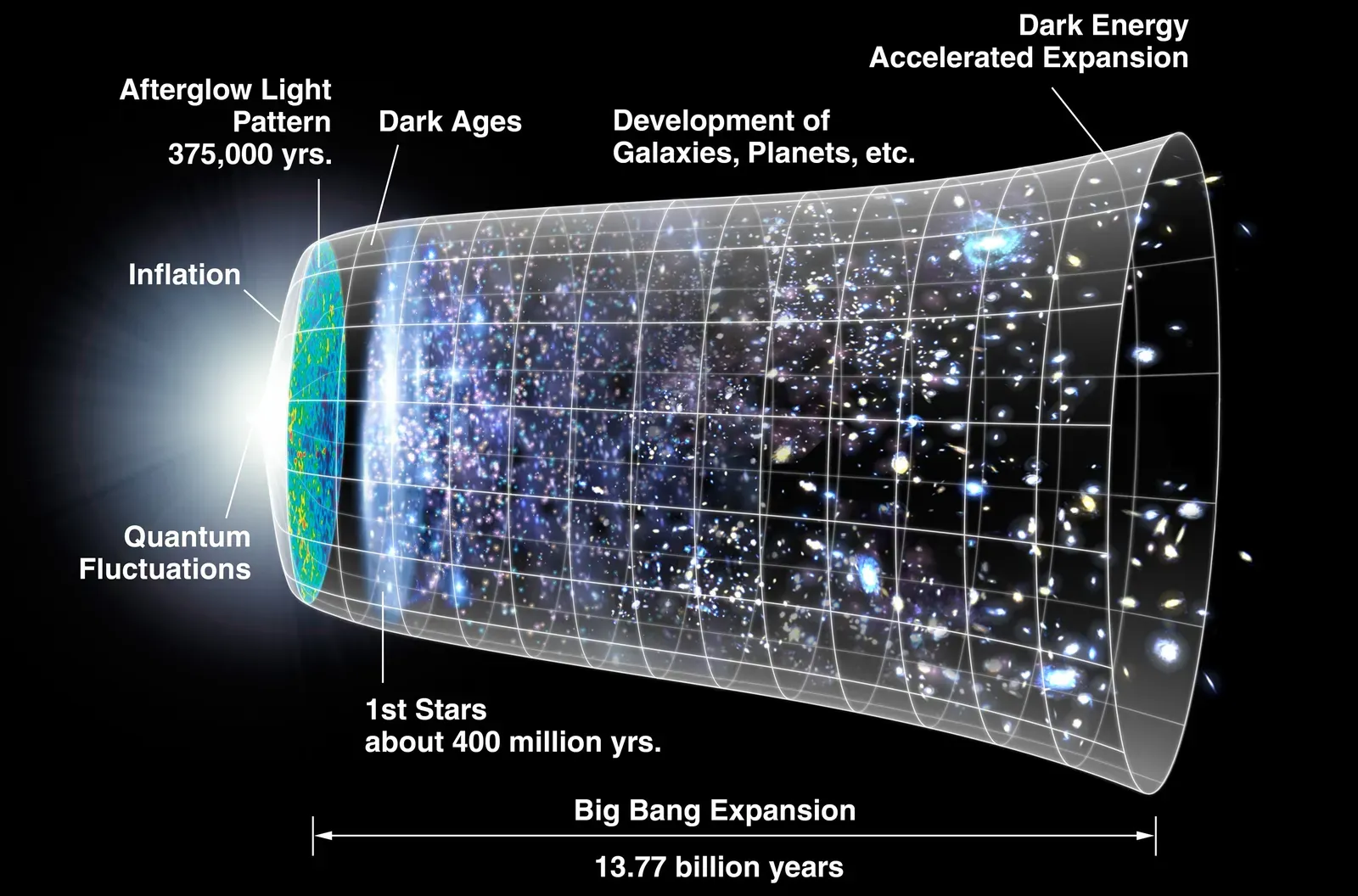
This is where things get really fascinating. For decades, scientists assumed dark energy was stable and constant, like background wallpaper in the universe that never changes. Recent data is seriously challenging that assumption. In March 2025, the Dark Energy Spectroscopic Instrument (DESI) collaboration announced that evidence for evolving dark energy had been discovered in analysis combining DESI data on baryon acoustic oscillations with the CMB, weak lensing, and supernovae datasets. Results suggest that the density of dark energy is slowly decreasing with time.
Dark energy, the mysterious force accelerating the expansion of the universe, may not have always provided a steady push as cosmologists have assumed for decades. Instead, the latest data from the powerful Dark Energy Spectroscopic Instrument adds more evidence that the universe’s expansion accelerated faster in the past than it is doing now. If confirmed with future data, this would be nothing short of revolutionary. It would mean the universe is not just expanding, but evolving in ways our current models cannot yet fully explain.
Detecting the Undetectable: The Search for Dark Matter Particles
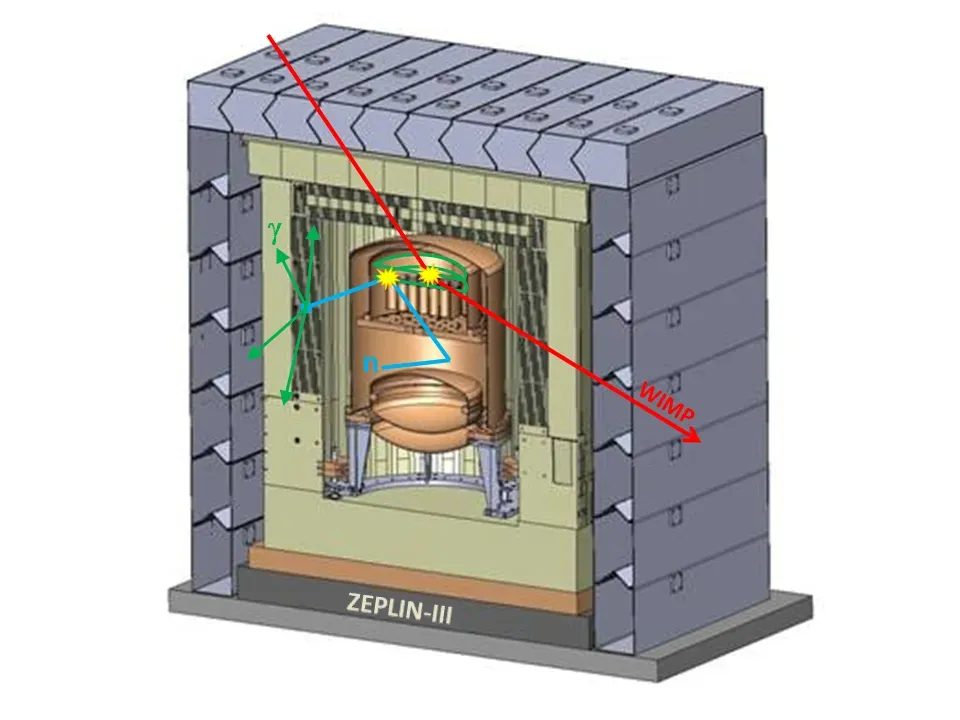
There are three main avenues of research to detect dark matter: attempts to make dark matter in accelerators, indirect detection of dark matter annihilation, and direct detection of dark matter in terrestrial labs. Each approach is like using a different instrument to hear the same silent song. None has definitively succeeded yet, but collectively they are closing in.
Scientists are developing detectors so sensitive they can spot particle interactions that might occur once in years or even decades. These experiments aim to uncover what shapes galaxies and fuels cosmic expansion. One of the leading particle candidates remains the Weakly Interacting Massive Particle, or WIMP. Perhaps the most likely candidate is the Weakly Interacting Massive Particle, though axions and more exotic candidates also exist. It’s hard to say for sure which, if any, of these candidates will ultimately be confirmed. The parameter space, as physicists love to say, is enormous.
Conclusion: Standing on the Edge of a Cosmic Revolution
We are living in genuinely extraordinary times for cosmology. In just the past year alone, the James Webb Space Telescope produced the most detailed dark matter maps in history, DESI dropped hints that dark energy may be evolving, and researchers from Shanghai to Bremen proposed bold new frameworks to explain what we are seeing. The pieces of the puzzle are multiplying rapidly, even if the full picture remains stubbornly out of reach.
Let’s be real – we are only just beginning to understand the nature of roughly ninety-five percent of everything that exists. That is both humbling and thrilling in equal measure. Once we know what constitutes the majority of the matter in the universe, we will be able to more deeply understand its origins. Only then will we be able to comprehend our own. The cosmos is not waiting for us to catch up. It keeps expanding, evolving, and hiding its deepest secrets in plain sight.
What fascinates you more – the invisible glue holding galaxies together, or the mysterious force slowly tearing the universe apart? The answer might tell you something about how you see the cosmos itself. Tell us in the comments – we would genuinely love to know.