
If you’ve ever stared at the night sky and felt that dizzy mix of wonder and confusion, you’re already halfway to quantum physics. Quantum theory is basically the universe’s confession that underneath all the familiar stuff – rocks, trees, phones, people – reality is far stranger and more fluid than our everyday senses can handle. It doesn’t just tweak our old ideas; it shatters them, sweeps up the pieces, and rebuilds the rules from scratch.
What’s wild is that this isn’t some abstract, ivory-tower curiosity. Quantum physics quietly runs the modern world: your smartphone, GPS, lasers at the grocery store checkout, medical scanners, even the chips in your laptop all depend on effects that flat-out do not exist in normal, everyday physics. Once you see how deeply it’s wired into everything, you can’t unsee it – and the universe starts to feel less like a static machine and more like a restless, shimmering story in progress.
The Shocking Quantum Rulebook Beneath Everyday Reality
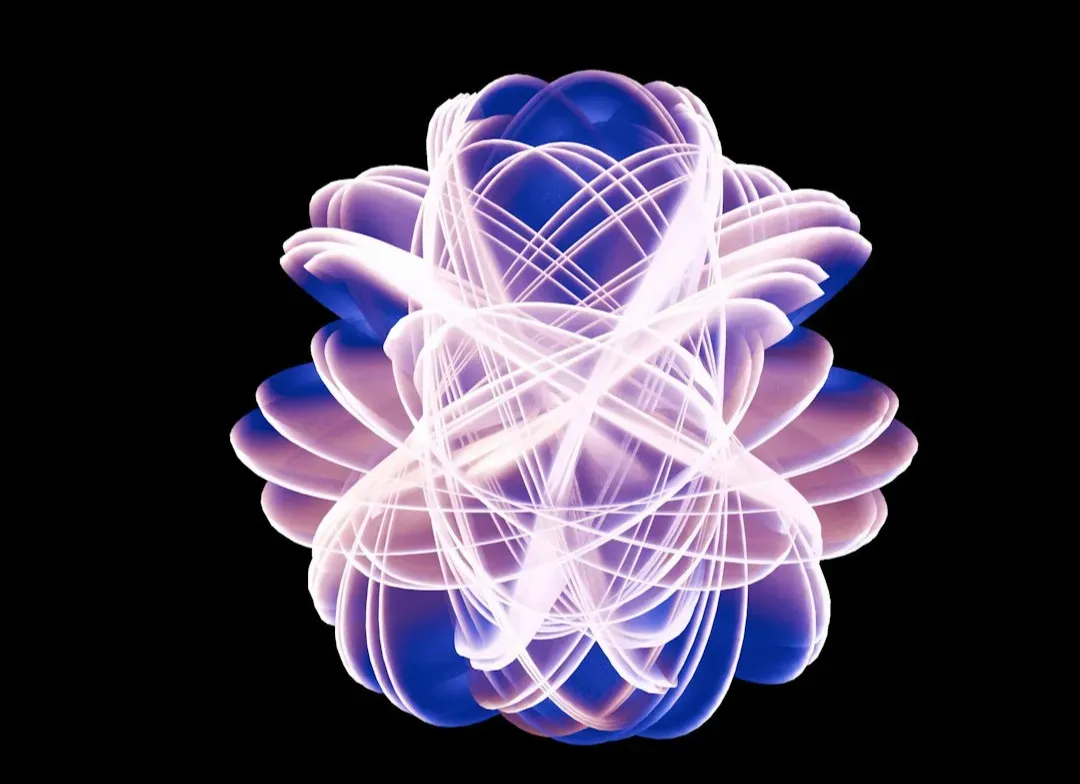
Here’s the first punch in the gut: the solid world you trust is mostly empty space, held together by invisible quantum forces. Atoms aren’t tiny billiard balls; they’re fuzzy clouds where particles exist more like possibilities than fixed objects, described by mathematical waves that tell us where they’re likely to show up. When you press your hand against a table, what stops you isn’t matter slamming into matter – it’s quantum electrical forces between electrons refusing to occupy the same states.
On our human scale, everything seems predictable: apples fall, cars drive, clocks tick. But shrink down to the level of electrons and photons, and the universe becomes a kind of cosmic casino where outcomes are governed by probabilities, not certainties. Quantum physics doesn’t say, “This will happen”; it says, “This is how likely it is to happen.” It’s like the universe runs on weather forecasts instead of rigid schedules – and yet, when billions of tiny probabilistic events add up, we get the stable, familiar world we live in.
Wave–Particle Duality: When Light Refuses to Pick a Side
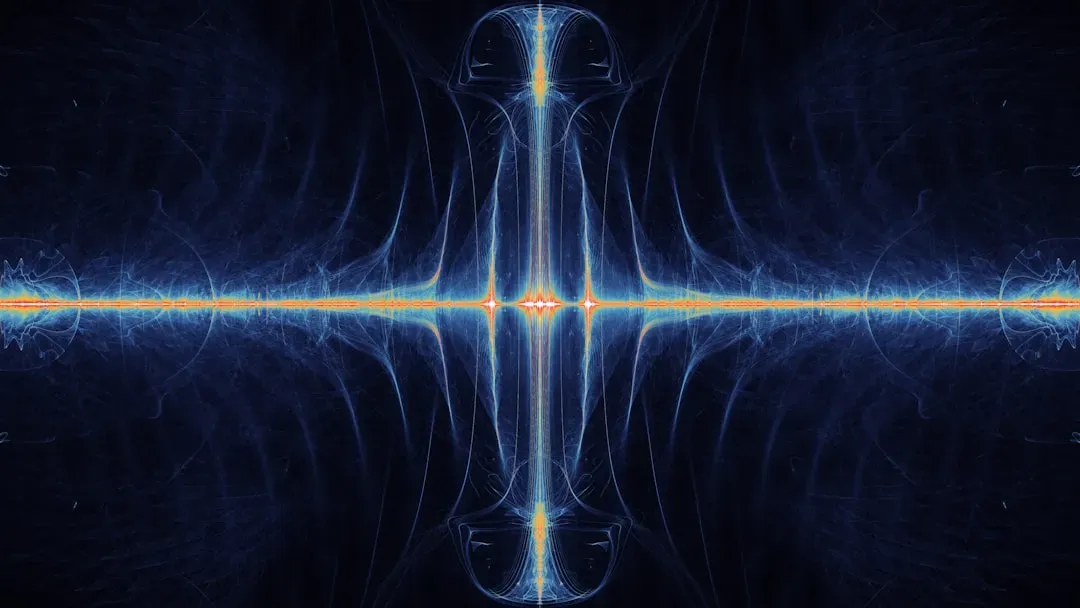
If you’ve ever felt torn between two choices, you’ve got something in common with light. In quantum physics, light and matter behave as both particles and waves, depending on how we look at them. In the famous double-slit experiment, when light passes through two tiny openings, it creates an interference pattern like waves on water – unless we watch closely which slit it goes through, in which case it behaves like individual particles. The setup doesn’t change much, but the outcome does, and that’s deeply unsettling.
This wave–particle duality isn’t just about light; electrons, atoms, and even larger molecules show wave-like behavior under the right conditions. An electron can spread out as a wave across space, then suddenly appear in a specific place when measured, like a ripple that snaps into a single droplet. It’s as if the universe keeps its options open until the last moment, then “chooses” an outcome when something interacts with it. That blurry in-between state is not just philosophical fluff – it’s what makes technologies like electron microscopes and semiconductor devices possible.
Quantum Entanglement: Spooky Links Across the Cosmos
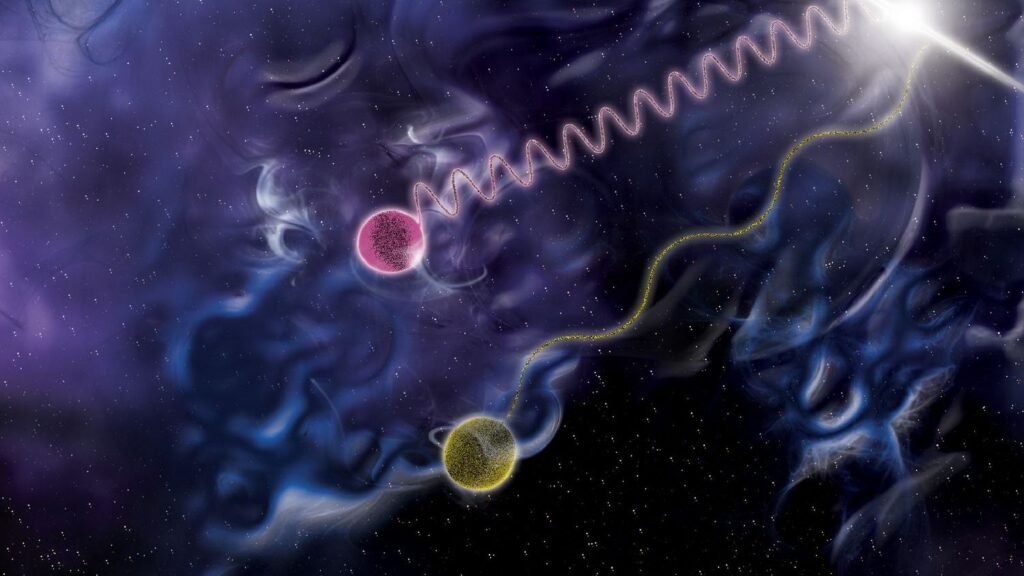
Entanglement is where quantum physics stops being just weird and starts feeling almost supernatural. When two particles become entangled, their properties link so tightly that measuring one instantly tells you something about the other, no matter how far apart they are. You can separate them by a room, a continent, or even light-years, and the correlation still shows up. That’s why some people half-jokingly describe entanglement as the universe’s built-in secret messaging system, even though it doesn’t allow faster-than-light communication.
What really bothers people is what this says about reality itself. It suggests that the universe isn’t made up of isolated pieces but of deeply connected relationships, like a web where tugging one strand subtly shifts the whole structure. In the last decades, experiments have repeatedly confirmed entanglement’s predictions, closing loophole after loophole. This isn’t science fiction; it’s now being engineered into quantum communication networks and encryption systems that could, in principle, be secure against any eavesdropper that plays by the laws of physics.
Quantum Fields: The Invisible Fabric of Everything

Behind the talk of particles and waves sits an even deeper idea: quantum fields. Modern physics treats every type of particle as a ripple in an underlying field that fills all of space. Electrons are excitations in the electron field, photons are ripples in the electromagnetic field, and so on. Instead of imagining tiny marbles flying around, think of the universe as an endless ocean where different kinds of waves show up as the particles we observe.
This field picture explains why particles can pop in and out of existence, interact, merge, and decay according to precise rules. Even what we call “empty” space isn’t truly empty; it seethes with quantum fluctuations, boiling with momentary particle–antiparticle pairs that appear and disappear too quickly to see directly. These restless fields help explain subtle effects like the forces between atoms and tiny shifts in energy levels that have been measured with incredible accuracy. The more scientists probe, the more it looks like the fields themselves are the real players, and particles are just their temporary patterns.
From Atoms to Electronics: How Quantum Theory Powers Our Tech
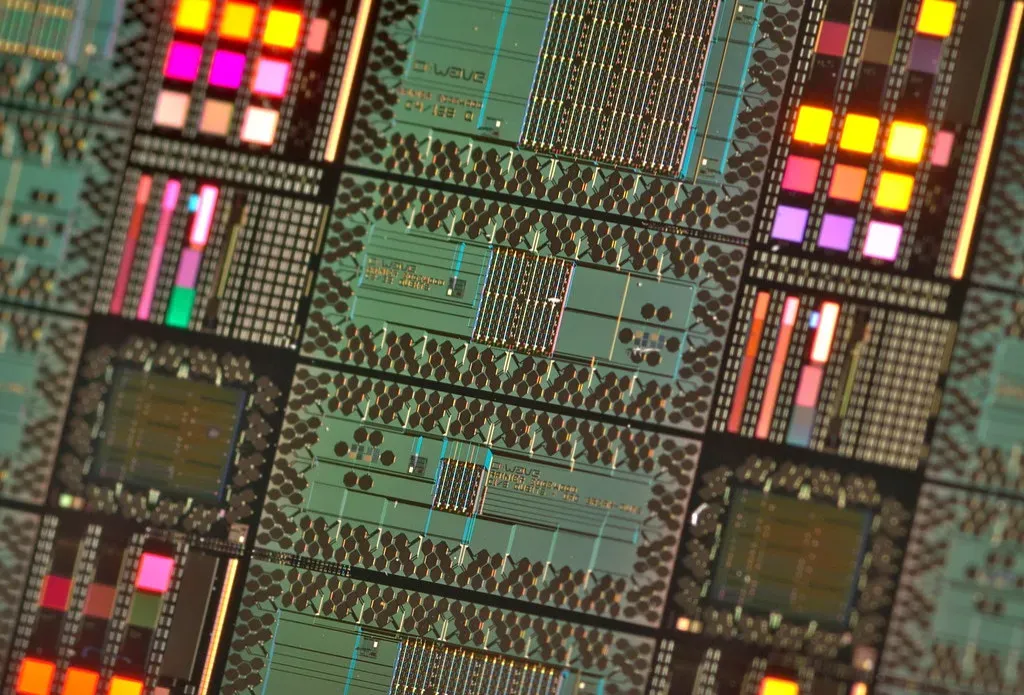
Quantum theory isn’t just a theory about the universe; it’s a toolkit we use every day, usually without noticing. The reason atoms don’t collapse, why chemical bonds have specific shapes, and why materials conduct or block electricity – all of that is quantum. Once scientists understood how electrons occupy discrete energy levels and move through solids, it became possible to design transistors, lasers, LEDs, and the entire electronics industry grew out of those insights. The device you’re using to read this is basically a monument to quantum mechanics.
Take semiconductors as an example. Their behavior depends on quantum rules about how electrons can occupy allowed bands of energy and how they jump between them when given just the right push. This delicate tuning lets engineers build logic gates, memory, and communication hardware that underpins the internet and digital life. Medical technologies, like MRI scanners, rely on quantum properties of atomic nuclei responding to magnetic fields. Whether we like the strangeness or not, we’re already living inside a quantum civilization.
Quantum Physics and the Mystery of Consciousness
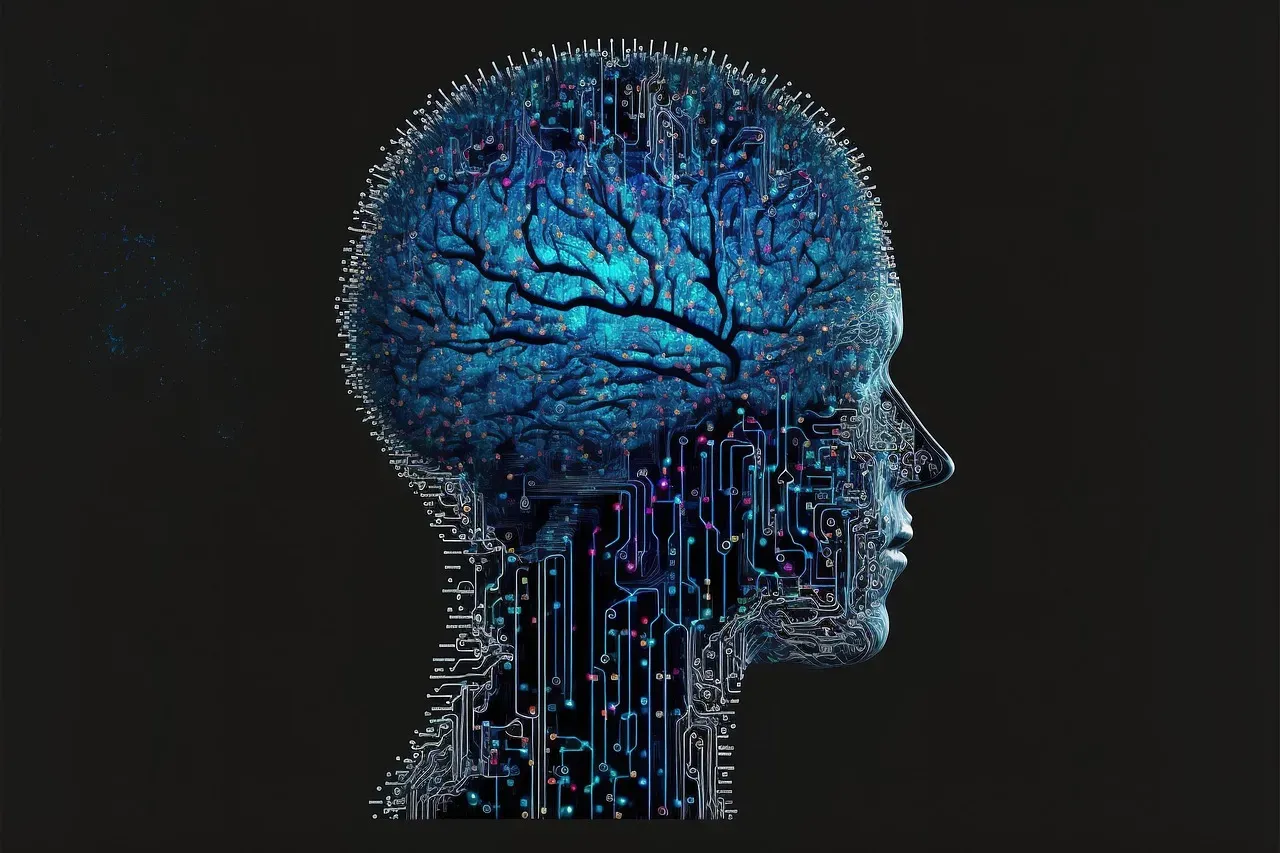
The question of whether quantum physics explains the mind is where things get controversial fast. Some people look at quantum unpredictability and entanglement and feel tempted to link them to free will, thoughts, or even mystical ideas about consciousness shaping reality. Certain theories suggest that quantum effects in the brain might play a role in how we experience awareness, but the evidence for that is still heavily debated and far from settled. The brain is an incredibly complex, warm, wet system, where maintaining delicate quantum states is extremely difficult.
What is true, though, is that quantum physics forces us to rethink what we mean by observation, measurement, and reality. At the smallest scales, the line between “observer” and “observed” becomes blurry, and that naturally spills over into philosophical questions about how we fit into the universe. Personally, I don’t think quantum theory magically solves consciousness, but it does expose how limited our everyday intuitions are. It’s a reminder that the categories we use – mind versus matter, subject versus object – might be more flexible and intertwined than we’d like to admit.
Quantum Gravity and the Edges of the Universe
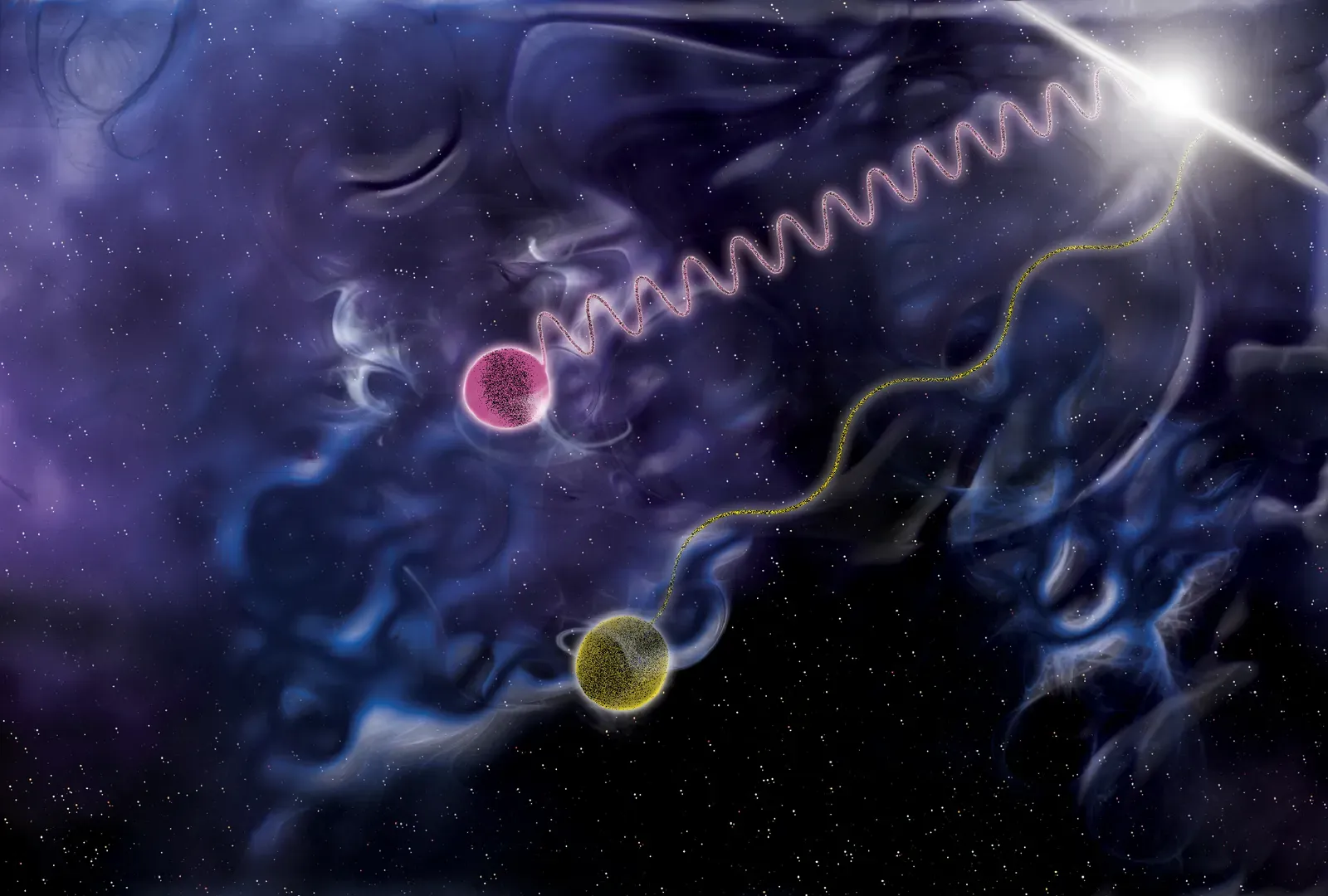
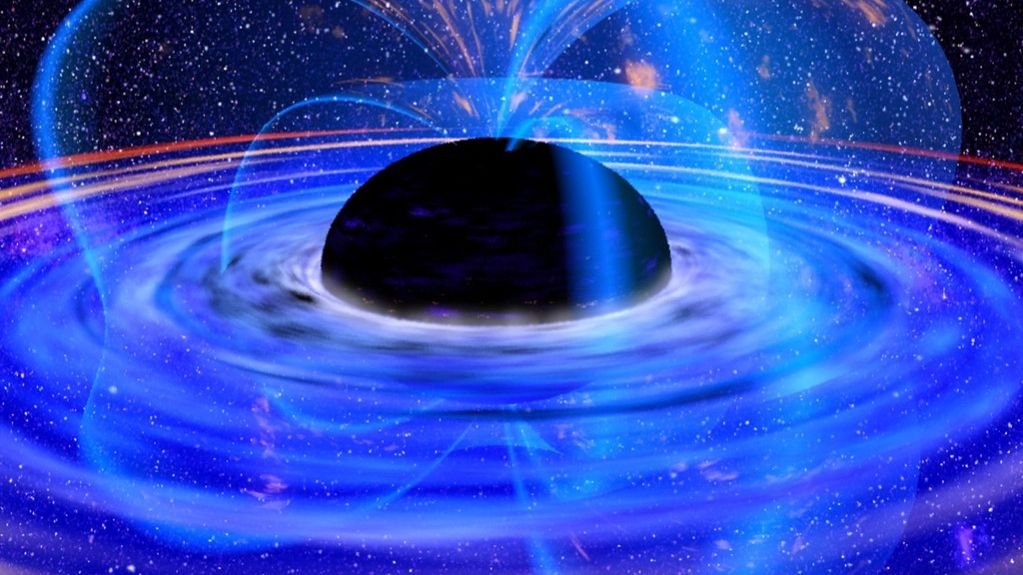
For all its success, quantum physics still clashes with another giant of modern science: general relativity, our theory of gravity and spacetime. Quantum mechanics rules the very small, while relativity rules the very large, and they do not yet mesh neatly into a single framework. At places where both extremes collide – like the centers of black holes or the first moments after the Big Bang – our current equations break down. This is where the search for quantum gravity comes in, an attempt to describe spacetime itself as a quantum object.
Candidates like string theory or loop quantum gravity try to build such a description, imagining tiny vibrating strings or discrete chunks of space and time, but so far we lack definitive experimental proof. Still, clues keep emerging from astrophysics, black hole thermodynamics, and subtle patterns in the cosmic microwave background. If a full quantum theory of gravity is found, it could explain why the universe began the way it did, what really happens at the edge of a black hole, and whether space and time are ultimately emergent, like waves on a deeper ocean of reality.
Does Quantum Physics Really Explain “Everything”?
It’s tempting to say , and in a sense, it does describe the basic rules that all matter and energy obey. The Standard Model of particle physics, built on quantum principles, has passed test after test with impressive precision. From the behavior of atoms to the fusion reactions in stars, the quantum framework underlies almost every physical phenomenon we’ve been able to measure. On that level, it’s the closest thing we have to a universal rulebook.
But “explaining everything” is trickier than just nailing the microscopic rules. Quantum physics doesn’t tell you how a particular person will fall in love, how an ecosystem will evolve, or what a piece of music will mean to someone hearing it for the first time. Higher-level patterns – life, mind, society, culture – emerge from layers of complexity built on quantum foundations, but they need their own concepts and explanations. So yes, quantum theory anchors reality at the deepest physical level we know, but the human story still needs chemistry, biology, psychology, and more to be fully told. Maybe the real power of quantum physics isn’t that it answers every question, but that it shows us how astonishingly rich the universe can be when simple rules ripple upward into something as strange and beautiful as us.