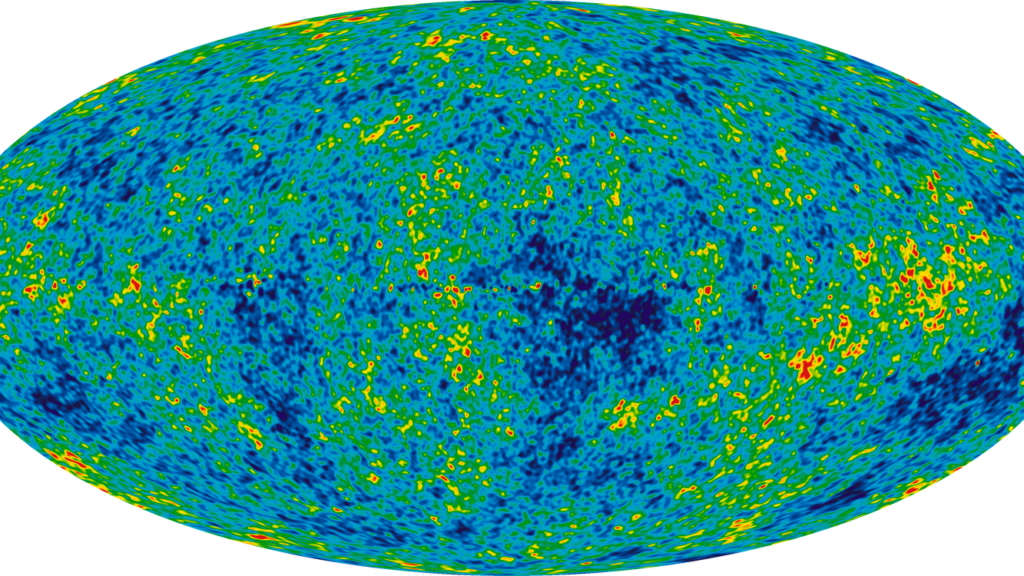

If you’ve ever looked up at the night sky and quietly wondered what’s really going on behind the scenes, quantum physics is the rabbit hole you’ve been peeking into without realizing it. This strange, stubborn branch of science keeps telling us that the world beneath our everyday experience doesn’t just bend our intuitions – it shatters them and then calmly asks us to live with the pieces.
What makes it even more gripping is this: quantum physics isn’t just some distant, abstract theory that only matters in giant laboratories. It sits inside your phone, your computer, your GPS, and increasingly, the technologies governments and companies are betting huge money on – like quantum computers and quantum sensors. The deeper we dig into the quantum world, the more it forces us to rethink what we mean by “real,” “cause,” and even “information” itself.
The Quantum Revolution: Why the Tiny World Changes Everything
Here’s the first shocking twist: the rules that govern the tiny particles inside atoms don’t match the rules that describe falling apples, orbiting planets, or moving cars. In the quantum world, particles can behave like waves, exist in blurry “maybes,” and only take on definite properties when we measure them. It’s as if nature keeps its cards hidden until we look, and only then chooses a hand.
Quantum physics emerged in the early twentieth century because classical physics simply could not explain experimental results about light, atoms, and energy. Instead of patching old ideas, scientists had to invent a completely new framework, one where certainty was replaced by probabilities and where energy came in tiny chunks called quanta. Much of modern technology, from lasers to MRI machines, quietly runs on this strange logic, even though it clashes with common sense at nearly every turn.
Particles in Many Places at Once: The Mystery of Superposition
Superposition is one of those ideas that sounds like science fiction until you realize it’s been repeatedly confirmed. In quantum mechanics, a particle like an electron doesn’t have to be in one specific place or state; it can exist in a combination of possibilities at the same time. Only when we perform a measurement does it “collapse” into a definite outcome we can record.
The classic analogy is a coin that isn’t just heads or tails, but genuinely both at once until you look. In the famous double-slit experiment, particles fired at a barrier with two openings create an interference pattern like waves – unless you measure which slit they pass through, in which case they behave like particles. This isn’t just a parlor trick; it’s the core principle behind quantum computers, which use superposition to explore many computational paths in parallel and potentially solve some problems far faster than classical machines.
Spooky Connections: Entanglement and Nonlocality
If superposition feels weird, entanglement turns the dial to maximum. When two particles become entangled, their properties are linked in such a way that measuring one instantly affects the description of the other, even if they’re far apart. It’s as if you separated a pair of perfectly matched dice by thousands of kilometers and yet their rolls always lined up in just the right way.
This phenomenon bothered some of the most famous physicists so deeply that they suspected the theory had to be incomplete. Decades of painstaking experiments, however, have shown that entanglement is real and that no hidden, classical explanation can fully account for it. Instead, the universe seems to allow correlations that go beyond what any local, common-sense picture would permit, forcing us to rethink distance, separateness, and what it means for something to “influence” something else.
When Observation Changes Reality: The Measurement Problem
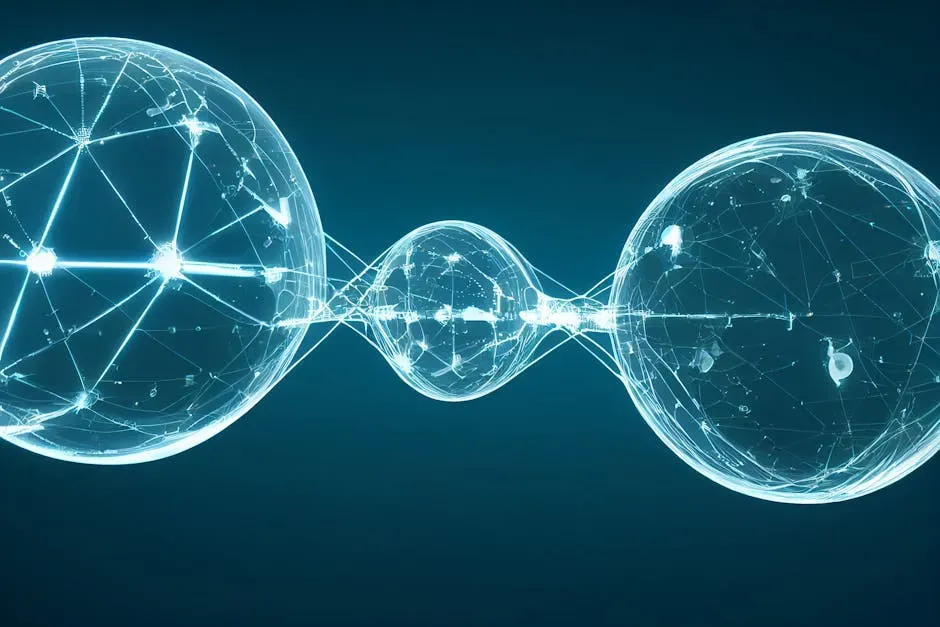
One of the deepest puzzles in quantum physics is the role of measurement itself. Before measurement, quantum systems are described by wave functions that encode all possible outcomes with different probabilities. After measurement, we only ever see one result, as if the wave of possibilities suddenly shrunk into a single dot. How and why that collapse happens is still an open question.
This is known as the measurement problem, and it sits at the heart of many debates about quantum reality. Does the universe “choose” an outcome when a conscious observer looks, or is any interaction with the environment enough? Are there many branching worlds where every possibility plays out, with us only experiencing one branch? Different interpretations give different answers, and while they usually agree on experimental predictions, they don’t agree on what is truly real. That gap between prediction and understanding is where philosophy and physics collide head‑on.
Reality as Probability: Letting Go of Certainty
Classical physics gave us a comforting picture: if you knew all the initial conditions perfectly, you could predict the future exactly. Quantum mechanics ripped that comfort away. At the most fundamental level, it tells us that the best we can do is assign probabilities to different outcomes, no matter how precise our instruments become. The randomness isn’t just about ignorance; it appears built into nature itself.
This probabilistic view of reality is more than a mathematical trick. It suggests that the world isn’t a rigid clockwork, but a kind of cosmic casino with strict rules about the odds. For some people, that feels unsettling, as if the rug has been pulled out from under the idea of a fully determined universe. For others, it’s liberating, because it opens space for novelty and genuine unpredictability, from the decay of atoms to the behavior of complex systems like weather – and possibly even aspects of life and cognition.
Quantum Fields, Not Tiny Billiard Balls
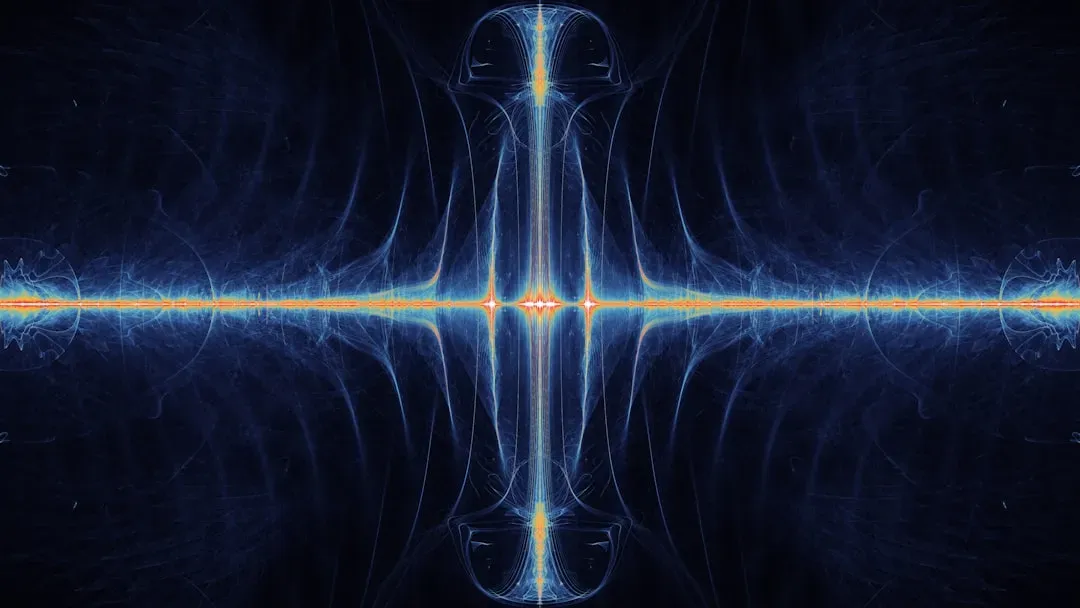
Another quiet revolution in our understanding is the idea that particles are not the ultimate building blocks of reality. In modern physics, the world is described in terms of quantum fields that fill space, and what we call “particles” are excitations – little ripples or bundles of energy – in those fields. Instead of thinking of the universe as made of tiny marbles, it’s more accurate to picture a restless ocean with waves popping up, interacting, and fading away.
This field perspective helps explain phenomena like particle creation and annihilation, where particles and antiparticles appear and disappear in ways that would be impossible in a purely classical picture. It also ties together electricity, magnetism, and other forces into a unified framework that has passed some of the most precise tests in the history of science. The cost is that our intuition about solid objects and simple causes has to be updated to something subtler and more abstract, where what’s “real” is a dynamic, underlying field rather than a collection of permanent, isolated things.
Quantum Technologies: From Weird Theory to Everyday Tools
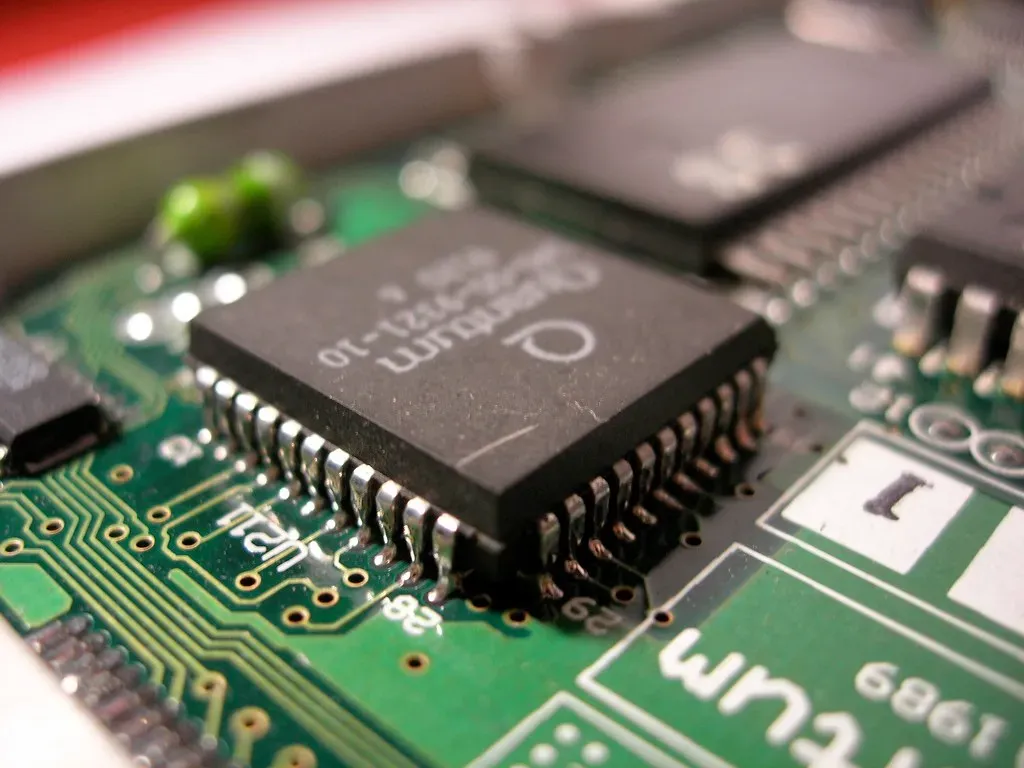
For all its philosophical strangeness, quantum physics is intensely practical. The basic principles of quantum mechanics underpin semiconductor physics, which in turn made transistors, microchips, and modern electronics possible. Without quantum theory, there would be no lasers for eye surgery and barcode scanners, no LED lights, and no medical imaging techniques such as certain types of MRI that rely on nuclear spin behavior.
We’re now entering what many call a second quantum revolution, where engineers and scientists are trying to control individual quantum systems with incredible precision. Quantum computers aim to exploit superposition and entanglement to tackle specific problems in cryptography, materials science, and optimization. Quantum communication and sensing promise more secure information transfer and extremely sensitive detectors, potentially transforming fields from navigation to medical diagnostics. The same logic that once seemed purely philosophical is slowly turning into hardware – and that, in turn, pushes these mind-bending ideas closer to everyday life.
Does Quantum Physics Challenge Free Will and Determinism?
Once you accept that quantum events are fundamentally probabilistic, it’s natural to wonder what that means for free will and determinism. If the universe is not fully determined, does that open the door for free choice, or does it simply replace rigid predictability with blind randomness? Neither answer is entirely satisfying, and there’s no consensus, but the question refuses to go away.
Some thinkers argue that quantum indeterminacy breaks the strict chain of cause and effect that classical physics seemed to imply, leaving room for new kinds of explanations at higher levels of organization, like brains and societies. Others caution against jumping too quickly from subatomic events to human decisions, pointing out that most macroscopic processes average out quantum noise. Personally, I find it humbling: the more we learn about the deep structure of reality, the less it feels like a simple story about gears grinding toward a single inevitable future.
Do We Live in Many Worlds? Competing Views of Quantum Reality
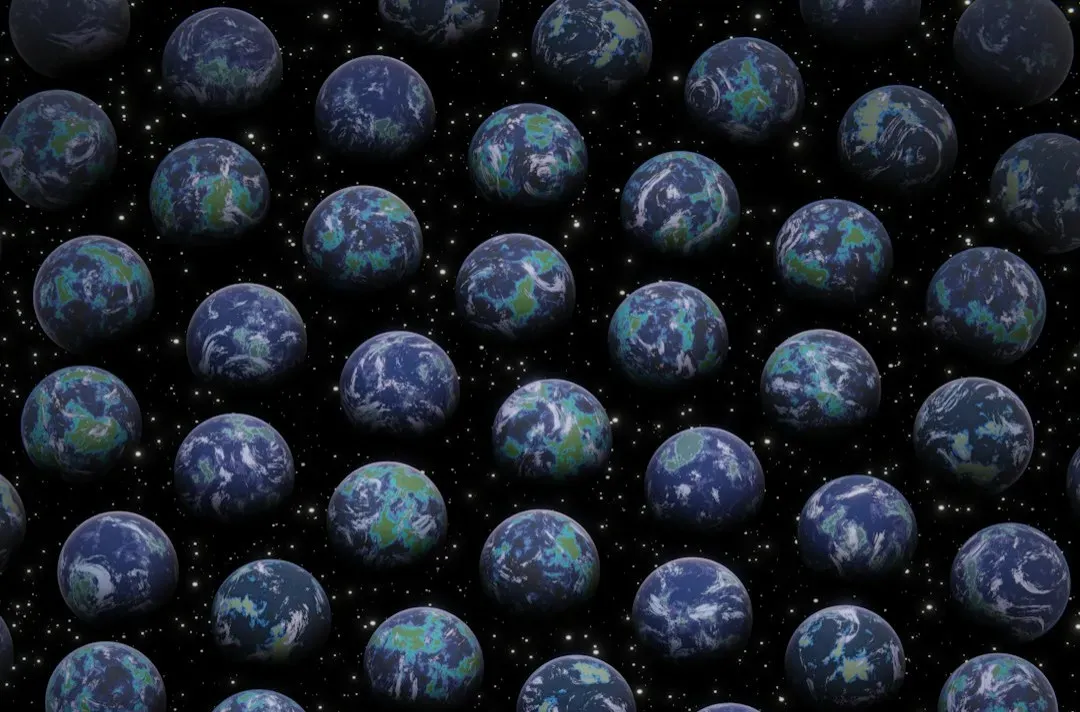
Because quantum theory works so well mathematically but feels so strange, scientists and philosophers have proposed multiple interpretations to make sense of it. One camp treats the wave function as a real physical object that evolves smoothly until measurement, while others see it as just a tool for organizing our knowledge. Some approaches try to add extra variables to restore determinism, while others accept randomness as fundamental.
Among the most striking ideas is the many‑worlds view, which suggests that every quantum event branches the universe into different outcomes, all equally real, with us experiencing only one branch. On the other side, there are interpretations that emphasize the role of information and observation rather than multiple universes. What’s remarkable is that, so far, these different stories usually make the same experimental predictions, which means the deeper question – what is actually happening – is still open. In a way, our picture of reality is being reshaped not just by new data, but by the realization that multiple, radically different narratives can fit the same facts.
Quantum Physics and Consciousness: Tempting but Tricky

Few ideas attract more speculation than the link between quantum mechanics and consciousness. Because quantum theory places such emphasis on observation and measurement, some people wonder whether the mind plays a special role in collapsing wave functions or shaping reality. This has inspired countless books, spiritual claims, and bold theories trying to connect brain activity with quantum processes.
Right now, though, the hard evidence for a direct, necessary link is thin. The brain is warm, wet, and noisy, which usually makes maintaining delicate quantum states extremely difficult, although a few serious researchers are exploring whether some biological systems might exploit quantum effects. It’s tempting to invoke quantum physics to explain the mysteries of consciousness, but doing so without solid data risks turning a rigorous theory into a vague metaphor. That said, the mere fact that our best physical theory raises questions about observation, information, and reality keeps the door open for deeper connections we may not yet fully understand.
Conclusion: Living with a Stranger, Truer Reality
The more we learn about the quantum world, the more it pushes us out of our comfort zone and into a reality that doesn’t care about our intuitions. Particles in many places at once, eerie entanglement across vast distances, probabilities instead of certainties – all of this paints a universe that is richer, stranger, and more flexible than the tidy mechanical picture many of us grew up with. At the same time, these ideas sit at the core of technologies that quietly power our daily lives, proving that even the weirdest theories can be deeply practical.
In the end, quantum physics isn’t just reshaping our understanding of reality; it’s reshaping our understanding of what it means to understand anything at all. It asks us to live with ambiguity, to accept that there may be multiple valid ways of describing the same underlying world, and to stay curious even when answers feel slippery. Maybe the real secret it unlocks is that reality is not a fixed story but an ongoing discovery, one experiment at a time. When you look around now – at your phone, the night sky, your own thoughts – does it feel just a little more mysterious than before?