
In the depths of our oceans, where sunlight fades and mystery thrives, lives one of nature’s most extraordinary architects. While humans marvel at their engineering feats, a small pufferfish has been quietly creating masterpieces that would make any artist jealous. These aren’t just random marks in the sand – they’re intricate, mathematically precise circles that serve a purpose so romantic and complex that scientists spent decades trying to understand them.
The Discovery That Changed Marine Biology Forever

Picture this: you’re diving in the clear waters off Japan’s coast when suddenly, you spot something that shouldn’t exist. Perfect geometric patterns stretch across the ocean floor, each one more intricate than the last. These weren’t ancient ruins or human-made structures – they were fresh creations, appearing overnight like crop circles of the sea.
For years, these mysterious formations puzzled marine biologists. The patterns were too perfect, too deliberate to be natural formations. Some scientists even wondered if they were looking at evidence of unknown deep-sea creatures or geological phenomena.
It wasn’t until 2011 that photographer Yoji Ookata captured the architect in action. What he filmed would revolutionize our understanding of fish intelligence and behavior.
Meet the Master Builder: The White-Spotted Pufferfish

The artist behind these underwater masterpieces is Torquigener albomaculosus, a species of pufferfish barely five inches long. Don’t let its small size fool you – this little fish possesses an architectural genius that rivals any human engineer.
These pufferfish are found primarily in the waters around Japan, where they’ve been perfecting their craft for millennia. Unlike their more famous cousins who inflate when threatened, these particular pufferfish have channeled their energy into something far more sophisticated.
What makes them even more remarkable is their dedication. A single male can spend over a week creating his masterpiece, working tirelessly day and night.
The Sacred Geometry of Love

Each circle these pufferfish create measures approximately six feet in diameter – that’s 12 times the length of the fish itself. Imagine if you had to create a perfect circle that was 72 feet across using only your bare hands and unlimited determination.
The patterns aren’t random either. Each circle contains precise ridges and valleys, with the outer edge featuring delicate scalloped patterns that look like they were carved by a master craftsman. The mathematical precision is mind-boggling.
At the center of each circle lies a raised platform, perfectly smooth and slightly elevated. This isn’t just artistic flair – it serves a crucial biological purpose that we’ll explore later.
Construction Techniques That Defy Belief

Watching a pufferfish build is like observing a one-man construction crew in action. Using only its fins and mouth, the fish pushes, pulls, and sculpts sand with surgical precision. It’s a process that requires both physical strength and incredible spatial awareness.
The fish starts from the center and works outward, creating the raised platform first. Then, using swimming motions that generate water currents, it begins carving the intricate ridges that will form the circle’s distinctive pattern.
Perhaps most impressively, the pufferfish maintains perfect symmetry throughout the entire process. There’s no blueprint, no measuring tools – just an innate understanding of geometry that would make Pythagoras weep with joy.
The Science Behind the Symmetry

How does a fish brain, roughly the size of a pea, calculate such perfect geometry? Scientists believe it’s a combination of instinct, spatial memory, and constant sensory feedback. The fish can somehow sense when something is off-balance and adjust accordingly.
Research has shown that the pufferfish uses lateral line sensors – specialized organs that detect water movement and pressure changes. These sensors act like a biological compass, helping the fish maintain consistent distances and angles.
The mathematical precision extends beyond just the circle’s shape. The ridges follow specific patterns that optimize water flow, creating the ideal environment for the circle’s ultimate purpose.
A Labor of Love: The Romantic Purpose

Here’s where the story gets truly heartwarming. These elaborate circles aren’t art for art’s sake – they’re the most sophisticated courting displays in the animal kingdom. Each circle is essentially a bachelor pad designed to attract a mate.
The male pufferfish spends days perfecting his creation, knowing that female pufferfish are incredibly discerning. A sloppy circle means no girlfriend, while a perfect one might just win her heart.
The raised platform in the center serves as a spawning ground where, if all goes well, the female will lay her eggs. The entire structure is designed to protect these precious eggs from ocean currents and predators.
Quality Control: How Females Judge the Competition

Female pufferfish are the ultimate critics. They don’t just glance at a circle and make a decision – they conduct thorough inspections that would make a home inspector proud. They examine the symmetry, check the ridge patterns, and test the structural integrity.
Studies have shown that females spend significantly more time in circles with finer, more numerous ridges. The quality of construction directly correlates with mating success, creating intense evolutionary pressure for males to become better architects.
It’s a harsh reality: in the pufferfish world, your construction skills determine your romantic prospects. No pressure, right?
The Engineering Marvel of Water Flow

The circles aren’t just beautiful – they’re functional engineering marvels. The intricate ridge patterns create specific water flow dynamics that serve multiple purposes. The design channels nutrients toward the center while creating calm zones that protect developing eggs.
Ocean currents that might otherwise sweep away eggs are redirected around the circle’s perimeter. Meanwhile, the ridges create micro-environments with different flow rates, ensuring optimal conditions for embryo development.
It’s like the fish has designed an underwater nursery with built-in climate control. The sophistication rivals human-engineered systems, yet it’s created entirely by instinct and fin power.
Tool Use and Problem-Solving Abilities

While pufferfish don’t use traditional tools, they’ve mastered the art of environmental manipulation. They use shells, coral fragments, and other debris as decorative elements, carefully placing them to enhance their circles’ appeal.
When faced with obstacles like rocks or coral, the fish adapt their designs rather than abandoning them. They incorporate these elements into their patterns, showing remarkable problem-solving abilities.
Some researchers have observed pufferfish moving objects many times their own weight, using leverage and water pressure to achieve what should be physically impossible for such small creatures.
Seasonal Patterns and Timing

The construction of these circles follows strict seasonal patterns tied to reproductive cycles. Males begin building during specific months when conditions are optimal for egg development and food availability is high.
Temperature and moon phases also influence construction timing. The fish seem to instinctively know when conditions will be perfect for mating and egg survival, timing their architectural projects accordingly.
This seasonal synchronization ensures that multiple males in the same area are all competing simultaneously, creating underwater neighborhoods of artistic competition.
The Maintenance Challenge

Creating the circle is only half the battle. Ocean currents, storms, and curious sea creatures constantly threaten these delicate structures. The male pufferfish must constantly maintain and repair his creation, like a homeowner dealing with never-ending maintenance issues.
Some males have been observed working on the same circle for weeks, continuously fine-tuning and reinforcing their masterpiece. It’s a full-time job that requires unwavering dedication.
The most successful males are those who can balance construction time with maintenance duties, ensuring their circles remain pristine when females come calling.
Communication Through Architecture

These circles serve as a form of communication that transcends species barriers. The patterns convey information about the male’s fitness, genetic quality, and ability to provide for offspring.
Different ridge patterns and circle sizes may communicate different messages. Scientists are still decoding this architectural language, but it’s clear that these structures contain far more information than meets the eye.
It’s like each circle is a resume written in sand, showcasing the male’s qualifications as a potential mate through pure craftsmanship.
Competition and Territorial Behavior

The construction sites become battlegrounds where males compete not just through building skills but also through direct confrontation. Territory disputes are common, with males fiercely defending their construction areas.
Some males resort to sabotage, deliberately damaging competitors’ circles under cover of darkness. It’s underwater warfare conducted through architectural vandalism.
The most dominant males secure the best territories – areas with optimal sand quality, current patterns, and visibility to passing females. Location matters as much as construction quality.
Environmental Factors Affecting Construction

Sand quality plays a crucial role in construction success. Fine sand allows for more intricate patterns, while coarse sand creates stability challenges. The fish must work with whatever materials nature provides.
Water temperature affects both the fish’s energy levels and the sand’s properties. Warmer water increases activity but can also make sand more prone to erosion.
Depth is another critical factor. Too shallow, and waves destroy the circles; too deep, and there’s insufficient light for females to appreciate the craftsmanship. Finding the perfect depth requires considerable experience.
The Role of Ocean Currents

Ocean currents are both blessing and curse for pufferfish architects. Gentle currents help transport nutrients and remove waste from the construction site, but strong currents can destroy days of work in minutes.
Experienced males learn to read current patterns and adjust their construction techniques accordingly. Some create reinforced sections in areas prone to strong currents, while others modify their circle orientation to minimize damage.
The most skilled architects can actually use currents to their advantage, channeling water flow to help shape their circles and create more intricate patterns than would be possible through fin power alone.
Learning and Cultural Transmission

Young male pufferfish don’t emerge from the depths as master architects. They learn by observing older males, gradually developing their skills through practice and trial and error.
This learning process suggests a form of cultural transmission rare in fish species. Techniques and design innovations can spread through populations, leading to regional variations in circle styles.
Scientists have identified distinct “architectural schools” in different geographical areas, each with characteristic patterns and construction methods passed down through generations.
Conservation Implications
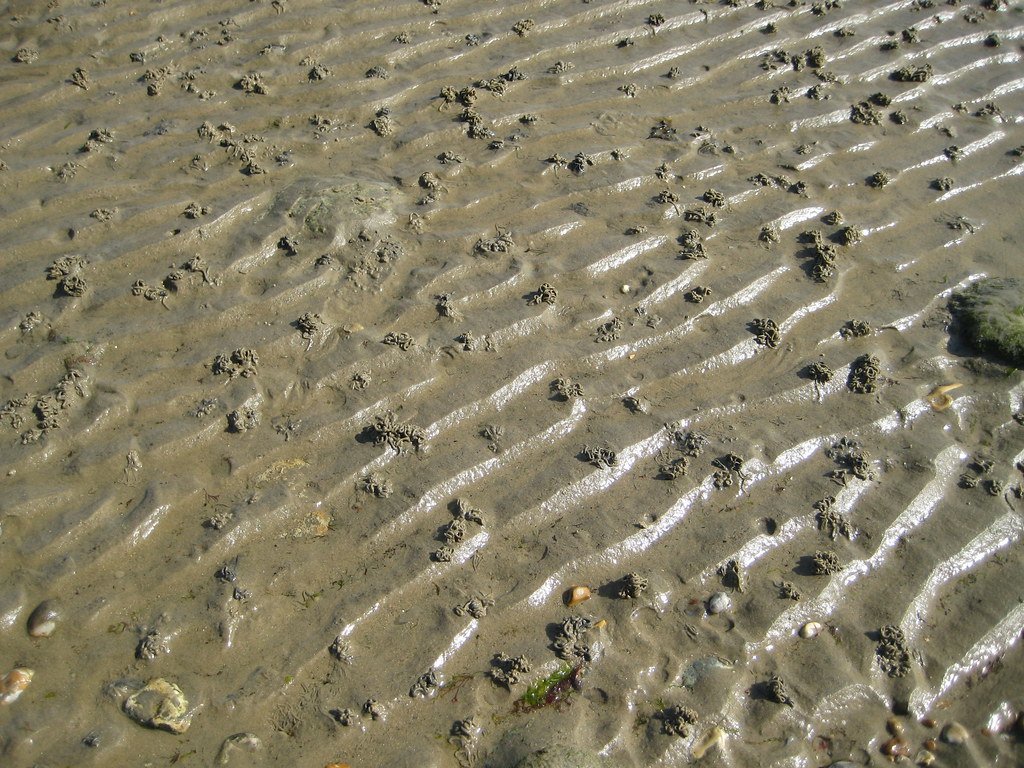
The discovery of these incredible structures has highlighted the importance of protecting seemingly empty sandy areas of the ocean floor. What appears barren to human eyes might actually be a thriving center of architectural innovation.
Climate change and ocean acidification pose threats to these delicate ecosystems. Changes in water temperature and chemistry could affect both the fish’s ability to build and the stability of their creations.
Protecting these underwater architects requires preserving their entire habitat, from the sand composition to the current patterns that make their artistry possible.
Future Research Directions

Scientists are now using advanced imaging technology to study these circles in unprecedented detail. Three-dimensional mapping reveals construction techniques and patterns invisible to the naked eye.
Genetic studies are exploring whether architectural ability is inherited and how it might be evolving in response to environmental changes. The intersection of genetics and geometry promises fascinating discoveries.
Research into the neurological basis of this behavior could revolutionize our understanding of animal intelligence and spatial cognition. How does a fish brain accomplish what requires complex mathematics in human engineering?
Lessons for Human Engineering

The pufferfish’s construction techniques offer insights for human engineers working on underwater projects. The fish’s ability to work with natural forces rather than against them demonstrates principles of sustainable engineering.
The circles’ efficiency in managing water flow has applications in coastal engineering and underwater construction. Sometimes the best solutions come from millions of years of evolutionary refinement.
Bio-inspired design based on these natural architects could lead to more efficient and environmentally friendly engineering solutions. The fish are teaching us that beauty and function can coexist perfectly.
The story of the pufferfish architects reminds us that intelligence and creativity exist in forms we’re only beginning to understand. These tiny fish, working alone in the ocean’s depths, create masterpieces that rival human achievement. Their dedication to perfection, their understanding of complex engineering principles, and their ability to blend art with function challenge our assumptions about animal intelligence. In a world where we often feel disconnected from nature, these underwater circles serve as bridges between species, showing us that the drive to create, to build, and to leave something beautiful behind transcends the boundaries between human and animal consciousness. What other architectural marvels might be waiting in the depths, created by minds we never imagined capable of such sophistication?