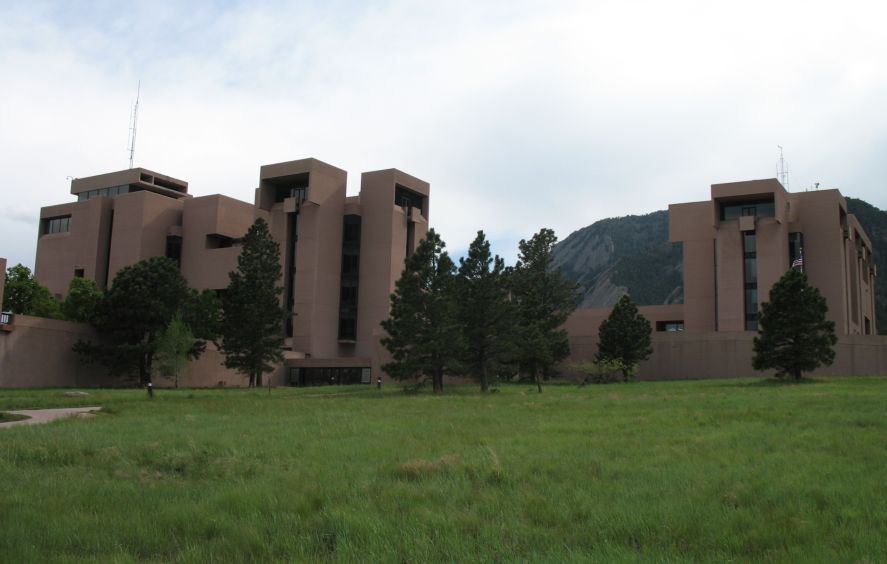


A Sudden Shift in Federal Priorities (Image Credits: Upload.wikimedia.org)
Boulder, Colorado – The Trump administration has unveiled plans to dissolve a cornerstone of federal climate science, raising alarms among researchers and policymakers.
A Sudden Shift in Federal Priorities
The announcement came swiftly, catching many in the scientific community off guard. Russell Vought, director of the White House Office of Management and Budget, declared that the National Science Foundation would break up the National Center for Atmospheric Research, or NCAR, labeling it a hub of “climate alarmism.” This facility has long served as the nation’s premier institution for atmospheric studies, employing hundreds of scientists who track everything from hurricanes to air quality. For decades, NCAR’s work has informed disaster preparedness and environmental policies across the country. Now, its future hangs in the balance as the administration seeks to redirect resources away from what it views as overstated climate concerns. Critics argue this move undermines essential research at a time when extreme weather events are on the rise. The decision reflects broader efforts to reshape federal spending on science.
NCAR, established in 1960 and based in the Rocky Mountain foothills, operates under the NSF umbrella. It coordinates vast networks of data collection, including supercomputers that model weather patterns. Vought’s statement emphasized fiscal responsibility, suggesting that reallocating funds could bolster other national priorities. However, scientists warn that fragmenting the center could disrupt ongoing projects vital to public safety. The administration’s push aligns with campaign promises to challenge established climate narratives. Local leaders in Colorado expressed dismay, highlighting the center’s role in the regional economy and innovation ecosystem. As details emerge, questions swirl about how the breakup would unfold.
The Core Mission Under Threat
At its heart, NCAR drives advancements in understanding Earth’s atmosphere, from short-term forecasts to long-term climate trends. Researchers there have pioneered tools that predict tornado paths and monitor ozone levels, saving lives through better warnings. The center also collaborates with universities and international partners, fostering breakthroughs in renewable energy and pollution control. Dismantling it could scatter these expertise across smaller, less coordinated units, potentially slowing progress. Administration officials contend that the move streamlines operations and reduces perceived biases in climate reporting. Yet, the facility’s contributions extend beyond controversy; they underpin everyday decisions like flight safety and agricultural planning. This restructuring arrives amid a surge in global weather anomalies, amplifying the stakes.
Key programs at risk include those focused on severe storms and climate modeling. For instance, NCAR’s high-resolution simulations have helped refine evacuation strategies during floods. Without a unified structure, maintaining these capabilities might prove challenging. The NSF, tasked with executing the plan, has not yet outlined timelines or personnel impacts. Employees, numbering around 1,000, now face uncertainty about their roles. Broader implications touch on U.S. leadership in global science, where NCAR has been a flagship effort. Stakeholders urge a measured approach to preserve institutional knowledge.
Reactions and Potential Fallout
The news sparked immediate backlash from environmental groups and lawmakers. Figures like Congressman Joe Neguse of Colorado decried it as possible retaliation tied to state politics, though the administration dismissed such claims. Supporters of the plan praise it as a pragmatic cut to inefficient bureaucracy, arguing that private sector innovation can fill any gaps. Still, experts highlight the irreplaceable value of federal oversight in atmospheric research. International observers worry about ripple effects on collaborative climate initiatives. In Boulder, community leaders mobilized to advocate for the center’s preservation, citing its economic boost through jobs and grants. The debate underscores deep divisions over science funding in the current political landscape.
- Potential loss of specialized supercomputing resources for weather prediction.
- Disruption to partnerships with over 100 universities nationwide.
- Risk to data archives spanning 60 years of atmospheric observations.
- Shift in focus that may prioritize short-term economic goals over long-term environmental resilience.
- Opportunities for reorganization to address perceived redundancies in federal agencies.
As the plan advances, calls grow for congressional oversight to evaluate its merits. Proponents envision a leaner framework that aligns with administration goals on energy independence. Opponents, however, see it as a setback for evidence-based policy. The coming months will reveal how these tensions play out.
Looking Ahead: Implications for Climate Science
The proposed dismantlement signals a pivotal moment for U.S. climate efforts. While the administration aims to curb what it calls alarmist tendencies, the move could erode trust in federal research outputs. NCAR’s dissolution might accelerate reliance on commercial weather services, but at the cost of comprehensive, public-domain data. Policymakers now grapple with balancing innovation and caution in an era of intensifying natural threats. This development invites reflection on how science intersects with governance.
Key Takeaways
- The National Center for Atmospheric Research faces breakup under NSF directives, driven by budget and ideological concerns.
- Its work on weather prediction and disaster response supports critical national infrastructure.
- Reactions range from support for fiscal reforms to fears of scientific setbacks.
In the end, the fate of NCAR tests the resilience of America’s scientific enterprise amid policy shifts. As details solidify, the broader impact on climate understanding remains a pressing concern. What implications do you see for future weather research? Share your thoughts in the comments.
Jan loves Wildlife and Animals and is one of the founders of Animals Around The Globe. He holds an MSc in Finance & Economics and is a passionate PADI Open Water Diver. His favorite animals are Mountain Gorillas, Tigers, and Great White Sharks. He lived in South Africa, Germany, the USA, Ireland, Italy, China, and Australia. Before AATG, Jan worked for Google, Axel Springer, BMW and others.