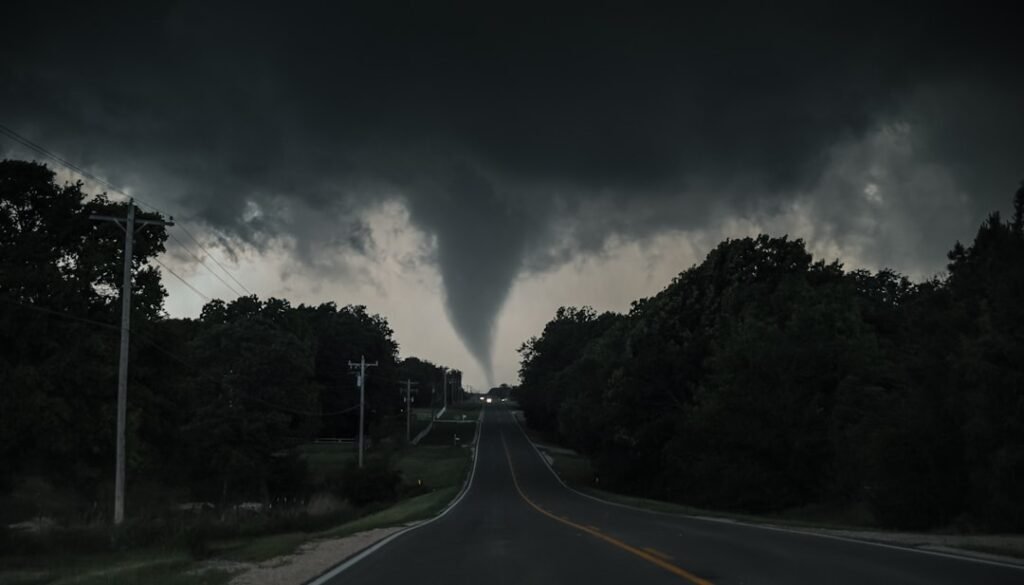

Defining Outbreak Days in Modern Storms (Image Credits: Unsplash)
The D.C. region – Residents have noticed a surge in “outbreak days” capable of spawning multiple tornadoes at once. A meteorologist attributes this trend directly to climate change, which has created more favorable conditions for severe storms. This shift brings heightened risks to an area not traditionally known for frequent twisters.[1]
Defining Outbreak Days in Modern Storms
Outbreak days represent a stark change in how tornadoes strike. These events feature large lines of storms that spawn numerous supercell thunderstorms across a region. Each supercell can produce several tornadoes, overwhelming response efforts and amplifying damage.[1]
Such days have grown more common nationwide, with tornadoes concentrating on fewer but busier occasions. In earlier decades, most twisters occurred on quieter days with under 10 reports. Recent patterns show a reversal, as nearly 30 percent now cluster on high-activity days with 20 or more.[2]
Tornado Alley’s Eastward Migration Hits Home
The core tornado zone, long centered in the Great Plains, has begun drifting eastward. This movement places the D.C. area squarely in the path of intensified severe weather. Wetter and stormier conditions now prevail as warmer air fuels instability.[1]
Meteorologists observe that traditional Tornado Alley patterns no longer hold. Storms once confined to the Midwest now routinely push into the Mid-Atlantic. This realignment exposes densely populated suburbs to risks previously rare in the region.
Climate Change Fuels the Perfect Storm Ingredients
Warming temperatures have extended the list of days primed for thunderstorms. “We know that there are now more days that have those ingredients to create thunderstorms and to create severe weather than there were just, say, 50 years ago,” noted Shel Winkley, weather and climate engagement specialist at Climate Central.[1]
Climate models project even greater atmospheric instability ahead. Super outbreaks, defined by dozens or hundreds of tornadoes, may arrive sooner and hit harder in a hotter world. Early-season events, once anomalies, now signal this evolving threat.[3]
While total U.S. tornado counts remain steady, their clustering raises alarms. Busy outbreak days demand robust preparation from communities unaccustomed to such intensity.
Forecast Advances Meet Persistent Challenges
Prediction tools have improved dramatically over decades. Half a century ago, five-day outlooks proved unreliable. Today, seven-day forecasts deliver solid guidance, and even 10-day views offer useful clues.[1]
Recent alerts in the D.C. area, such as Monday’s severe weather watch, prompted early closures despite lighter outcomes. Experts emphasize refining communication to balance caution with accuracy. “How do we communicate it? What were the graphics that were shared?” Winkley asked, highlighting areas for growth.[1]
- Enhance public messaging on timing and storm types.
- Invest in high-resolution models for pinpoint threats.
- Build resilient infrastructure against clustered impacts.
- Promote community drills for multi-tornado scenarios.
- Track eastward shifts in real-time data networks.
Navigating the Rising Storm Risks
As outbreak days multiply, the D.C. region must adapt swiftly. Shifting weather patterns underscore the need for vigilance year-round. Enhanced forecasts provide an edge, yet proactive measures define safety.
Local leaders and residents alike face a new reality of clustered threats. Investments in warning systems and education will prove essential.
Key Takeaways
Communities that prioritize readiness will weather these changes best. What steps is your area taking? Tell us in the comments.