Time travel sounds like the ultimate fantasy: fix your biggest mistake, meet your younger self, or watch history unfold in real time. Yet when you look closely at modern physics, a weird and slightly unsettling truth appears: our best theories do not clearly forbid time travel to the past. They make it hard, unimaginably hard, but not obviously impossible. That gap between “forbidden” and “ridiculously difficult” is exactly where science fiction stops and real physics starts to get interesting.
We live in a universe where space and time are flexible, where gravity can slow clocks, and where motion itself scrambles our sense of “now.” In that kind of universe, the idea that time is a rigid, one-way arrow starts to look more like a useful story than a fundamental rule. If you’ve ever felt that time sometimes crawls and sometimes races, you’re closer to modern physics than you think – only, the universe takes that feeling and pushes it to outrageous extremes.
The Strange Flexibility Of Time In Einstein’s Relativity

Imagine two twins: one stays on Earth, the other hops on a near‑light‑speed spaceship, races around the galaxy, and comes back younger than the sibling who never left. That’s not a plot twist; it’s a prediction of special relativity that has been confirmed in countless experiments with fast‑moving particles and extremely precise atomic clocks. Time is not a universal rhythm; it’s personal, tied to how fast you move and what gravity you experience. For the traveling twin, less time genuinely passes, not just on a clock, but biologically, physically, in every sense.
General relativity goes even further and says gravity is not a mysterious force pulling things down; it is the bending of space and time themselves. A massive object like Earth or a black hole warps spacetime so that paths of least resistance – the “straight lines” of the universe – curve around it. That curvature affects not just where you go, but how fast your time flows. Clocks on GPS satellites tick slightly faster than clocks on the ground because they feel a bit less gravity, and engineers must correct for this or positioning would go wildly wrong. In other words, we already live in a world where time is elastic; we just don’t notice it in everyday life.
Why Time Dilation Is Already A Kind Of Time Travel
Traveling close to the speed of light or hanging out near an intense gravitational field lets you jump into the future faster than everyone else. This is not sci‑fi hand‑waving; this is literally what happens to things that move fast or feel strong gravity. When astronauts spend months on the International Space Station, their onboard clocks and their bodies experience very slightly less time than people on Earth. The effect is tiny at human speeds, but it grows dramatically as you push closer to light speed or to the edge of a black hole.
From a certain angle, this is already one‑way time travel: you vanish, experience a shorter span of life, then reappear in a future where more time has passed for everyone else. You don’t get to go back and redo your teenage years, but you can, in principle, skip ahead decades or centuries if you have the right technology and are willing to pay the price. It’s a harsh kind of time travel, more like a one‑way ticket than a looping adventure, but it’s as real as the physics that powers GPS and particle accelerators.
Closed Timelike Curves: Loops In Spacetime
If relativity is a map, closed timelike curves are the parts of the map that look like someone spilled ink and drew a loop. In Einstein’s equations, there are solutions where spacetime bends so extremely that a path exists which starts at one moment, winds through the universe, and ends back at the same place and time it began. This is what physicists call a closed timelike curve – a path a physical object could, in theory, follow to its own past. Suddenly, the idea of literally walking into yesterday is not just fiction; it’s hidden inside the math.
This sounds like a cheat code for reality, but it comes with brutal requirements. To create or access such loops, you typically need exotic setups: rotating universes, fantastically dense rings of matter, or wormholes stabilized in very specific ways. None of this is remotely within reach of today’s engineering, and it may never be. Still, the awkward fact remains: Einstein’s celebrated theory, which has survived every experimental test so far, quietly allows solutions where time can curve back on itself. Physics, it turns out, is not as squeamish about paradoxes as we are.
Wormholes: Cosmic Shortcuts With A Time Twist
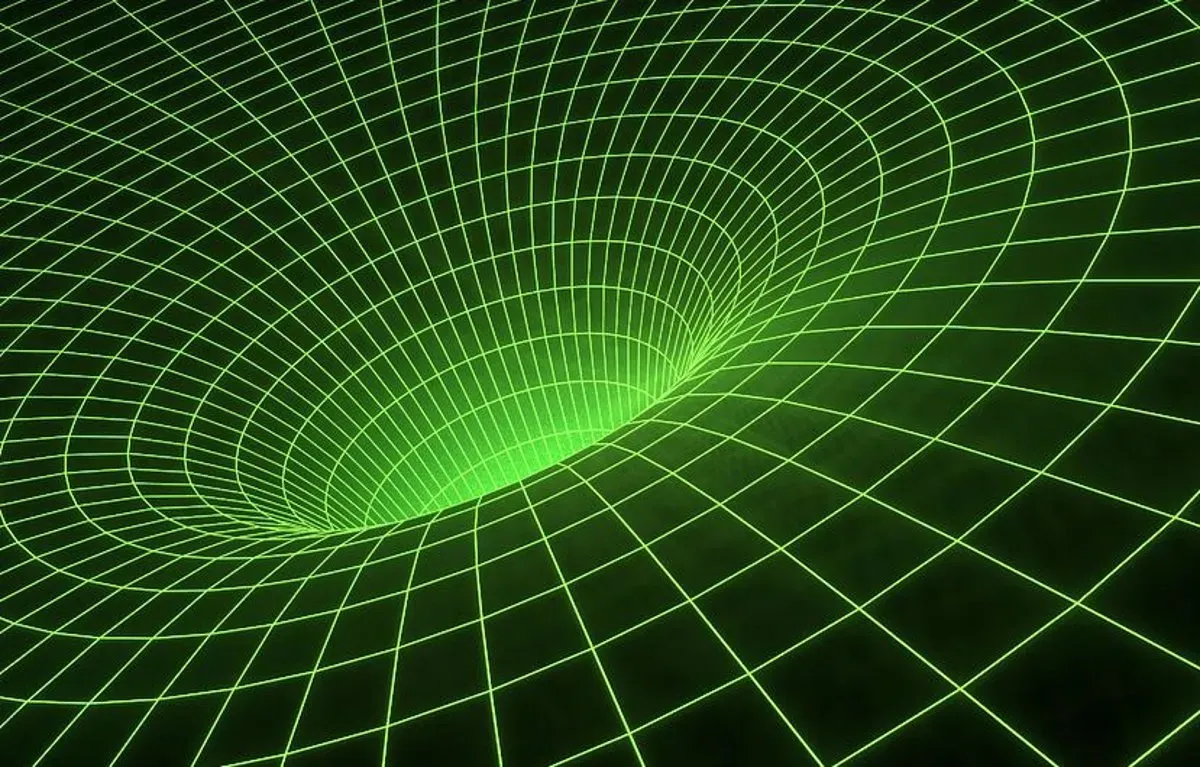
A wormhole is often described as a shortcut through spacetime: instead of traveling a long road, you step through a hidden tunnel that pops you out far away. In the equations of general relativity, wormholes show up as bridges connecting two distant points, possibly even two different universes. In most simple versions, they snap shut too quickly to be useful, but theorists have explored ways to hold them open using materials with negative energy density, which is something quantum physics says is at least not strictly forbidden.
Here’s where time travel sneaks back in: if you take one mouth of a wormhole and move it at high speed or place it in a strong gravitational field, time will pass differently at each end. When you bring the two mouths back together, walking through becomes more than a shortcut in space – it’s a shortcut in time. You could step in one side and emerge from the other at an earlier moment, at least in principle. It’s a wild idea that sits right at the edge of what our current theories allow, balanced between mathematical possibility and physical practicality.
Quantum Mechanics And The Many‑Worlds Escape Hatch
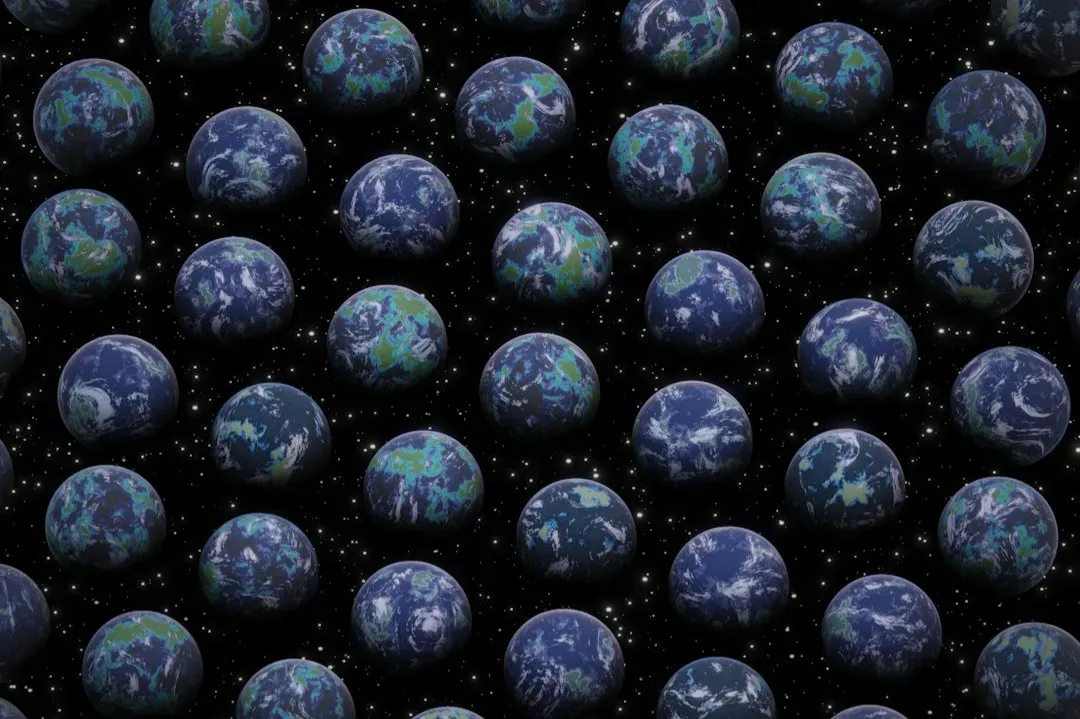
Time travel messes with our intuition because we imagine a single, fixed timeline where changing the past scrambles the future. Quantum mechanics already challenges that picture by suggesting that reality, at its smallest scales, does not follow one determined path but branches into many possibilities. In the many‑worlds interpretation, every quantum event can lead to multiple outcomes, each realized in a different branch of the universe. Instead of one story, you get a constantly splitting tree of stories.
In that view, traveling to “the past” might really mean sliding into a different branch that looks like your history up to a point but then diverges. You don’t overwrite your own timeline; you peel off into a neighboring one where events unfold differently. That would dodge classic paradoxes, because the version of you who remembers stepping into a time machine still exists in their original future, unchanged. The cost is conceptual: you trade a simple, single reality for a dizzying multiverse of slightly different worlds that all feel equally real.
Paradoxes, Self‑Consistency, And The Universe’s Rules

The classic example everyone brings up is the “grandfather paradox”: go back, prevent your grandparents from meeting, and you’ve just deleted the conditions that let you exist and travel back in the first place. At first glance, this looks like a logical dead end, the kind of contradiction that should force physics to rule out time travel. Yet some researchers have argued that the universe might enforce its own version of logical consistency, where any journey to the past is constrained so that paradoxical actions simply cannot occur. You might try to change history and find yourself mysteriously failing every time.
One idea is the self‑consistency principle: only events that fit into a single, coherent history are allowed. Another idea, inspired by quantum mechanics, is that interactions with the past might spread across many possibilities, smoothing out contradictions rather than letting them blow up into impossibilities. In recent years, simplified quantum simulations have modeled what happens when you let particles “interact with their own past,” and they tend to produce strange but consistent outcomes rather than outright paradoxes. It’s as if the universe is less like a fragile house of cards and more like a flexible web that bends under tension but refuses to tear.
Why Time Travel To The Past Remains An Open Question

Right now, the honest position in physics is uncomfortable but clear: we don’t know if time travel to the past is truly possible in our universe. Our best theories allow mathematical scenarios where it could happen, but those scenarios demand extreme conditions we can’t come close to creating. On top of that, we still don’t have a single agreed‑upon theory that unifies quantum mechanics with general relativity, and that missing piece might either outlaw time travel decisively or reveal new, unexpected ways it could work. Until then, we are working with incomplete tools, like trying to finish a puzzle with half the pieces missing.
At the same time, the everyday consequences of these ideas are already woven into technology, from satellite navigation to particle physics experiments that push particles to near light speed. The same equations that keep your phone’s maps accurate also quietly whisper that, under the right extremes, time could loop and twist in ways that feel almost supernatural. So time travel is not just a toy for novels and movies; it is a logical extension of how we understand space, motion, and gravity at a deep level. Whether a real time machine ever exists is a separate question from whether the universe’s laws tolerate the idea in principle.
Living In A Universe Where Time Is Not Simple
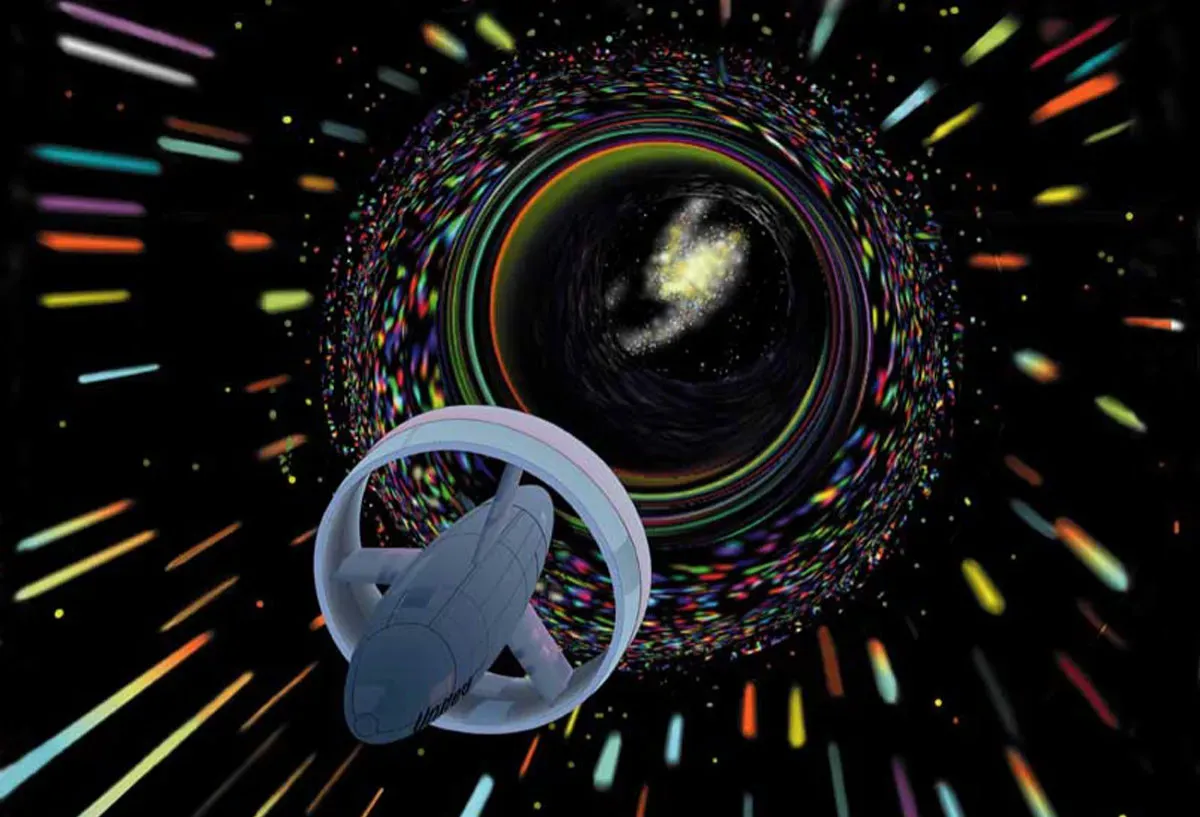
When you strip away the special effects and the dramatic plots, what remains is almost more unsettling: a universe where time is malleable, where speed and gravity reshape duration, and where the equations that describe reality leave the door to the past only half‑closed. We already exploit mild forms of time distortion every time we rely on systems that correct for relativistic effects, even if we don’t think of it as time travel. The deeper we dig into relativity and quantum theory, the less sense it makes to picture time as a single, rigid line that everyone must follow in lockstep.
That doesn’t mean a gleaming time machine is just around the corner, or that you’ll ever have to worry about someone popping in from the future to spoil tomorrow’s lottery numbers. It does mean that, at the most fundamental level we currently understand, the universe is stranger and more flexible than our everyday experience suggests. Time travel, especially to the past, sits right on the boundary between what’s mathematically allowed and what might be physically off‑limits. In a world where clocks can disagree and spacetime can bend, is it really so surprising that the line between science fiction and real physics is thinner than it looks?