
Think about the last truly unforgettable moment in your life. Maybe it was a celebration, a breakup, a birth, or just a quiet evening that somehow felt different. It probably feels like it’s “back there,” stored somewhere along a personal timeline you’re moving through. But according to several cutting‑edge ideas in physics and philosophy, that entire sense of flowing from past to future might be a brilliantly convincing trick your brain is playing on you.
In the last few years, more researchers have started to say something that sounds almost outrageous: time, as we experience it, may not be a basic feature of reality at all. Instead, it could be something that emerges from deeper, timeless laws of nature, the way a movie emerges from still frames. That doesn’t mean your life isn’t real or that memories don’t matter. It means that the underlying structure of the universe might be far stranger – and more beautiful – than we were ever taught in school.
The Block Universe: Past, Present, and Future All at Once
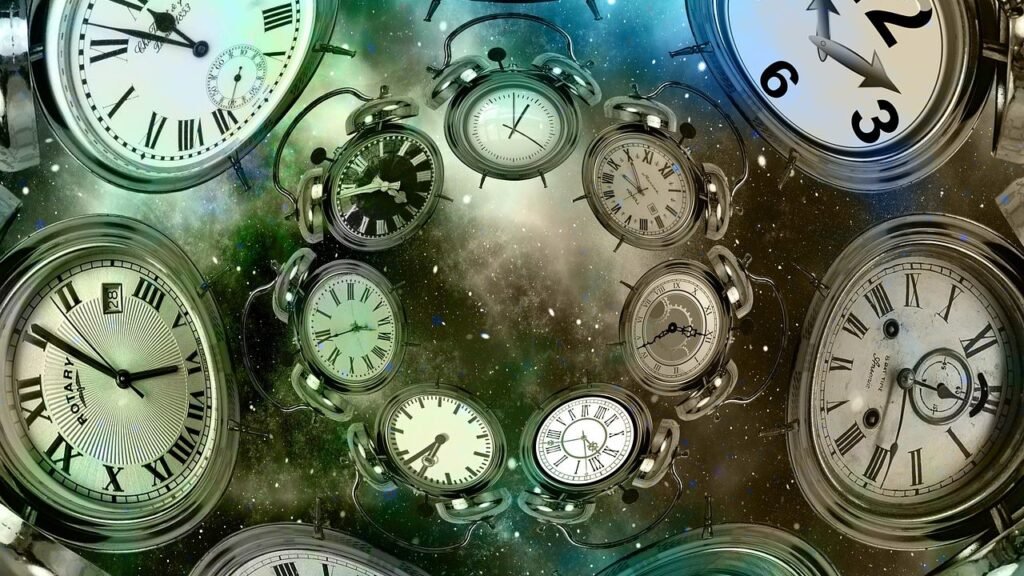
One of the boldest ideas about time is something called the block universe. In this view, the past, present, and future all coexist in one gigantic four‑dimensional structure – three dimensions of space plus one of time – like a frozen cosmic sculpture. You don’t “move” from yesterday to tomorrow; instead, every moment of your life is already there, laid out in the structure of spacetime, the way every frame of a film reel exists even before the projector starts.
Our sense that “now” is special, that we’re sliding along a river of time, might just be the way our consciousness reads this block, frame by frame. From this angle, your fifth birthday, your current moment reading this sentence, and your future last day on Earth are all equally real parts of the same object. It’s unsettling, even a bit eerie, because it clashes with how we emotionally live our lives, but it fits surprisingly well with Einstein’s theory of relativity and how modern physics treats time.
Relativity’s Strange Verdict: No Universal “Now”
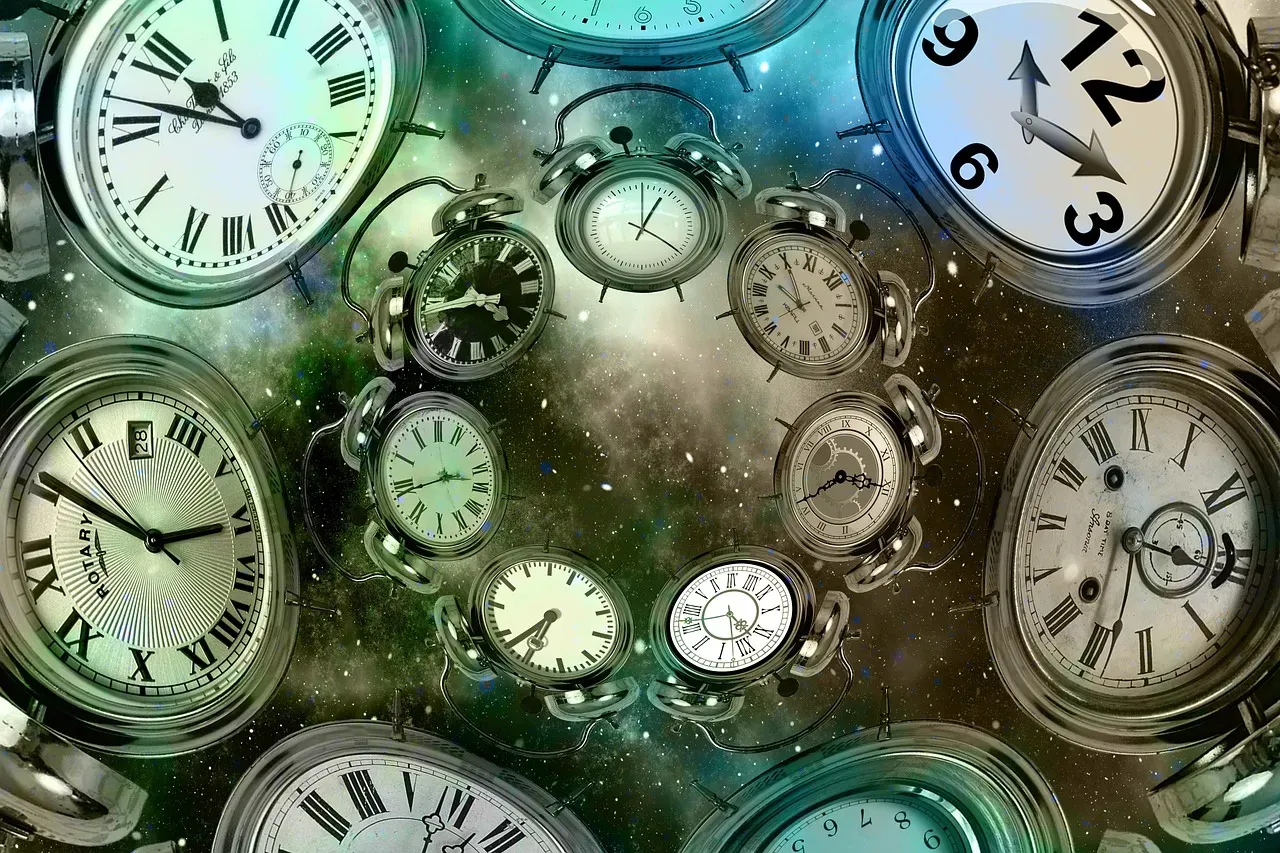
Einstein didn’t set out to destroy our everyday idea of time, but he sort of did anyway. His theory of special relativity showed that there’s no single universal “now” that everyone in the universe shares. Two people moving at different speeds can disagree about whether two events happened at the same time, and both can be right according to physics. That simple fact cracks open our intuitive sense of a global ticking clock.
When you take relativity seriously, the idea of one marching, objective moment that sweeps the cosmos just doesn’t survive. Instead, time becomes woven into space, forming spacetime, and what counts as “simultaneous” depends on where you are and how you’re moving. For many physicists and philosophers, this pushes them toward the block universe picture: if “now” depends on who you ask, maybe “now” is not a built‑in feature of reality at all, but something our minds construct to make sense of experience.
Quantum Gravity and the Puzzling “Timeless” Universe
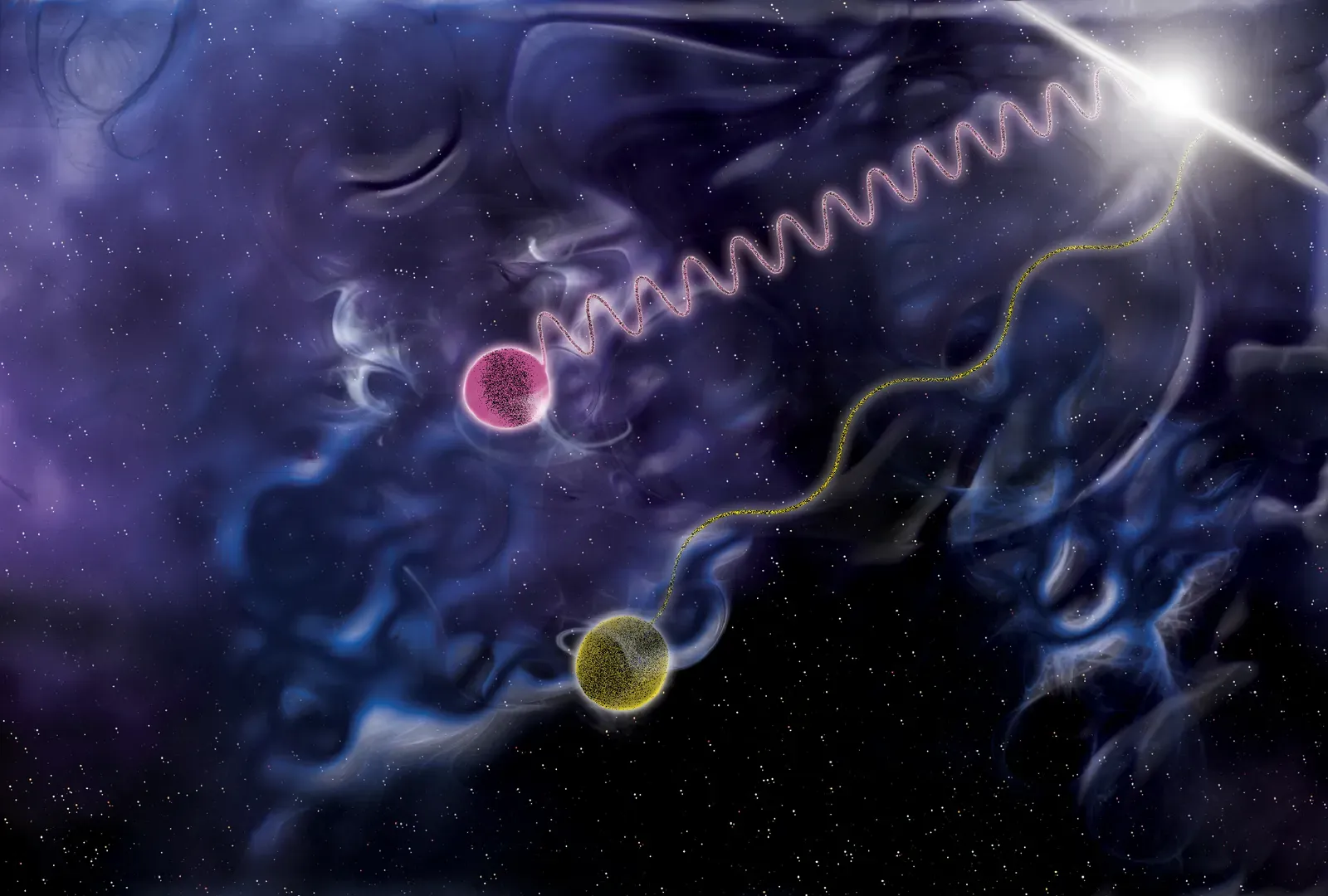
Things get even more disturbing when we look at attempts to merge quantum mechanics with general relativity, the holy grail known as quantum gravity. Some approaches, especially ones that treat the entire universe quantum‑mechanically, end up with equations where time just doesn’t appear in the usual way. One famous equation in this area, when taken literally, seems to describe a universe that simply is, not one that evolves from past to future.
Researchers have spent decades trying to understand how a world without fundamental time could still give rise to the flowing, changing reality we experience. One idea is that what we call “time” arises from correlations between different parts of the universe, rather than from something external ticking along like a cosmic clock. In that sense, time would be more like an internal bookkeeping system that appears only when you have complex, interacting systems – not a basic ingredient of the universe at its deepest level.
Emergent Time: How Change Can Exist Without a Cosmic Clock
When physicists say time might be “emergent,” they mean it could be like temperature: not a basic atom‑level property, but something that only makes sense for large collections of particles. A single molecule doesn’t really have a temperature in the everyday sense, but a gas made of trillions does. Similarly, the universe’s most fundamental description might not include time, but when you zoom out to large, complex systems – galaxies, planets, brains – time pops out as a useful way to describe how things change.
In some models, what we feel as time is tied to the growth of complexity or disorder, often associated with the famous arrow of time. The more disorder spreads, the more we say time has “advanced.” If that’s right, then time isn’t an absolute river we’re tossed into; it’s more like a pattern that emerges from how matter and energy are arranged. That makes the universe start to look less like a ticking clock and more like an ever‑unfolding pattern where “before” and “after” are context‑dependent rather than built into the foundations.
The Brain’s Role: Is the Flow of Time Just a Mental Story?
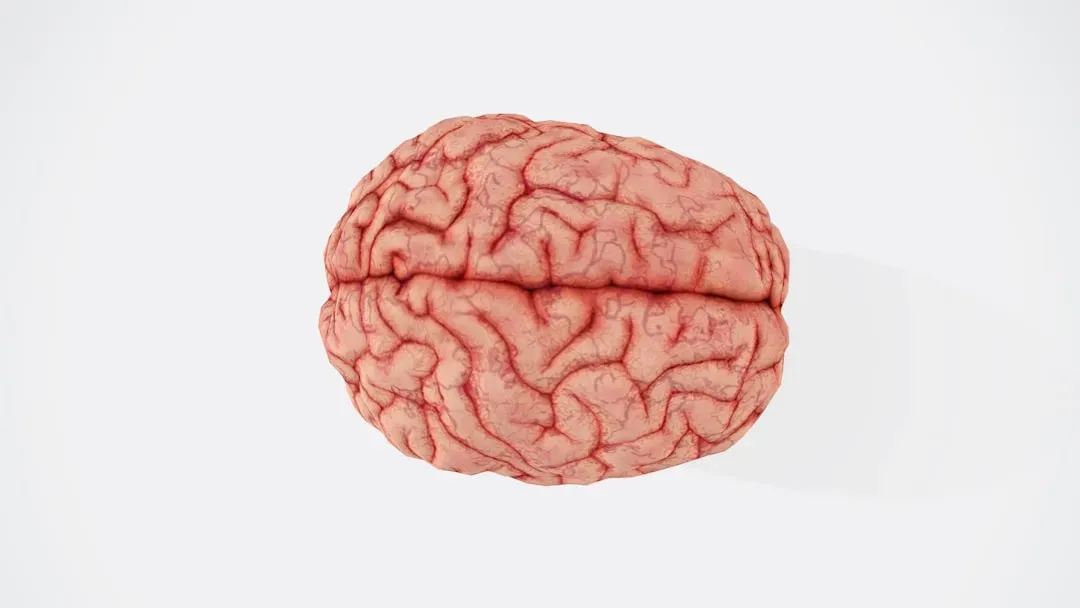
Even if physics suggests time might not be fundamental, that doesn’t explain why it feels so intensely real to us. This is where neuroscience steps in. Our brains actively stitch together a sense of continuity from moment to moment, smoothing out the raw sensory data into a story with a past, a present, and an anticipated future. It’s like an internal storyteller, constantly updating the plot so our experience feels unified instead of choppy and fragmented.
Experiments show that our sense of “now” is surprisingly flexible. Under certain conditions – drugs, meditation, trauma, or neurological disorders – people report time slowing, speeding up, or losing its usual structure. Short delays in how the brain processes information are hidden from us, giving the illusion of an immediate, flowing present. If the brain is constructing time the way it constructs color or sound, then the flow you feel might be less like a property of the universe and more like the user interface your mind generates to navigate it.
Everyday Consequences: Free Will, Death, and Meaning Without Time

If the future somehow already “exists” in a block universe, it’s natural to wonder what that means for free will. Are you just acting out a script that’s already written into spacetime, like a character in a completed novel? Some people find that idea suffocating, as if choice is an illusion. Others argue that even in a block universe, your decisions are still real parts of the structure; they’re not forced from outside, they’re simply what you, as that particular pattern of matter and mind, actually do.
This way of thinking also raises emotional questions about death and loss. If every moment exists eternally in the block, then the people you’ve loved and lost are not “gone” in the deepest sense; their moments still sit in the structure of spacetime. That can feel oddly comforting, even if it doesn’t change the grief of not being able to interact with them now. The bigger challenge is existential: if time isn’t what we thought, we might have to rethink what it means to live a meaningful life – maybe not as marching toward a distant future, but as inhabiting each slice of reality as fully as we can.
Living as If Time Is Real, Even If It Isn’t

Here’s the strange thing: you can spend hours wrestling with these theories, and yet when you burn your toast tomorrow morning, you’ll still curse because you can’t rewind and unburn it. On a human level, cause and effect, memory, plans, and regrets all work as if time is absolutely real and one‑way. The physics may say that the deeper story is weirder, but the surface story is still the one we have to live inside. In that sense, time might be like the desktop on your computer – an interface that hides the complex machinery underneath but is still incredibly useful.
From my own perspective, I find this tension oddly liberating rather than paralyzing. If time is partly a mental construct and partly an emergent feature of complex systems, then our experience of it is not a mistake – it’s a clever adaptation. Maybe the point isn’t to “escape” the illusion, but to understand it well enough that we stop taking it for granted. After all, even if every moment of your life is already etched into the universe’s structure, you still only ever feel one moment at a time. What will you do with this one?