

You wake up. You check your phone. Another morning has arrived, and you assume yesterday is firmly behind you and tomorrow is patiently waiting up ahead. But what if that whole story, that clean little timeline you carry around in your head, is something your brain invented? What if the universe itself has absolutely no preference for past, present, or future?
Honestly, this is not science fiction. Physicists, philosophers, and neuroscientists have been quietly dismantling the idea of linear time for decades. The deeper you go, the stranger it gets. And by the time you’re done reading, you may never look at a clock the same way again. Let’s dive in.
The Comfortable Lie We All Live By

Here’s the thing: in your everyday experience, time feels like a one-way street, with seconds ticking into minutes, minutes into hours, and the past always behind you. It is such a deeply embedded assumption that questioning it feels almost absurd, like doubting whether the ground is solid. Yet that feeling of certainty is precisely where the trouble begins.
Your perception of time is deeply subjective. You experience it as flowing steadily forward, but this may be more about how your brain organizes information than how the universe actually works. Think of it this way: if a film editor shuffled the frames of your memories, you might not even notice. The “flow” could be a narrative your mind is constantly composing, not a feature of reality itself.
What Physics Actually Says About Time’s Direction

You plan your life around time, measure it obsessively, and experience it as an unbroken flow from past to future. It feels so obvious that time moves forward that questioning it can seem almost pointless. Yet, for more than a century, physics has struggled to say what time actually is. That is not a minor puzzle. That is one of the deepest unsolved problems in all of science.
Many fundamental physical equations are time-symmetric. In other words, they work the same whether time is moving forward or backward. There is nothing in these equations that demands time move in one direction. So physics, at its most fundamental level, is completely indifferent to whether you are heading toward Monday or retreating back toward Sunday. That should unsettle you at least a little.
Quantum Physics and the Two Arrows of Time
Researchers from the University of Surrey have uncovered evidence that in the strange world of quantum physics, time could theoretically run both forward and backward. Their study reveals that certain quantum systems, when interacting with a vast environment, still obey time-reversible laws, even under assumptions that typically favor a one-way arrow of time. This is not a fringe finding. It challenges your entire intuition about irreversibility.
Scientists found that in certain quantum systems, time behaves symmetrically and could flow backward just as easily as forward. This challenges the idea that time only moves in one direction. Imagine watching a movie of a pendulum swinging. You genuinely could not tell if the film was playing forwards or in reverse. That is time-symmetry in action, and quantum mechanics suggests this is not just a quirk of pendulums.
The Block Universe: Where Your Death Already Exists
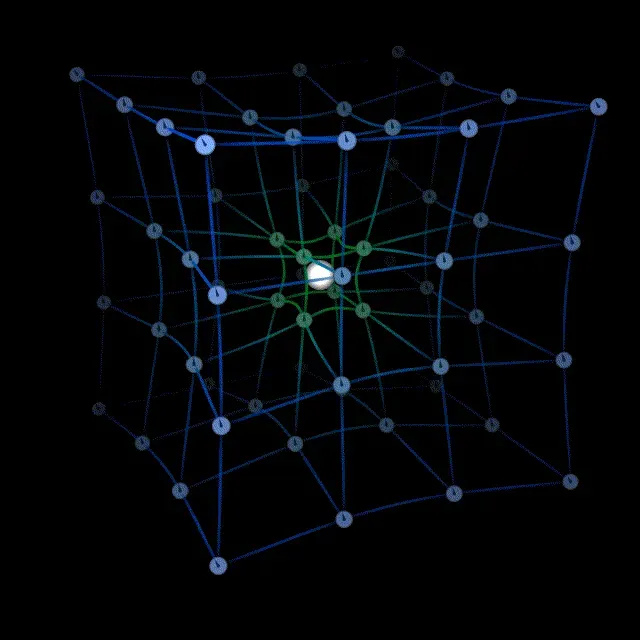
The block universe theory says that our universe may be looked at as a giant four-dimensional block of spacetime, containing all the things that ever happen. In the block universe, there is no “now” or present. That is a genuinely startling idea. Your birth, your first heartbreak, every Tuesday you will ever experience, all of it simply exists, frozen in a four-dimensional structure like flies in amber.
Instead of three dimensions of space and one separate dimension of time, there is one four-dimensional continuum called spacetime. In that continuum, every event is fixed. Your birth is an event. Reading this sentence is an event. Your death is an event. Each one has a position defined by three spatial coordinates and one temporal coordinate. The block universe does not just suggest time is weird. It suggests the future is as real, right now, as the ground beneath your feet.
Entropy: The Real Reason You Remember Yesterday

The arrow of time is the “one-way direction” or “asymmetry” of time. The thermodynamic arrow of time is provided by the second law of thermodynamics, which says that in an isolated system, entropy tends to increase with time. Entropy can be thought of as a measure of microscopic disorder, thus the second law implies that time is asymmetrical with respect to the amount of order in an isolated system. In plain language: things fall apart. Eggs break, coffee cools, and nothing spontaneously reassembles itself.
The resolution lies in initial conditions. The universe began in a remarkably low-entropy state. From that starting point, entropy has been increasing ever since. The laws allow time reversal, but the universe’s starting configuration biases evolution in one direction. So when you feel time “flowing forward,” you are essentially feeling the universe becoming more disordered. Your memory of the past exists precisely because of this entropic asymmetry. It is hard to say for sure, but our entire sense of temporal direction may just be thermodynamics in disguise.
Your Brain Is Making It All Up

Your brain does not have a single “clock” ticking away inside. Instead, it gathers sensory information, experiences, and memories to create the sensation of flowing time. Scientists believe that different brain regions collaborate to generate your sense of time. The prefrontal cortex, basal ganglia, and cerebellum play major roles in time perception. This is a committee decision, not a cosmic truth.
Time perception, the subjective sense of how long an event or interval lasts, is influenced by several factors, including attention, emotion, memory, expectation, and context. Let’s be real: you already know this intuitively. Time crawls when you are stuck in a boring meeting and vanishes when you are absorbed in something you love. When you are bored, you focus a lot of attention on yourself, which subjectively slows down the passage of time. The clock on the wall never changes. Your perception of it does.
The Problem of Time: When Physics Swallows Itself
In theoretical physics, the problem of time is a conceptual conflict between quantum mechanics and general relativity. Quantum mechanics regards the flow of time as universal and absolute, whereas general relativity regards the flow of time as malleable and relative. This problem raises the question of what time really is in a physical sense and whether it is truly a real, distinct phenomenon. It also involves the related question of why time seems to flow in a single direction, despite the fact that no known physical laws at the microscopic level seem to require a single direction.
In many attempts to create a unified theory, time vanishes as a parameter from the fundamental equations altogether. The universe appears frozen, described by equations that make no reference to change. This puzzle is known as the problem of time, and it remains one of the most persistent obstacles to a unified theory of physics. Think about that. The most ambitious equations humans have ever written, the ones meant to describe all of reality, describe a universe where time simply does not exist. That is either the biggest clue or the biggest headache in the history of science.
Conclusion: Reality Is Stranger Than Your Calendar Suggests
Here is where we land in 2026, and honestly, it is both thrilling and slightly vertiginous. The linear flow of time, the feeling that seconds are marching forward in an orderly queue, is almost certainly not a fundamental feature of the universe. It is a story your brain tells you, shaped by entropy, neuroscience, and the particular low-entropy state in which our cosmos happened to begin. To many physicists, while you experience time as psychologically real, time is not fundamentally real. At the deepest foundations of nature, time is not a primitive, irreducible element or concept required to construct reality.
That might feel like the rug being pulled out from under you. Still, there is something unexpectedly freeing about it. If your past and your future already exist as fixed coordinates in spacetime, then every moment you inhabit is, in its own way, permanent. On a comforting note, this theory implies that nothing truly disappears. Past moments, loved ones, and important events continue to exist somewhere within the block. They are not lost, merely distant in the fabric of spacetime. The universe, it seems, keeps everything.
So the next time you feel time slipping away, remember: you might not be losing it at all. What would you have guessed? That time was exactly what it seemed? Tell us in the comments.