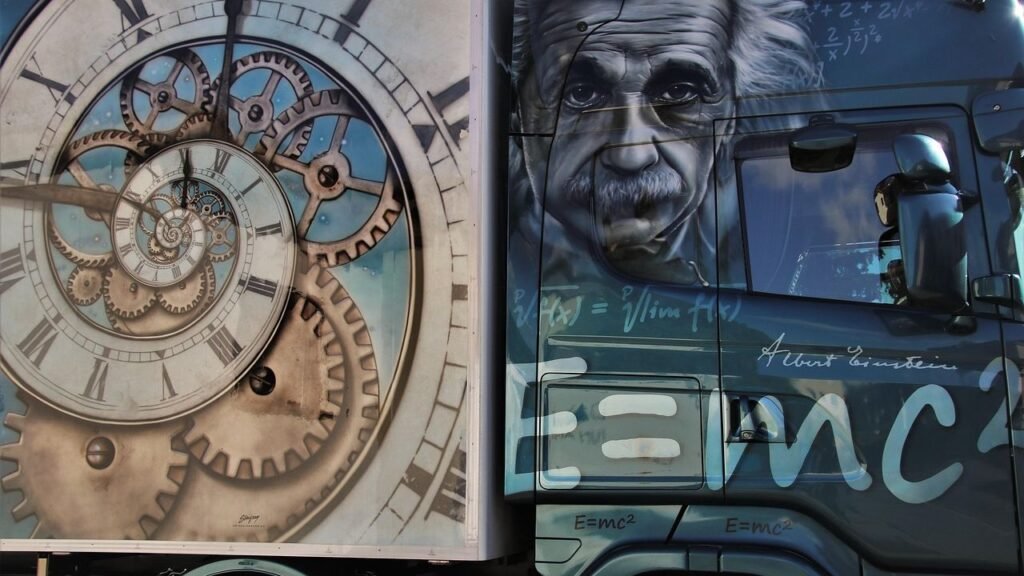

We take time for granted. Every second ticks by with predictable regularity, memories stack neatly into our past, and the future remains stubbornly out of reach. It’s one of the few universal experiences we all share. Yet beneath this familiar surface lies a puzzle that has perplexed physicists for over a century.
What if everything we think we know about time is fundamentally wrong? Recent breakthroughs in quantum mechanics are revealing that time might be far stranger than we ever imagined. From arrows pointing in opposite directions to entire dimensions emerging from invisible connections between particles, the very fabric of temporal reality is being called into question.
The Arrow That Points Both Ways
Researchers at the University of Surrey have discovered that opposing arrows of time can theoretically emerge from certain quantum systems. This discovery flips conventional wisdom on its head. For centuries, we’ve accepted that time flows in one direction, from past to future.
Even after making standard assumptions about quantum systems, the system behaved the same way whether time moved forward or backwards, suggesting that time’s arrow may not be as fixed as we experience it. Think of it like a knife balanced perfectly on its edge. A cup could topple either way, yet the water spills identically regardless of direction.
The implications are honestly mind-bending. Any thermal equilibrium state for a forward-running trajectory is also an equilibrium thermal state for any time-reversed trajectory, and entropy increases in both directions. This means at the quantum level, the distinction between past and future becomes blurred in ways that challenge our deepest intuitions about reality.
Quantum Mechanics Doesn’t Play by the Rules
Here’s the thing about fundamental physics that makes this all so perplexing. While time flowing from past to future seems obvious in our experienced reality, the underlying laws of physics do not inherently favour a single direction, and whether time moves forward or backwards, the equations remain the same.
The Quantum Arrow of Time suggests that time’s flow might be tied to observation and measurement in quantum mechanics, where particles exist in superposition until they are observed, forcing them to take a definite state in an irreversible process that some physicists argue defines the direction of time. It’s as if reality itself doesn’t solidify until someone looks at it.
The double-slit experiment perfectly illustrates this weirdness. Physicists at MIT performed an idealized atomic-scale double-slit experiment with single ultracold atoms and photons, confirming Niels Bohr’s complementarity principle. The act of observation fundamentally changes what happens, raising an unsettling question about whether time only moves forward because we’re constantly watching the universe unfold.
Time Might Be an Illusion Emerging from Something Deeper
Let’s be real, this is where things get properly wild. According to some prominent researchers in emergent gravity such as Mark Van Raamsdonk, spacetime is built up of quantum entanglement, which is the fundamental property that gives rise to spacetime. Time itself might not be fundamental at all.
When fundamental particles come together in sufficient numbers and show collective behavior, they act in a way that is like a liquid, and spacetime might emerge from the materials we usually think of as living in the universe – matter and energy itself. Temperature emerges from atoms jiggling around. Liquidity emerges from countless molecules. Could time work the same way?
The AdS/CFT correspondence provides mathematical evidence for this radical idea. Mark Van Raamsdonk’s work suggests that spacetime is glued together by entanglement, where the degree of entanglement between regions corresponds to how connected they are in spacetime, with maximum entanglement meaning close proximity. In other words, the invisible connections between quantum particles might literally create the dimensions we experience.
Multiple Arrows, Multiple Realities

The mathematics gets even stranger when you dig deeper. A general universe may not have well defined arrows of time, and when arrows are emergent they need not point in the same direction over the whole of spacetime but may be local, pointing in different directions in different spacetime regions.
This isn’t just theoretical hand-waving. In 2019, a team of Russian scientists reported the reversal of the quantum arrow of time on an IBM quantum computer, where in roughly four out of five cases, the two-qubit computer returned to the initial state. They literally made time run backwards for quantum particles in a controlled environment.
I know it sounds crazy, but the implications stretch far beyond laboratory experiments. If different regions of the universe can have time flowing in different directions, what does that mean for causality? For the very notion of before and after? The familiar landscape of temporal experience suddenly looks like just one possible arrangement among many.
The Problem With Trying to Understand Time
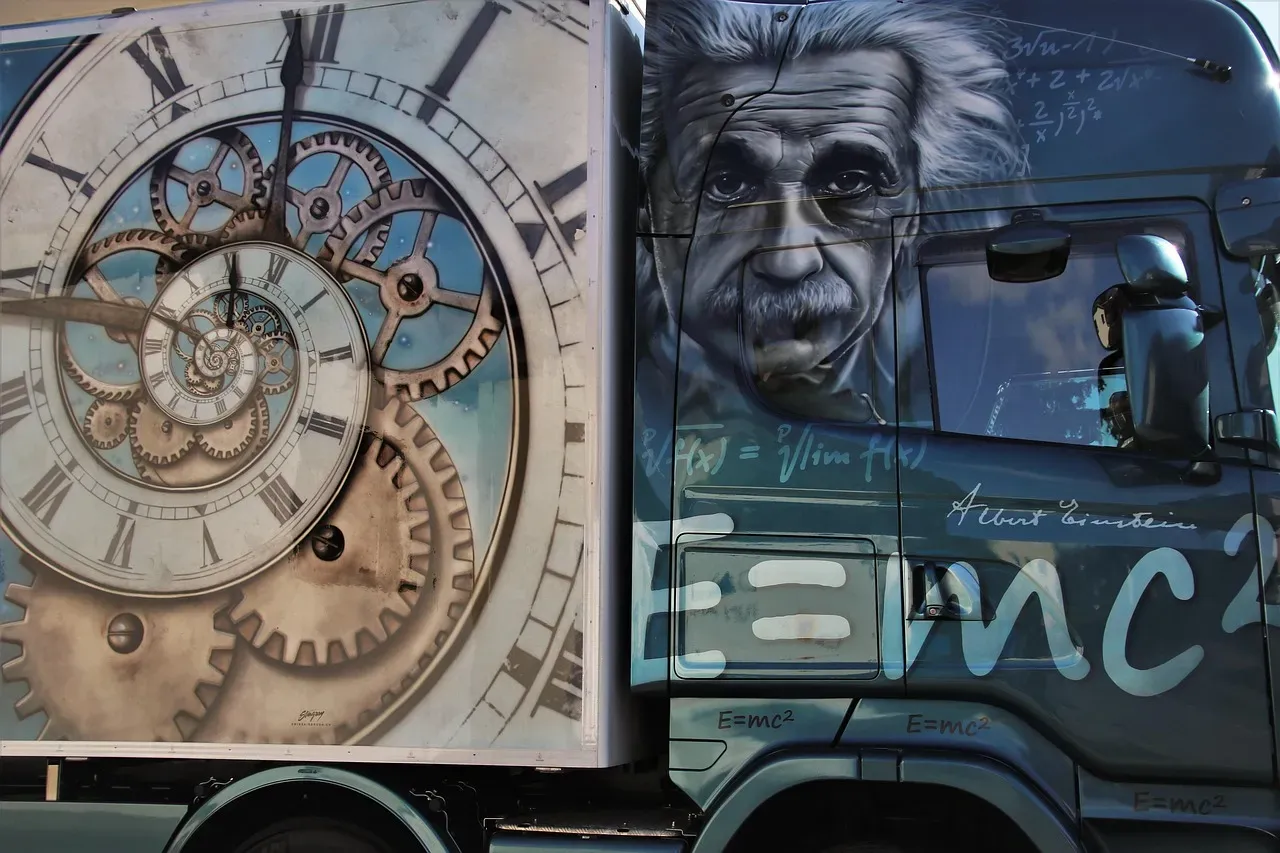
Scientists face a fundamental problem when studying time. Quantum physics treats space and time as immutable, while general relativity warps them constantly, and somehow a theory of quantum gravity would need to reconcile these ideas about space and time. These two pillars of modern physics fundamentally disagree about what time actually is.
The origins of time’s arrow appear to be dependent on a physicist’s preferred interpretation of quantum mechanics itself, representing a reflection of an approximation rather than objective reality. In other words, what we observe might depend on how we choose to look at it. That’s a profoundly unsettling thought for anyone seeking objective truth.
The circularity problem makes this even trickier. When physicists try to explain emergent spacetime, they often rely on quantum states defined in terms of spacetime. It’s hard to say for sure, but this appears to create a logical loop that remains unresolved.
What This Means for Reality as We Know It
If time is emergent rather than fundamental, then our everyday experience of reality is in a way an illusion, with space and time existing but not being the bedrock of existence we once thought, instead being approximations useful for describing the universe at large scales but breaking down when we probe the smallest distances.
The philosophical implications ripple outward in every direction. Memory, causation, free will – all these concepts rest on assumptions about time’s nature. The existence of an arrow of time undeniably characterizes our common experience through memory of the past in objective evidence like pictures and fossils, yet we do not have memory of the future, describing the clear asymmetry that makes the past intrinsically different from the future.
Yet beneath that experience, the mathematics suggests something far more fluid and bizarre. Perhaps time’s apparent solidity is like seeing a smooth liquid surface while remaining blind to the chaotic dance of molecules underneath. The universe might operate on principles completely alien to our evolved intuitions, with time as we know it being merely a useful fiction our brains construct to navigate reality.
Conclusion
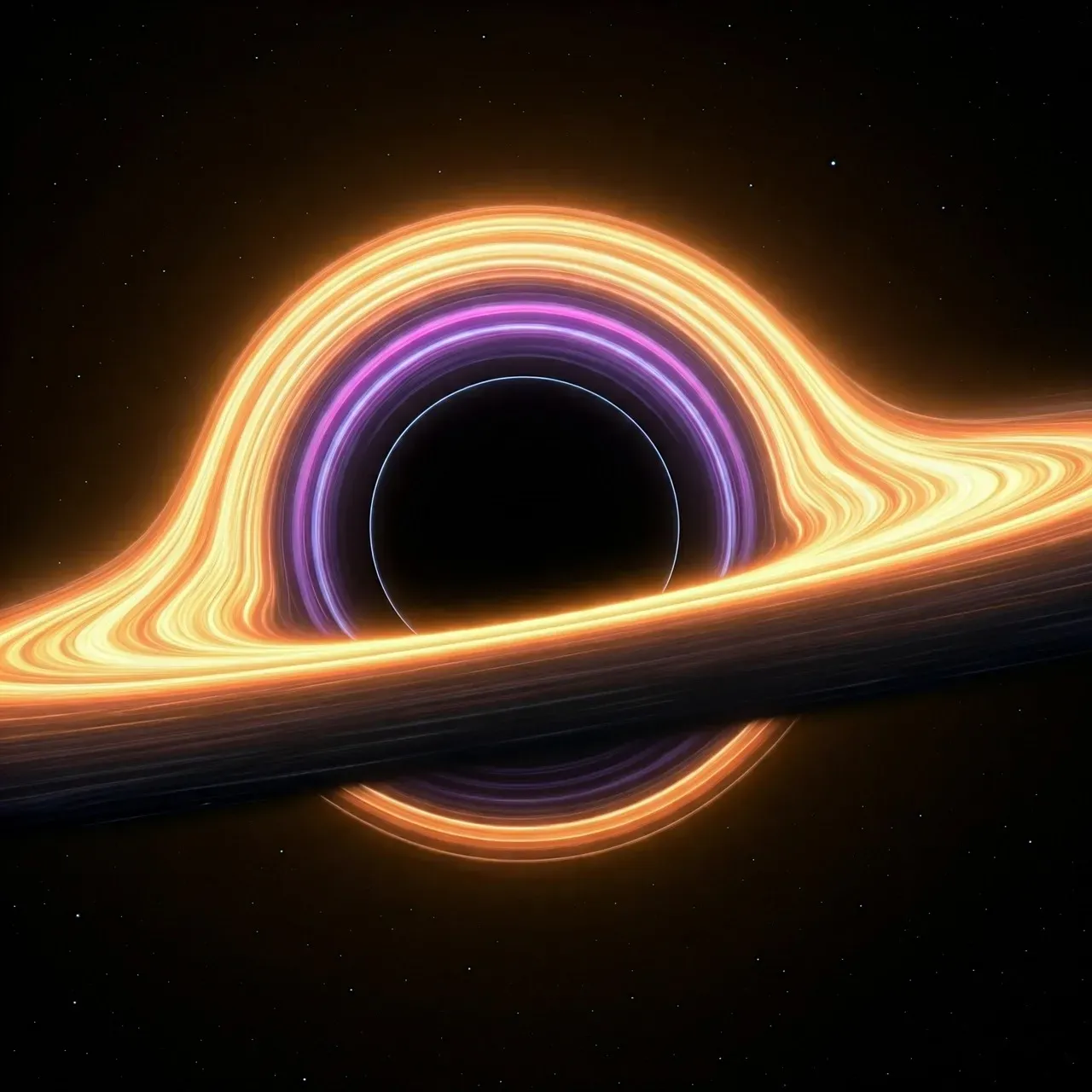
The nature of time stands as one of physics’ most profound mysteries. From arrows that point both ways to dimensions emerging from quantum entanglement, every new discovery seems to deepen the puzzle rather than solve it. We’re living through a remarkable moment when fundamental assumptions about reality itself are being questioned and revised.
Understanding the true nature of time could have profound implications for quantum mechanics, cosmology and beyond. What began as a simple question about why we can’t unbreak an egg has led us to the edge of comprehension itself, staring into an abyss where time might be an illusion, where past and future blur together, and where the very fabric of existence emerges from invisible quantum connections.
What do you think about all this? Does it change how you experience the present moment, knowing that time itself might be more fluid than it appears?