
Most of us grow up thinking of time as a steady, invisible conveyor belt: every second the same length, every minute marching forward at a perfect, mechanical pace. It feels comforting, almost sacred, to believe that one hour for you is the same as one hour for anyone else, anywhere in the universe. But nature is not interested in our comfort.
In reality, time is elastic. It can slow down, stretch, and twist under the influence of gravity in ways that are both shocking and deeply beautiful. Modern physics shows that time near a massive object does not pass at the same rate as time far away from it. That isn’t just a weird idea in a textbook or a science fiction movie plot. It’s a measurable fact that quietly shapes the world you live in every single day.
What It Really Means To Say “Time Is Not Constant”
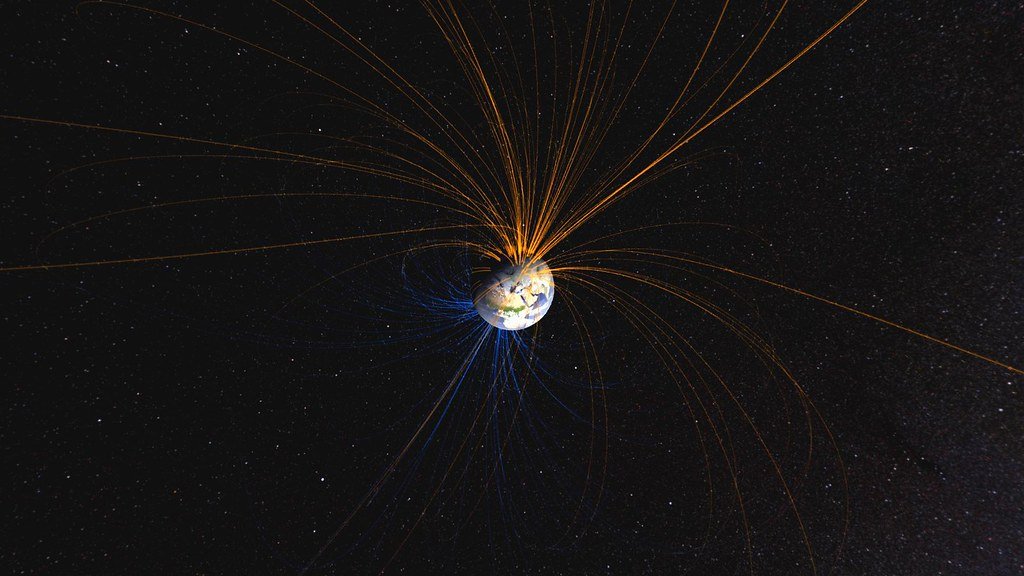
It sounds dramatic to claim that time itself isn’t constant, but that’s exactly what the theory of relativity tells us. According to Einstein’s general relativity, time is woven together with space into a single fabric called spacetime, and this fabric can be bent. When mass and energy are present, they curve spacetime, and that curvature affects how time flows. So if you stand on Earth’s surface, you’re not just standing in space, you’re sitting in a dent in time.
This has a startling consequence: clocks in different places don’t agree, even if they are perfect and synchronized at the start. A clock closer to a massive object (like the surface of Earth) will tick more slowly than a clock farther away (like one on a satellite). The difference is tiny in everyday conditions, but it’s real. Time is not a universal drumbeat that echoes the same everywhere; it’s more like a rhythm that changes depending on where you are in the cosmic landscape.
How Gravity Warps Spacetime: The Trampoline Picture (And Its Limits)
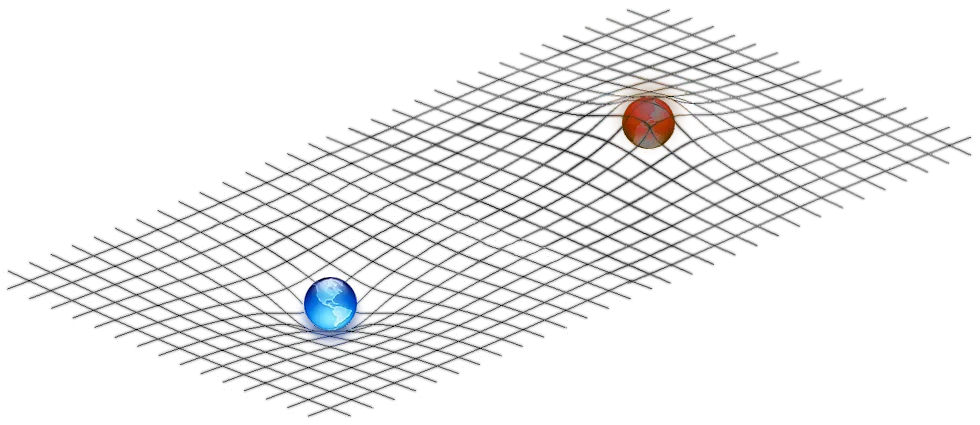
One of the most helpful ways to picture this is the classic trampoline analogy. Imagine spacetime as a stretchy sheet and a heavy bowling ball as a star or planet. Drop the ball onto the sheet and it makes a dip. Smaller balls, like marbles, roll around the dip and curve their paths instead of moving in perfectly straight lines. That’s how gravity works in relativity: objects follow the curves in spacetime, and we perceive that as gravitational attraction.
But here’s the twist: the dip isn’t just a bend in space, it’s also a distortion in time. The deeper the well, the slower time runs. Near very massive objects like neutron stars or black holes, the “dip” in spacetime is so extreme that time can slow to a crawl compared with regions far away. The trampoline image is imperfect, of course, because it uses gravity to explain gravity and only shows space, not time, but it still captures something crucial: mass changes the geometry of reality, and time is part of that geometry.
Gravitational Time Dilation: Clocks Don’t Agree
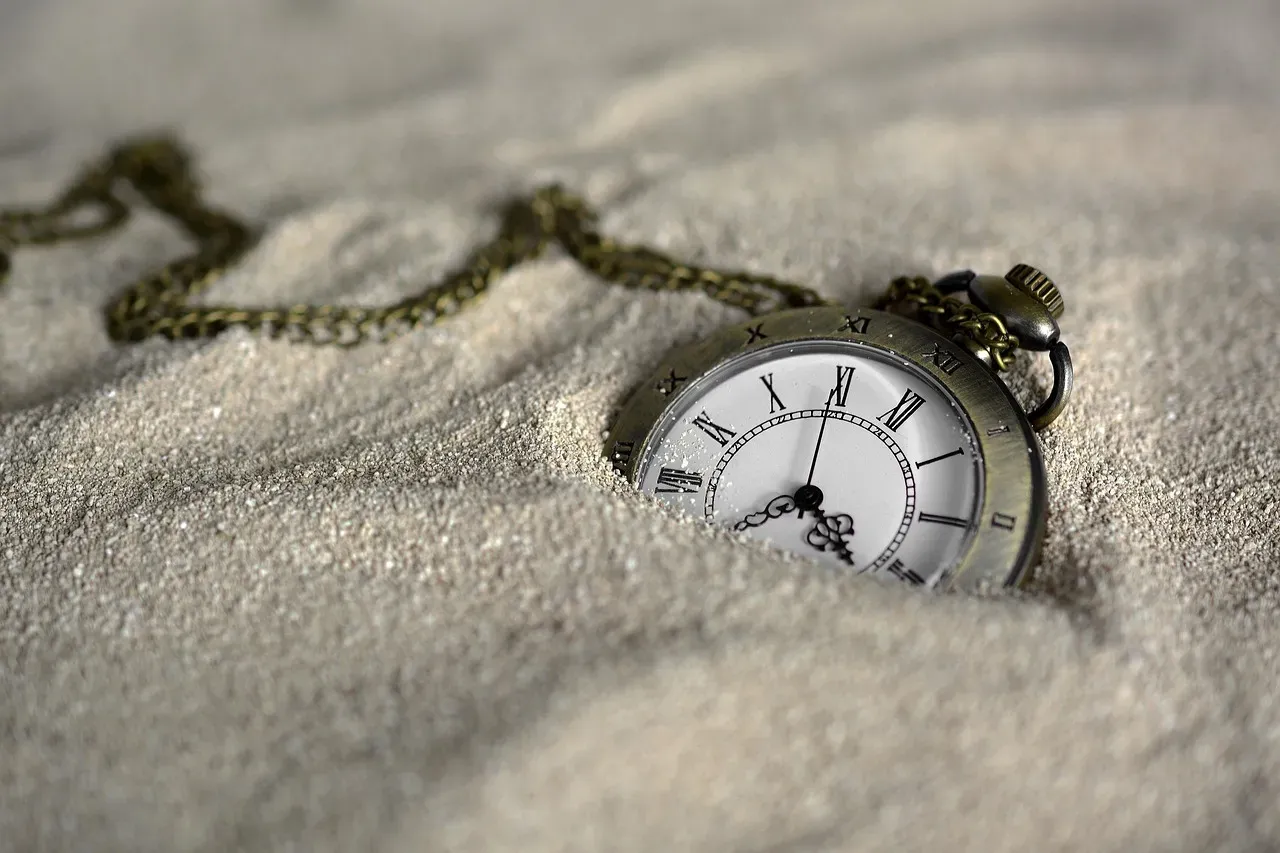
Gravitational time dilation is the technical name for this effect. In simple terms, the stronger the gravitational field you’re in, the slower your time passes compared with someone in a weaker field. That means a clock at sea level on Earth runs a tiny bit slower than a clock on top of a high mountain, just because it’s slightly closer to Earth’s mass. You and your friend on that mountaintop are aging at measurably different rates, even if the difference is mind-bogglingly small.
This isn’t just theory. Experiments using highly precise atomic clocks have placed them at different altitudes and watched them drift apart in time exactly as relativity predicts. Even raising a clock by a few tens of centimeters can produce a detectable difference with modern technology. It’s wild to think about: just sitting in a chair on the ground versus lying on the top bunk of a bed technically means living in slightly different rivers of time.
Everyday Proof: GPS Only Works Because Time Gets Warped
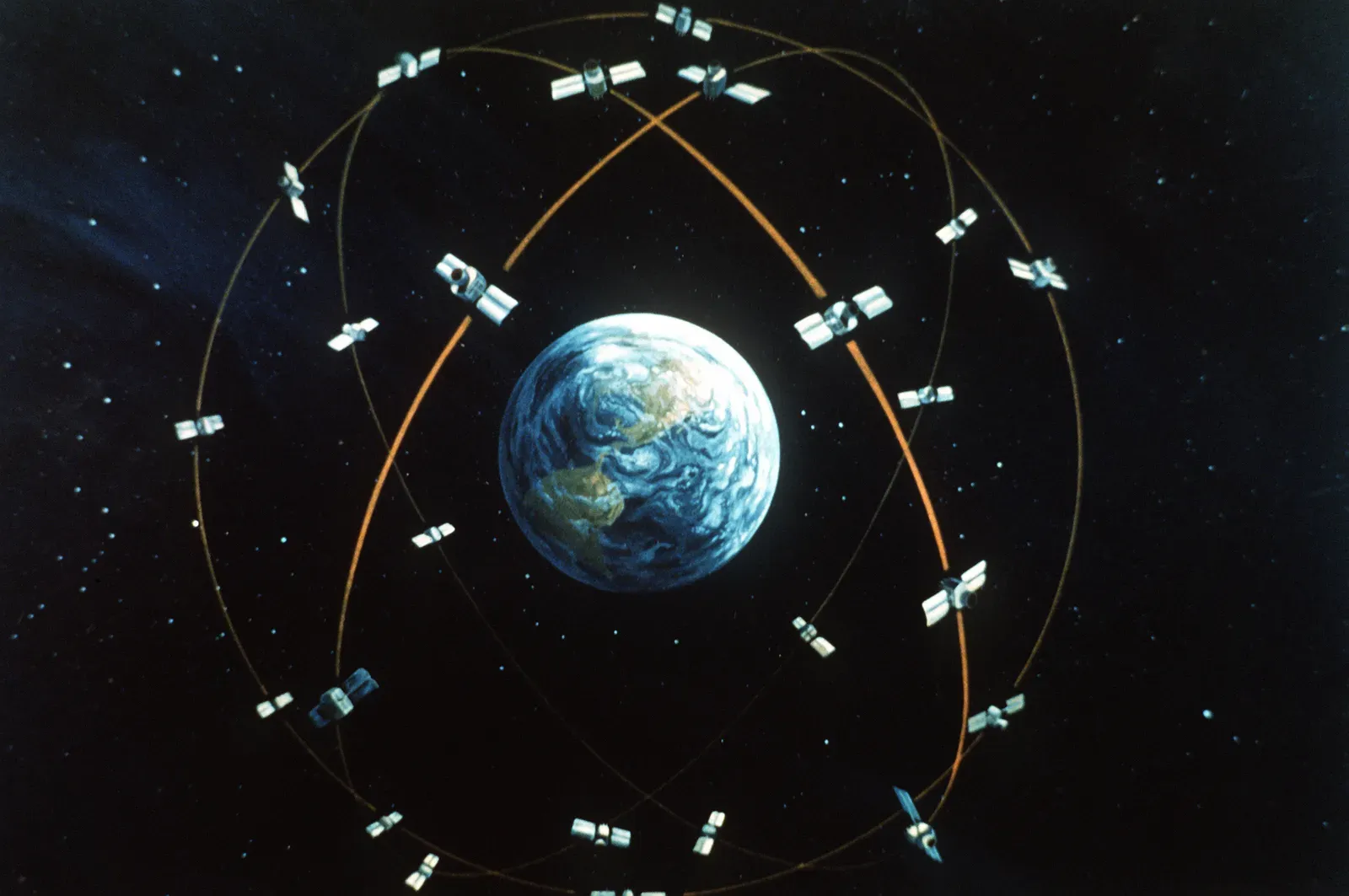
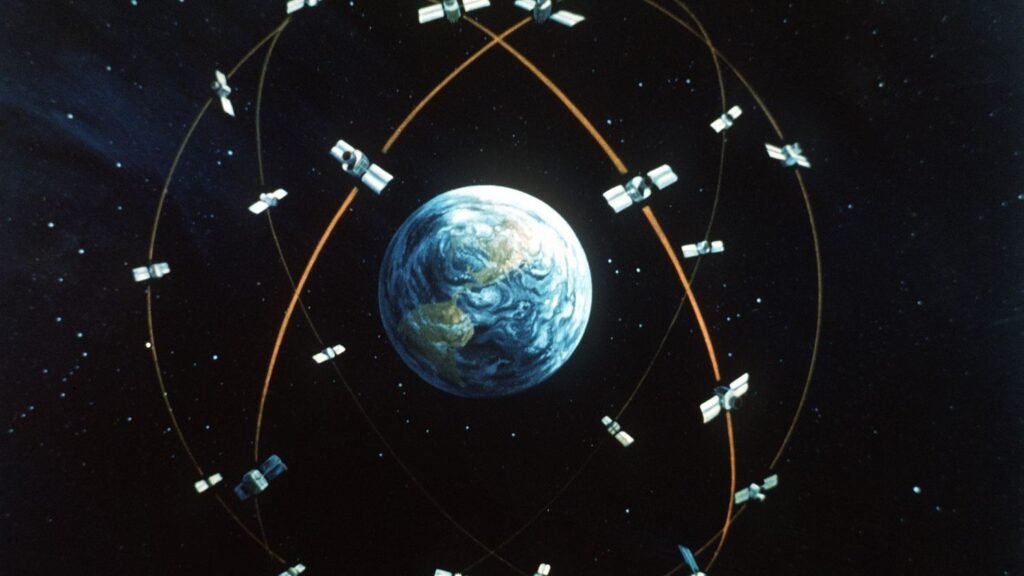
If all this still sounds a bit abstract, look at your phone. The GPS in your device relies on satellites orbiting Earth, each one carrying atomic clocks that broadcast precise timing signals. These satellites are farther from Earth’s center, where gravity is weaker, so their clocks tick a little faster than clocks on the ground. At the same time, they’re moving quickly, and special relativity says fast motion makes clocks tick slower. Both effects happen at once.
The net result is that satellite clocks and ground clocks naturally get out of sync. If engineers ignored relativity, GPS positions would drift by kilometers each day, and your navigation apps would be useless. Instead, the system is deliberately corrected for gravitational and motion-based time dilation. So every time you follow a blue dot on a map, you’re using a technology that quietly assumes time is stretchable and uneven across space.
Black Holes: Where Time Practically Freezes
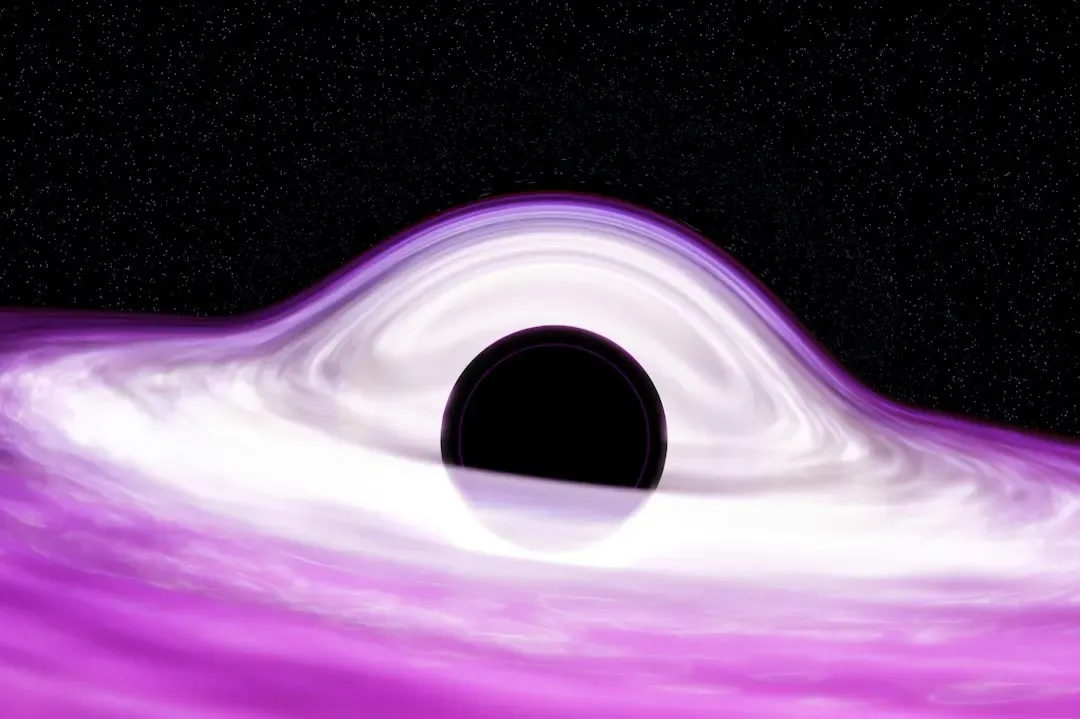
If gravity on Earth barely nudges time, black holes slam it down hard. Near a black hole, spacetime is curved so intensely that the path toward the center is like a waterfall, with space itself falling inward. As you approach the event horizon – the point of no return – time for you continues normally from your perspective, but to a distant observer, your clock appears to run slower and slower. At the horizon, it appears to almost stop altogether.
This creates some of the most mind-bending scenarios in physics. You could, in principle, hover close to a black hole and experience only a few hours while far away from it, years or even centuries could pass. While that idea has inspired countless stories and movies, it’s rooted in solid mathematics. Black holes are not just places where light can’t escape; they’re regions where the structure of time is twisted into extremes that make our everyday intuition almost useless.
Time Differences On Earth: You Age Faster On The Roof
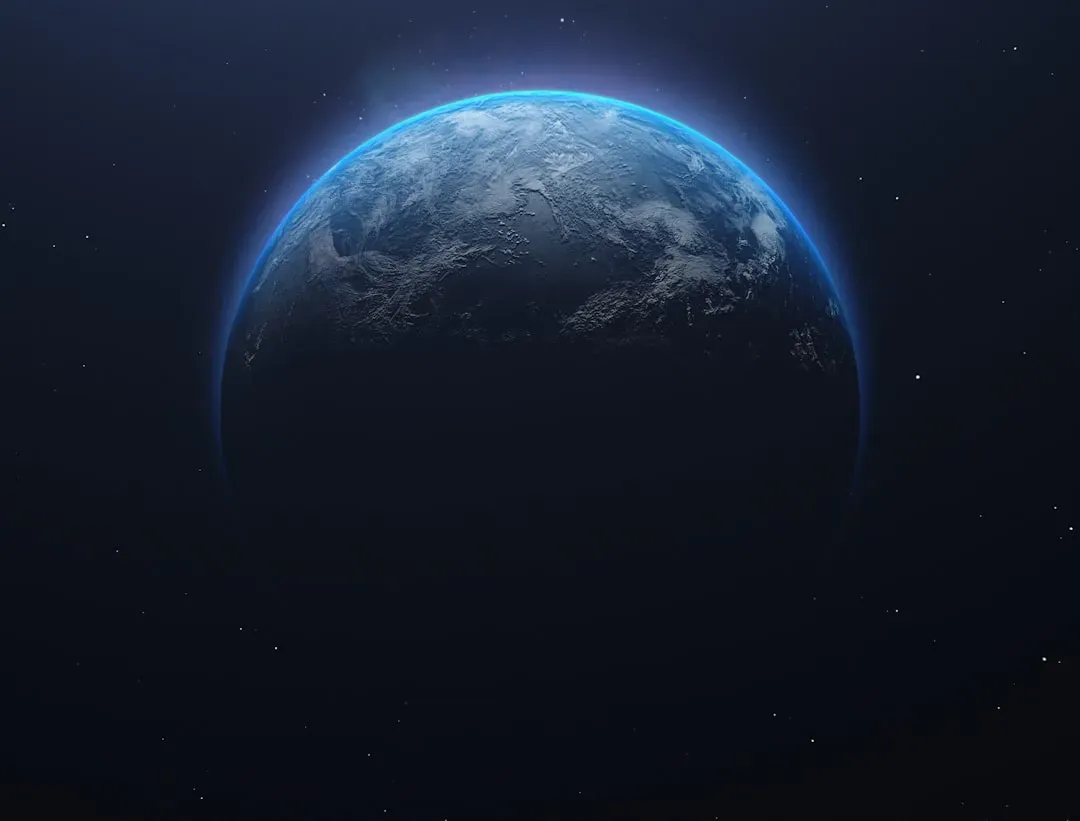
You don’t need to visit a black hole to experience gravitational time dilation; it’s happening to you right now. The higher you are above Earth’s surface, the weaker gravity is, and the faster your time passes relative to someone lower down. If you lived your whole life in a high-rise penthouse while your twin lived at sea level, you’d end up slightly older than your twin, by a sliver of a second. Tiny, yes – but real.
Scientists have literally measured time running differently between floors of the same building using state-of-the-art atomic clocks. The differences are measured in billionths or trillionths of a second, but modern instruments can see that small. It’s a quiet, humbling reminder that there is no single, global “now” ticking the same way for everyone. Even within the walls of your own home, time is just a little bit uneven.
What This Does To Our Idea Of Reality And “Now”
Once you accept that time can stretch, it becomes hard to hang on to the old picture of a universal present shared by all observers. In relativity, what counts as “happening right now” depends on where you are and how you’re moving. Two people in different gravitational fields, or moving at different speeds, will slice spacetime into past, present, and future in slightly different ways. It’s like they’re carrying their own personal clocks and rulers, and nature respects them all without picking a favorite.
There’s something unsettling but also freeing about this. The universe is not built around human intuition or our sense that time should be simple, straight, and fair. Instead, time is part of a flexible geometry that bends with mass and motion. You could say the cosmos cares more about consistency in its equations than about our craving for one absolute timeline. In that sense, discovering that time is not constant is a bit like discovering the Earth isn’t flat: it might feel disorienting at first, but it brings you closer to how things really are.
Living In A Universe With Elastic Time
Time, it turns out, is not a rigid metronome but a responsive, malleable part of the universe’s structure. Massive objects like planets, stars, and black holes pull on spacetime, slowing clocks and reshaping what “later” and “earlier” mean for different observers. From GPS satellites overhead to tiny time shifts between your feet and your head, gravitational time dilation is woven into both cutting-edge physics and the quiet details of everyday life.
We evolved with senses tuned to solid ground and blue skies, not to the subtle warping of time by gravity, so it’s no surprise it feels so strange. But once you know that time itself can be stretched and warped, it’s hard to look at a ticking clock – or a sunset, or your own aging – in quite the same way. If the very flow of time depends on where you stand, what else that feels fixed might turn out to be more flexible than you ever imagined?