
Imagine waking up one morning and discovering that, without feeling a thing, time has been flowing more slowly for you than for the rest of the world. No sci‑fi machine, no flashing lights, just the invisible hand of the universe quietly stretching and squeezing the seconds of your life. That’s not a movie plot; it’s what modern physics tells us really happens when gravity gets involved.
Time dilation is one of those ideas that sounds abstract until you realize it actually changes how your GPS works, how astronauts age, and even how we understand the beginning and end of the universe. It’s the kind of concept that can make your brain ache a little and then suddenly snap into focus like a magic‑eye picture. Once you see it, you can’t unsee it: time isn’t a universal drumbeat, it’s a flexible rhythm that bends with gravity and motion.
When Einstein Broke Time: The Shocking Idea Behind Time Dilation

At the start of the twentieth century, people generally thought of time as something absolute: the same everywhere, marching forward at the same rate for everyone, like a perfectly ticking cosmic clock. Then along came Albert Einstein and quietly set that clock on fire. He proposed that time and space are woven together into a single fabric called spacetime, and that this fabric can bend, stretch, and twist.
The moment you accept that spacetime can deform, you’re forced to accept that time itself can run differently in different places. An object moving very fast experiences time more slowly relative to something at rest, and an object deep in a gravitational field experiences time more slowly than something farther away. What once sounded like philosophy suddenly became physics, with equations that made very specific predictions. The unsettling part is that every experiment since has lined up with those predictions, not with our old common sense.
Spacetime: The Invisible Stage Where Time Gets Twisted
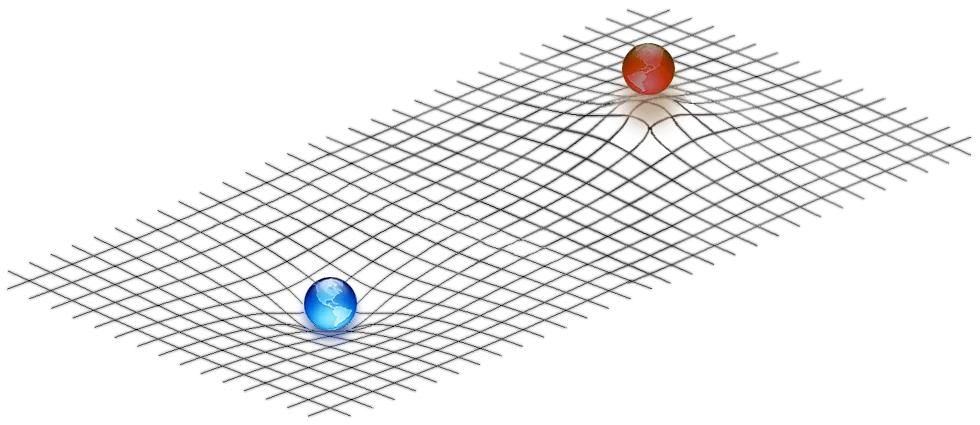
A helpful way to picture spacetime is to imagine a stretchy rubber sheet with a grid drawn on it. If the sheet is perfectly flat, the grid lines are straight and evenly spaced, and time ticks the same everywhere on it. Now place a heavy bowling ball in the middle of the sheet: the grid lines warp, the sheet dips, and anything rolling nearby changes direction. That dip is a crude analogy for gravity bending spacetime.
But here’s the wild part: in reality, it’s not just space that’s curving, it’s time too. Closer to the “bowling ball” of a massive object like a planet, the fabric is pulled tighter, and the path that clocks follow through spacetime changes. They tick more slowly relative to clocks farther away in the weaker part of the gravitational field. In other words, standing near something massive literally drags your personal time compared with someone standing farther out.
Gravity’s Slow Clock: How Mass Literally Changes Time
Gravitational time dilation is the technical name for this slowing of time near massive objects. The stronger the gravity you’re in, the slower time passes for you compared with someone farther out. If that sounds subtle or hypothetical, atomic clock experiments have measured it even over small height differences: clocks at the top of a building tick slightly faster than identical clocks in the basement.
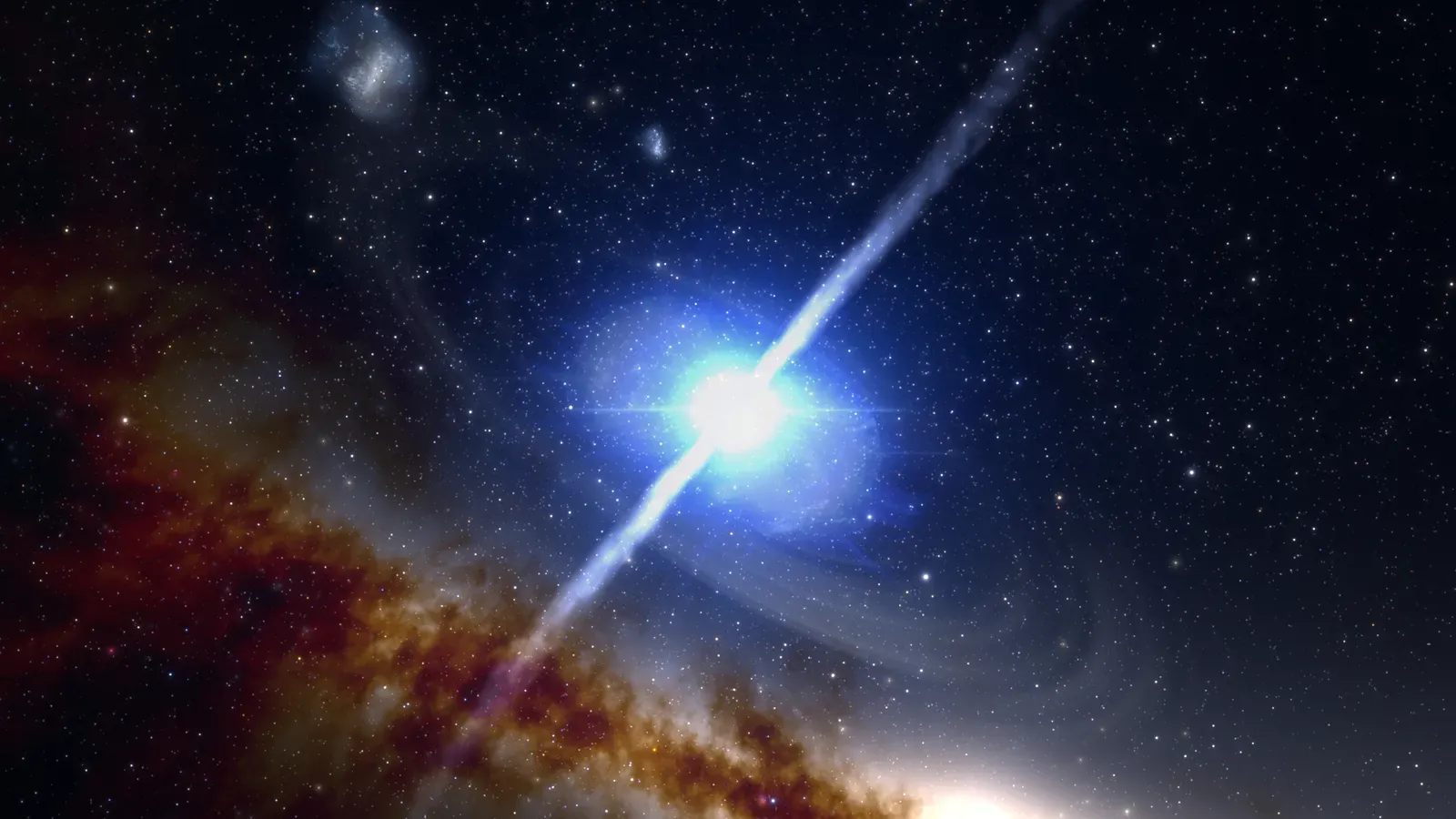
Scale that up to something like a neutron star or a black hole, where gravity is unimaginably intense, and the effect becomes extreme. Time near the surface of a neutron star can pass much more slowly than for someone far away who’s barely feeling its gravity. In a sense, mass is like a weight pulling on the flow of time, stretching it out so that seconds become a little longer the closer you get.
Speeding Through Time: Motion vs. Gravity
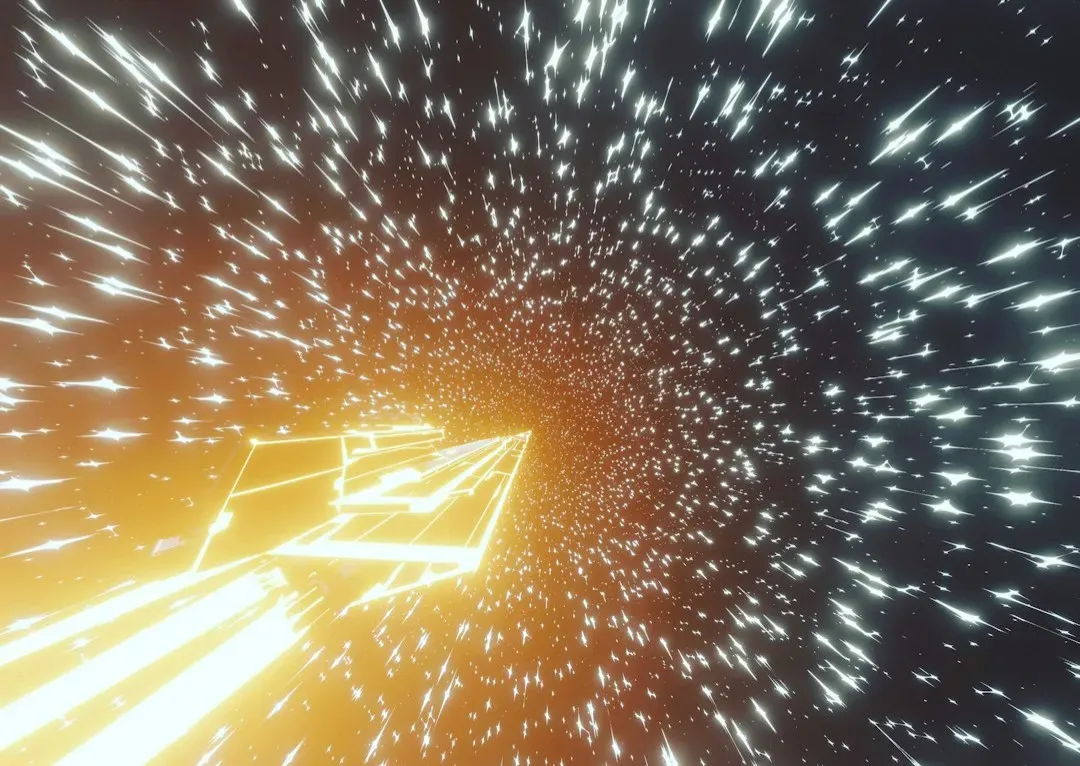
Gravity isn’t the only culprit when it comes to time dilation; high speed does the trick too. According to special relativity, the faster you move relative to someone else, the slower your time runs compared with theirs. It’s not about feeling tired or dizzy from speed; it’s baked into how the universe keeps track of cause and effect. Fast motion distorts the way space and time trade off with each other.
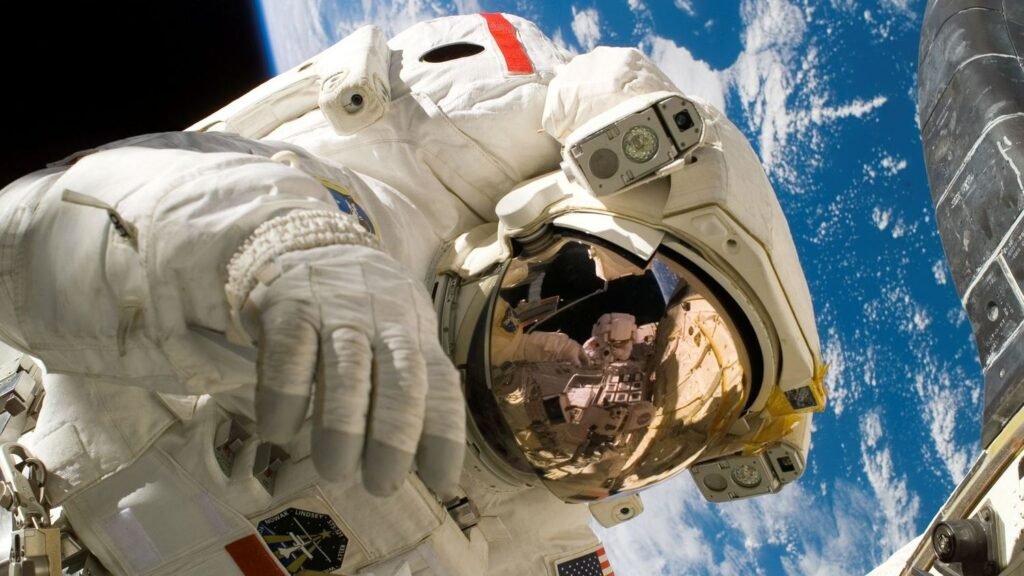
In the real world, both kinds of time dilation – due to gravity and due to speed – often happen at the same time. Astronauts orbiting Earth move very fast, so their motion makes their clocks tick more slowly, but they are also higher in Earth’s gravity field where gravity is weaker, which makes their clocks tick faster than ours on the ground. The final result comes from carefully balancing both effects, and to our surprise, the astronauts actually age a tiny bit faster than we do during some missions.
Everyday Time Bending: Why GPS Would Fail Without Relativity
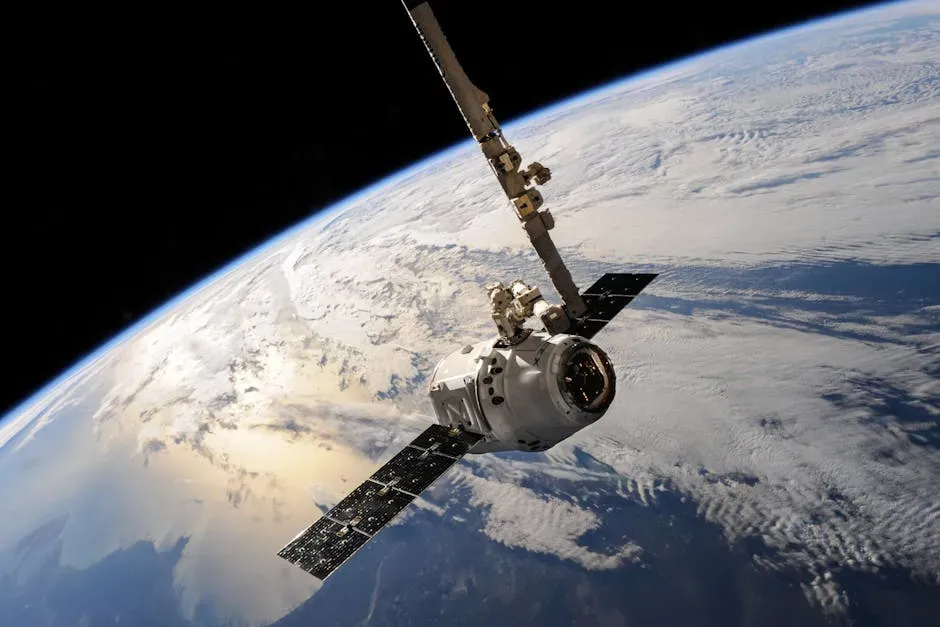
Time dilation might sound like something that only matters near black holes or in particle accelerators, but your phone quietly depends on it. GPS satellites orbit Earth high above the surface, where gravity is weaker and speeds are high. Both gravitational and motion‑based time dilation affect their onboard atomic clocks, making them tick at a slightly different rate compared with identical clocks on Earth.
If engineers ignored relativity, GPS errors would build up rapidly, and your navigation app could be off by kilometers after just a day. Instead, the satellite clocks are calibrated with relativistic corrections from the start, so the system compensates for the warped flow of time. That means every time you get directions to a coffee shop, you’re leaning on the same physics that explains how gravity bends the fabric of existence.
On the Edge of Forever: Time Near Black Holes
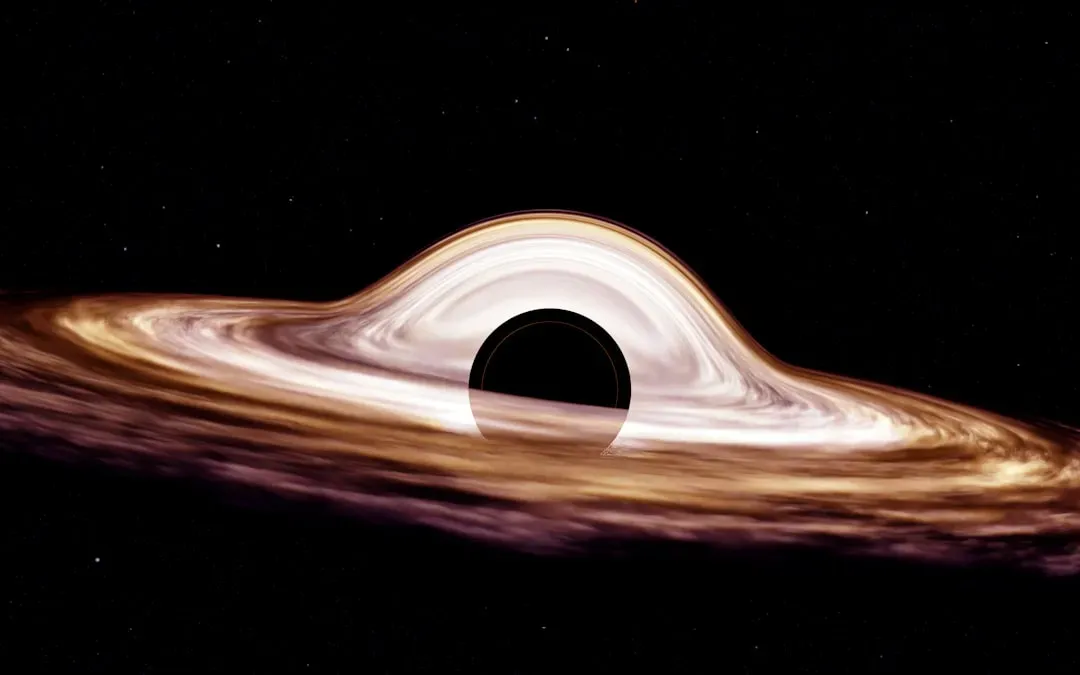
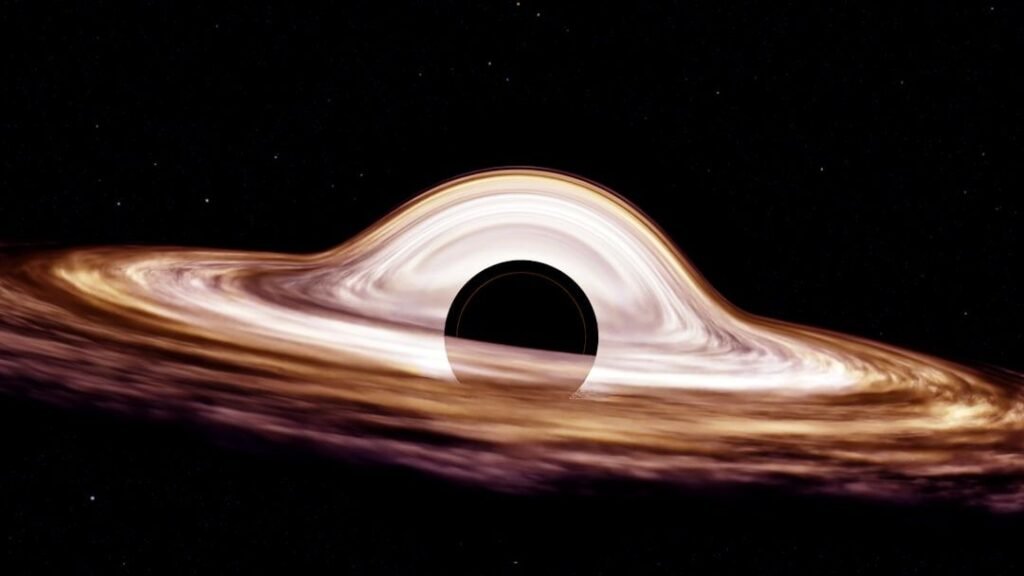
Black holes are where time dilation goes from “interesting” to “mind‑bending.” Near a black hole’s event horizon – the boundary beyond which nothing can escape – the gravitational pull is so extreme that time for someone hovering just above it slows dramatically compared with someone far away. From the distant observer’s point of view, anything falling in appears to freeze and slowly fade as its time stretches out.
From the perspective of the object falling in, though, it experiences its own time normally as it plunges past the point of no return. The catch is that its timeline becomes forever cut off from the outside universe. The closer you get to that horizon, the more spacetime is warped, until time in the outside universe races ahead like a fast‑forwarded movie while your own seconds crawl along. In a strange way, a black hole can act like a one‑way trip into the far future.
Cosmic Time: How the Universe Expands and Warps Our Sense of “Now”
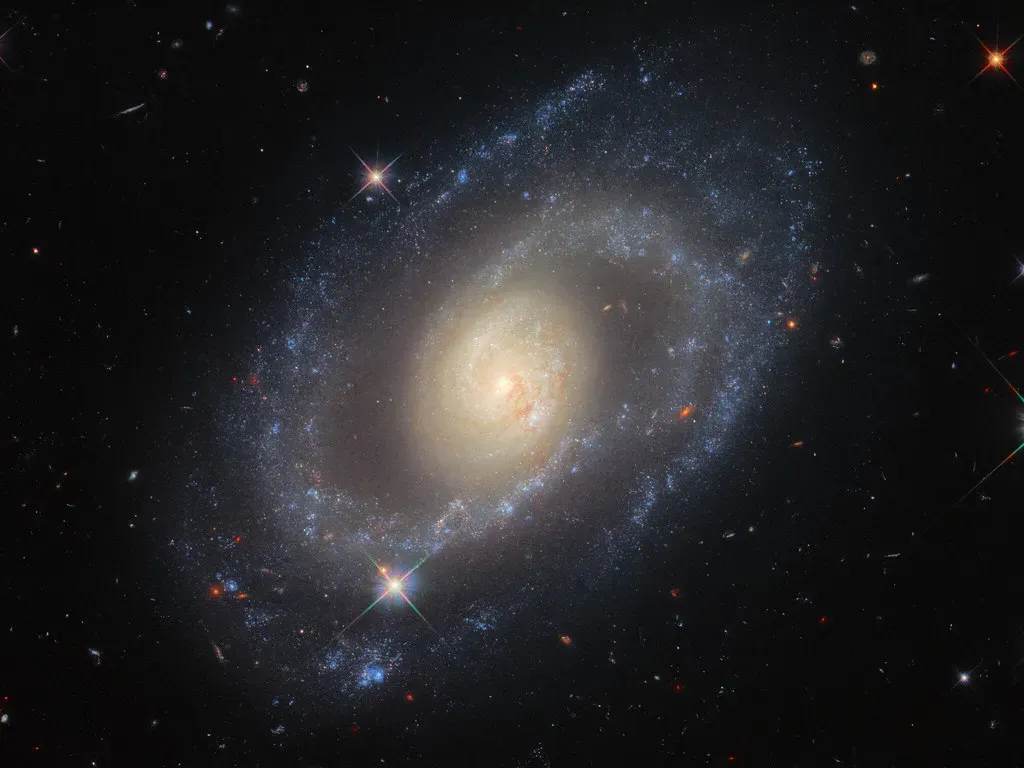
Zoom out from black holes to the entire universe, and time dilation shows up in a different guise. The universe is expanding, and distant galaxies are racing away from us, some close to the speed of light when you factor in the expansion of space itself. Light from those galaxies has been stretched and delayed, so what we see in our telescopes is a kind of time travel to a much younger universe.
On large scales, cosmologists talk about “cosmic time,” a way of measuring time since the Big Bang that is roughly shared by galaxies moving along with the expansion. But once you add in motion and gravity, that shared time gets complicated. Regions near very massive structures or moving at extreme speeds drift out of sync with that cosmic clock. Even the age of the universe is a kind of average, not a single perfectly uniform number experienced by all observers.
Biological Time vs. Relativistic Time: Do You Really Age Slower?
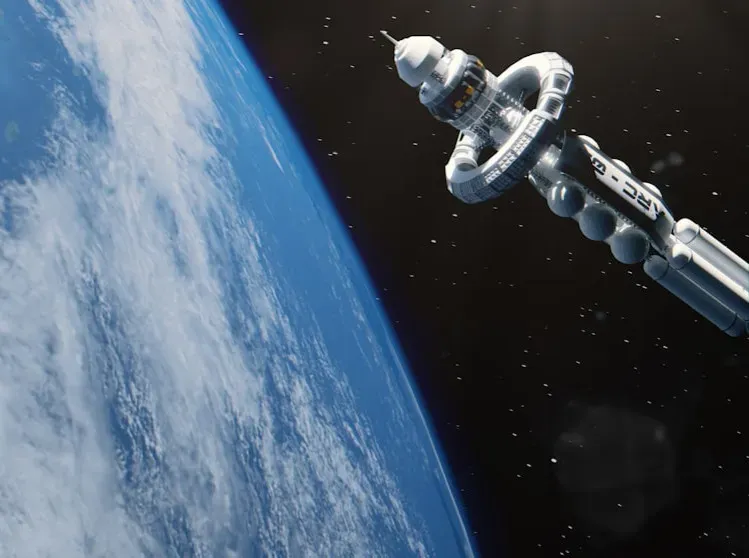
One of the most irresistible questions people ask about time dilation is whether you can “age slower” by moving fast or hanging out in strong gravity. In a strict relativistic sense, yes: your biological processes, your heartbeat, even your thoughts all unfold more slowly compared with someone in a weaker gravitational field or at rest. But from your own perspective, everything feels perfectly normal; your seconds feel like seconds.
The weirdness appears only when you compare timelines. Imagine identical twins, one spending a long time near a very massive object, the other staying safely far away. When they reunite, the one who spent time in the deeper gravitational well will have experienced fewer years, even though both felt like they lived at a normal pace. It’s not science fiction; it’s the same logic that keeps GPS honest, just pushed to a more extreme, human scale.
Time Dilation Experiments: Proving the Universe Really Does This
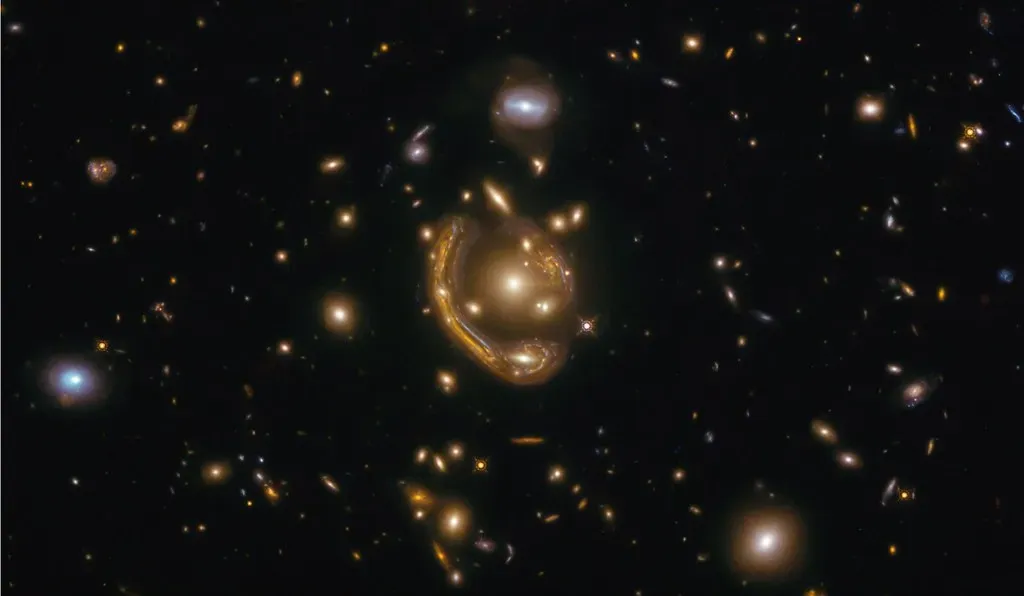
These ideas would be easy to dismiss as clever math tricks if they didn’t match reality, so scientists have gone out of their way to test time dilation. High‑precision atomic clock experiments have flown clocks on airplanes, placed them at different altitudes, and compared their ticks. Over and over, the results line up with relativity: clocks higher up in weaker gravity run faster, and clocks in motion run slower, exactly as predicted.
Particle physics adds another powerful confirmation. Unstable particles created in accelerators should decay quickly, but when they are accelerated to speeds near that of light, their lifetimes stretch out. They travel much farther than they would if time were absolute, because for them, time is literally running more slowly. Nature keeps answering the same way: our intuitive sense of a universal time is simply wrong.
Living in a Bent Universe: What Time Dilation Says About Reality
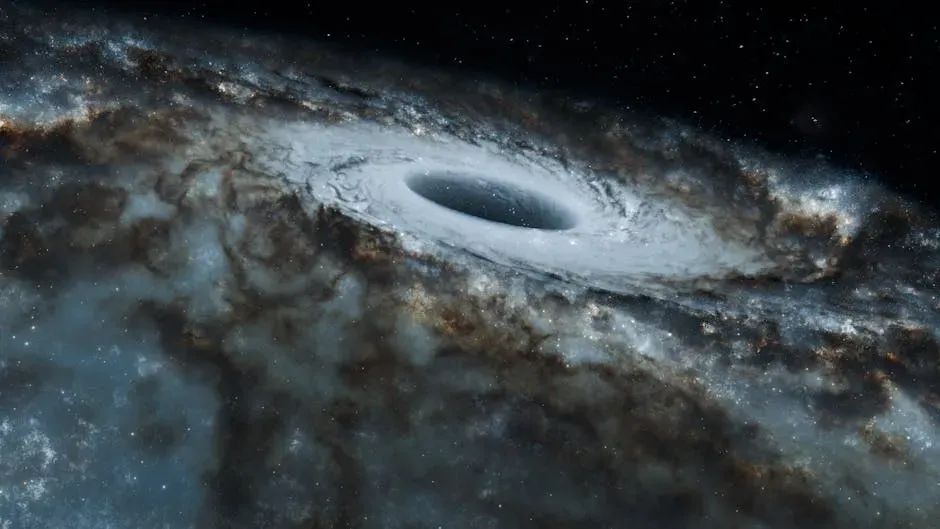
Time dilation forces us to abandon the comforting idea that there is one single, shared “now” for the entire universe. Instead, every observer carries their own version of time, shaped by how they move and how much gravity they feel. It’s unsettling at first, like discovering that your hometown map has always been distorted, but it also explains phenomena that otherwise make no sense.
At a deeper level, it suggests that reality is less like a ticking clock and more like a woven tapestry of events, each thread following its own path through spacetime. Where gravity is strong or motion is intense, those threads stretch and twist, changing how long journeys and lifetimes take. You and I are not just living in time; we’re surfing on a dynamic, curved fabric that quietly shapes every second we experience.