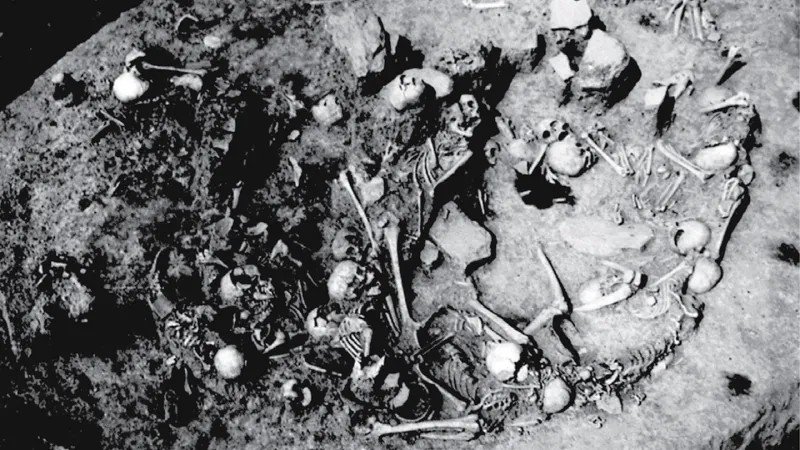
A Shocking Demographic Imbalance (Image Credits: Sciencenews.org)
Northern Serbia – A mass grave dating back nearly 3,000 years has revealed evidence of deliberate violence against women and children during a turbulent period in Europe’s early Iron Age.[1][2]
A Shocking Demographic Imbalance
Archaeologists first discovered the burial pit at Gomolava, an ancient tell site near the Sava River, decades ago. Recent analysis of the 77 skeletons buried there painted a grim picture. More than 60 percent of the remains belonged to children under 12, while over 70 percent of those whose sex could be determined were female.[1]
Among the adults, 87 percent were women. DNA from 25 individuals confirmed the victims came from diverse backgrounds, with no close familial ties—not even shared great-great-grandparents in most cases. Isotope analysis of teeth and bones further showed they grew up in different environments, likely from multiple settlements at least 30 miles away.[3][4]
This unusual composition set the grave apart from typical prehistoric mass burials, which often held equal numbers of men and women or more adult males from battlefield clashes.
Signs of Organized Brutality
Examinations revealed clear marks of violence. Many skulls bore unhealed fractures from bludgeoning with clubs, while others showed stab wounds from blades or knives. Defensive injuries and projectile impacts suggested victims fought back during a close-quarters assault.[2][4]
The bodies, crammed into a shallow pit inside a disused semi-subterranean house less than three meters wide, lay on their sides to fit. Yet the burial included rituals: personal bronze jewelry and ceramics remained untouched, alongside a butchered calf, joints of meat from deer, sheep, cattle, and pigs, broken grinding stones, and charred millet and barley seeds.[3]
- Bludgeoning and stabbing as primary causes of death.
- No signs of disease or infection, ruling out pandemic.
- Offerings indicate a ceremonial element post-killing.
- Settlement abandoned soon after, without destruction.
Conflicts Over Land and Livelihoods
The massacre occurred around 850 B.C., amid the early Iron Age in the Carpathian Basin. Researchers point to tensions between semi-sedentary farmers reoccupying ancient tells and mobile pastoralists from the Eurasian steppes. Farmers enclosed lands for crops, clashing with herders who needed open pastures.[1][2]
“There’s clearly a choice being made about who’s being killed,” said Barry Molloy of University College Dublin, co-lead of the study. Killing non-combatants aimed to demoralize communities, assert dominance, and send a message beyond a simple raid.[1]
Linda Fibiger of the University of Edinburgh noted the injuries reflected “uninhibited force” in a “brutal event.” The findings, published in Nature Human Behaviour, highlight how farming’s spread intensified organized violence after the Bronze Age collapse.[5]
Broader Lessons from Prehistory
This event underscores the Iron Age’s instability across Europe, with population movements and resource wars reshaping societies. Unlike typical warfare, where women and children might be enslaved, their targeted slaughter here suggests deeper cultural or strategic motives.
The international team, including experts from Serbia, Ireland, the UK, Denmark, and beyond, transformed initial assumptions of a village wiped out. Instead, it points to gathered victims from afar, perhaps captured earlier.
Key Takeaways:
- 77 victims, predominantly unrelated women and children from diverse origins.
- Violence tied to farmer-herder land disputes in 9th-century B.C. Serbia.
- Ritual burial with offerings marks a symbolic power play.
Such discoveries remind us that humanity’s past includes calculated cruelty amid societal shifts. What do you think drove this ancient horror? Tell us in the comments.