
Every so often, space throws us something that makes us question everything. You’d think after studying the cosmos for centuries, we’d have most of the early universe figured out. Turns out, the universe loves keeping secrets. What astronomers recently spotted in the cosmic dawn has sent shockwaves through the scientific community, and honestly, it’s hard to blame them.
An incredibly distant galaxy was observed only two hundred and ninety million years after the Big Bang, but here’s the thing: it shouldn’t exist, at least not in the form we’re seeing it. This discovery is challenging fundamental assumptions about how quickly galaxies could form, grow, and evolve. So let’s dive into what makes this cosmic mystery so extraordinary.
A Galaxy That Defies Expectations
JADES-GS-z14-0 is a high-redshift galaxy discovered in 2024 using NIRCam as part of the James Webb Space Telescope Advanced Deep Extragalactic Survey, with a redshift of about 14.18. When scientists first spotted this galaxy, they nearly dismissed it. The object appeared surprisingly bright, way brighter than anything from that era should be.
The galaxy spans some 1,600 light-years and is pouring out light. To put that in perspective, most galaxies at this stage of universal history were expected to be faint, barely detectable smudges. Instead, JADES-GS-z14-0 is blazing like a beacon across billions of years. It’s like expecting to find a tiny campfire in the wilderness and stumbling across a full-blown bonfire instead.
The Puzzle of Early Cosmic Maturity
What really threw scientists for a loop was the galaxy’s composition. The oxygen detection shows that this early galaxy is more chemically mature than expected. Elements heavier than hydrogen and helium require multiple generations of stars to form, live, and die in spectacular supernova explosions.
Researchers had thought that, at 300 million years old, the Universe was still too young to have galaxies ripe with heavy elements, however the studies indicate JADES-GS-z14-0 has about 10 times more heavy elements than expected. Think about that for a moment. The universe was barely out of its infancy, yet this galaxy had already experienced cycles of stellar birth and death. One astronomer compared it to finding an adolescent where you’d only expect babies.
Breaking Records and Scientific Models
NIRSpec observed this galaxy for almost ten hours, and when the spectrum was first processed, there was unambiguous evidence that the galaxy was at a redshift of 14.32. This shattered the previous record for the most distant galaxy ever confirmed. The team had to be certain though because extraordinary claims demand extraordinary evidence.
The team first observed the object more than a year ago, but its brightness and proximity to another galaxy was puzzling, while they had a preliminary redshift finding, the team later obtained a spectrum that confirmed the galaxy’s distance. Scientists are trained to be skeptical, especially when data contradicts established models. Initially, researchers wondered if they were looking at something closer or perhaps some cosmic optical illusion.
The James Webb Telescope’s Revolutionary View
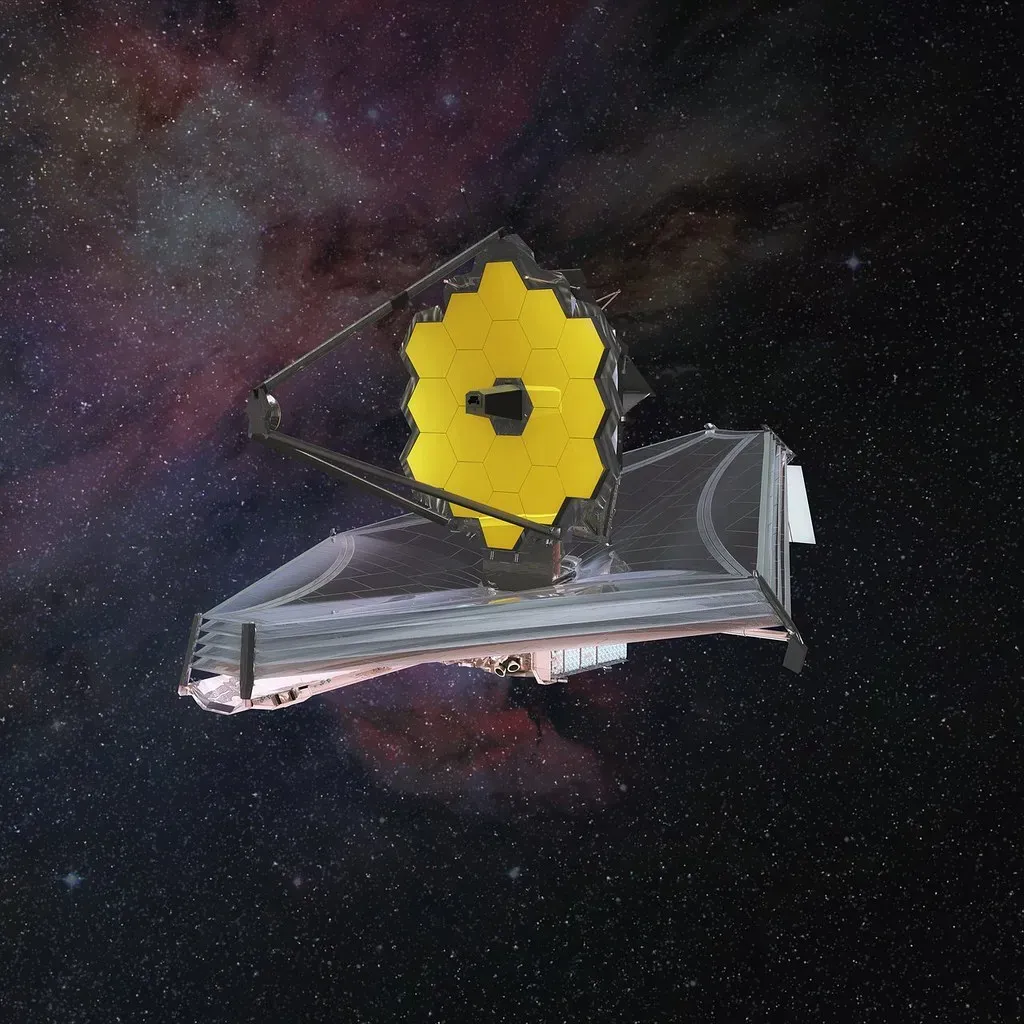
None of this would be possible without the James Webb Space Telescope’s remarkable infrared capabilities. Because of the expansion of the universe, the light from distant galaxies stretches to longer wavelengths as it travels, this effect is so extreme for these galaxies that their ultraviolet light is shifted to infrared wavelengths where only JWST can see it.
Webb is able to see back to about 100 million to 250 million years after the Big Bang. The telescope essentially functions as a time machine, peering through cosmic history to witness events that happened when our universe was just a toddler. It’s mind-boggling when you think about the photons that traveled for over thirteen billion years just to hit Webb’s mirrors.
Rapid Star Formation in the Infant Universe
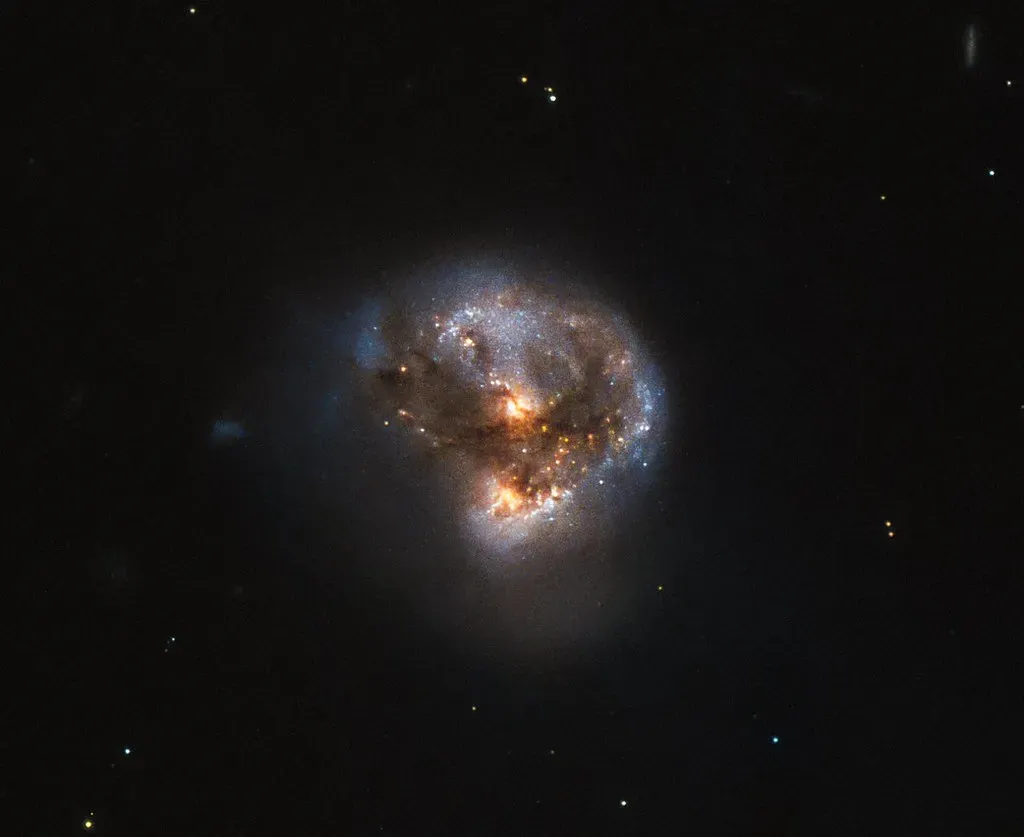
Analysis demonstrated significant ionized gas emission, including oxygen, suggesting that massive stars formed and died early in the galaxy’s life, contradicting theoretical models of early galaxy formation. The galaxy wasn’t taking its time building up mass gradually as models predicted. Instead, it seems to have hit the cosmic gas pedal hard right from the start.
The study outlines the theory that JADES-GS-z14-0 contained half a billion solar masses, with strong star formation in the previous few million years. That’s an astonishing amount of stellar material to accumulate in such a short cosmic timespan. Previous theories suggested early galaxies would grow slowly, methodically, but this discovery suggests the early universe was far more dynamic than we imagined.
What This Means for Cosmic History
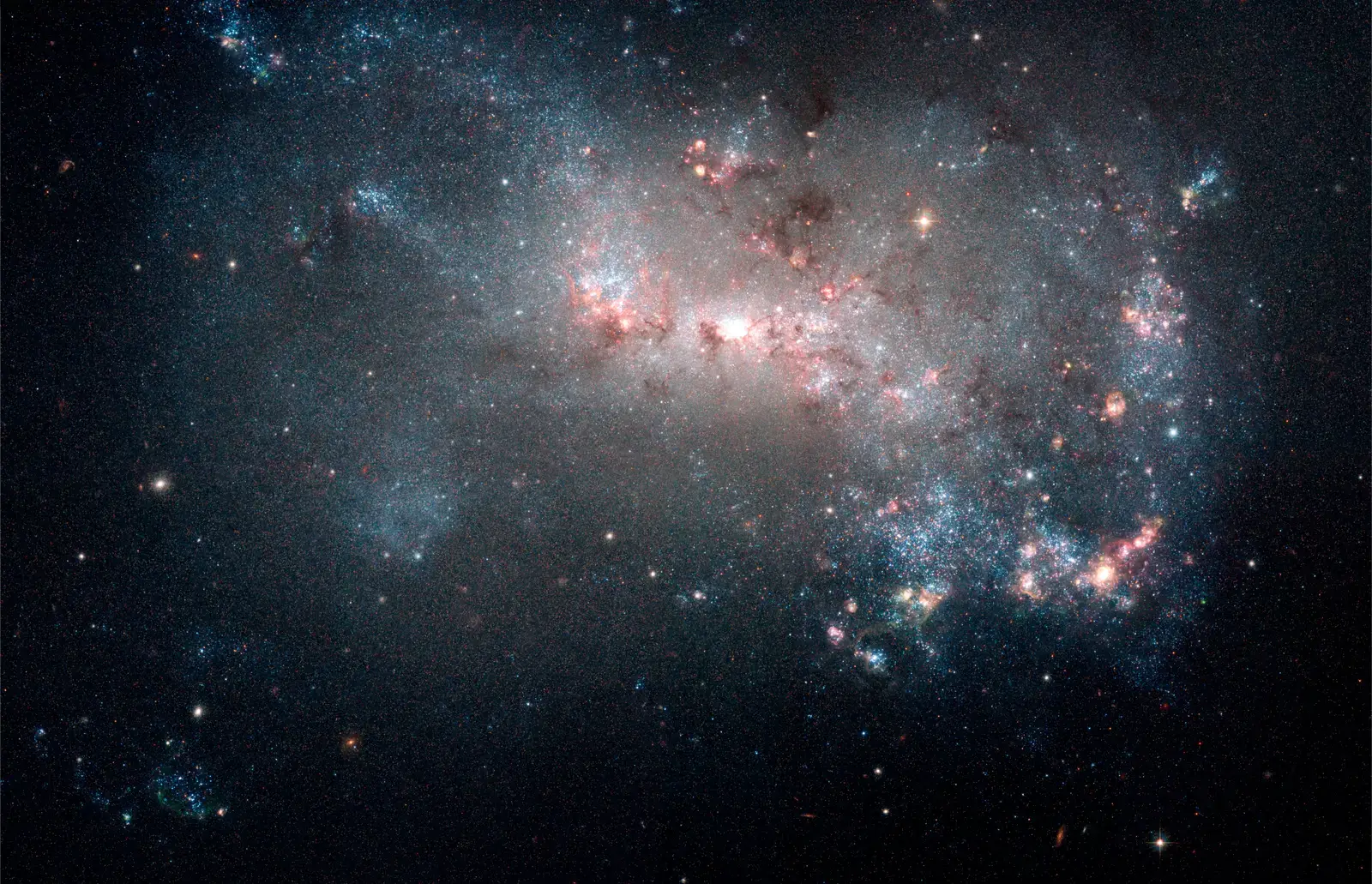
This record-breaking detection makes astronomers rethink how quickly galaxies formed in the early universe. The implications stretch far beyond just one unusual galaxy. If JADES-GS-z14-0 formed this rapidly, it likely wasn’t alone. Other similar galaxies probably existed during this period, fundamentally changing our understanding of the cosmic dawn.
Its age, size, and luminosity added to a growing body of evidence that current theories of early star and galaxy formation are incomplete. Science advances not just through confirmation but through contradiction. When observations clash with theory, that’s where the most exciting discoveries happen. This galaxy is telling us there are gaps in our knowledge, pieces of the cosmic puzzle we haven’t figured out yet.
The Mystery of Little Red Dots
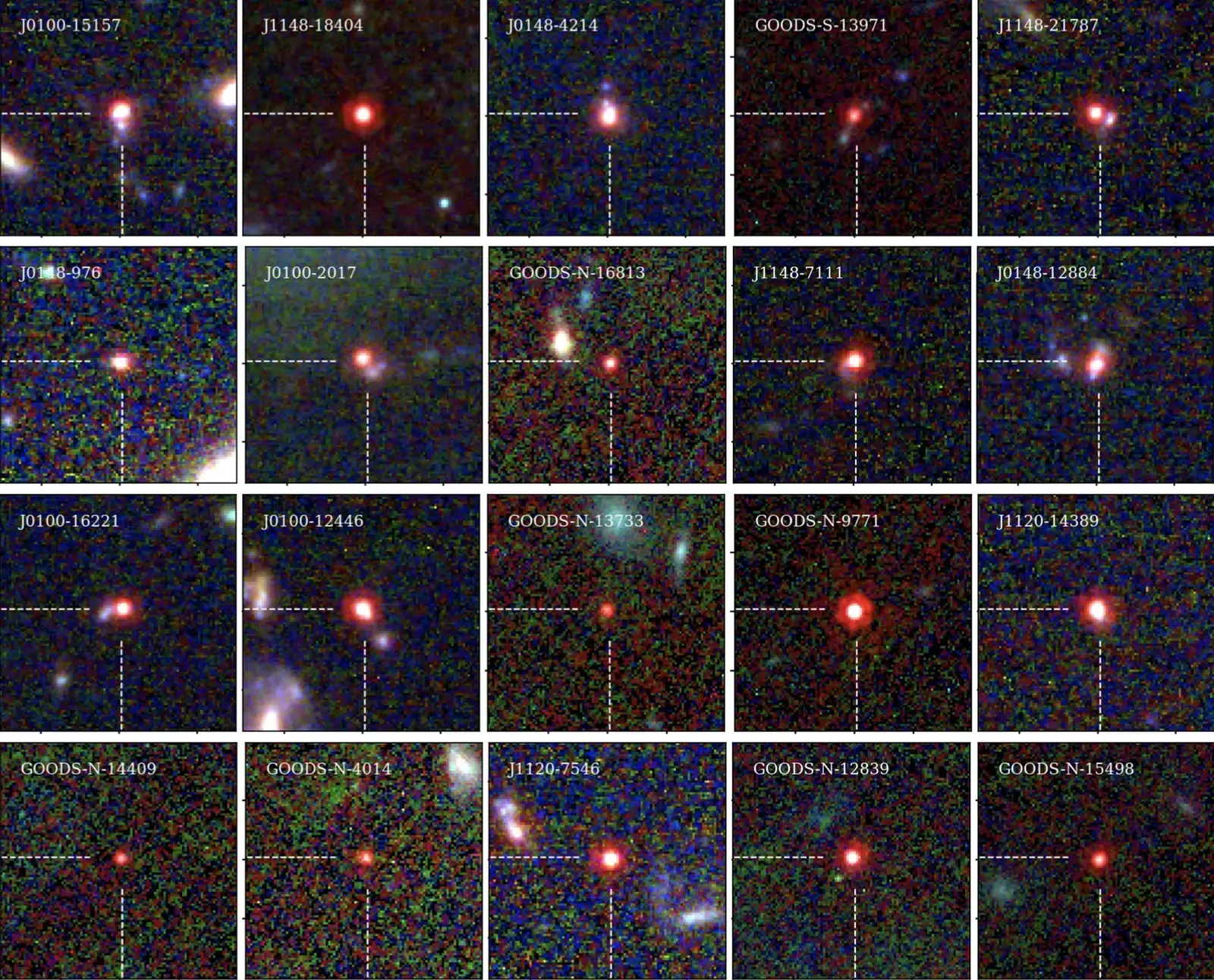
Actually, JADES-GS-z14-0 isn’t the only oddity Webb has found from this era. What are known as little red dots, which showed up in Webb observations, were all thought to be galaxies at first, with their low X-ray emissions and spectral properties that are somewhat bizarre. Some of these objects might not be galaxies at all but rather early black holes or something we haven’t even theorized yet.
If confirmed as a protogalaxy, the object will officially be 110 million years older than the current-oldest-known galaxy, MoM-z14, which began shining 280 million years after the Big Bang. The race to find earlier and earlier cosmic objects continues, with each discovery pushing our understanding further into the mysterious fog of the universe’s beginning. Who knows what Webb will spot next?
Conclusion
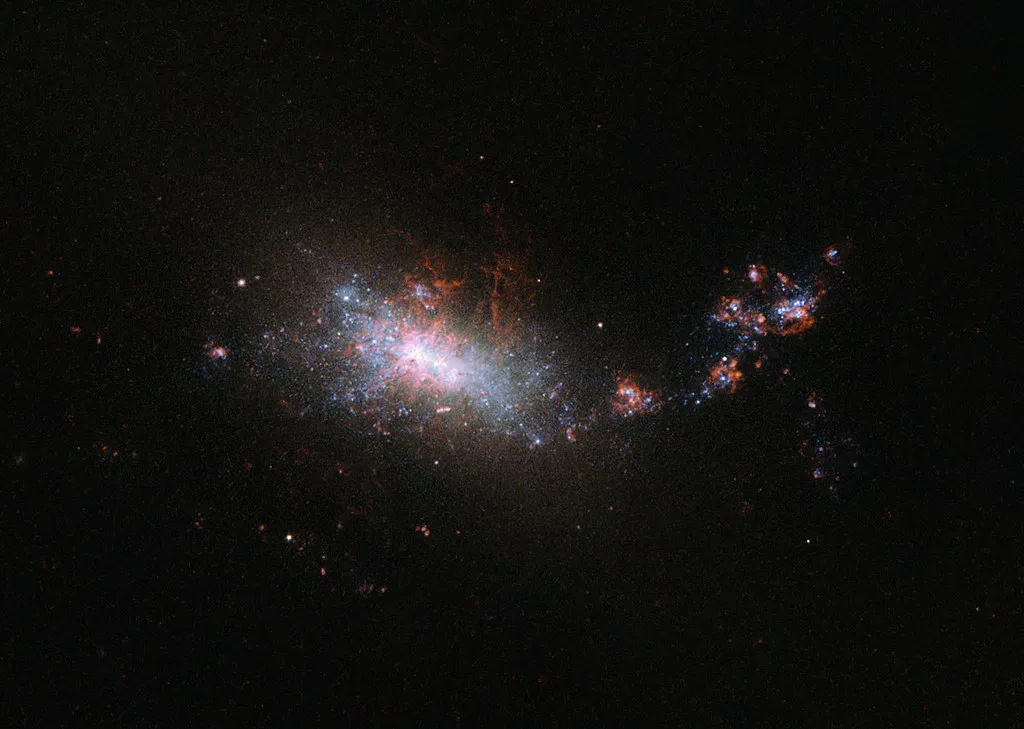
The discovery of JADES-GS-z14-0 represents more than just a new record. It’s a cosmic wake-up call that our models of the early universe need serious revision. This blazing galaxy, bursting with mature chemical elements just a fraction of cosmic history after the Big Bang, shouldn’t exist according to everything we thought we knew.
Yet there it is, captured in stunning infrared detail, forcing astronomers to go back to the drawing board. The early universe was apparently far more bustling, dynamic, and complex than our best theories predicted. What other surprises are lurking in those first hundred million years of cosmic time?
It makes you wonder what else we’ve gotten wrong. Perhaps the universe’s early chapters are far more dramatic than we ever imagined. What do you think this discovery means for our understanding of cosmic origins?