
In the deep ocean, a cuttlefish shifts its skin from pebble-gray to pulsing neon in a fraction of a second, matching the background so perfectly that even a hunting shark misses it. Far above, high-energy particles from distant galaxies slam into Earth’s atmosphere, sparking light our eyes can’t see and triggering tiny cascades of energy. Between these two extremes lies a common thread: invisible forces shaping life and behavior in ways we’re only just starting to understand. For decades, biologists treated many animal feats as clever tricks of evolution; physicists mostly ignored them as “messy biology.” Now the boundaries are blurring. As researchers track how animals tap into quantum effects, electric fields, and subtle distortions of space and time, they’re uncovering a new story: our planet is full of creatures quietly hacking the deep physics of the .
The Hidden Clues: Animals as Living Physics Experiments
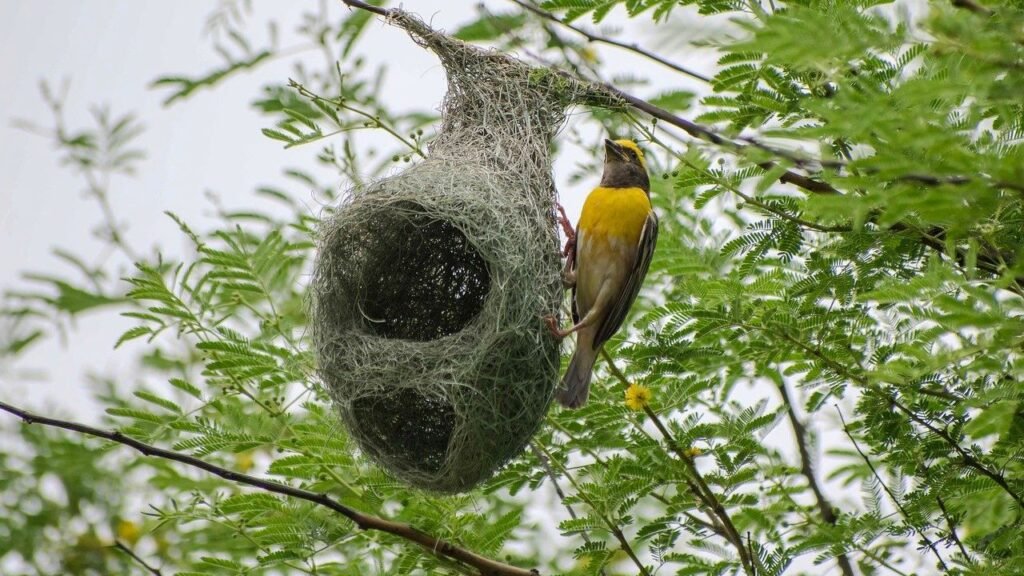
Walk through a forest at night and you’re surrounded by experiments no laboratory could fully control. Migrating birds silently adjust their course using Earth’s magnetic field, apparently sensing quantum-level reactions in proteins inside their eyes. Tiny marine worms launch glowing clouds into the water, turning bioluminescence into a timed signal that interacts with currents and light scattering. Even desert ants, marching in brutal heat, somehow track distance and direction with a precision that hints at internal “integrators” tuned to gravity and motion.
For years, scientists described these abilities in simple evolutionary terms: behaviors that worked were passed on. That explanation is still true, but it’s incomplete. What’s becoming clear is that animals are not just passively shaped by physical forces; they actively exploit them, like engineers who never went to school but learned by trial and error over millions of years. In that sense, an albatross gliding across an ocean swell without flapping its wings is also running a real-time model of turbulence, air density, and lift. The hidden clue is this: if we want to understand , we may need to start by paying closer attention to what animals are already doing with it.
Quantum Senses: How Creatures Touch the Invisible
The idea that a bird or a fish might use quantum physics sounds like science fiction, but the evidence is getting harder to ignore. Some migratory birds seem to detect Earth’s magnetic field through a process involving entangled electron spins in special light-sensitive proteins, turning a quantum reaction into a navigational compass. Bees and other insects may rely on quantum coherence in their eyes to sharpen their vision in low light, effectively boosting weak signals before noise drowns them out. In the ocean, certain fish species possess electroreceptors so sensitive they can detect fields created by the movement of prey or even by the planet itself.
These abilities expose a strange truth: animals routinely interact with phenomena that remain abstract for most of us. Quantum effects, which we usually learn about through weird thought experiments and complex equations, become everyday tools for survival in the wild. It flips the usual hierarchy, where physicists lead and biology follows. Instead, evolution has been running a four-billion-year research program on quantum engineering, with no grant proposals and no lab walls. That should make us wonder how many other quantum-scale tricks are hiding in plain sight, coded into behaviors we haven’t learned to interpret yet.
Gravity, Time, and the Animal Clockwork
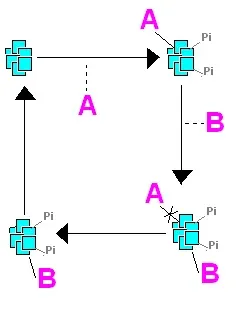
At first glance, the pull of gravity and the flow of time seem too blunt to matter for something as specific as animal behavior. Yet precision timing and motion are everywhere in nature, from the synchronized flashing of fireflies to the perfectly timed leaps of hunting mantis shrimps. Many animals carry internal clocks that are so finely tuned they can predict tidal changes, sunrise, or seasonal shifts, aligning their activity with slow, predictable changes in Earth’s orientation and orbit. On migratory journeys that span continents, small timing errors accumulate into deadly detours, so evolution has favored creatures that can sense and correct tiny mismatches.
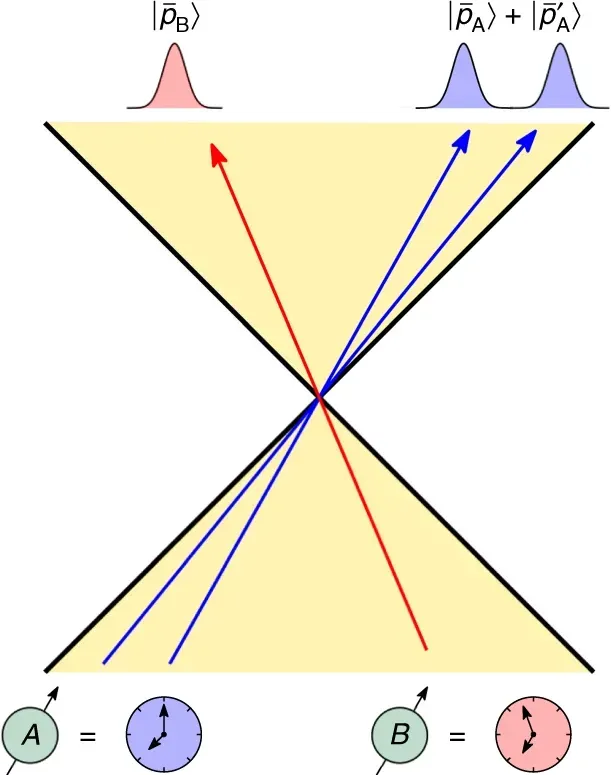
What’s mind-bending is that these biological clocks operate in a universe where time and space are not fixed but subtly warped by gravity and speed. In practical terms, an animal on a mountain and an animal at sea level experience minutely different flows of time, even if neither could ever notice it consciously. Still, when you add up millions of years and countless generations, it’s not crazy to imagine that life has brushed up against these relativistic edges more than we realize. Think of salmon, returning with uncanny accuracy to the river where they were born, or sea turtles crossing open oceans on long arcs that match shifting currents and planetary cycles. They are not doing general relativity on a chalkboard, but their survival depends on navigating a universe where space, time, and gravity are inseparable.
Electromagnetic Worlds: Life in Fields We Cannot See
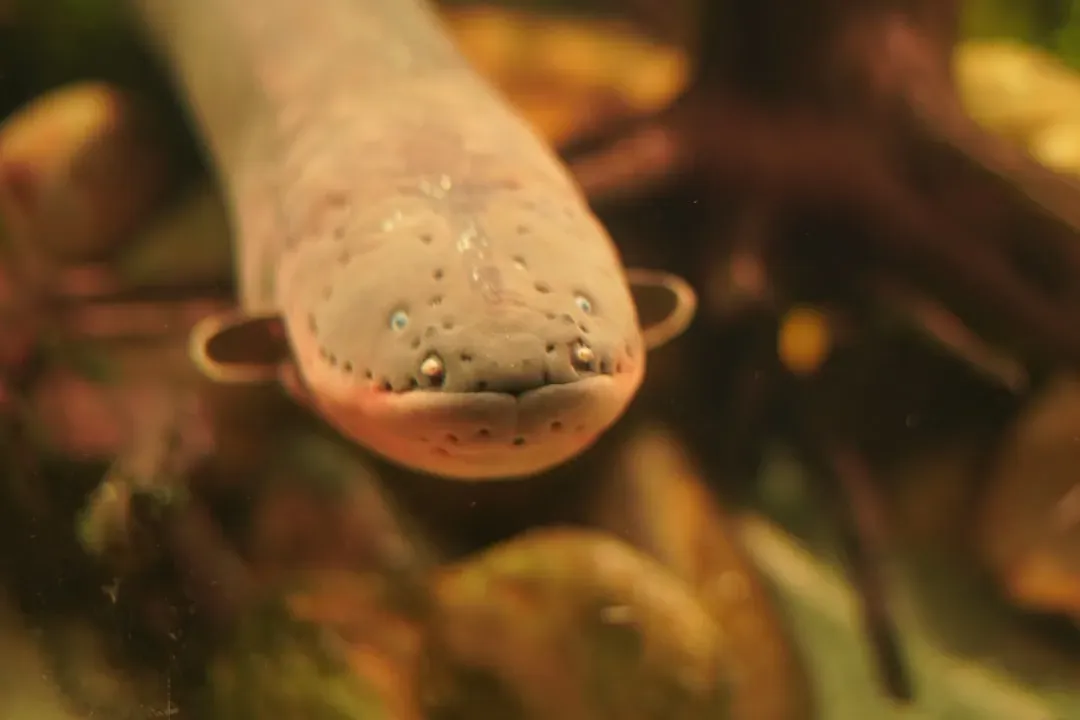
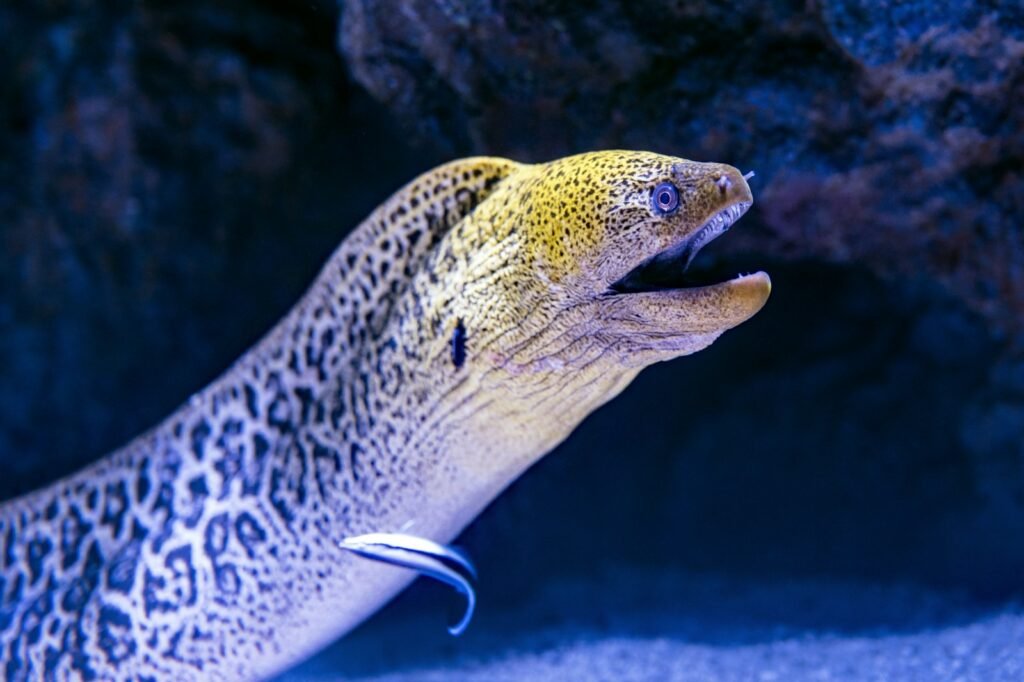
Our daily experience of electricity and magnetism is mostly limited to phone batteries, power lines, and the occasional static shock, but for many animals these forces define their reality. Sharks, rays, and some bony fish carry specialized organs that can detect minuscule electric fields produced by the muscles and nerves of hidden prey. Certain eels and weakly electric fish go further, generating their own fields and reading distortions in them as a kind of three-dimensional map of their surroundings. To them, a murky river or pitch-dark lake is filled with sharp contours and moving shapes, sketched not in light but in invisible lines of force.
Birds, again, seem to live in a layered world where magnetism and vision blend into a single sense. Experiments suggest that some species might literally see magnetic field lines as patterns superimposed on the landscape, a kind of built-in heads-up display that guides their migrations. On smaller scales, insects use polarized light – a structured form of electromagnetic radiation – to find their way even when the sun is hidden. When you step back, it starts to look as if the universe offers multiple overlapping “channels” of information, and humans happen to be tuned to just one or two of them. Animals, by contrast, are distributed across the spectrum, decoding fields and forces that reshape our idea of what a sensory world can be.
From Ancient Curiosity to Modern Physics-Biology Mashups

Humans have been noticing strange animal abilities since long before we had equations to describe them. Ancient sailors watched birds to guess the direction of land, and farmers marked the timing of insect swarms and bird migrations to anticipate seasonal changes. They saw patterns but lacked a framework to connect those patterns to deeper physical laws. As science matured, biology and physics split into separate silos: one focused on cells and organs, the other on particles and fields. In that separation, many of the most intriguing questions about how animals tap into the physical fabric of the universe were set aside as curiosities.
Now those walls are starting to crumble. Physicists, biologists, and engineers are forming unlikely collaborations to probe quantum navigation, bioelectric sensing, and ultra-precise animal timing. High-speed cameras, satellite trackers, and quantum-level detectors are revealing layers of behavior once invisible to human observers. For example, researchers combining physics-style modeling with field data have shown that seabirds surfing wind gradients can minimize energy usage in ways that rival the best algorithms in aerospace engineering. The story here is not just that we finally have better gadgets. It’s that we’re finally willing to admit that nature might be ahead of us in using physics creatively, and that humility is changing how both fields evolve.
Why It Matters: Rethinking Physics Through Animal Lives
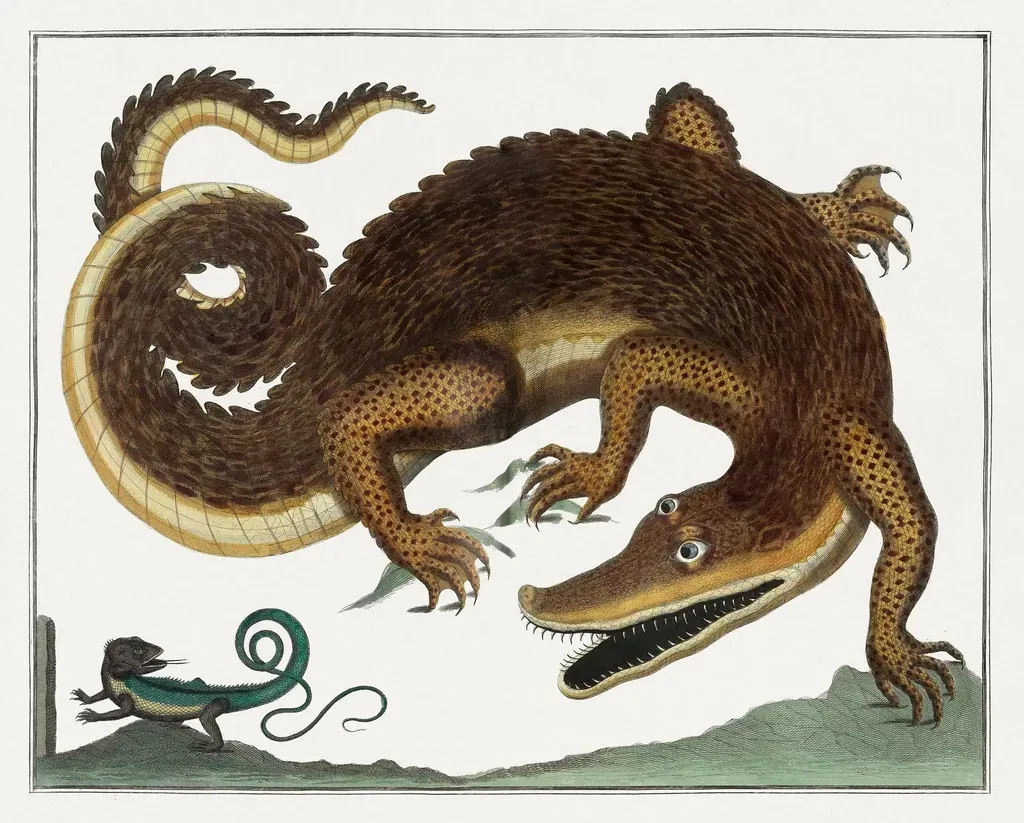
It’s tempting to treat these discoveries as delightful trivia – fun facts about clever animals that make us smile and then move on. But something bigger is at stake. When we see an organism using quantum effects to navigate, or reading tiny electric signals in a murky river, it forces physics out of the realm of pure abstraction and into the messy, urgent business of staying alive. That shift has consequences for how we design technology, how we explore the universe, and even how we define intelligence. If an unassuming bird can solve a navigation problem that strains our best instruments, it suggests that “smart” might also mean “deeply embedded in physical reality.”
Compared with traditional physics experiments – carefully isolated systems, controlled conditions, and tidy equations – animal behavior looks chaotic and noisy. Yet that is exactly why it is so important. The universe we inhabit is not a vacuum chamber; it is a turbulent planet bathed in radiation, crisscrossed by magnetic fields, wrapped in shifting atmospheres and spinning in curved spacetime. Animals are living test cases for how the laws of physics play out under those conditions, over evolutionary timescales we can’t reproduce in a lab. Taking them seriously as partners in discovery may nudge physics toward questions it might otherwise ignore, and give biology a more fundamental language for describing what life does.
The Future Landscape: New Tools, New Questions, New Risks
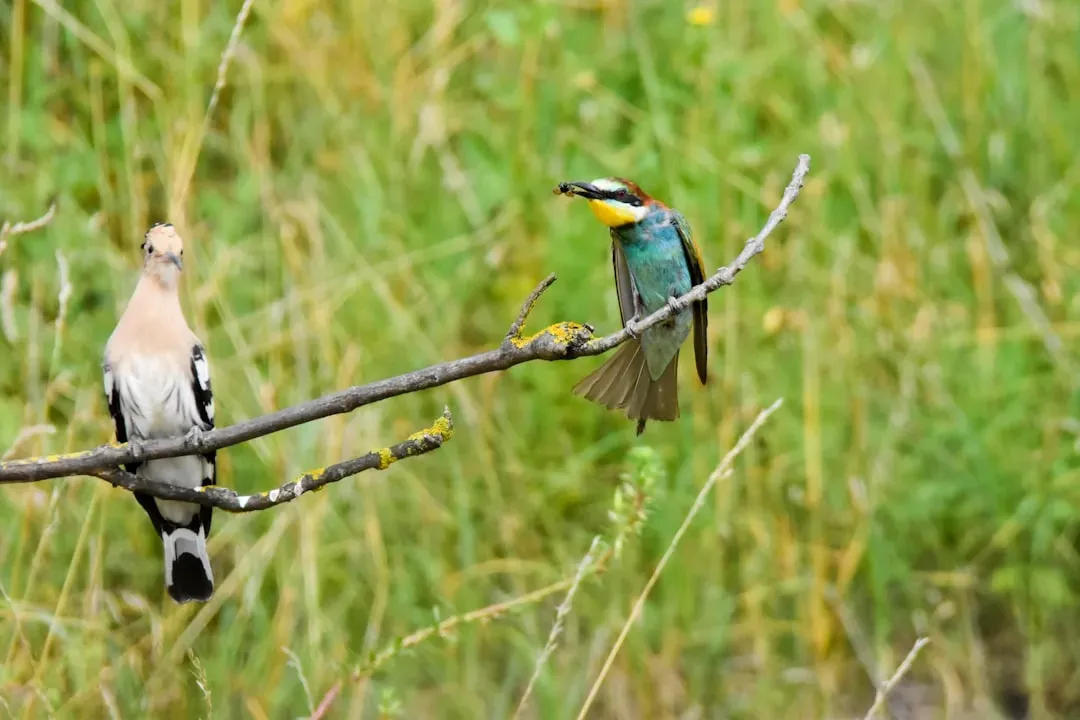
Looking ahead, the frontier where animal behavior meets fundamental physics is likely to get stranger, more exciting, and more uncomfortable. New satellite tags and miniaturized sensors will let scientists follow birds, whales, and insects through magnetic storms, solar flares, and shifting gravitational environments, turning each migration into a natural experiment on a planetary scale. Quantum-enabled instruments could soon be small enough to ride on an animal’s back, measuring the same subtle fields and particles the animal itself is using. At the same time, computer models inspired by animal strategies – like the way albatrosses glide or sharks track electric fields – are already influencing designs for drones, underwater robots, and navigation systems that work when GPS fails.
But there are risks in turning animals into mere toolkits for human technology. As climate change and habitat loss disrupt migration routes and breeding grounds, the very behaviors we hope to study may begin to fracture or disappear. The irony is sharp: just as we realize how much animals can teach us about the universe, we’re destabilizing the environments that shaped those lessons. Future work will have to balance curiosity and caution, using new technology to learn from wild creatures without overwhelming them. If we get it right, we could end up with a richer picture of physics and a stronger argument for protecting the living systems that reveal it.
Living With the Unseen: What This Means for Us
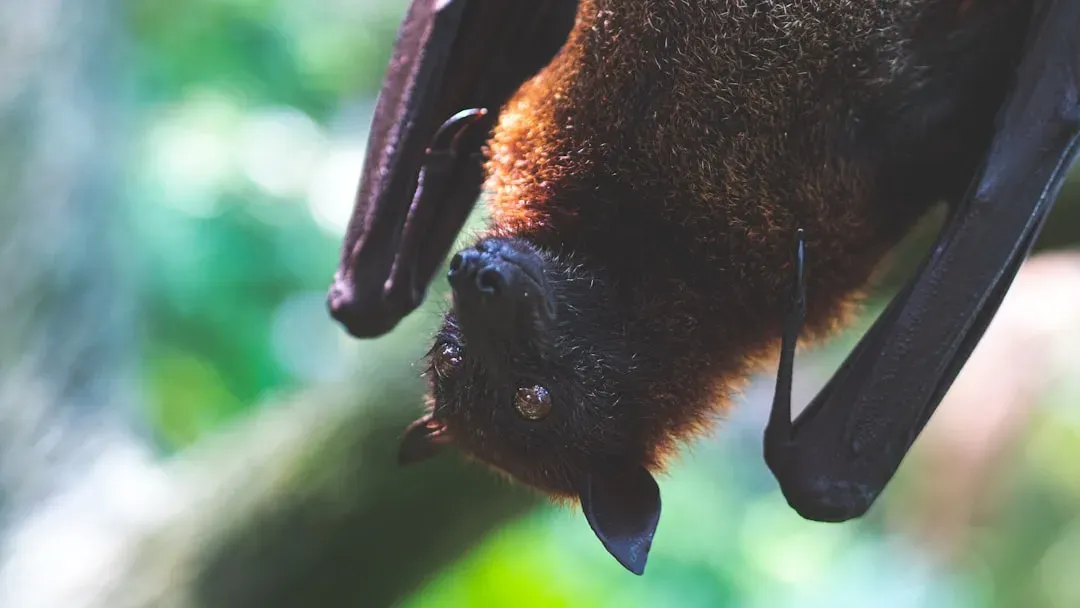
For most of us, the unknown physics of the universe feels distant – buried in black holes, particle colliders, or equations that live only in textbooks. Yet the more we learn, the more it looks like those same deep laws shape the daily drama of life on this planet. A whale tuning in to faint ocean vibrations, a bat weaving through branches guided by echoes, a turtle feeling its way along a magnetic gradient: all are living reminders that reality is layered, and we occupy just one thin slice of it. Recognizing that can be unsettling, because it means our human senses and intuitions are far from complete.
But there is also something strangely comforting in the idea that we share a universe with so many different ways of knowing it. I still remember tagging along with a field biologist years ago, watching shorebirds lift off in sudden unison just before a distant storm rolled in, as if they’d read the sky’s hidden script. At the time, it felt like magic; now I see it as a hint that physics is not a cold backdrop but an active, shaping presence in every feather, fin, and neuron. Paying attention to that might change not only what we know, but how we move through the world – more curious, a bit more humble, and more willing to admit that other species are already experts in forces we barely understand.
What You Can Do: Paying Attention as a Scientific Act

You do not need a telescope or a physics degree to be part of this story. One of the simplest, most powerful things you can do is to start noticing how animals around you respond to subtle shifts in their environment: birds changing flight paths before a storm, insects vanishing during a sudden cold snap, or neighborhood bats adjusting their routes as city lights grow brighter. Keeping a simple nature journal or logging wildlife sightings in community science apps can generate data that researchers actually use to link behavior with environmental conditions. In that sense, paying attention becomes a small but real contribution to understanding how invisible forces shape life.
If you want to lean in further, you can support organizations that protect migratory corridors, marine sanctuaries, and dark-sky reserves – places where animals can continue to run their long, slow experiments with gravity, magnetism, and light without constant disruption. You can also encourage local schools, libraries, and parks to host talks or walks focused on animal senses and physics, turning curiosity into shared experience. None of this requires perfect knowledge, just a willingness to look and to care. is not only out there in distant galaxies; it is also encoded in the flight of a bird over your street tonight, if you choose to look up.
Suhail Ahmed is a passionate digital professional and nature enthusiast with over 8 years of experience in content strategy, SEO, web development, and digital operations. Alongside his freelance journey, Suhail actively contributes to nature and wildlife platforms like Discover Wildlife, where he channels his curiosity for the planet into engaging, educational storytelling.
With a strong background in managing digital ecosystems — from ecommerce stores and WordPress websites to social media and automation — Suhail merges technical precision with creative insight. His content reflects a rare balance: SEO-friendly yet deeply human, data-informed yet emotionally resonant.
Driven by a love for discovery and storytelling, Suhail believes in using digital platforms to amplify causes that matter — especially those protecting Earth’s biodiversity and inspiring sustainable living. Whether he’s managing online projects or crafting wildlife content, his goal remains the same: to inform, inspire, and leave a positive digital footprint.