
It sounds like something out of a cosmic horror story. The most powerful, most ferocious objects in the entire universe – supermassive black holes capable of devouring entire solar systems – are apparently running out of things to eat. If that doesn’t make you stop and think for a second, honestly, I don’t know what will.
A sweeping new survey has pulled back the curtain on roughly 8,000 of these cosmic monsters, and the picture that’s emerging is genuinely surprising. What researchers found challenges some long-held assumptions about how black holes grow, feed, and evolve across billions of years. Let’s dive in.
A Massive Survey That Changed the Picture
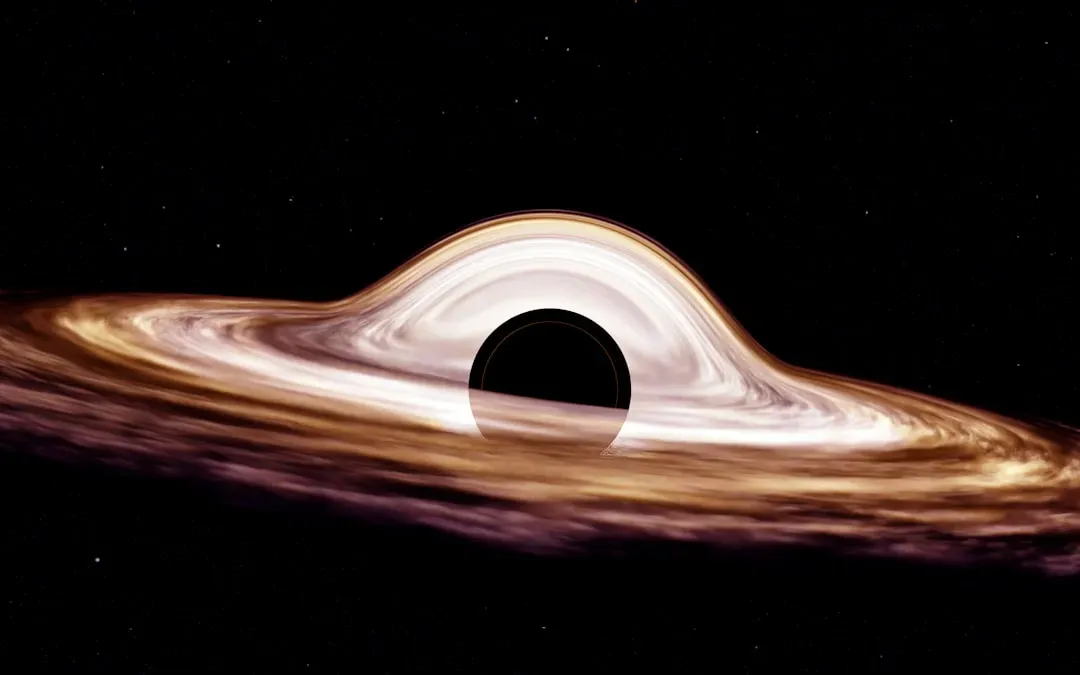
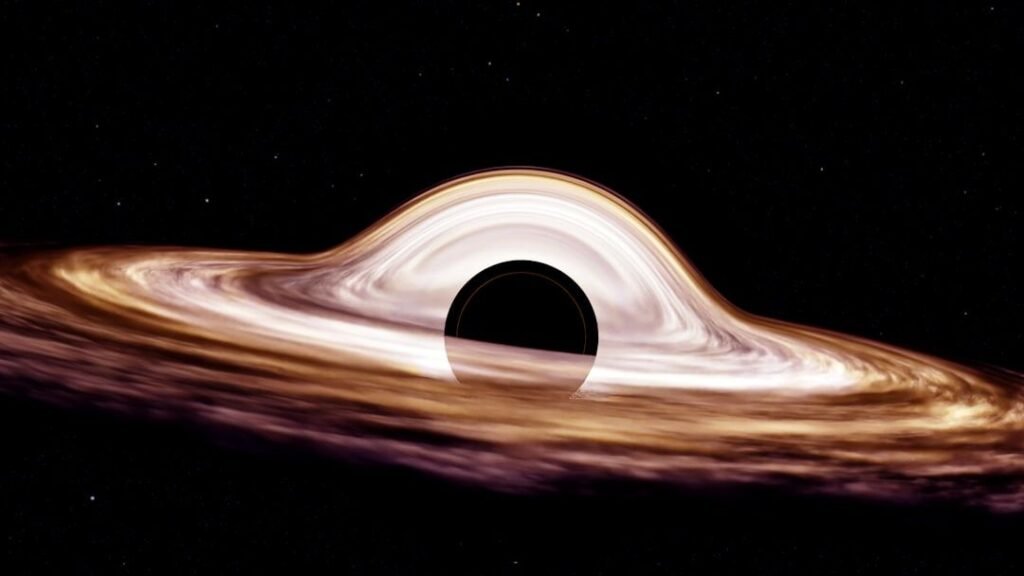
Here’s the thing – studying black holes at a cosmic scale is no small feat. Scientists recently completed one of the most comprehensive surveys of actively feeding black holes ever attempted, cataloguing around 8,000 so-called quasars across a wide sweep of cosmic history. Quasars are essentially black holes in feeding mode, blazing with such incredible luminosity that they can outshine entire galaxies.
What made this survey particularly powerful was the sheer range of cosmic time it covered. Researchers were able to compare how these feeding black holes behaved billions of years ago versus how the most active ones behave in the more recent universe. The contrast turned out to be striking in ways nobody quite anticipated.
What Quasars Actually Are and Why They Matter
Think of a quasar like a cosmic furnace at full blast. When a supermassive black hole has abundant gas and dust spiraling into it, the surrounding material heats up to extraordinary temperatures and releases enormous amounts of energy – that’s your quasar. Some of the most luminous quasars are so bright they were originally mistaken for stars when first discovered in the mid-twentieth century.
They matter enormously to astronomers because they act like time capsules. Since light takes time to travel across the universe, observing distant quasars is literally looking back in time. Studying them lets scientists piece together the story of how galaxies and their central black holes co-evolved across cosmic history, which is a genuinely fascinating puzzle.
The Hunger Peak Was Billions of Years Ago
Here’s where things get genuinely interesting. The survey data strongly suggests that the universe’s black holes were at their most ravenous roughly ten to twelve billion years ago, during what astronomers sometimes call “cosmic noon.” Back then, galaxies were rich with the raw material black holes need to grow – dense clouds of gas, frequent galaxy mergers, chaotic and abundant fuel sources.
The universe at that era was a messier, wilder place. Galaxies were colliding and merging constantly, funneling enormous quantities of material toward their central black holes. It was essentially an all-you-can-eat buffet of cosmic proportions, and the black holes were making the most of it.
The Food Supply Is Drying Up
Fast forward to the present-day universe, and the buffet has largely closed. Galaxies have settled down. Mergers are less frequent. The vast reservoirs of cold gas that once fueled spectacular quasar activity have been either consumed, expelled, or simply used up over billions of years. It’s a bit like watching a once-roaring bonfire gradually reduce to glowing embers.
The survey found clear evidence that even the most luminous, hungriest black holes visible in the relatively recent universe are operating at reduced capacity compared to their ancient counterparts. The implication is almost poetic in a strange way – these monsters that once ruled the cosmos are now, in a sense, slowly fading. I think there’s something genuinely moving about that, even if “moving” feels like an odd word for a black hole.
What the Data Actually Revealed
The researchers behind the survey used data that allowed them to trace the luminosity, mass, and activity levels of quasars across different cosmic epochs. What they found is that the most extremely luminous quasars – the truly hungry giants – are increasingly rare in the modern universe. The numbers drop off significantly as you move from the ancient universe toward the present day.
Importantly, the team also found patterns in how black holes appear to regulate their own feeding. As a black hole grows and feeds, it generates powerful outflows of energy and material that can effectively push away the very gas it needs to continue eating. It’s a self-defeating process in a way, almost like a fire consuming its own oxygen. This feedback mechanism plays a major role in why the hungriest black holes seem to be running out of steam.
What This Means for Our Understanding of Galaxy Evolution
This isn’t just a story about black holes in isolation. The connection between a galaxy and its central supermassive black hole is deeply intertwined. When quasar activity was at its peak billions of years ago, the energy and outflows generated by feeding black holes likely played a significant role in shaping the galaxies around them – heating up gas, halting star formation, and sculpting the structures we observe today.
Understanding how and when black holes transitioned from ravenous to relatively quiet has huge implications for explaining why galaxies like our own Milky Way look the way they do right now. The Milky Way’s central black hole, Sagittarius A*, is extraordinarily quiet by quasar standards today. The findings from this survey help explain why that shift toward quieter black holes is a natural and perhaps inevitable stage in galactic evolution.
What Comes Next for Black Hole Research
Let’s be real – eight thousand black holes sounds like a lot, but in the context of the billions of galaxies in the observable universe, it’s still a relatively focused sample. Researchers are already planning follow-up studies that will use next-generation telescopes and observatories to expand this kind of survey even further. The goal is to map black hole activity across even wider stretches of cosmic time with greater precision.
Upcoming facilities and space-based observatories promise to push these observations into previously inaccessible ranges of the electromagnetic spectrum, revealing black holes at even earlier cosmic epochs than currently possible. It’s hard to say for sure exactly what surprises those data sets will bring, but if this latest survey is any indication, the universe still has plenty of jaw-dropping revelations waiting to be uncovered.
A Universe Winding Down – And What That Tells Us
There’s a bigger, almost philosophical takeaway lurking in these findings. The universe is not static. It had a dramatic, explosive, intensely active youth – full of colliding galaxies, blazing quasars, and black holes gorging themselves on cosmic fuel. Over billions of years, things have gradually grown quieter, more structured, and in some ways, more lonely.
The fact that even the most extreme objects in existence – the hungriest black holes – are subject to the same arc of rise, peak, and decline is genuinely humbling. It suggests that the universe itself follows a kind of life cycle, and we happen to be living in its more sedate middle age. Honestly, I find that both a little unsettling and completely awe-inspiring at the same time. The cosmos doesn’t pause for anyone. So here’s a thought to sit with: if even the most powerful things in existence eventually run out of fuel, what does that say about the long-term fate of everything else out there?