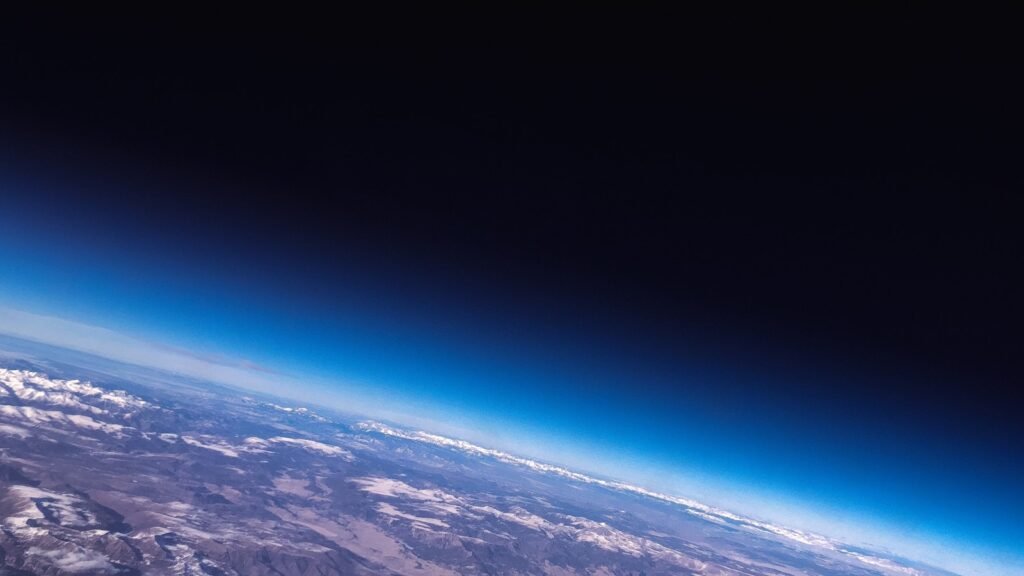

Every night, the sky above us repeats the same silent performance: galaxies wheel, stars die and are born, and space itself stretches – all without a script we can hear, yet following rules we can measure. For centuries, humans have suspected there was a pattern beneath the chaos, but only in the last few hundred years have we started to decode it with serious precision. Today, physicists talk about dark matter and quantum fields, biologists map genomes, and astronomers listen for whispers from the cosmic microwave background, each discipline holding a different chapter of the same story. What has changed is not the universe, but our tools and our questions: we are finally able to see that the cosmos is not a random mess but a grand narrative written in laws, symmetries, and probabilities. The real surprise is not that the universe has rules, but that those rules are discoverable – and that they keep inviting us deeper in.
The Hidden Clues: Patterns Beneath Cosmic Chaos
The night sky looks like scattered glitter, but to someone who knows what to look for, it is more like a carefully typeset page. Planetary orbits, star clusters, and spiral galaxies each follow mathematical regularities so precise that engineers now slingshot spacecraft around worlds using equations first written down in the seventeenth century. The same gravity that bends the path of a falling apple curves the light from distant quasars, creating ghostly arcs known as gravitational lenses. These warped images, once an almost absurd prediction of Einstein’s general relativity, are now routine tools to weigh invisible dark matter and map the structure of the universe.
Zoom in further, and the clues become even stranger. Quantum mechanics tells us that particles do not behave like tiny billiard balls but as clouds of probability, yet even this apparent weirdness is governed by strict statistical rules that have never been seen to fail in the lab. Radio telescopes catch faint murmurs from hydrogen gas stretched across intergalactic space, revealing filaments and voids that echo the tiny ripples frozen into the cosmic microwave background just after the Big Bang. What began as mysterious dots and smudges in early telescopes has evolved into a coherent pattern that seems to insist, over and over, that there is structure hiding in what once looked like noise.
From Myth to Models: How We Learned to Read the Universe
For most of human history, the universe’s story was told through myths, not equations. Ancient civilizations imagined the sky as a dome held up by gods or beasts, and celestial events as messages or warnings; the night was not a data set but a drama. Yet even then, careful observers tracked the regularity of eclipses and planetary motions, building calendars that governed harvests and rituals. Their records became, unintentionally, the first scientific logs of the cosmos, raw material waiting centuries for a new kind of explanation.
That explanation arrived when thinkers like Copernicus, Galileo, and Newton replaced cosmic characters with universal laws. The sun stopped being a chariot and became a star; the Earth stopped being the center and became one orbiting planet among many. Later, Einstein’s theories folded space and time together, while quantum mechanics revealed an underlying world of uncertainty that was still – paradoxically – predictable in aggregate. By the late twentieth century, computer simulations could evolve synthetic universes from simple starting conditions, showing how galaxies, stars, and planets could arise from gravity acting on tiny early fluctuations. The story shifted from one told about us to one in which we are very late arrivals in an unfolding physical narrative.
Living Laws: From Star Factories to Cellular Machines

It is tempting to think of physical laws as something that only act on distant galaxies or exotic black holes, but the same mathematics governs the chemistry in your coffee cup and the firing of neurons in your brain. Stars fuse hydrogen into helium following rules of nuclear physics that we have experimentally verified on Earth, and those reactions forge the heavier elements that later end up in rock, water, and eventually DNA. When massive stars die in supernova explosions, they scatter these elements into space, enriching gas clouds that will collapse into new solar systems. Our own solar system carries that chemical inheritance; the iron in your blood and the calcium in your bones trace back to events that lit up the galaxy long before the Earth existed.
On smaller scales, biology tells its own chapter of the same law-bound saga. Inside each cell, proteins fold according to the principles of thermodynamics and quantum interactions between atoms, forming molecular machines that copy DNA, harvest sunlight, and repair damage. Recent advances in cryo-electron microscopy and AI-driven protein prediction have turned these once-invisible machines into detailed, rotating models on researchers’ screens. It can feel almost mystical to watch them in motion, but their choreography is governed by the same physical constants found in handbooks of chemistry. In this sense, life is not an exception to the universe’s rules; it is what happens when those rules are applied with extreme, improbable complexity.
Why It Matters: Meaning, Method, and the Human Desire to Know
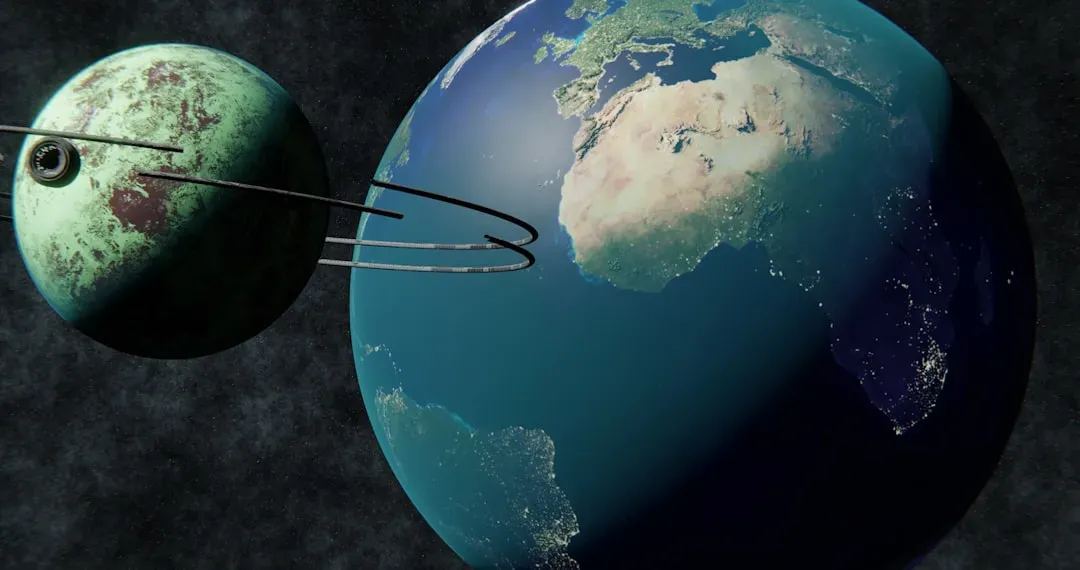
Understanding that the universe follows discoverable principles is not just an abstract philosophical win; it changes how we live, what we build, and how we think about ourselves. When we accept that phenomena from eclipses to pandemics obey natural laws instead of supernatural whims, we gain tools to predict, prepare, and intervene. Weather models, climate projections, GPS navigation, and medical imaging all rest on the assumption that physics and chemistry are stable, universal, and testable. Without that trust, every storm would be a mystery and every disease a curse.
There is also a deeper human dimension to this realization. The idea that we inhabit a lawful cosmos implies that curiosity is a valid path to power and understanding, not a dangerous trespass into forbidden territory. Modern science’s method – observe, hypothesize, test, revise – flows naturally from the belief that the universe will respond with consistency, not caprice. Compared to pre-scientific eras, when explanations often stopped at tradition or authority, this is a radical shift: it gives ordinary people, with the right tools and training, a way to challenge even the most cherished assumptions. In that sense, every well-tested principle is both a fact about nature and an invitation to keep asking harder questions.
The Cosmic Toolkit: How Modern Science Turns Data into Narrative

Today’s scientists do not simply stare at the sky or peer into microscopes; they orchestrate a global arsenal of instruments that turn the universe into streams of analyzable data. Space observatories track light across the spectrum, from low-energy radio waves to blisteringly energetic gamma rays, each revealing different layers of cosmic structure. Particle accelerators smash protons together at nearly light speed to recreate conditions close to the Big Bang, testing theories about fundamental forces and particles. Gravitational wave detectors pick up tiny ripples in spacetime from colliding black holes and neutron stars, converting once purely theoretical predictions into audible signals and clear plots.
On Earth, climate scientists blend satellite observations, ocean buoy readings, and ice core records to reconstruct not only present-day warming but also deep past climate swings. Genomic surveys compare DNA across millions of individuals and species, uncovering evolutionary pathways that were once purely speculative. A few simple but powerful ideas often sit at the heart of this work, such as conservation laws (energy and momentum), symmetry principles, and probabilistic rules. These tools let researchers turn messy measurements into coherent stories: how structure formed in the early universe, how continents moved, how pandemics spread, and how ecosystems respond to human pressure. The narrative is never finished, but the tools keep sharpening, and the chapters keep getting richer.
Beyond the Visible: Dark Matter, Dark Energy, and the Limits of Knowing
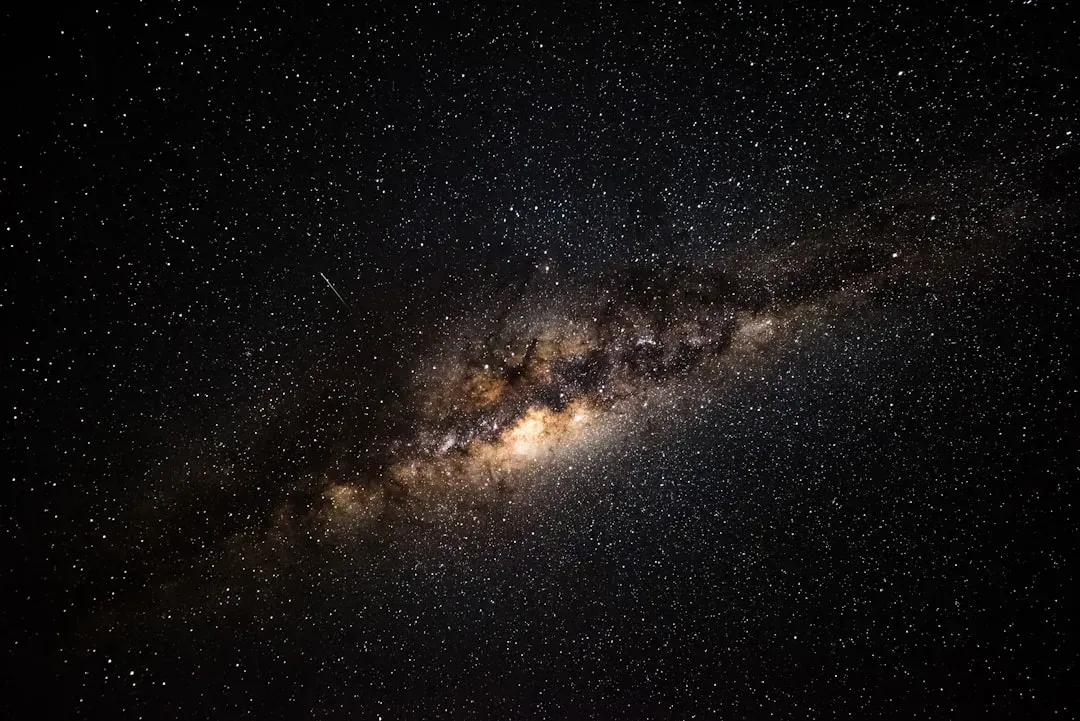
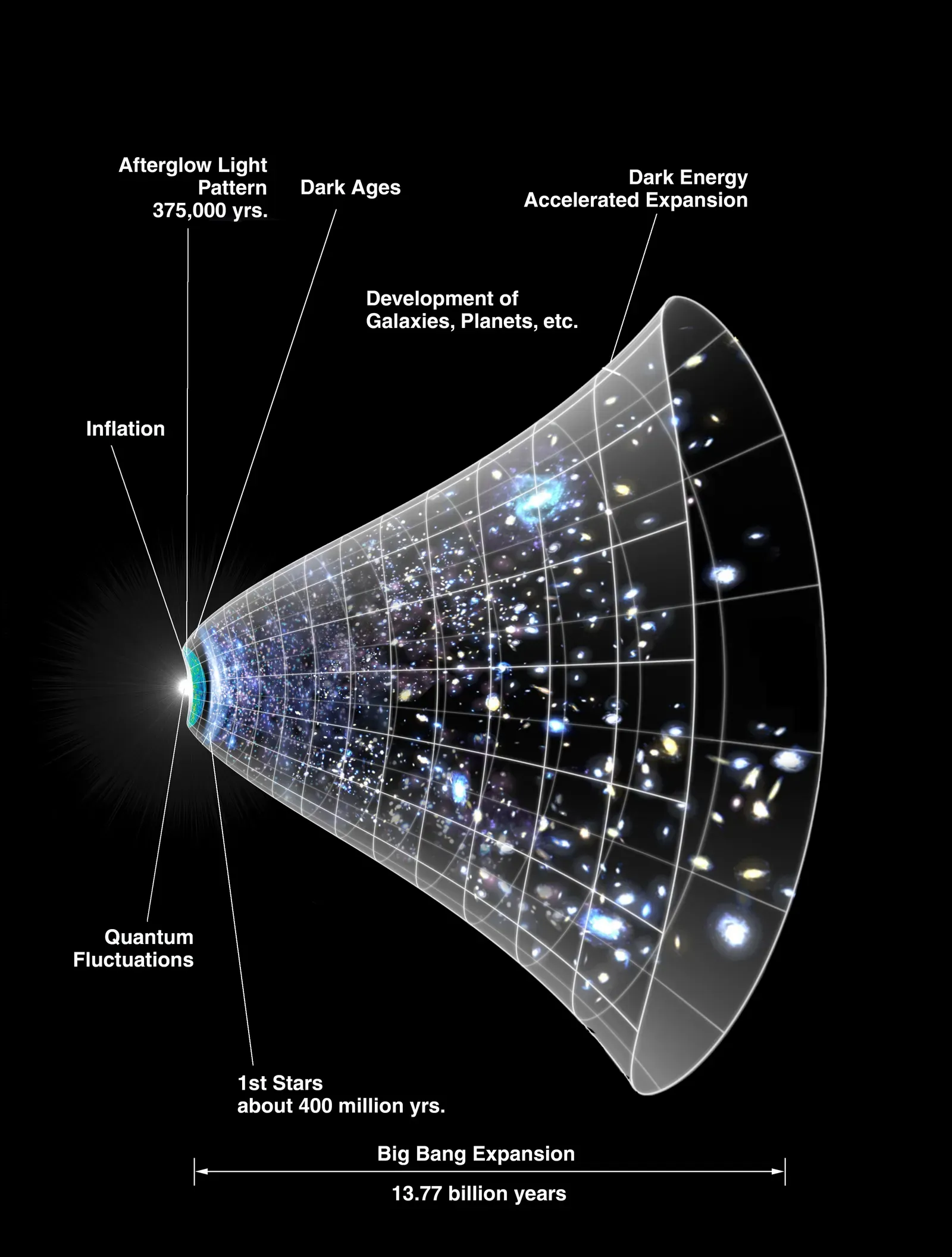
For all our progress, there are glaring gaps in the story, and they may be the most exciting parts. Astronomers infer that most of the universe’s matter is invisible dark matter, detectable only through its gravitational influence on galaxies and clusters. An even larger share of the cosmic energy budget appears to be dark energy, a mysterious component driving the accelerated expansion of space. Together, these unseen players account for the vast majority of the cosmos, leaving the familiar matter of stars, planets, and people as just a thin surface layer.
Scientists have proposed a range of possible explanations, from undiscovered particles to modifications of gravity itself, and new observatories are being built specifically to hunt for clues. Projects mapping how galaxies cluster over billions of years, precision measurements of cosmic expansion, and underground detectors searching for rare particle interactions all aim to test which ideas survive. This frontier is a humbling reminder that a universe with discoverable principles is not the same as a universe we fully understand. The laws we know may be local chapters in a book that keeps revealing new sections and plot twists the deeper we read. Wonder, in this context, is not a romantic add-on; it is an honest response to standing at the edge of what we can currently explain.
The Future Landscape: New Tools, New Questions, New Risks
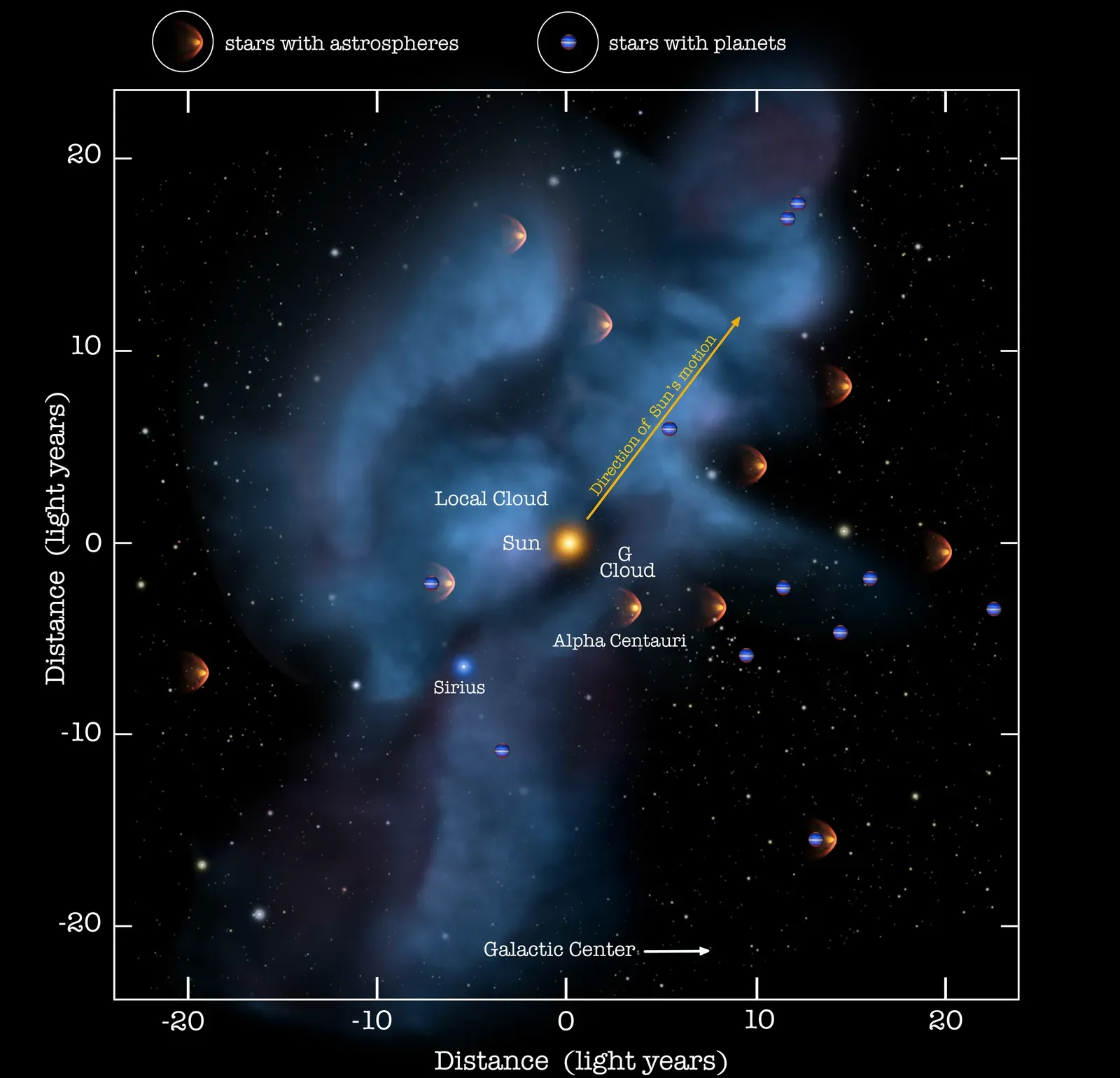
The next few decades promise a surge of instruments and computations that will probe the universe with unprecedented precision. Telescopes coming online are designed to survey the entire sky repeatedly, catching fleeting events like supernovae and possible signatures of exotic phenomena that older observatories might have missed. Quantum sensors, capable of detecting unimaginably small changes in fields and forces, could open new windows on dark matter or gravitational effects. At the same time, advances in artificial intelligence are accelerating pattern recognition in huge data sets, helping scientists spot correlations and anomalies that would have taken lifetimes to find manually.
This expanding toolkit does more than just fill in details; it reshapes the kinds of questions we dare to ask. We are moving from simply cataloging objects to tracing the full life cycles of galaxies, stars, planets, ecosystems, and civilizations. Yet these capabilities come with risks and responsibilities: the same technologies that let us model climates and pandemics can reveal uncomfortable truths about human impact and vulnerability. As we refine our understanding of planetary systems, we also confront the possibility that our own civilization is just one example of how physical laws can be pushed to the brink by intelligent life. The universe’s discoverable principles do not guarantee a happy ending; they simply tell us that consequences will follow causes, whether we are ready or not.
Engaging the Grand Narrative: What You Can Do
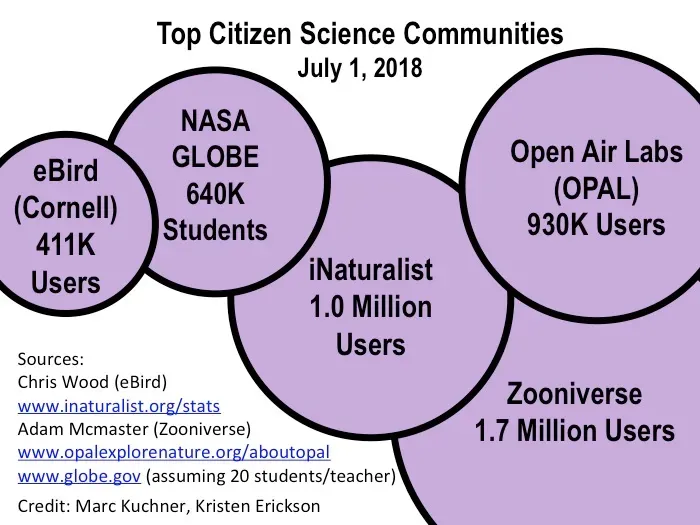
You do not need a PhD or access to a particle accelerator to take part in the universe’s unfolding story. One of the quiet revolutions of the last decade has been the rise of citizen science platforms, which invite anyone with an internet connection to classify galaxies, track wildlife, or help sift through gravitational wave candidates. Public sky surveys, open climate databases, and freely available genomic tools mean that much of the raw material of discovery is no longer locked behind institutional walls. Supporting science-friendly policies, funding agencies, and education initiatives is another straightforward way to keep the story moving, especially in regions where research budgets are fragile.
On a more personal level, simply cultivating the habit of asking how we know something – about space, health, or the environment – ties you into the same mindset that built modern science. Choosing to engage with high-quality science journalism, books, and outreach programs helps keep a broader culture of curiosity and evidence alive. You can visit local observatories, planetariums, natural history museums, or even join backyard astronomy clubs that track eclipses and meteor showers. Each of these acts, however small, is a vote for a world that treats the universe as a readable text rather than an unfathomable riddle. The cosmos is telling a story in laws and patterns; whether we keep listening and learning is, for the first time in history, partly up to all of us.
Suhail Ahmed is a passionate digital professional and nature enthusiast with over 8 years of experience in content strategy, SEO, web development, and digital operations. Alongside his freelance journey, Suhail actively contributes to nature and wildlife platforms like Discover Wildlife, where he channels his curiosity for the planet into engaging, educational storytelling.
With a strong background in managing digital ecosystems — from ecommerce stores and WordPress websites to social media and automation — Suhail merges technical precision with creative insight. His content reflects a rare balance: SEO-friendly yet deeply human, data-informed yet emotionally resonant.
Driven by a love for discovery and storytelling, Suhail believes in using digital platforms to amplify causes that matter — especially those protecting Earth’s biodiversity and inspiring sustainable living. Whether he’s managing online projects or crafting wildlife content, his goal remains the same: to inform, inspire, and leave a positive digital footprint.