
Have you ever wondered why you exist? Not in some existential, philosophical way, but literally why the atoms in your body can even exist in the first place? It turns out the universe we inhabit is far more precarious than most people realize. There’s something deeply mysterious going on beneath the surface of reality, something scientists have been grappling with for decades. The fundamental constants that govern everything from the pull of gravity to the charge of an electron appear to be set with astonishing precision, as if carefully dialed to specific values that allow stars, planets, chemistry, and ultimately life to emerge. Change any of these numbers even slightly, and everything collapses. So let’s dive in and explore this cosmic mystery that challenges everything we think we know about chance, necessity, and the nature of existence itself.
The Invisible Numbers That Shape Reality

Around thirty fundamental constants define the values of many forces and particles in the universe, and these numbers appear to line up with incredible precision. A physical constant is a physical quantity that cannot be explained by a theory and therefore must be measured experimentally. Think about that for a moment. We can measure these values, plug them into our equations, and describe the cosmos with stunning accuracy, yet nobody knows why they have the values they do.
It takes 26 fundamental constants to give us our known Universe, and each one seems to play an indispensable role. The most widely recognized include the speed of light in vacuum, the gravitational constant, the Planck constant, the electric constant, and the elementary charge. These aren’t just abstract mathematical constructs. They determine whether atoms can form, whether stars can burn, and whether molecules can bond together to create the chemistry of life.
When Gravity Walks a Tightrope

Let’s talk about gravity first, because honestly, it’s wild how delicate this force really is. The gravitational constant must be fine-tuned to something like one part in 10 to the 60th power. That’s not a typo. We’re talking about a precision so extreme it defies comprehension.
To understand how exceedingly narrow this life-permitting range is, consider that the number of cells in your body is around 10 to the 14th power. The level of precision required for gravity is incomparably greater. If gravity were weaker, matter wouldn’t clump enough to form stars at all. On the flip side, make it too strong and stars would burn through their fuel in a cosmic blink, never giving planets time to form or life to evolve. The universe would either be a diffuse cloud of gas or a rapidly collapsing nightmare. Neither option works for us.
The Cosmological Constant: A Number Too Small to Believe
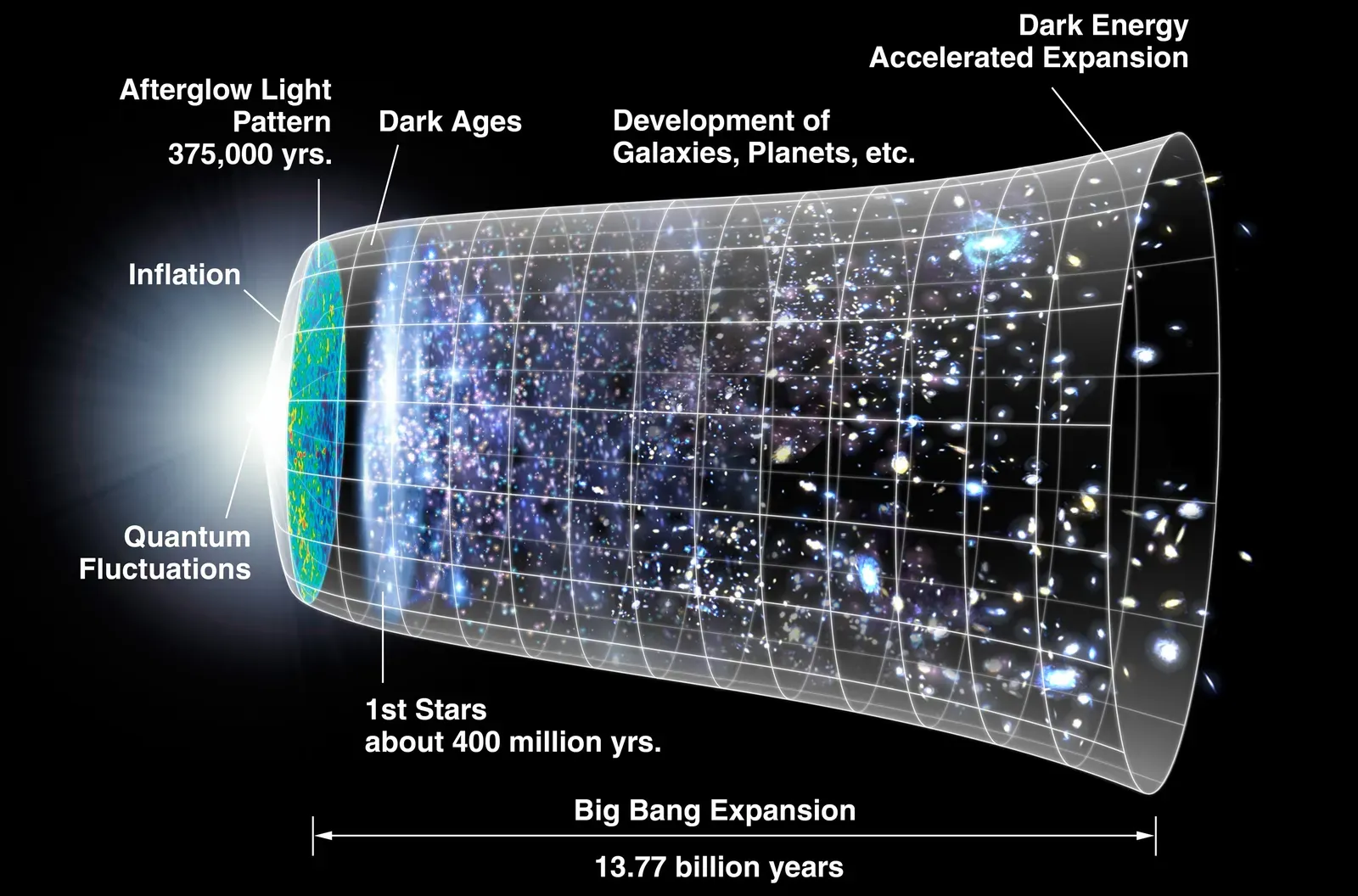
Here’s where things get truly bizarre. The cosmological constant, which describes the ratio of dark energy density to critical energy density, is on the order of 10 to the negative 122nd power in Planck units. Let that sink in for a second. This number is so absurdly tiny that it has no significant effect on anything smaller than a billion light years across.
The cosmological constant must be fine-tuned to something like one part in 10 to the 120th power, and if it were just slightly more positive, the universe would fly apart; slightly negative, and the universe would collapse. Scientists struggle to explain why this constant isn’t wildly larger, as quantum field theory predicts it should be. Yet here we are, existing in a universe where it’s balanced with mind-bending precision. Some call this the most profound mystery in all of physics.
The Fine Structure Constant and the Chemistry of Existence

Now let’s consider something that hits even closer to home: the fine structure constant, often denoted by the Greek letter alpha. This dimensionless constant characterizes the strength of the electromagnetic interaction, and it governs how atoms behave and how molecules form.
If the fine structure constant were four percent larger, stars couldn’t produce carbon, which is essential for life; if it were four percent smaller, molecular bonds like those in DNA wouldn’t form. Four percent. That’s the margin we’re working with between a universe teeming with potential and one that’s biologically sterile. If the value of the fine-structure constant was just four percent larger in the early Universe, the existence of carbon-based life would be impossible. The universe appears to exist in an incredibly narrow window of possibility.
The Delicate Balance of Nuclear Forces
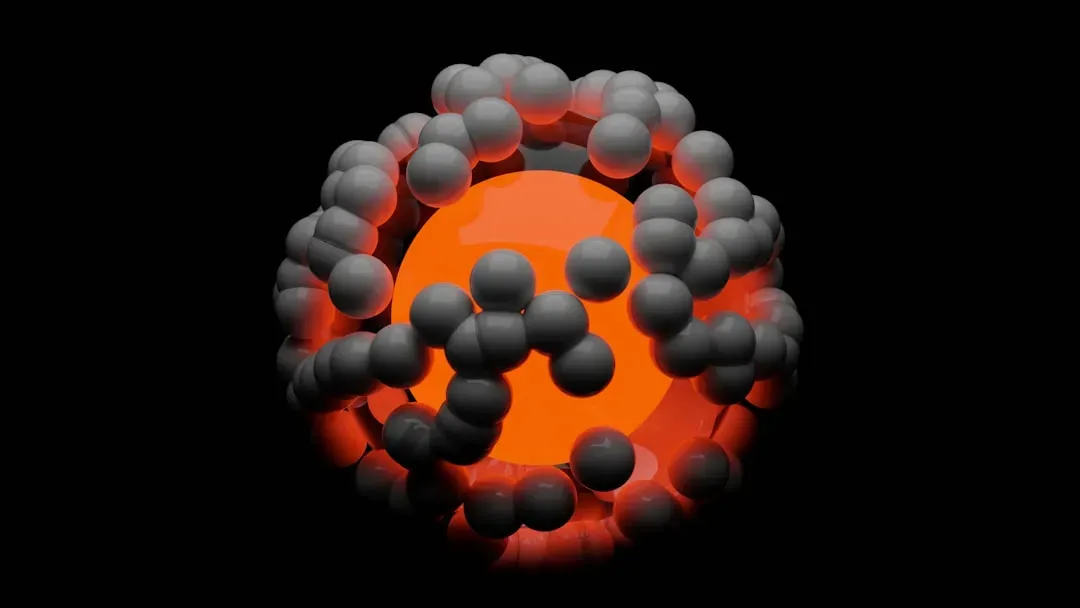
The forces inside atomic nuclei also walk an impossibly fine line. When four nucleons fuse into helium, 0.007 of their mass is converted to energy, and this value is in part determined by the strength of the strong nuclear force. This nuclear efficiency is crucial for stars to function properly.
If this value were 0.006, a proton could not bond to a neutron and only hydrogen could exist, making complex chemistry impossible; if it were above 0.008, no hydrogen would exist as all hydrogen would have been fused shortly after the Big Bang. We’re talking about a range so narrow that a shift of less than one-tenth of one percent in either direction would eliminate either all complex elements or all hydrogen. Without both, forget about water, organic molecules, or anything resembling life as we understand it.
Why Life Needs Perfectly Tuned Stars
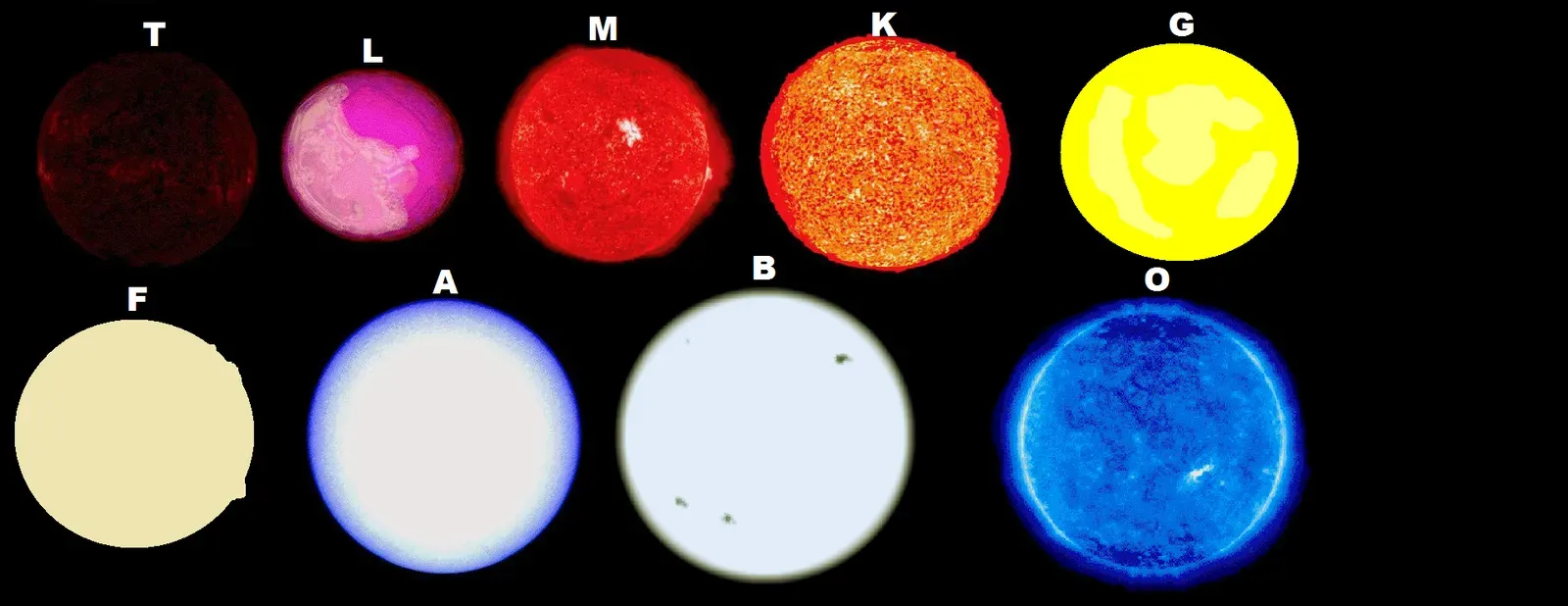
Stars aren’t just pretty lights in the night sky. They’re the foundries where heavy elements are forged, and they need to be precisely calibrated to support life. Most stars happen to be situated near the boundary between the blue-giant regime and the red-dwarf regime, meaning a slight change in fundamental constants would push all stars to become blue giants or red dwarfs.
Blue giants emit copious ultraviolet light and are not suitable for supporting life, while red dwarfs emit mainly infrared light whose energy is too feeble to support life. Sun-like stars fall in between, emitting visible light that powers photosynthesis and allows complex ecosystems to flourish. The fact that our universe produces these Goldilocks stars in abundance seems almost ridiculously fortunate. Shift a constant here or there, and every star in the cosmos becomes inhospitable to biology.
The Great Debate: Design, Luck, or Something Else?

So what do we make of all this? Fred Adams discovered that the mass of the down quark can only change by a factor of seven before rendering the universe lifeless, and this kind of constraint applies across the board. The question that keeps physicists up at night is why these constants have the values they do.
Among scientists who find the evidence persuasive, a variety of natural explanations have been proposed, such as the existence of multiple universes introducing a survivorship bias under the anthropic principle. Perhaps we live in one universe among countless others, each with different constants, and we simply happen to be in one where life can exist because that’s the only type where observers could arise to ask the question. Some argue our universe is not finely tuned for life but rather barely compatible with life as we know it. Still, the precision required seems to demand some kind of explanation, whether it’s a multiverse, a deeper theory of physics we haven’t discovered yet, or something else entirely. Recent research shows that model values align with measured experimental values of biological markers, suggesting the laws of physics do impose constraints on cellular life, which could help in the search for life distinct from our own.
What do you think about this cosmic puzzle? Could we truly be the product of blind chance in an infinite multiverse, or does the precision of these constants hint at something more? Tell us your thoughts in the comments.