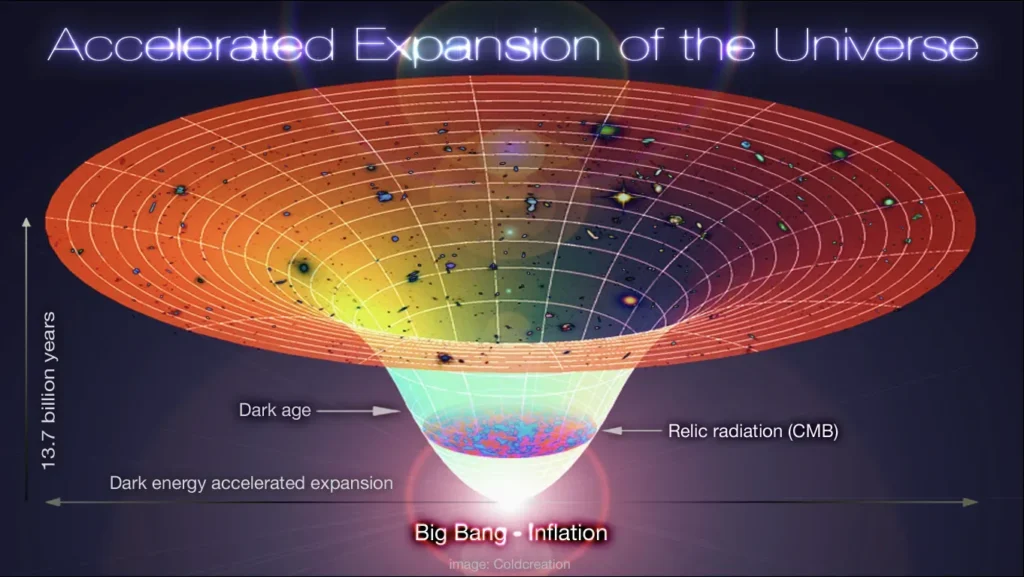

Ever looked up at the night sky and wondered what happens to all those stars eventually? You’re staring at a cosmic mystery that’s been unraveling in surprising ways since the late 1990s. The universe isn’t just expanding like we thought it would. It’s speeding up, rushing outward faster and faster, driven by something we barely understand. This discovery turned astronomy on its head and won a Nobel Prize, yet we’re still trying to figure out what it truly means for everything we know.
Let’s be real, thinking about the universe’s fate feels a bit overwhelming. I know it sounds crazy, but this acceleration tells us something profound about where we’re all headed, from galaxies to atoms to the fabric of space itself.
The Discovery That Changed Everything
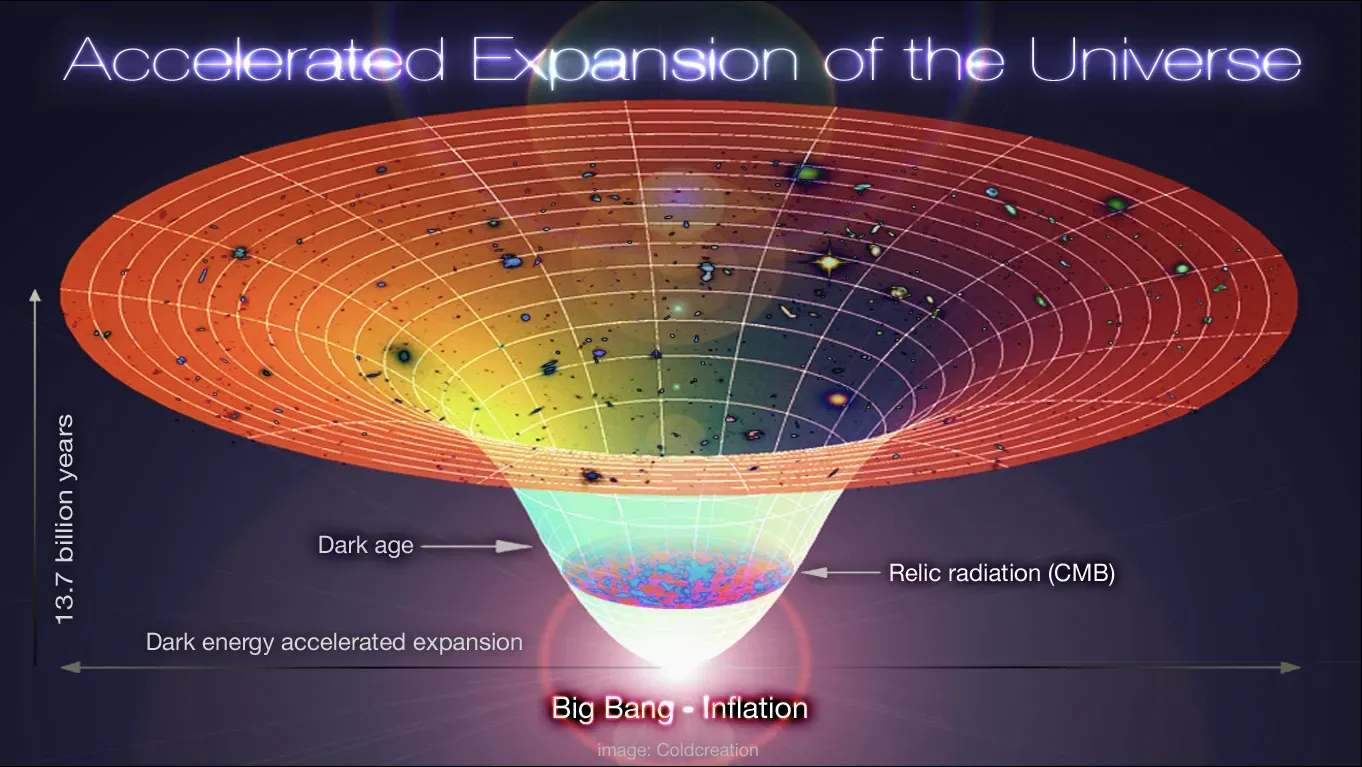
In 1998, two independent teams of cosmologists used distant supernovae to discover that the universe’s expansion is accelerating rather than slowing. Think about it. Scientists expected gravity to be slowing things down, like a ball tossed in the air eventually falling back to earth. Instead, they found the exact opposite.
Nine billion years after the universe began, its expansion started to speed up, driven by an unknown force that scientists have named dark energy. The measurements came from observing Type Ia supernovae, exploding stars that act like cosmic lighthouses with predictable brightness. When astronomers noticed these distant explosions appeared dimmer than expected, they realized something extraordinary was happening. These stars had moved farther away than they should have if the universe was simply coasting along.
What Exactly Is Dark Energy Anyway?
Here’s the thing. Right now, dark energy is just the name that astronomers gave to the mysterious “something” that is causing the universe to expand at an accelerated rate. Nobody really knows what it is. It’s not a particle you can see or detect directly.
Approximately 68.3 to 70% of the universe is dark energy. That’s the vast majority of everything that exists, and we have no clue what it actually is. Some scientists describe it as having a repulsive effect, pushing space itself outward. Others wonder if it’s connected to the energy inherent in empty space itself, something called vacuum energy. Using an extended version of Einstein’s gravity, researchers found that cosmic acceleration can arise naturally from a more general geometry of spacetime, hinting at a radical new way to understand why the universe keeps speeding up.
Is Dark Energy Actually Constant or Changing?
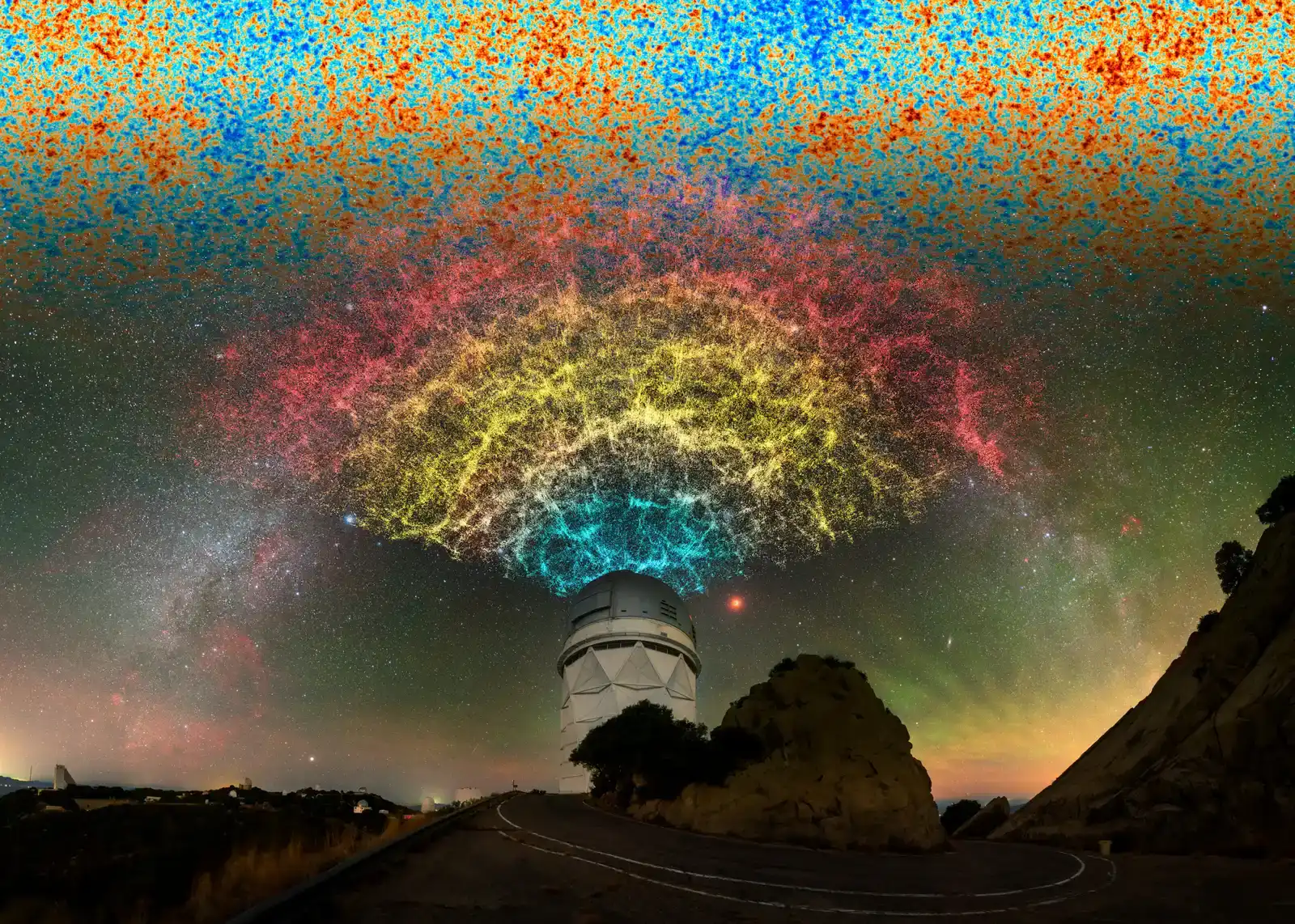
This gets interesting. For years, scientists assumed dark energy was constant, never changing its strength over cosmic history. Dark energy, the mysterious force accelerating the expansion of the universe, may not have always provided a steady push as cosmologists have assumed for decades, with the latest data from the powerful Dark Energy Spectroscopic Instrument adding more evidence that the universe’s expansion accelerated faster in the past than it is doing now.
Recent observations from DESI have thrown a wrench into our understanding. When the DESI team adds data sets that cover other epochs, including the CMB, supernovae, and measures of the clustering of galaxies and the agglomeration of dark matter, it sees something different: dark energy that has changed over time. Some research even suggests the universe’s expansion might already be slowing down today, though this remains hotly debated. If dark energy is weakening, everything we thought we knew about the cosmic future needs rethinking.
Could We Be Wrong About Dark Energy Entirely?
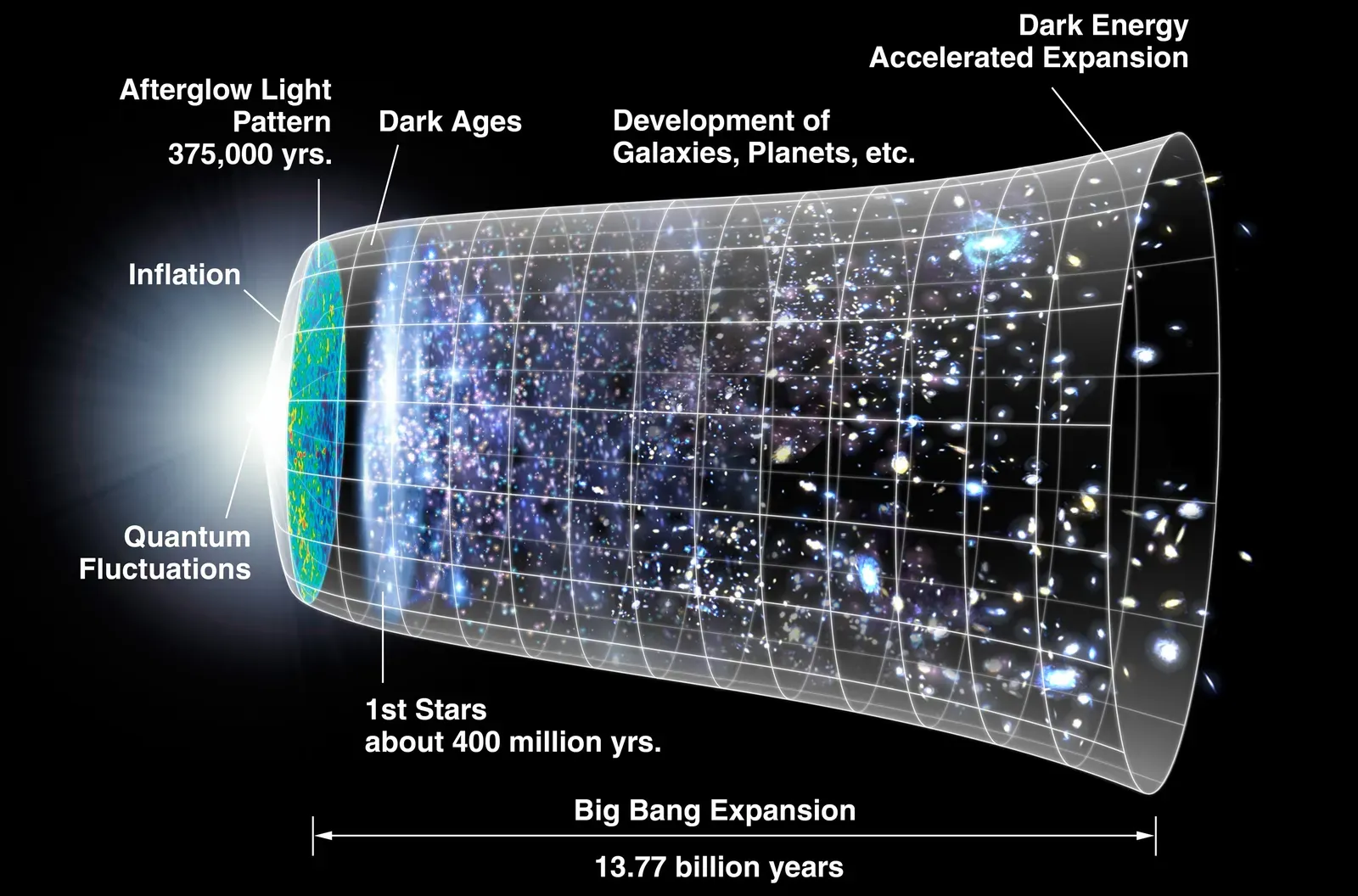
Let’s consider something wild. What if dark energy doesn’t exist at all? Researchers from the University of Bremen suggest the universe’s expansion might be explained, at least partially, without invoking dark energy at all. Their work uses something called Finsler gravity, an extension of Einstein’s equations.
The modified equations, known as the Finsler-Friedmann equations, naturally predict an accelerating universe even in empty space, with no extra assumptions required, and no additional “dark energy” term needs to be added by hand. It’s hard to say for sure, but if they’re right, the acceleration might be built into the very geometry of spacetime itself. This doesn’t eliminate dark energy entirely, but suggests some of what we attribute to it might actually be gravity behaving differently than we thought on cosmic scales.
The Heat Death Scenario: A Slow Fade to Nothing
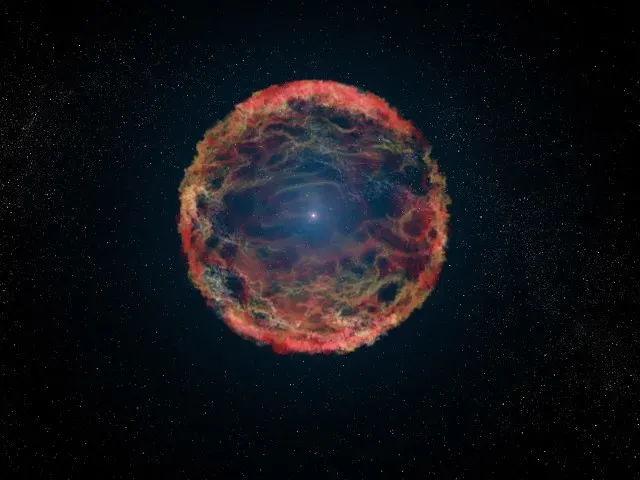
So what happens if the universe keeps expanding? The preponderance of evidence to date favors a universe that will continue to expand indefinitely, resulting in a scenario where continued expansion results in a universe that asymptotically approaches absolute zero temperature. Scientists call this the Big Freeze or heat death.
Picture this. A couple trillion years from now, the universe will have expanded so much that no distant galaxies will be visible from our own Milky Way, and eventually, 100 trillion years from now, all star formation will cease. Stars burn out one by one. Galaxies fade into darkness. Black holes will be the last surviving sentinels of the universe as we know it, and by a googol years into the future, Hawking radiation will have killed off even the supermassive black holes. What remains is just empty space, growing colder and more dilute forever. When all the energy in the cosmos is uniformly spread out, there is no more heat or free energy to fuel processes that consume energy, such as life.
The Big Rip: When Dark Energy Gets Too Strong
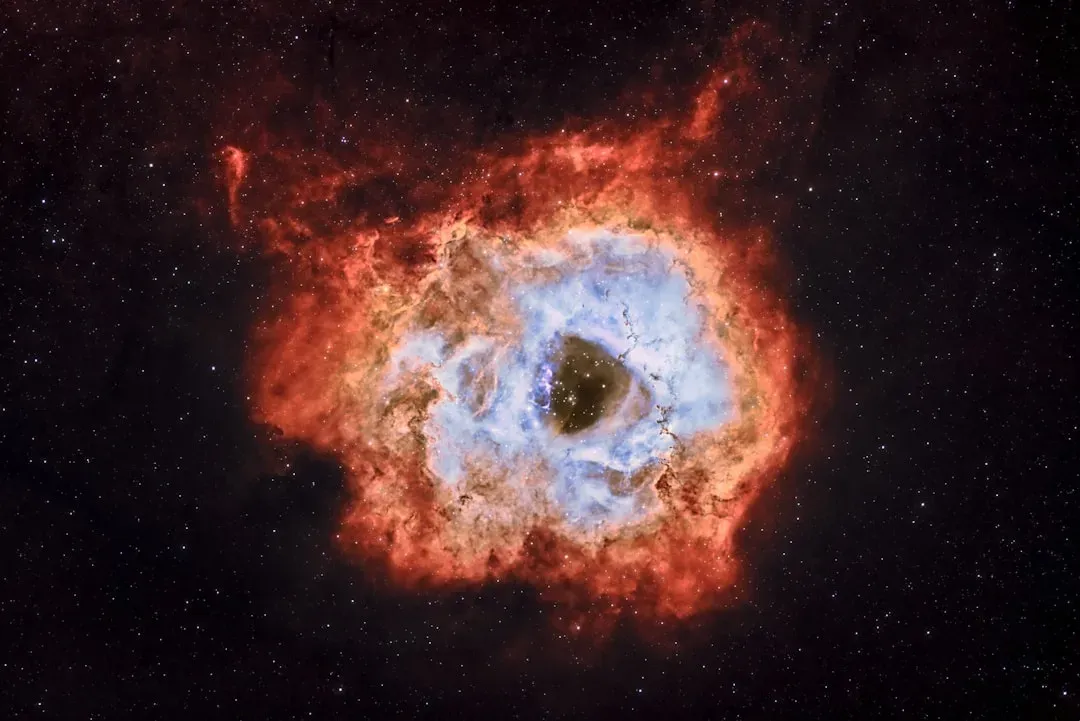
There’s another possibility though, and honestly, it’s more dramatic. The stronger and faster the repulsive force of dark energy is, the more likely it is that the universe will experience a Big Rip, which is what happens when the repulsive force of dark energy is able to overcome gravitation and everything else.
In this nightmare scenario, dark energy doesn’t stay constant but grows stronger over time. The phantom dark energy would begin by overwhelming the force of gravity between galaxies and the expansion of space would force galaxies further apart until they are completely isolated, then the phantom dark energy would overwhelm the gravity holding individual galaxies together, causing them to unwind and the objects within the galaxies to be ripped apart as well. Eventually even atoms get torn apart. The fabric of spacetime itself rips. Everything ends not in a whimper but in total destruction. Most current data pushes this scenario far into the future, if it happens at all, but we can’t rule it out completely.
Could the Universe Collapse Instead?
Wait, there’s more. Some scientists wonder if dark energy might actually weaken or reverse over time. Observations from the Dark Energy Spectroscopic Instrument hinted that dark energy may be weakening over time, indicating that the universe’s rate of expansion could eventually slow, with some work suggesting that the universe’s expansion has already started to slow down.
If that’s true, gravity could eventually win. Eventually, if the expansion continues to slow down, the universe could begin to contract, ending in what astronomers imagine may be the opposite of the big bang – the big crunch. Everything collapses back into a single point. Space contracts. Galaxies crash together. The universe implodes. Whether this could lead to a new Big Bang and a cyclic universe remains pure speculation, but it’s fascinating to consider.
What Does This All Mean for Us Right Now?
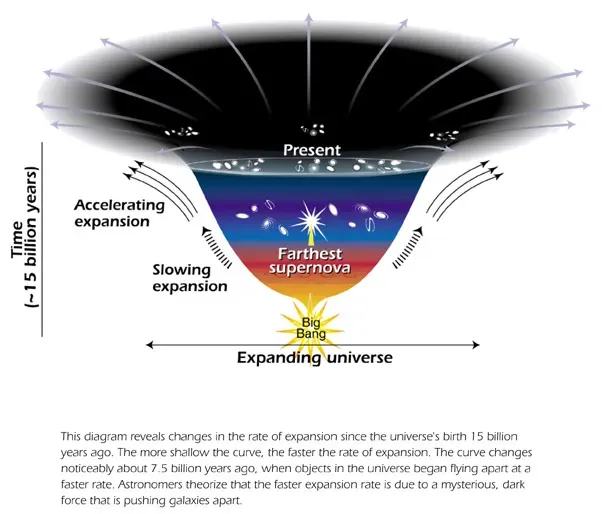
Let’s bring this back down to earth for a moment. The universe’s expansion rate is very well known: at about 70 km/s/Mpc, meaning that for every megaparsec in distance, an object’s light is shifted as though it were receding at an additional 70 km/s from us. This cosmic acceleration is happening right now, all around us, though we don’t feel it directly.
By reconstructing the universe’s matter distribution across six billion years, recent measurements reveal how dark energy and dark matter have influenced the universe’s evolution, with scientists comparing observations between theories where dark energy remains constant over time and where dark energy changes as the universe evolves. These investigations aren’t just abstract philosophy. They’re helping us understand the fundamental nature of reality. New telescopes and surveys like the Vera Rubin Observatory and the James Webb Space Telescope are collecting unprecedented amounts of data, bringing us closer to answers than ever before.
The Long View on Our Cosmic Future
The truth is, we’re living in a golden age of cosmology. We’ve discovered that the universe is accelerating, mapped its structure across billions of years, and narrowed down its possible fates. Yet enormous mysteries remain. Is dark energy truly a property of empty space, or is it something that changes with time? Could our understanding of gravity itself be incomplete?
Current observations suggest that the expansion of the universe will continue forever. Whether that means a cold, dark heat death, a violent Big Rip, or something we haven’t imagined yet remains an open question. The universe has already surprised us once by accelerating when we expected deceleration. It could surprise us again.
Here’s what strikes me most. These aren’t just questions about the distant future. They’re questions about what the universe is made of right now, today. Dark energy surrounds us, shapes the cosmos we inhabit, and determines whether future civilizations will look up at a sky full of galaxies or an empty void. Did you expect that when you first heard about the universe expanding? What would you have guessed its fate might be?